

For many, the mention of a polygraph test conjures images of intense interrogations, not compassionate therapy. This apprehension is understandable, especially when you’re focused on personal healing. However, when used correctly, the polygraph is not a tool for confrontation but a powerful ally for building trust and accountability. In fact, professional therapeutic polygraph testing in Idaho is specifically designed to support, not punish, creating a foundation for honest communication and lasting recovery.
This guide serves as your confidential resource. We will demystify the process, explaining exactly how this specialized testing supports therapy, addiction recovery, and other treatment programs across the state. You will learn what to expect during a session, how the results are used constructively within your treatment plan, and how to find a certified, discreet examiner who prioritizes your well-being. Our goal is to replace your uncertainty with confidence, showing you how truth verification can become a cornerstone of your journey toward healing and wholeness.
Key Takeaways
- Understand how therapeutic polygraphy acts as a clinical tool to rebuild trust and foster genuine honesty within a treatment plan.
- Learn how this process provides an objective way to verify disclosures and measure progress, strengthening the therapeutic alliance.
- Prepare for your appointment by knowing the step-by-step process for therapeutic polygraph testing Idaho, which is designed to be confidential and compassionate.
- Discover why choosing an examiner with specialized training in clinical dynamics is critical for ensuring the test supports your specific treatment goals.
What is Therapeutic Polygraph Testing? A Tool for Trust and Progress
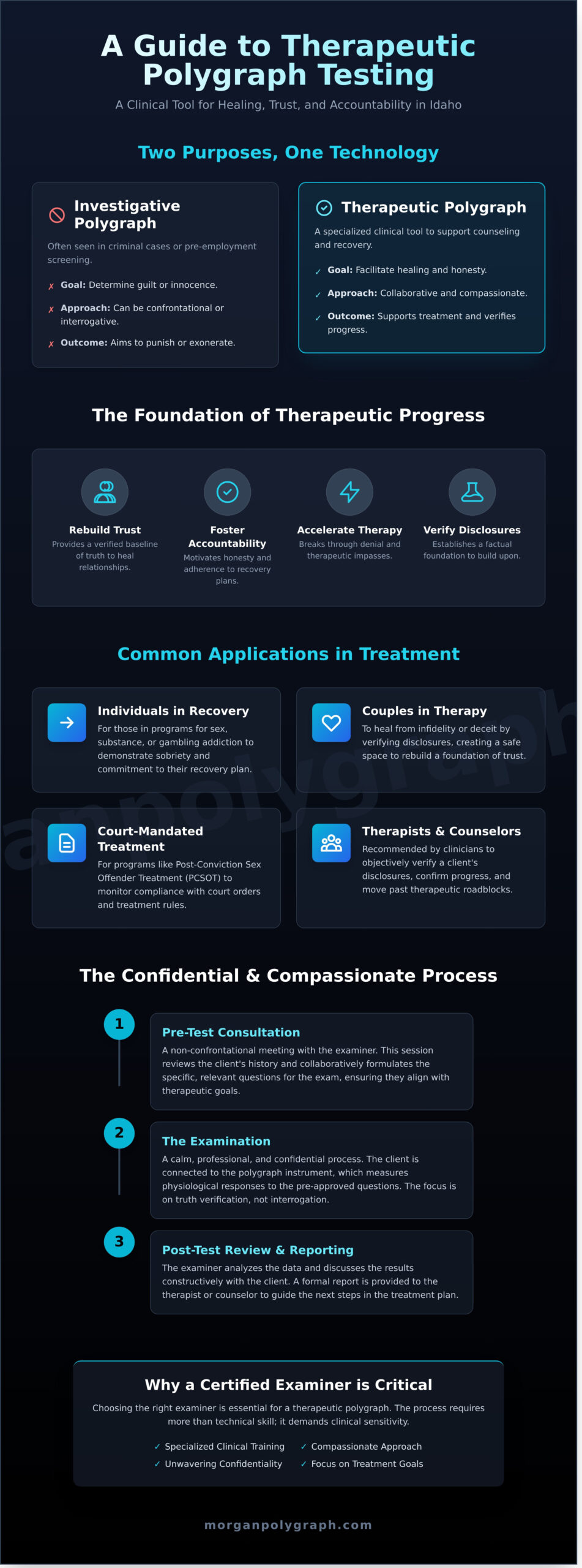
Therapeutic polygraphy is a specialized clinical tool designed to support the goals of therapy and counseling. Unlike the investigative polygraphs often seen in criminal cases or pre-employment screenings, its purpose is not to determine guilt but to facilitate healing and honesty. At its core, a polygraph measures physiological responses to questions, but the application here is fundamentally different. For those unfamiliar with the basics of the technology, a helpful overview can answer the question, What is a Polygraph? When individuals seek therapeutic polygraph testing in Idaho, the focus shifts from interrogation to truth verification, creating a safe, structured environment where clients can break through denial and establish a factual foundation for progress. This process is always conducted in close collaboration with a licensed therapist or counselor to ensure the examination directly serves established treatment objectives.
The Core Purpose: Supporting Treatment, Not Just Detecting Lies
The primary goal of a therapeutic polygraph is to rebuild trust and foster accountability, both with a partner and with oneself. The examination provides a verified baseline of truth that allows therapy to move forward productively, eliminating the “he said, she said” dynamic that can stall progress. Our expert examiners conduct these sessions in a non-confrontational, collaborative manner. The focus is on empowering the client to be truthful about their actions and maintain their commitments to recovery, creating a clear path toward rebuilding relationships and achieving personal integrity.
Who Utilizes Therapeutic Polygraphs in Idaho?
In our professional practice, we find that a therapeutic polygraph is an invaluable resource for a diverse range of clients and clinical professionals. It provides clarity and verification in situations where trust has been compromised and honesty is critical for moving forward. Common applications include:
- Individuals in Recovery: Clients in programs for sex, substance, or gambling addiction use polygraphs to demonstrate sobriety and adherence to their recovery plan.
- Couples in Therapy: Partners working to heal from infidelity or other forms of deceit can use polygraphs to verify disclosures and re-establish a foundation of trust.
- Court-Mandated Treatment: Clients participating in programs such as the Post-Conviction Sex Offender Treatment (PCSOT) program often require polygraphs to monitor compliance with court orders.
- Therapists and Counselors: Clinicians may recommend a polygraph to verify a client’s disclosures, confirm progress, or break through therapeutic impasses.
The Role of Polygraph in the Therapeutic Process
In a therapeutic setting, genuine progress is built on a foundation of truth. When trust has been broken by deception, addiction, or other harmful behaviors, rebuilding that foundation can feel impossible. This is where professional polygraph examinations serve not as an interrogation, but as a powerful clinical tool. It provides an objective, unbiased measure of truthfulness that helps therapists, clients, and their families move beyond suspicion and focus on healing and recovery.
By verifying disclosures and monitoring ongoing commitment, the polygraph becomes an accelerator for therapeutic progress. It motivates continued honesty, provides accountability, and offers tangible evidence that positive change is occurring, which is essential for rebuilding trust within a relationship or family unit.
Breaking Through Denial and Verifying Disclosures
One of the first and most difficult hurdles in therapy is ensuring a full and honest disclosure of past actions. A therapeutic polygraph can definitively confirm whether a client has been completely forthcoming about their history, such as in a sexual history disclosure exam. This process allows the therapist to work from a position of fact rather than suspicion. For the individual being tested, having their honesty officially verified provides a profound psychological benefit, creating a clean slate from which to build a new future.
Accountability and Maintenance Testing
Recovery and behavioral change are ongoing processes that require sustained commitment. Periodic “maintenance” polygraphs are a critical component of long-term success. These scheduled exams monitor compliance with treatment plans, probation rules, or personal agreements. They act as a powerful deterrent against relapse or re-offense by creating a clear structure of accountability. For partners and family members, these tests provide consistent peace of mind, confirming that the individual remains dedicated to their recovery journey.
Application in Post-Conviction Sex Offender Testing (PCSOT)
A highly specialized application of therapeutic polygraph testing Idaho is in Post-Conviction Sex Offender Testing (PCSOT). This is a court-ordered and treatment-integrated tool used in community supervision to enhance public safety. PCSOT helps probation officers and treatment providers manage offenders by verifying compliance with strict rules. Exams are tailored to specific needs and include:
- Sexual History Exams: To uncover the full scope of past behaviors.
- Monitoring Exams: To ensure compliance with treatment and supervision rules.
- Specific Issue Exams: To investigate allegations of new offenses or rule violations.
Due to the complexity and sensitivity of this work, examiners conducting PCSOT must have advanced, specialized certification and adhere to rigorous ethical guidelines, such as the American Polygraph Association (APA) standards, to ensure professional and accurate results.
The Therapeutic Polygraph Process in Idaho: What to Expect
Engaging in therapeutic polygraph testing is a significant step toward rebuilding trust and fostering honesty. At Morgan Polygraph, we have refined this process to be a structured, collaborative, and supportive tool for your therapeutic journey. Our approach is rooted in professionalism and absolute confidentiality, ensuring the environment is safe and focused on healing, not interrogation. Understanding the steps involved can help demystify the experience and empower you to move forward with confidence.
Step 1: Consultation and Question Formulation
The process begins not in the examination chair, but with a collaborative consultation. This critical first step involves you, your therapist, and one of our expert examiners. Together, we discuss your specific treatment goals to formulate a set of relevant, precise, and non-intrusive questions. Crucially, every question is reviewed with you and agreed upon before the exam. This transparent phase ensures the test is fair and directly supports your therapeutic objectives.
Step 2: The Examination Session
On the day of the exam, our priority is your comfort and readiness. The session starts with a pre-test interview, where the examiner ensures you understand the process and are prepared to proceed. Simple, painless sensors are then attached to monitor physiological responses. In this calm and professional setting, the agreed-upon questions are asked multiple times to collect the necessary data. The entire session is conducted with compassion and respect, maintaining a non-judgmental atmosphere.
Step 3: Post-Test Analysis and Reporting
After the session, our certified examiner meticulously analyzes the physiological data to form a professional conclusion. The results of our therapeutic polygraph testing in Idaho are compiled into a detailed, confidential report created specifically for your treatment provider. This report outlines the specific questions asked, the answers you provided, and the examiner’s findings, providing your therapist with valuable, objective information to guide future sessions. Schedule a confidential consultation to discuss your needs.
Why Choose a Certified Examiner for Therapeutic Testing in Idaho
When seeking therapeutic polygraph testing Idaho, the examiner’s qualifications are not just a detail-they are the foundation of the entire process. Unlike standard examinations, therapeutic polygraphy is a sensitive clinical tool used to support treatment, verify disclosures, and rebuild trust. The person administering the test must be more than a technician; they must be a trained professional who understands the complex dynamics of therapy and recovery.
A certified therapeutic examiner possesses specialized training that goes far beyond basic polygraph techniques. They understand how to work collaboratively with therapists and treatment providers to formulate questions that align with specific clinical goals. This role demands unwavering professionalism, deep compassion for the client’s situation, and an absolute commitment to discretion. Furthermore, an examiner with local Idaho expertise is uniquely positioned to understand the state’s treatment standards and legal requirements, ensuring the process is both effective and credible. Court-recognized certification adds a final, crucial layer of trust and reliability.
Essential Credentials and Certifications
A truly qualified examiner’s credentials provide a clear measure of their expertise and commitment to ethical practice. When evaluating a professional for this critical role, verify the following:
- Membership in good standing with the American Polygraph Association (APA).
- Specialized Post-Conviction Sex Offender Testing (PCSOT) certification, which is mandatory for sex offender treatment cases.
- Demonstrated experience working alongside Idaho therapists and legal professionals.
- Current licensing and insurance to practice within the state of Idaho.
The Morgan Polygraph Standard of Care
At Morgan Polygraph, we don’t just meet these standards; we exceed them. Our commitment to providing the highest level of professional service is built on a foundation of trust and proven expertise. When you work with our team, you are assured of:
- Court-Recognized Experts: Our examiners bring decades of combined, real-world experience to every session.
- Strict Confidentiality: We adhere to the most stringent ethical codes, guaranteeing absolute confidentiality and discretion.
- Local Collaboration: We maintain strong, collaborative relationships with Idaho’s therapeutic and legal communities.
- A Compassionate Approach: We ensure every interaction is professional, respectful, and supportive of the therapeutic journey.
Choosing the right examiner is the most important step in leveraging polygraphy as a tool for recovery. To ensure you are working with a certified and experienced professional, contact Morgan Polygraph to discuss your specific needs.
Your Path Forward with Idaho’s Leading Polygraph Experts
As we’ve explored, therapeutic polygraph testing is a powerful, structured tool for fostering honesty and accountability within the treatment process. It is not merely about deception detection, but about rebuilding trust and verifying progress, making it an invaluable asset for individuals committed to recovery. The success of this process hinges on choosing a certified examiner who brings both expertise and compassion to every session.
When you are ready to integrate professional therapeutic polygraph testing Idaho into your treatment plan, trust the team at Morgan Polygraph. With over 40 years of combined professional experience, our court-recognized experts are fully certified for Post-Conviction Sex Offender Testing (PCSOT) and are dedicated to providing a discreet and respectful experience. We understand the path to recovery is challenging and are here to provide the clarity you need.
Contact Morgan Polygraph for a confidential consultation in Boise. Your journey toward truth and recovery is a courageous one, and having the right professional support can make all the difference.
Frequently Asked Questions About Therapeutic Polygraph Testing
Is a therapeutic polygraph test confidential?
Yes, absolute confidentiality is a cornerstone of our professional practice. The entire process, from your initial consultation to the final report, is handled with the utmost discretion. The specific details discussed and the results of your exam are protected and will not be shared without your explicit, written consent. We are committed to creating a secure and private environment for all our clients, ensuring your sensitive information is handled with professional care and respect.
Will the therapeutic polygraph process be stressful or intimidating?
We understand that clients may feel anxious. Our certified examiners are trained to conduct the process in a professional, compassionate, and non-judgmental manner. The goal is truth verification, not interrogation. We take the time to explain every step, ensuring you are comfortable and fully understand the procedure. Our calm, respectful approach is designed to reduce stress and create a professional environment focused on therapeutic goals rather than intimidation.
How are the questions for a therapeutic polygraph test developed?
The questions are developed through a careful, collaborative process involving you, your therapist, and the polygraph examiner. Your therapist will identify the key issues and specific areas of concern that need to be addressed for treatment to progress. The examiner then works with this information to craft precise, non-ambiguous questions that are directly relevant to the therapeutic goals. This ensures the test is focused, fair, and serves its intended purpose of rebuilding trust.
How accurate is a polygraph test in a therapeutic context?
When conducted by a certified, experienced examiner following established protocols, the accuracy rates are exceptionally high. In the context of therapeutic polygraph testing in Idaho, accuracy is paramount for rebuilding trust. We utilize state-of-the-art equipment and validated testing techniques to ensure the most reliable results possible. Our commitment to professional standards ensures that both parties can have confidence in the outcome as a tool for healing and accountability.
Who gets to see the results of my therapeutic polygraph exam?
The results are strictly confidential and are released only to individuals you have pre-authorized in writing. Typically, this includes you and your therapist. A formal, written report detailing the exam questions, your answers, and the examiner’s professional conclusion is provided. No information will be shared with spouses, partners, or any other third party without your explicit, signed consent. You maintain complete control over the distribution of your private information at all times.
How often are maintenance polygraphs needed in treatment?
The frequency of maintenance polygraphs is determined by your therapist as part of your specific treatment plan. Initially, they might be scheduled every three to six months to verify ongoing honesty and accountability. As trust is rebuilt and progress is made, the interval may be extended. The goal is to support recovery, and follow-up exams serve as a valuable tool to maintain momentum and provide continued reassurance for all parties involved in the therapeutic process.