
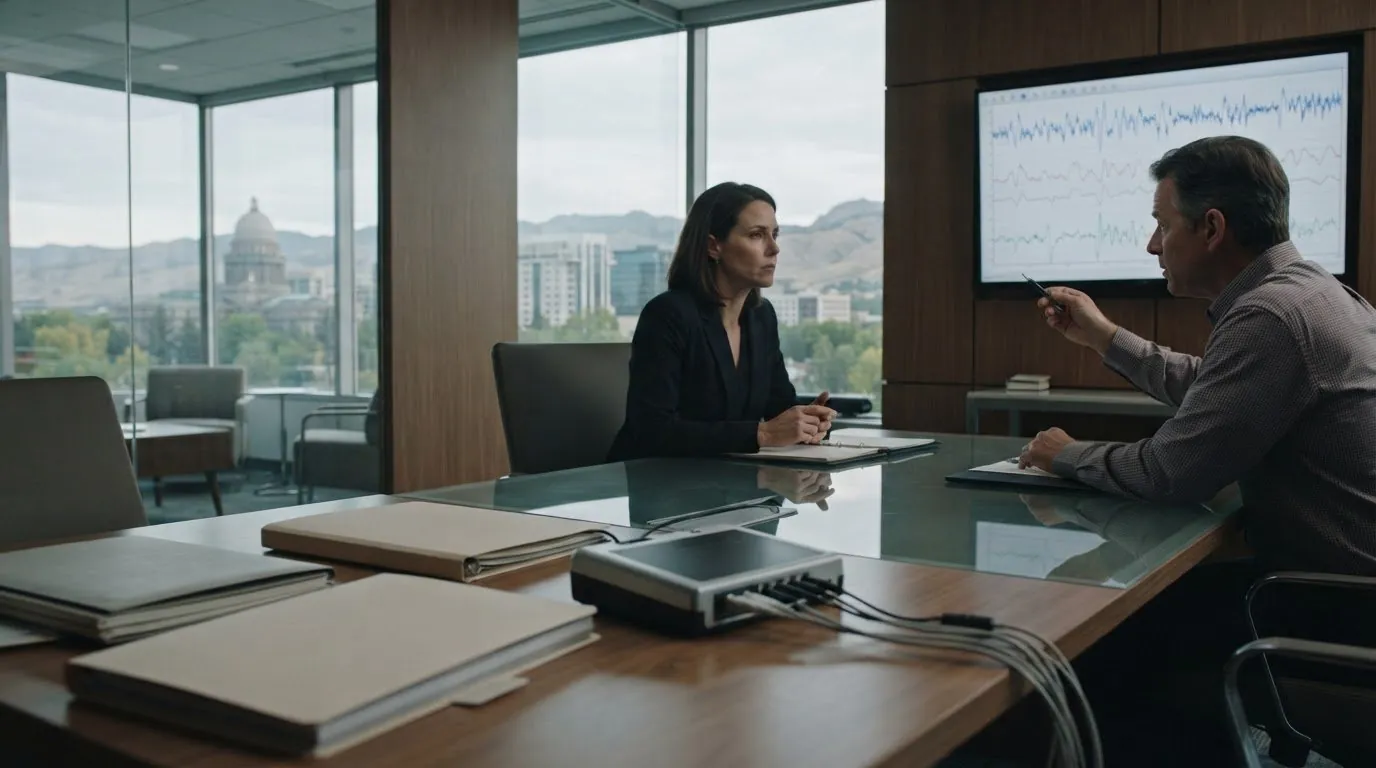
A polygraph can shape case planning long before anyone asks a judge to admit the result. For defense counsel, a pre-trial polygraph strategy for Idaho defense lawyers should begin with a clear objective, not an assumption that a favorable result will change the courtroom outcome. Idaho generally excludes polygraph results at trial unless all parties agree to their admission. Even outside court, a result does not guarantee exoneration, reduced charges, or negotiating leverage.
Counsel must weigh possible investigative or negotiation value against evidentiary risks, question design, timing, confidentiality, and discoverability. An examination may help inform next steps, but it should fit a deliberate case plan.
This article explains how to assess whether testing serves a defined purpose, prepare and coordinate with an examiner, and consider scope and timing. It also covers reports and sensitive information, including what counsel should review before an examination. The goal is a measured decision: proceed, gather more information first, or decide that an examination is not appropriate.
Key Takeaways
- Start with a defined investigative or case-planning objective, then decide whether an examination could advance it.
- A focused, clearly framed issue gives counsel and the examiner a workable basis for planning questions and timing.
- A sound pre-trial polygraph strategy for Idaho defense lawyers accounts for disclosure and evidentiary risks before anyone relies on a result.
- Coordinate the client, examiner, and relevant case materials deliberately, without coaching or influencing responses.
- Consult a Boise examiner about examination scope, logistics, and reporting, while leaving legal judgments to counsel.
Pre-trial polygraph strategy in Idaho: define the case objective first
A pre-trial examination may help counsel investigate a factual issue, but that does not mean a court will admit the result as evidence. For a pre-trial polygraph strategy for Idaho defense lawyers, start with a defined case objective, not a broad hope that a test will prove innocence. Counsel may consider whether an examination could help assess a disputed account, identify investigative leads, or inform attorney-client case planning.
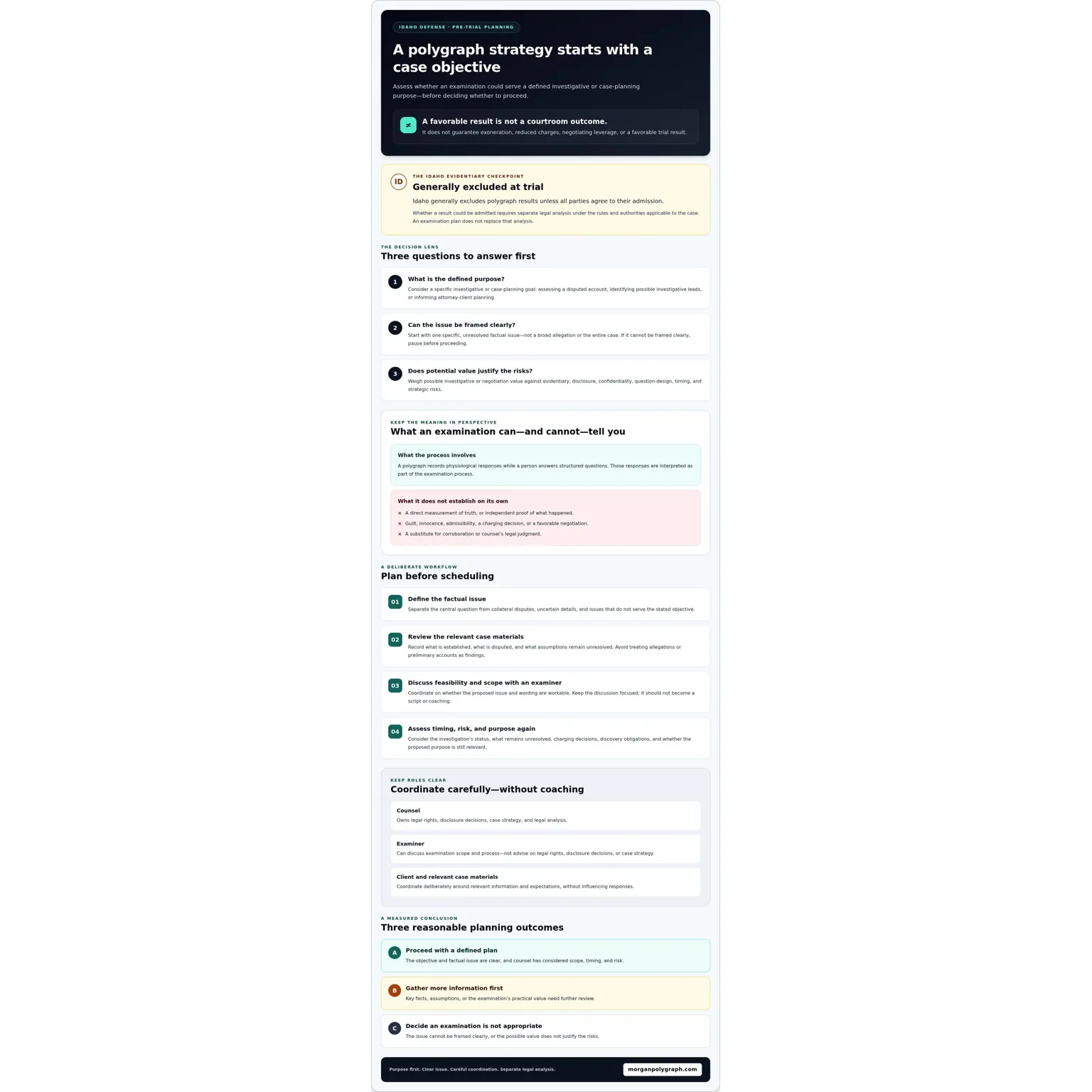
Legal strategy belongs to counsel. An examiner can discuss the examination’s scope and process, but cannot advise the client about legal rights, disclosure decisions, or case strategy. Results are not conclusive proof of truth, guilt, or innocence. They do not guarantee a charging decision, favorable negotiation, or trial outcome. Idaho admissibility questions require separate legal analysis under the rules and authorities that apply to the case.
When might counsel consider an examination?
Begin with one specific, unresolved factual issue. For example, counsel might consider whether testing could help assess a client’s account of a particular meeting, rather than put a broad allegation or the entire case to a test. Consider whether the account and available case information support focused questions, and whether the potential investigative value justifies procedural, disclosure, and strategic risks. If the issue cannot be framed clearly, pause before proceeding.
What can a pre-trial polygraph establish, and what can it not?
A polygraph examination records physiological responses while a person answers structured questions. Those responses are interpreted as part of the examination process; they are not a direct measurement of truth. The Polygraph overview provides background on the device, its debated scientific standing, and its use in legal contexts. A result does not independently establish what happened, determine guilt or innocence, or establish admissibility.
Before arranging testing, counsel can compare the proposed objective with the available evidence and decide what information, if any, would be useful to the defense. A result may raise questions for further investigation, but it should not replace corroboration or legal judgment. For background on the process, readers can review Morgan Polygraph’s complete polygraph examination guide. Counsel should assess whether an examination fits the facts and case strategy.
Build a defensible examination plan with clear questions and timing
A sound plan follows a sequence: identify the factual issue, review relevant case materials, consult an examiner about feasibility and scope, then decide whether to proceed. This keeps the examination tied to the defense’s purpose rather than letting scheduling or a hoped-for result drive the decision. The pre-trial polygraph strategy for Idaho defense lawyers should also account for the investigation’s status, charging decisions, discovery obligations, and the broader case plan.
Timing matters. An examination scheduled before key facts are reviewed may rely on assumptions that later change. Waiting, however, may affect whether the result can inform an investigative step or case decision. Counsel should consider what is known, what remains unresolved, and whether the examination’s purpose is still relevant. The Idaho Rules of Evidence provide the framework for state-court evidence questions, but counsel should verify the current rules and any controlling authority that applies. An examination plan is not a substitute for that legal analysis.
How should counsel define the examination issue?
Separate the central factual question from collateral disputes, uncertain details, and issues with no clear bearing on the case objective. Counsel and the examiner can discuss whether the proposed scope and wording are sufficiently clear for an examination. That discussion should not become a script or coaching. Record what is established, what is disputed, and what assumptions remain unresolved, without treating allegations or preliminary accounts as findings.
Broad or compound questions can combine multiple events or propositions, making it harder to understand what the examination addresses. A focused issue gives the process a defined boundary and makes its intended use easier to evaluate.
What should counsel coordinate before scheduling?
Before setting a date, address practical and communication details with the client and examiner. Confirm which records are relevant, what background information the examiner needs, what the client should expect, and who will receive any report. Discuss how results and related materials may be handled. Do not assume that a conversation, examination, or report is confidential or protected from disclosure. Counsel should assess those risks independently.
- Confirm the examination’s purpose and the facts it will address.
- Review relevant records and identify unresolved assumptions.
- Set expectations for logistics, report recipients, and communication.
- Reassess whether proceeding still fits the case plan before scheduling.
For general context on polygraph accuracy limitations, review Morgan Polygraph’s accuracy information. A preliminary discussion with a Boise examiner may clarify scope and logistics, while legal and disclosure decisions remain with counsel. Learn about Morgan Polygraph’s case examinations.
Evaluate Idaho admissibility, disclosure, and strategic risks before relying on results
An examination may provide investigative information without producing evidence a court will admit. Keep those questions separate. Idaho authorities have generally treated polygraph results as inadmissible absent an agreement by the parties, but counsel should verify the current rule, applicable procedural posture, and any relevant stipulation before relying on that general description. The pre-trial polygraph strategy for Idaho defense lawyers should account for both the potential case-planning value and the possibility that the result cannot be presented at trial.
Disclosure and privilege questions depend on the facts and how the examination is arranged. Before testing, counsel should assess consent, who may receive the report, what discovery obligations may apply, and whether communications or materials are protected. Do not assume that calling an examination confidential makes its results or related records undiscoverable. Those are legal questions for counsel, not promises an examiner can make.
What legal authorities should Idaho counsel check?
For an Idaho state case, verify the current Idaho Rules of Evidence, relevant Idaho appellate decisions, and any local procedural requirements. For a federal case, conduct a separate review of the Federal Rules of Evidence, controlling Ninth Circuit authority, and district procedures. The DOJ Criminal Resource Manual on Polygraphs offers federal background, including discussion of United States v. Scheffer, but it does not replace analysis of controlling authority or the specific court’s rules. Confirm citations and procedural context before making a strategic decision.
How can counsel weigh potential value against risk?
Assess what the examination could realistically add, then compare that potential benefit with the consequences of an unfavorable or inconclusive result, possible disclosure, and impeachment risks. A result might inform discussions with the prosecution even if it is not offered at trial, but it does not guarantee leverage or a particular negotiation outcome. Consider any possible use alongside the case’s evidentiary record and counsel’s broader objectives.
- Potential value: Could the process clarify an investigative lead or help counsel evaluate a disputed account?
- Potential exposure: Could the result, report, or related communication create disclosure or credibility concerns?
- Independent support: What corroborating evidence would be needed regardless of the examiner’s conclusion?
Use examiner input to understand scope and process, not as a substitute for legal analysis. A careful review may support proceeding, waiting, or deciding that an examination adds more risk than value.
Coordinate the client, examiner, and case file with a careful workflow
A consistent process helps everyone understand the examination’s purpose and limits. In a pre-trial polygraph strategy for Idaho defense lawyers, counsel guides legal decisions, the client decides whether to participate, and the examiner explains the examination process and technical scope. Clear roles reduce confusion without encouraging a client to rehearse answers or trying to influence responses.
Before scheduling, document the examination’s objective, the factual issue it will address, who will participate, what materials may be shared, and who is expected to receive the report. This helps keep the examination aligned with its agreed scope and makes report handling deliberate. Do not assume that a particular arrangement creates confidentiality or privilege; counsel should assess those questions for the case.
What should counsel and client clarify beforehand?
Explain the process in plain language, including its purpose, limitations, and possible outcomes. The client should understand that no result is guaranteed and that the examination does not replace legal advice. Review relevant records with the examiner as appropriate to clarify the defined issue, not to coach the client or suggest preferred responses. Confirm voluntary participation, consent, scheduling, and how counsel, client, and examiner will communicate before and after the examination.
How should counsel review the report?
Check that the report addresses the agreed issue and accurately describes the examination’s scope. If technical terms or conclusions are unclear, ask the examiner to explain their meaning and basis. Keep that explanation distinct from legal conclusions about credibility, admissibility, or case outcome. Counsel should also review the report’s intended recipients and handling in light of disclosure and case strategy.
- Before: Confirm the purpose, scope, participants, consent, relevant records, and communication plan.
- During coordination: Keep questions within the defined issue and avoid coaching or influencing responses.
- After: Review the report for scope and clarity, then make legal and strategic decisions independently.
When choosing a certified polygraph examiner, counsel can review relevant qualifications and ask how the examination and reporting process will be handled. Morgan Polygraph states that its examiners are nationally certified and court-recognized. Verify current credentials and what any recognition means before relying on those claims. To discuss criminal or civil case examination scope and logistics, contact Morgan Polygraph about case examinations. An examiner can clarify the process; legal advice and case decisions remain with counsel.
When to consult a Boise polygraph examiner about an Idaho defense case
A preliminary conversation can help counsel determine whether an examination is feasible, how its scope might be framed, and what the process involves. It should clarify examination logistics, not replace legal analysis or decide whether testing serves the client’s interests. A careful pre-trial polygraph strategy for Idaho defense lawyers keeps those roles distinct: counsel evaluates legal and strategic questions, while the examiner explains the examination service.
Morgan Polygraph is based in Boise and provides criminal and civil case polygraph examinations. The company prepares professional reports intended for legal proceedings, but that does not mean a court will accept a report or its conclusions. An examiner provides examination services, not legal advice, case representation, or a predicted result.
What can counsel ask during an initial examiner discussion?
Use the conversation to gather practical information before deciding whether to proceed. Ask about the examiner’s current qualifications and relevant case experience, examination procedures, and the format and contents of any report. Clarify consent, scheduling, fees, what case information may be requested, and how records and results are handled. Ask what confidentiality arrangements apply; do not assume the conversation or resulting materials are protected from disclosure.
If credentials or court-recognition claims are relevant, request specifics and verify them before relying on those claims. A preliminary discussion can clarify scope and logistics, but it cannot determine admissibility or guarantee a favorable finding.
What are the next steps if an examination appears appropriate?
Counsel should first decide whether testing aligns with the client’s interests and the case plan. If so, coordinate with the examiner to settle the issue, scope, timing, and communication plan before scheduling. Confirm who will receive the report and how any resulting information will be reviewed. The client should understand the process and its limitations, and participation should not be based on a promise about the outcome.
It may also be appropriate to decide against testing. Proceed only if counsel concludes that the examination’s potential role is clear and the client has had an opportunity to consider the process. The examiner can answer questions about procedures; legal advice and case decisions remain with counsel.
For counsel assessing whether an examination fits an Idaho defense matter, discuss a criminal or civil case polygraph with Morgan Polygraph. A discussion can focus on suitability and logistics without presuming that testing is the right next step.
Make the Next Decision With a Clear Case Objective
A sound pre-trial polygraph strategy for Idaho defense lawyers begins with a defined investigative purpose, not an assumption that a result will become courtroom evidence or determine the case. A focused issue, careful timing, and clear coordination with the client and examiner can help counsel assess whether an examination fits the defense plan. Admissibility, disclosure, and strategic consequences still require case-specific legal review.
Morgan Polygraph is based in Boise and provides criminal and civil case polygraph examinations, with professional reports intended for legal proceedings. The company states that its examiners are nationally certified and court-recognized; verify current credentials and the meaning of those claims. Examination services do not replace counsel’s legal advice or guarantee admissibility, exoneration, or a particular outcome.
If an examination may serve a defined purpose, discuss its scope and logistics with an examiner while keeping legal decisions with counsel. Discuss a criminal or civil case polygraph with Morgan Polygraph. A measured review can help counsel choose the next step, whether that means proceeding or deciding an examination is not appropriate.
Frequently Asked Questions
Are polygraph results admissible in Idaho courts?
Polygraph admissibility cannot be assumed in an Idaho case. Whether results may be offered depends on the case, court, applicable rules, and controlling authority. An examination may inform an investigation or counsel’s planning without becoming evidence offered at trial. Counsel should verify current Idaho statutes, rules, appellate decisions, and local procedures before relying on any proposed use. An examiner can explain the examination process but cannot determine admissibility.
Can an Idaho defense lawyer use a polygraph before charges are filed?
A defense lawyer may consider whether an examination could inform an investigation before charges are filed, but it will not necessarily prevent charges or change a prosecutor’s decision. Counsel should carefully assess timing, the client’s interests, case facts, and potential disclosure concerns. An examiner can explain procedures, scope, and logistics, but cannot advise on legal strategy or guarantee an effect on charging decisions or any later outcome.
Should a client take a polygraph before trial?
There is no universal answer about whether a client should take a polygraph before trial. Counsel should first assess the examination’s purpose, factual issue, possible investigative value, risks, the client’s readiness, and how results may be handled. Clients should get legal advice from their own attorney before deciding. An examiner can explain the process and its limitations, but cannot replace counsel’s advice or promise a particular result.
Can a polygraph result help with plea negotiations?
Counsel may consider whether examination information has investigative or negotiation relevance, even if the result is not offered at trial. Its value depends on the specific case and the decisions of the people involved. A result does not prove innocence, require a prosecutor to accept it, or guarantee a favorable resolution. Before communicating information, counsel should assess disclosure obligations, credibility concerns, and strategic risks, including how the result could be interpreted or challenged.
What should defense counsel ask a polygraph examiner before scheduling?
Ask about current credentials, relevant examination experience, methods, the proposed issue and scope, consent, preparation expectations, and report format. Clarify scheduling, confidentiality, who may receive the report, and how records and other information will be handled. Counsel should verify qualifications and any court-recognition claims rather than rely on a general description. An examiner should explain procedures, not promise admissibility or a favorable outcome.
Does a federal Idaho case follow the same polygraph rules as an Idaho state case?
Not necessarily. State and federal proceedings may involve different governing authorities, precedent, and court procedures. Counsel should separately verify the rules and controlling decisions that apply to the particular case, along with any court-specific requirements. Do not assume a state-court analysis resolves a federal evidentiary question, or vice versa. An examiner can discuss examination procedures, but legal analysis and decisions about admissibility belong to counsel.
Can a polygraph prove that a defendant is innocent?
No. A polygraph should not be treated as conclusive proof of innocence or guilt. An examination produces results that require careful interpretation; those results do not replace corroborating evidence, a complete investigation, or legal analysis. A result may be considered as one part of a broader case assessment, but it cannot guarantee exoneration or another outcome. Discuss case-specific decisions with defense counsel and technical questions with a qualified examiner.