
When facing a situation that demands absolute truth, the topic of lie detectors often brings more questions than answers. You may have seen dramatic portrayals in movies or read conflicting reports online, leaving you to wonder if the results can be trusted for a serious matter. Will natural nervousness be mistaken for deception? How can a machine possibly know if you are lying? These are valid and important concerns, and they all lead to one fundamental question: are polygraphs accurate?
In this article, we provide a clear, professional answer, moving beyond the myths to deliver a factual look at polygraph reliability. We will explore the established science and methodology behind truth verification, examine the statistics that define its success, and discuss the rigorous professional standards that certified examiners must follow. Most importantly, you will learn why the examiner’s expertise is the single most critical factor in an accurate test, empowering you with the confidence and clarity you need to make an informed decision.
How a Polygraph Works: Measuring the Body’s Response to Deception
A common question we encounter is, “are polygraphs accurate?” To answer this, one must first understand what the test actually measures. A polygraph is not a mystical “lie detector.” Instead, it is a sophisticated diagnostic instrument that records involuntary physiological changes in the human body. The core principle is rooted in the “fight-or-flight” response-a primitive, automatic reaction to a perceived threat. For many individuals, the act of deception about a significant event triggers this stress response.
The polygraph instrument meticulously charts these physiological shifts, providing a certified examiner with data to analyze. It does not detect a “lie” itself, but rather the body’s reaction to the stress of attempting deception. To learn more about the fundamentals of this truth verification tool, a comprehensive overview of What is a Polygraph? provides valuable historical and procedural context. Ultimately, the process is a methodical assessment of a person’s truthfulness based on scientific data.
What the Polygraph Machine Actually Records
The polygraph instrument uses several medical-grade components to simultaneously monitor and record specific bodily functions. A professional examination will typically include:
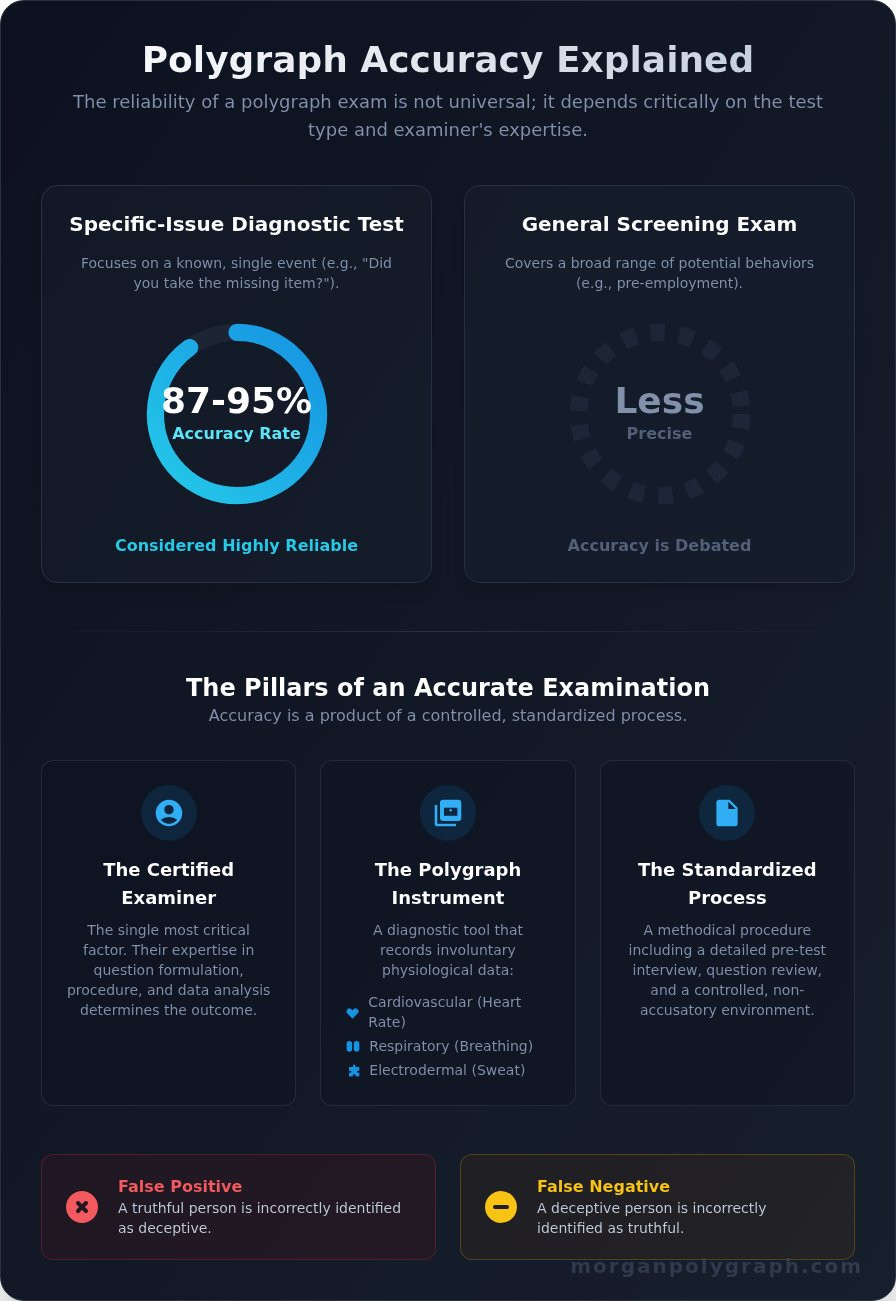
- Cardiovascular Activity: A standard blood pressure cuff is placed on the arm to continuously track changes in heart rate and blood pressure.
- Respiratory Activity: Two flexible tubes, called pneumographs, are placed around the chest and abdomen to measure the rate and depth of breathing.
- Electrodermal Activity: Small sensors are attached to the fingertips to record changes in sweat gland activity, also known as galvanic skin response.
The Central Role of the Certified Examiner
The polygraph instrument is merely a tool; its effectiveness is entirely dependent on the expertise of the person operating it. A certified and experienced examiner is the most critical component of a valid polygraph test. This professional is highly trained to design specific, non-biased questions, conduct the examination in a controlled environment, and accurately interpret the complex physiological data recorded by the machine. Their expertise ensures the entire process is conducted in a fair, ethical, and scientifically sound manner.
The Pre-Test Interview: Setting the Stage for Accuracy
Before any sensors are attached, a crucial pre-test interview takes place. This phase is essential for the overall accuracy of the examination. The examiner explains the process in detail, discusses the issue at hand, and formulates the specific questions that will be asked. Every question is reviewed with the subject until there is complete and mutual understanding of its exact wording. This methodical approach helps the subject acclimate to the environment, reduces anxiety unrelated to deception, and establishes a baseline for their physiological responses.
The Great Debate: What Studies Reveal About Polygraph Accuracy
The question of polygraph validity is at the heart of a long-standing debate among scientists, legal professionals, and the public. A common misconception is that a polygraph has a single, universal accuracy rate. In reality, when people ask are polygraphs accurate, the answer depends heavily on the type of test being administered and the expertise of the examiner conducting it. The purpose of the examination-whether it’s to investigate a specific incident or to screen a potential employee-is the most significant factor influencing its reliability.
Understanding the Numbers: How Accurate Are Polygraphs?
Not all polygraph examinations are created equal. The most reliable format is the specific-issue diagnostic test, which focuses on a known, single event (e.g., “Did you steal the missing money?”). Decades of research validated by organizations like the American Polygraph Association (APA) indicate that when conducted by a certified professional following proper procedures, these tests achieve accuracy rates between 87-95%. However, broader screening exams, such as those used for pre-employment, have a more debated track record. These tests cover a range of potential behaviors and are considered less precise, a view supported by a critical National Academies of Sciences report on their use in security screening.
Why is Polygraph Evidence Often Inadmissible in Court?
The inadmissibility of polygraph results in most courtrooms stems from the strict standards for scientific evidence, such as the Daubert Standard. Courts are concerned about the potential for error, the influence of examiner bias, and the lack of universal scientific consensus on the test’s infallibility. A judge must weigh whether the evidence’s scientific value outweighs its potential to prejudice a jury. Despite these legal hurdles, law enforcement agencies, government bodies, and private citizens widely use the polygraph as a powerful and effective investigative tool to narrow down suspects, verify statements, and uncover the truth outside of the courtroom.
False Positives vs. False Negatives
In any diagnostic test, there is a possibility of error. In polygraphy, these errors fall into two categories. A certified examiner uses validated techniques and scoring models specifically designed to protect the innocent and minimize the risk of both outcomes.
- False Positive: This occurs when a truthful individual is incorrectly reported as being deceptive. This is a primary concern in screening tests, where the questions are broader.
- False Negative: This occurs when a deceptive individual is incorrectly reported as being truthful. This is the more serious error in specific-issue criminal investigations.
Key Factors That Ensure a Highly Accurate Polygraph Examination
A common misconception is that a polygraph machine is a “lie detector” in itself. In reality, the instrument is a sophisticated medical device that records physiological data. The accuracy of a polygraph examination is not inherent to the machine; it is a direct product of the controlled, standardized process in which it is used. When people ask, “are polygraphs accurate?”, the answer depends almost entirely on whether the examination adheres to established best practices. A valid test is a methodical procedure, not a simple Q&A session.
The Examiner’s Certification and Training
The single most important factor in a reliable polygraph test is the examiner. A certified professional is not just an operator but a highly trained specialist. Credible examiners are graduates of polygraph schools accredited by leading organizations like the American Polygraph Association (APA). They maintain memberships in professional bodies, such as the APA or ASTM International, and are required to complete continuous education to stay current on validated techniques and ethical standards.
Use of Validated Testing Techniques
Professional examiners do not use random questions; they employ scientifically validated methods. The most common is the Control Question Test (CQT). This technique compares a subject’s physiological responses to relevant questions (e.g., “Did you steal the money from the safe?”) against their responses to control questions (e.g., “Have you ever told a lie to get out of trouble?”). This methodology, which is central to most modern scientific research on polygraph accuracy, is designed to isolate physiological reactions specific to deception from general anxiety about the test itself.
Proper Question Formulation is Non-Negotiable
The way questions are worded is critical. To yield clear, interpretable data, every question must be direct, unambiguous, and address a single issue. Vague, accusatory, or complex questions can confuse the subject or elicit an emotional response unrelated to deception, rendering the results unreliable. Before the test begins, a professional examiner will review every question with the subject to ensure they are fully understood and can be answered with a simple “yes” or “no.”
The Test Environment and Subject’s Condition
A polygraph exam must be conducted in a controlled setting to produce valid results. The environment should be quiet, private, and free from distractions that could interfere with the subject’s focus. Furthermore, the examiner has a professional duty to ensure the subject is physically and mentally fit for the examination. Factors that can compromise the test’s validity and lead to its postponement include:
- Severe lack of sleep or exhaustion
- Intoxication or being under the influence of drugs
- Significant physical pain or illness
- Extreme emotional distress unrelated to the issue being tested
Ensuring these conditions are met is a hallmark of a professional and ethical examination.
Common Myths vs. Reality: Debunking Polygraph Misconceptions
Hollywood has painted a dramatic and often misleading picture of polygraph examinations. These cinematic portrayals have created persistent myths that cause unnecessary anxiety and skepticism. Addressing these misconceptions is essential for transparency and helps truthful examinees approach the process with confidence. When people ask, “are polygraphs accurate?”, they are often basing their question on these fictional scenarios. A professional, certified examiner understands the reality of the process and is trained to ensure a fair and valid test.
Myth: Being Nervous Will Automatically Make You Fail
The single most common fear is that general anxiety will be misinterpreted as deception. The reality is that every person who takes a polygraph test is nervous, and examiners not only expect this but account for it. The initial phase of the examination is dedicated to establishing your unique physiological baseline while answering neutral questions. The analysis focuses on the difference in your body’s response between control questions and the relevant questions, not your overall level of nervousness.
Myth: You Can Easily ‘Beat’ the Test with Countermeasures
Online sources often suggest tactics like biting your tongue or placing a tack in your shoe to manipulate the results. These are known as countermeasures, and expert examiners are extensively trained to detect them. Such actions create specific, unnatural patterns in the physiological data that a professional can easily identify. Attempting to deceive the instrument often backfires, as the use of countermeasures is itself considered indicative of deception and undermines the credibility of the examinee.
Myth: The Test is a Fishing Expedition with Surprise Questions
A professional polygraph examination is a highly structured and transparent process, not an interrogation designed to trap you with surprise questions. Before the data collection begins, the examiner will review every single question with you, word for word, to ensure you understand them completely. There are no tricks. The test’s accuracy relies on measuring your involuntary physiological reactions to questions you are already familiar with, making the process fair and methodical.
Understanding the truth behind these myths is a key part of appreciating how a professional examination works. For a confidential consultation about the truth verification process, please contact a certified expert at Morgan Polygraph.
When to Rely on a Polygraph: Real-World Applications
While the broader debate continues, the practical value of polygraph testing is demonstrated daily in high-stakes situations where truth verification is critical. A professionally administered polygraph serves as a powerful tool to provide clarity, reduce uncertainty, and guide important decisions. The results are not meant to be a sole determinant of guilt or innocence, but rather a vital piece of information that can inform legal strategy, facilitate personal resolutions, or validate an individual’s integrity.
The key to a meaningful outcome is understanding its strategic application. The question often isn’t just are polygraphs accurate in a vacuum, but how they can be used effectively in a specific context by a qualified professional.
Legal and Criminal Defense Cases
In the legal arena, polygraph examinations provide critical leverage and direction. Attorneys frequently use confidential tests to verify a client’s plea or statement, allowing them to build a defense strategy on a foundation of truth. For investigators, polygraphs are an invaluable tool for:
- Narrowing a field of suspects to focus resources efficiently.
- Verifying information from witnesses or informants.
- Assisting in Post-Conviction Sex Offender Testing (PCSOT) to monitor compliance for probation and parole officers.
Private and Relationship Issues
When trust has been broken, a polygraph can offer a neutral, fact-based path toward resolution. For couples facing damaging accusations of infidelity, a test can either confirm suspicions or, just as importantly, clear an innocent partner and provide the basis for rebuilding trust. It is also highly effective in resolving sensitive family disputes involving theft, substance abuse, or other personal matters where a definitive answer is needed to move forward.
Government and Law Enforcement Screening
Ensuring the integrity of individuals in positions of public trust is paramount. Federal agencies, police departments, and fire departments across the country rely on pre-employment polygraph screening to vet candidates. This process helps ensure applicants are honest about their background, including any undisclosed criminal history, drug use, or other activities that would disqualify them from holding a sensitive position.
Ultimately, the reliability of any test depends on the skill of the person administering it. Choosing a certified, court-recognized expert is the most important step you can take. To understand how a professional examination can help in your situation, we invite you to schedule a confidential consultation to discuss your specific needs.
The Final Verdict: Accuracy Hinges on Expertise
As we’ve explored, the reliability of a polygraph is not a simple matter of a machine detecting lies. The answer to the question, are polygraphs accurate, depends critically on the examiner’s expertise, the use of validated techniques, and a properly structured examination process. While myths often cloud the issue, the reality is that a professionally administered polygraph is a powerful and scientifically-backed tool for truth verification, capable of achieving exceptionally high accuracy rates when all critical factors are aligned.
When you require clarity and confidentiality, the choice of examiner makes all the difference. At Morgan Polygraph, our Nationally Certified & Court-Recognized Examiners bring over 40 years of combined professional experience to every consultation. By utilizing state-of-the-art, validated polygraph techniques, we provide the highest standard of accuracy and professionalism for your most sensitive matters.
If you are facing a situation that requires definitive answers, we are here to provide expert guidance. Contact Morgan Polygraph for a Professional and Confidential Consultation. Let us help you find the clarity and peace of mind you deserve.
Frequently Asked Questions About Polygraph Accuracy
What is the specific accuracy rate of a modern polygraph test?
Studies validated by organizations like the American Polygraph Association indicate that a professionally administered polygraph test has an accuracy rate between 85% and 95%. This reliability is contingent upon the use of validated techniques by a certified, expert examiner with modern, calibrated equipment. The specific question format and the complexity of the issue being investigated are also critical factors that can influence the outcome and overall accuracy of the examination.
Can a truthful person fail a polygraph test? What causes a false positive?
Yes, it is possible for a truthful person to fail a polygraph, which is known as a false positive. This can occur if an individual experiences extreme anxiety, fear, or other intense emotions that produce physiological responses similar to those of deception. Certain medical conditions or medications can also affect the readings. A skilled examiner is trained to account for these factors, but they underscore the importance of a controlled and professional testing environment to ensure an accurate result.
Are polygraph results admissible in court in Idaho?
In Idaho, polygraph results are generally not admissible as evidence in court proceedings. However, there is a key exception: results may be admitted if both the prosecution and the defense attorneys agree to their admission prior to the test being conducted. This formal agreement is called a stipulation. Without this mutual consent, the test results are primarily used as an investigative tool for law enforcement or for private, informational purposes rather than as direct evidence in a trial.
How can I be sure my examiner is qualified and using accurate methods?
To confirm an examiner’s qualifications, you should verify they are a graduate of a polygraph school accredited by the American Polygraph Association (APA). Ask about their state license, if applicable, and membership in professional organizations that mandate strict ethical codes and continuing education. The question of are polygraphs accurate is often directly tied to the skill and integrity of the examiner. A professional will readily provide their credentials for your review.
Does a polygraph hurt, and how long does the entire process take?
A polygraph examination is not a painful process. The components, including a standard blood pressure cuff on your arm and small sensors on your fingertips and chest, will feel snug but are designed to be non-invasive and should not cause any pain. The entire process is thorough and typically lasts between 90 minutes and three hours. This includes the pre-test interview, the actual in-test data collection, and a post-test review of the results with the examiner.
What is the difference between a lie detector test for infidelity versus a criminal case?
The primary difference lies in the scope, structure, and legal context. An infidelity test is a confidential, private matter focused on very specific, personal questions about a relationship. A criminal polygraph is structured around the precise legal elements of a potential crime. These tests must adhere to much stricter procedural and evidentiary standards, as they are part of a formal investigation and require meticulous documentation and question formulation.