

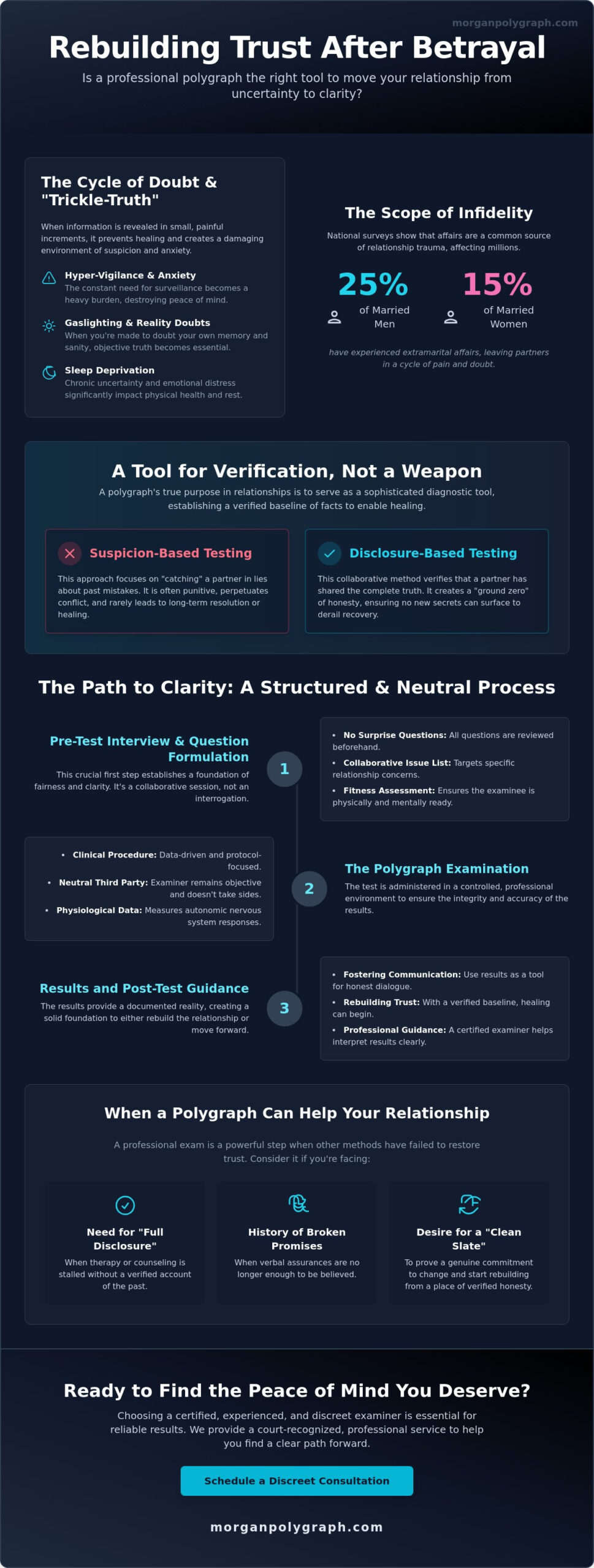
What if the real purpose of a lie detector isn’t to catch your partner in a betrayal, but to finally give you the evidence you need to stop looking for one? If you find yourself asking, “should we get a polygraph for our relationship issues,” you’re likely exhausted by the weight of the unknown. You aren’t alone in this struggle. National surveys indicate that 15 percent of married women and 25 percent of married men have experienced extramarital affairs, often leaving their partners trapped in a cycle of trickle-truth and hyper-vigilance. When gaslighting makes you doubt your own reality, the constant need for surveillance becomes a heavy burden that prevents any real healing.
We believe that rebuilding a foundation of honesty requires more than just words; it requires a verified baseline of facts. You may wonder if a lie detector will actually help you move past the pain or simply make things worse. This guide will help you discover if a professional polygraph is the right tool to help your relationship recover from betrayal and establish a clear path forward. We’ll explore how these examinations work as diagnostic tools for full disclosure, the role they play in modern therapeutic settings, and what you can expect from a process designed to provide the peace of mind you deserve.
Key Takeaways
- Understand how a professional examination can halt the damaging “trickle-truth” effect and establish a verified baseline for emotional recovery.
- Evaluate if you should we get a polygraph for our relationship issues by learning how it functions as a diagnostic tool rather than a punitive measure.
- Learn the step-by-step process of a fidelity exam, including the critical role of the pre-test interview and the preparation of a formal disclosure letter.
- Gain clarity on the technical accuracy of modern polygraphy and why choosing a certified, experienced examiner is essential for reliable results.
- Discover how to use the examination results to foster honest communication and rebuild trust under the guidance of a discreet, court-recognized professional.
Relationship Issues and the Search for Truth: Is a Polygraph Right for You?
The weight of uncertainty is often more damaging to a partnership than the truth itself. When a partner suspects betrayal, the psychological impact of “trickle-truth” can lead to chronic anxiety, hyper-vigilance, and significant sleep deprivation. This phenomenon occurs when information is revealed in small, painful increments over weeks or months, preventing the betrayed partner from ever feeling safe. Traditional questioning often fails in these high-stakes disputes because the fear of consequences or the habit of self-protection prevents full transparency. This cycle of doubt is why many couples eventually ask, “should we get a polygraph for our relationship issues?”
We define the Polygraph not as a weapon to “catch” someone, but as a sophisticated diagnostic tool for verification. It measures physiological indicators that are tied to the autonomic nervous system, providing a data-driven foundation that verbal promises cannot achieve. Assessing your relationship’s readiness for this process is essential. It requires a mutual commitment to total honesty and a shared goal of moving past the trauma of deception.
The Role of Verification in Rebuilding Trust
Establishing a “ground zero” is the first step toward genuine recovery. Many couples find themselves stuck in suspicion-based testing, where the focus is solely on uncovering past mistakes. However, the most effective use of our services is disclosure-based testing. This process verifies that a partner has shared the complete truth, ensuring no hidden secrets remain to surface later. Professional infidelity tests are becoming a standard part of recovery because they provide a verified baseline. This allows both individuals to stop looking backward and begin the difficult work of emotional reconstruction. When you decide “should we get a polygraph for our relationship issues,” you are choosing to replace ambiguity with a clear, documented reality.
Signs Your Relationship May Benefit from a Professional Exam
Certain patterns indicate that a formal truth-seeking process is necessary to save a relationship. If persistent gaslighting has made you doubt your own memory or sanity, an objective examination can restore your sense of reality. Other common indicators include:
- The need for a “Full Disclosure” as a prerequisite for continuing therapeutic counseling.
- A history of broken promises that has made verbal assurances feel meaningless.
- The desire for a “clean slate” where one partner can prove their commitment to change through verified honesty.
A professional exam provides the clarity needed to end the constant cycle of questioning. It offers a structured environment where the truth is prioritized above all else, helping you decide if the foundation of your relationship can be salvaged.
The Infidelity Polygraph Process: What to Expect During the Exam
Entering a professional office for a relationship examination can be a daunting experience for any couple. It’s helpful to understand that this isn’t an interrogation; it’s a structured, clinical procedure. In our Boise office, the examiner acts as a neutral third party, remaining focused on data and protocol rather than taking sides. This professional distance is essential to maintaining the integrity of the results. This controlled environment is designed to provide objective clarity when you’re still weighing the decision, “should we get a polygraph for our relationship issues.”
The Pre-Test Interview and Question Formulation
The process begins with a comprehensive pre-test interview, which typically lasts longer than the actual testing phase. During this time, we establish clear expectations. We don’t use “surprise” questions in relationship testing. Every inquiry is reviewed with the examinee beforehand to ensure they fully understand the language and can provide a binary “yes” or “no” response. We collaborate on formulating an issue list that targets the specific concerns of the relationship while maintaining scientific validity. We also assess the examinee’s physical and mental state to ensure they are fit for the test. Factors like severe sleep deprivation or certain health conditions must be accounted for to ensure the data is reliable.
Data Collection and the Science of Detection
Once the questions are finalized, we begin the data collection phase. This involves monitoring three primary physiological systems: respiratory activity through chest sensors, cardiovascular activity via a blood pressure cuff, and electrodermal activity through sensors on the fingertips. Modern technology is central to our operations, utilizing high-resolution instrumentation that records these markers with precision. This data-driven approach helps remove examiner bias from the initial data set. You can learn more about how a polygraph test works in a clinical environment through our detailed guide. While there are varying opinions on the accuracy of polygraph tests, our commitment to using validated protocols and state-of-the-art equipment ensures we provide the most accurate assessment possible.
This methodical approach is designed to respect the gravity of your situation. It provides a level of objectivity that is impossible to achieve through standard conversation or heated arguments. If you feel that a structured, professional environment is necessary to find the truth, you can contact our team to discuss how we can assist you in moving forward.
Accuracy, Myths, and the Ethics of Relationship Lie Detector Tests
Misconceptions about the reliability of truth-verification tools often stem from outdated pop-culture tropes rather than modern forensic standards. When couples ask, “should we get a polygraph for our relationship issues,” they’re usually looking for a definitive answer in a sea of conflicting stories. It’s vital to understand that a professional examination is a data-driven process, not a “coin flip” or a psychological game. The polygraph examination process relies on strict standardized protocols that have been refined over decades to provide objective results.
One of the most persistent myths involves the idea that an examinee can “beat” the test using physical maneuvers, such as biting their tongue or placing a tack in their shoe. Modern instrumentation includes sophisticated motion sensors that detect even the slightest muscle contractions or shifts in body weight. These countermeasures are easily identified by a seasoned examiner, often resulting in a finding of purposeful non-cooperation. Choosing a certified, court-recognized professional is non-negotiable because they possess the specialized training to distinguish between genuine physiological stress and attempted manipulation.
Understanding Accuracy and Reliability
Accuracy in polygraphy is often cited at 90 percent or higher for specific-issue examinations. This high degree of reliability applies specifically to tests focused on a single, well-defined event rather than broad, general screenings. When asking are polygraphs accurate, it’s important to recognize that the examiner’s expertise is the most critical variable. We minimize “inconclusive” results by ensuring the examinee is physically capable of being tested and by formulating clear, unambiguous questions. You should be wary of any service advertised for under $400, as this often indicates a lack of certification or the use of substandard equipment that can lead to inaccurate findings.
The Ethics of Private Testing
Our commitment to ethics ensures that every client is treated with the utmost compassion and respect. We maintain strict confidentiality and discretion, understanding that relationship issues are deeply sensitive family matters. Every examinee is afforded a “Polygraph Bill of Rights,” which includes the right to a professional environment and the right to know every question before the test begins. We firmly refuse to conduct examinations designed to harass, abuse, or intimidate a partner. A professional exam should serve as a bridge to the truth, not a tool for further emotional damage. This ethical framework protects the integrity of the results and the dignity of both individuals involved in the process.
Guidelines for Success: How to Use a Polygraph as a Tool for Healing
Success in truth-verification depends as much on the preparation as it does on the technology. When a couple decides “should we get a polygraph for our relationship issues,” they must view the event as a shared step toward recovery. This isn’t a solitary burden for the examinee; it’s a structured path for the partnership to regain its footing. A vital component of a successful examination is the formal disclosure letter. This document, prepared by the partner before the appointment, outlines all relevant facts and admissions. It serves as the definitive reference point for the exam. By documenting these details in advance, you eliminate the risk of miscommunication or memory lapses during the session.
Preparation for the Couple
Both individuals must agree on the “Scope of Inquiry” before arriving at our office. This ensures the examination remains focused on the most critical issues, providing the clarity needed to move forward. Managing the anxiety of the test day is easier when both partners are committed to the process rather than just fixating on a specific result. Clear communication regarding the logistics and expectations helps maintain a professional, calm atmosphere. We recommend following these steps to ensure a productive environment:
- Finalize the list of concerns at least 48 hours before the appointment.
- Ensure the examinee gets adequate rest and maintains their normal routine.
- Agree that the examiner’s role is to provide objective data, not to mediate the conflict.
Post-Test: Moving Forward with the Truth
Interpreting the results requires a calm and methodical approach. Once the examiner provides the final report, it should be treated as a clinical finding rather than an emotional verdict. For many, this report acts as a catalyst for deeper specialized assessments. If the issues involve complex behavioral patterns, the results can be integrated into a psychosexual evaluation to provide a more comprehensive view of the individual’s history and risk factors. This data-driven approach allows you to share verified information with your therapist or counselor, ensuring your recovery sessions are based on facts rather than speculation.
Healing begins when the constant questioning stops. Use the examination results to set a firm “no-more-lies” boundary. This means that once the truth is established, both partners agree to focus on the future rather than re-litigating the past. Avoid the common trap of requesting “re-tests” for the same issues, as this often indicates a deeper struggle with trust that needs to be addressed in a therapeutic setting. Establishing this verified baseline is the most effective way to stop the cycle of hyper-vigilance and start the process of rebuilding. To begin this journey and establish a verified baseline for your recovery, you can schedule a confidential consultation with our experienced team.
Choosing a Discreet Professional: Why Morgan Polygraph in Boise is the Trusted Choice
Selecting an examiner is a decision that requires careful consideration of both technical skill and professional ethics. When a couple concludes that “should we get a polygraph for our relationship issues” is the right question to ask, they need an environment that respects their vulnerability while providing clinical precision. Morgan Polygraph has spent decades handling sensitive fidelity cases with a focus on discretion and accuracy. Our Boise facility is designed to offer a neutral, professional setting where couples can find the clarity they need to move forward. This clinical atmosphere helps soften the stress of the situation, ensuring both parties feel they’re in capable and trustworthy hands.
Expertise You Can Trust in Idaho
Our lead practitioner is a highly decorated expert whose credentials and published works are central to our brand’s methodology. We maintain active standing with the American Polygraph Association, ensuring that every examination follows the most rigorous national standards for forensic truth detection. Having a local, Boise-based office allows for convenient, face-to-face consultations, which is often a preferred step for couples dealing with high-stakes emotional issues. We don’t rely on outdated techniques; instead, we integrate the latest data-driven detection technology to provide results that are both reliable and court-recognized. This unique blend of traditional experience and futuristic innovation ensures our clients receive the most accurate assessment possible.
The Morgan Polygraph Approach to Relationship Issues
We understand that the individuals who walk through our doors are often in a state of significant emotional distress. Our approach is defined by a commitment to compassion and respect, ensuring that the testing process remains non-judgmental for all couples. We don’t just provide a “pass” or “fail” result; we deliver clear, professional reporting that serves as a useful tool in various contexts. These reports are frequently utilized by local attorneys and therapists to help their clients navigate the complex aftermath of betrayal. By providing a verified baseline of truth, we help couples stop the cycle of suspicion and begin a more productive dialogue.
If you’re ready to stop the constant questioning and establish a foundation of honesty, our team is prepared to assist you. Our methodical and organized process ensures that your sensitive issues are handled with the utmost confidentiality and academic gravitas. Contact Morgan Polygraph today to schedule a confidential consultation and learn how a professional examination can provide the peace of mind necessary for your relationship recovery.
Establish Clarity and Rebuild Your Foundation
Choosing to confront the unknown is the first step toward reclaiming your peace of mind. A professional examination serves as a vital diagnostic tool that replaces the pain of trickle-truth with a verified baseline of facts. By utilizing standardized protocols and advanced technology, you can move past the cycle of hyper-vigilance and start focusing on the future of your partnership. When you decide should we get a polygraph for our relationship issues, you’re choosing to invest in a process that prioritizes honesty above all else.
At Morgan Polygraph, our Nationally Certified Examiners provide the Court-Recognized Expertise necessary to handle sensitive fidelity cases with the highest level of precision. We operate from a discreet State Street location in Boise, ensuring your privacy is protected throughout every step of the process. Don’t let uncertainty dictate your reality any longer. Schedule a Confidential Consultation in Boise today to begin your journey toward a transparent and honest recovery. You deserve the clarity needed to heal and move forward with confidence.
Frequently Asked Questions
Can a polygraph test be used in a divorce or custody case in Idaho?
Admissibility in Idaho courts is strictly limited by specific legal regulations. According to the Idaho Administrative Code, polygraph results aren’t admissible as evidence unless all parties involved in the case stipulate to their admissibility beforehand. While these examinations are powerful tools for personal verification and rebuilding trust, they don’t carry automatic legal weight in family law proceedings without a formal agreement between all legal counsels.
What happens if my partner refuses to take the lie detector test?
Voluntary participation is a mandatory requirement for any professional examination we conduct. We don’t perform tests on individuals who are unwilling or under extreme duress, as the results would lack scientific and ethical integrity. If a partner refuses, it’s often a signal to pause and discuss the underlying trust issues within a therapeutic setting. A refusal is a personal boundary that we respect as neutral, third-party professionals.
Can anxiety or a ‘guilty conscience’ cause a false positive result?
General anxiety doesn’t typically lead to a false positive because our process includes a detailed pre-test phase to establish a baseline. We measure specific autonomic nervous system responses that differ from situational nervousness or a racing heart. Our instrumentation is designed to isolate the physiological shifts that occur when someone is being deceptive about a specific issue, ensuring that a “guilty conscience” about unrelated matters doesn’t skew the data.
How much does a relationship polygraph test cost in Boise?
The cost of an examination depends on the complexity of the case and the specific issues that need to be verified. Because relationship cases are highly sensitive and require personalized question formulation, we don’t offer flat-rate pricing. We provide a free initial phone consultation to discuss your situation and offer a precise quote based on your needs. We require full payment at the time of service and accept major credit cards for your convenience.
How long does a typical fidelity examination take to complete?
A comprehensive fidelity examination generally takes between two and four hours to complete. This isn’t just time spent on the sensors; it includes a thorough pre-test interview and a collaborative review of the questions. We take the time necessary to ensure the examinee is physically and mentally fit for the test. Rushing the process can compromise the accuracy of the physiological data collection, so we maintain a methodical pace.
What if the results come back as ‘inconclusive’?
An inconclusive result occurs when the physiological data doesn’t provide a clear enough pattern for a definitive “truthful” or “deceptive” finding. This can happen due to various factors, such as physical exhaustion, certain medications, or inconsistent breathing during the test. If your results are inconclusive, we’ll provide a detailed explanation of the likely causes and help you determine if a follow-up session at a later date is the best path forward.
Do I get to see the questions before my partner takes the test?
Yes, we believe that transparency is essential for a successful relationship examination. Every question is reviewed with the examinee before the sensors are even attached to ensure there’s no confusion or ambiguity. We encourage couples to agree on the specific list of concerns beforehand. This collaborative approach ensures the test focuses on the most critical issues while maintaining a respectful and professional environment for both individuals involved.
Should we do a polygraph before or after starting couples therapy?
Many couples find that establishing a verified baseline of truth is most effective before starting intensive therapy. It’s difficult to make progress in counseling when one partner is still operating under the “trickle-truth” effect. Having the facts upfront allows you to focus your therapy sessions on healing rather than investigating. This clarity is often the deciding factor when couples ask, “should we get a polygraph for our relationship issues” to save their partnership.