

Most couples assume that introducing a polygraph into a relationship is the final admission of defeat. However, when you’re trapped in a cycle of circular arguments and the exhausting detective work of verifying your spouse’s every move, the traditional path to healing often feels out of reach. You’re likely tired of the constant fear and the soul-crushing weight of wondering if you’ll ever know the full story.
We understand that you need a clear baseline of truth before you can even consider the work of reconciliation. This guide explains how a professional lie detector test to save a marriage serves as a clinical diagnostic tool rather than a weapon. By utilizing specialized methodology that the American Polygraph Association cites as having an accuracy rate between 85 and 95 percent, you can stop the cycle of deception and establish a firm foundation for reconstruction. We’ll examine how this process works, the importance of choosing a credentialed examiner, and how to use these objective results to finally move toward genuine intimacy and peace.
Key Takeaways
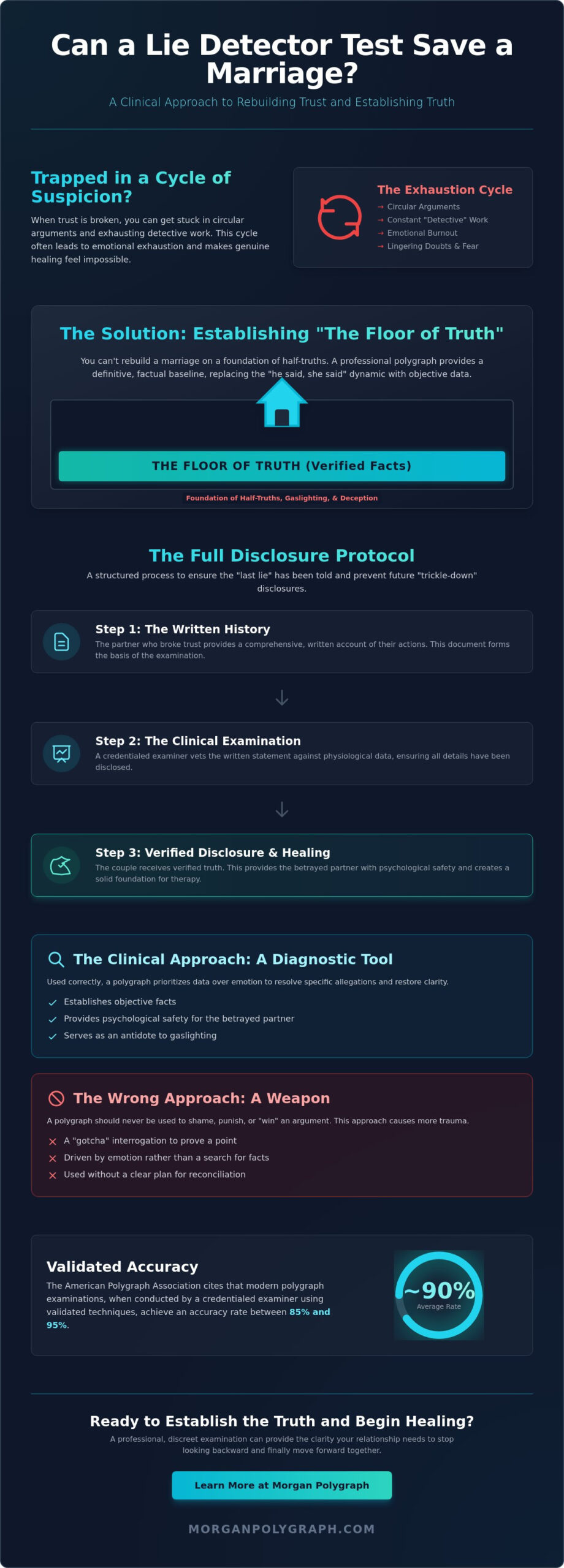
- Learn how a polygraph establishes a “Floor of Truth,” providing the necessary factual baseline to move beyond circular arguments and begin the healing process.
- Discover the Full Disclosure protocol, a structured method where a professional examiner verifies a written relationship history to eliminate lingering doubts.
- Understand the strategic importance of using a lie detector test to save a marriage as a clinical diagnostic tool rather than a means of winning an argument.
- Find out how to properly integrate a polygraph examination into your reconciliation plan by identifying specific targets and consulting with your existing support network.
- Explore the professional standards and advanced technology utilized by Morgan Polygraph in Boise to ensure your sensitive matters are handled with total discretion.
The Role of a Lie Detector Test in Marital Recovery
A relationship polygraph isn’t a scene from a crime drama. Instead, it’s a structured, science-based framework designed to resolve specific allegations and restore clarity. For many couples, the decision to utilize a Polygraph isn’t about “winning” an argument. It’s about establishing what professionals call “The Floor of Truth.” You can’t build a house on sand, and you certainly can’t rebuild a marriage on a foundation of half-truths. This clinical examination provides a definitive starting point for therapy, ensuring that both partners are working with the same set of facts.
Unlike a “gotcha” interrogation intended to shame a partner, a professional examination is a methodical process. It prioritizes data over emotion. This distinction is vital because the primary goal of a lie detector test to save a marriage is to provide an antidote to the emotional trauma caused by gaslighting. When one partner has spent months or years questioning their own reality, objective verification offers the only path toward psychological safety. It replaces the “he said, she said” dynamic with a clinical report that serves as a diagnostic tool for the relationship’s health.
Moving Beyond Circular Arguments
Unresolved suspicions often lead to a “stuck” dynamic in traditional counseling. You might find yourselves repeating the same arguments for hours without ever reaching a resolution. The exhaustion of this cycle is what often leads to divorce. A professional examination offers the psychological relief of objective third-party verification. It moves the conversation from “I think you’re lying” to “Here is the data.” While some believe in “blind trust,” that concept is often impossible to achieve once a significant betrayal has occurred. Verified honesty is the only realistic baseline for reconstruction.
When to Consider a Relationship Polygraph
It’s helpful to distinguish between pathological jealousy, sometimes called Othello Syndrome, and valid suspicions based on behavioral changes. A lie detector test to save a marriage is particularly effective during a “Full Disclosure” process. In this scenario, the examiner vets a written history provided by the spouse to ensure no details are being withheld. This tool is also frequently used to address hidden addictions, such as gambling or substance abuse, that threaten the stability of the home. By providing a clear timeline of events, couples can stop looking backward and finally begin the difficult work of looking forward together.
The Full Disclosure Process: How Polygraphs Facilitate Honesty
Many specialized marriage and family therapists now utilize a “Full Disclosure” protocol as a standard part of betrayal trauma recovery. In this structured process, the partner who has broken trust provides a comprehensive, written history of their actions. The examiner’s role is to vet this document against the physiological data. This ensures that the “last lie” has finally been told. Without this verification, many couples suffer from “trickle-down” disclosures, where new secrets emerge months into counseling and effectively reset the trauma clock for the betrayed spouse.
A professional lie detector test to save a marriage acts as the final gatekeeper in this process. It provides the betrayed partner with the assurance that they finally have the whole story. While it is vital to understand the accuracy and the limitations of relationship testing, the polygraph provides a level of certainty that verbal promises cannot match. This is particularly critical in cases involving hidden addictions, such as gambling or compulsive behaviors, where the cycle of secrecy is deeply ingrained and difficult to break through traditional conversation alone.
The Pre-Test Interview and Question Formulation
Precision is the foundation of a successful examination. Vague questions like “Have you been faithful?” are ineffective because “faithfulness” is a subjective concept. During the pre-test interview, the examiner works to narrow down specific, observable behaviors. This involves ensuring both spouses agree on the definitions of terms. For instance, the couple must define what constitutes “contact” with an outside party or what specific activities on a “dating app” are being questioned. This clarity prevents the subject from using semantic loopholes to justify deceptive answers.
Radical Transparency as a Rebuilding Tool
The mere prospect of a professional exam often encourages what are known as “parking lot confessions.” When an individual realizes they’ll be facing a data-driven process, they frequently admit to details they previously withheld. This moment of radical transparency is often the first genuine step toward healing. The examiner remains a neutral, non-judgmental professional throughout this process, focusing solely on the data. Once the results are finalized, the couple can take that verified information back into their therapeutic environment to begin the actual work of reconciliation. If you’re ready to establish this baseline, you can schedule a confidential consultation to discuss your specific needs.
Addressing Accuracy and the Limitations of Relationship Testing
The most frequent question couples ask is whether a machine can truly navigate the complex landscape of human emotion. Skeptics often wonder are polygraphs accurate when the subject is under extreme marital stress. The answer lies in the physiological data. While the American Polygraph Association cites high accuracy for validated protocols, a review by the National Research Council found accuracy in detecting deception to be between 81 and 91 percent. In the context of a lie detector test to save a marriage, this degree of precision provides a level of certainty that’s simply not achievable through standard conversation or intuition.
It’s also important to understand the possibility of an “Inconclusive” result. This outcome occurs when the physiological responses don’t clearly lean toward truthfulness or deception. It isn’t a failure of the test; rather, it’s a “no opinion” finding based on the data. For a couple, this result can be frustrating, but it emphasizes the integrity of the process. A professional examiner won’t guess or provide a biased report just to satisfy a client. They strictly follow what the data indicates, ensuring the results remain a credible diagnostic tool for your relationship. This commitment to accuracy is why choosing a nationally certified expert is non-negotiable for those seeking long-term resolution.
The Impact of Emotional Stress on Results
Many clients worry that their general nervousness will be mistaken for a lie. However, modern technology is designed to differentiate between situational anxiety and the specific physiological markers of deception. While you might feel “stressed” throughout the entire process, the sensors look for sudden, significant changes in heart rate, respiration, and sweat gland activity that only occur when a person is intentionally deceptive. This data-driven detection methodology is grounded in decades of behavioral observation research. Professional examiners use a neutral pre-test phase to establish your unique baseline, accounting for the high-stakes environment of a marital crisis before any critical questions are asked.
Why Examiner Credentials Matter Most
The validity of a lie detector test to save a marriage depends almost entirely on the expertise of the person conducting it. There’s a significant difference between a low-cost local service and a nationally certified, court-recognized expert. Cheap tests often use outdated equipment and lack the rigorous training required to interpret complex relationship data. You should also be wary of any polygraph test online or virtual app. These services lack scientific validity and are often scams designed to exploit vulnerable individuals. True healing requires professional-grade methodology and an examiner who adheres to the highest ethical standards of the industry.
How to Properly Integrate a Polygraph Into Your Reconciliation Plan
Integrating a lie detector test to save a marriage requires a fundamental shift in perspective. You shouldn’t view the examination as a weapon to win an argument, but as a clinical tool to facilitate healing and transparency. We strongly recommend consulting with your marriage therapist before scheduling an appointment. A therapist helps you process the motivations behind the request and ensures that both partners are prepared for the results. By framing the test as a professional step in a larger reconciliation plan, you reduce the risk of further emotional damage and prioritize the health of the relationship over individual victory.
Preparation is the key to preventing the process from becoming another source of conflict. You must set clear boundaries for how the results will be used in future discussions. For instance, agree that once a specific issue is verified, it won’t be used as ammunition in later arguments. This commitment to moving forward is what differentiates a successful recovery from a cycle of perpetual blame. You’re seeking a “Floor of Truth” to build upon, not a ledger of past sins to hold over one another.
Step 1: Establishing the Objective
Success depends on having a clear, narrow focus. You must decide if the goal is to verify a specific past event or to establish a baseline for future behavior. To maintain maximum accuracy, we limit the examination to three or four critical questions. Broad “fishing expeditions” often lead to ambiguous data and increased physiological stress, which can cloud the results. Additionally, the spouse being tested must participate voluntarily. Coercion undermines the therapeutic value of the process and rarely leads to the genuine intimacy you’re trying to restore.
Step 2: Choosing the Right Environment
The setting of the exam is just as important as the technology used. At Morgan Polygraph in Boise, we provide a professional and discreet office environment designed to minimize external stressors. You should expect the entire process to take between two and three hours. This time includes the extensive pre-test interview, the actual data collection, and the results analysis. It’s essential that children or other family members are not present. A clinical, distraction-free environment is necessary for the examiner to maintain the high levels of precision required for a valid, court-recognized result.
Step 3: The Post-Exam Strategy
The hours following the exam are often the most critical for a couple’s future. We suggest scheduling a follow-up therapy session immediately after receiving the results. It’s easy to fall into an “interrogation trap” once you return home, where the betrayed spouse continues to press for more details. Instead, use the infidelity test results as a factual bridge to new trust. If you’re ready to move beyond suspicion and toward a verified baseline, you can contact our Boise office to discuss how we can support your reconciliation journey.
Professional Infidelity Testing in Boise: The Morgan Polygraph Approach
Morgan Polygraph approaches relationship testing with a level of professional seriousness usually reserved for high-stakes forensic litigation. We understand that the future of your family and your personal peace of mind are of the highest priority. Our commitment to discretion is absolute. We provide a neutral, compassionate space where couples can find the answers they need without feeling judged. By utilizing a lie detector test to save a marriage, you’re choosing a path of radical transparency that prioritizes data over endless, unresolved conflict. Our methodology is designed to be a bridge from suspicion to a verified baseline of truth.
Our principal expert brings decades of experience and a highly decorated professional background to every case. We don’t just run a machine; we apply a methodical and organized framework to ensure every result is reliable. This innovative approach integrates modern technology with traditional behavioral observation, positioning our office as a leader in the field. We recognize the human stress involved in these situations and strive to make the process as unhurried and clear as possible, guiding you through each logistical step from the initial consultation to the final report.
Expertise You Can Trust in the Treasure Valley
Our background in both criminal and civil cases ensures that we maintain a high standard of forensic accuracy in every relationship exam. This professional rigor is essential for providing results that you can trust. Conveniently located in Boise, we serve clients throughout Southern Idaho and the Treasure Valley who require the highest levels of privacy. Our professional affiliations guarantee that we adhere to strict ethical codes, ensuring your sensitive matters are handled with the utmost confidentiality. We’ve built our reputation on being both authoritative and approachable, providing seasoned expertise to those in their most vulnerable states.
Taking the Next Step
Moving toward clarity is a courageous decision. To begin, you can schedule a confidential consultation with our lead examiner to discuss the specifics of your situation. We’ll help you formulate the most effective questions to ensure the results provide the diagnostic value your relationship requires. On the day of your appointment, we recommend arriving with a clear mind and a focus on the specific targets you’ve established with your spouse. You won’t find a “gotcha” atmosphere here; instead, you’ll enter a clinical environment designed for precision. Contact Morgan Polygraph today to find the clarity your marriage needs and finally establish a foundation for genuine healing.
Choosing Clarity to Rebuild Your Future
Rebuilding a relationship after a breach of trust is one of the most difficult challenges a couple can face. We’ve explored how a professional polygraph provides the “Floor of Truth” necessary to stop circular arguments and begin genuine therapy. By choosing a lie detector test to save a marriage, you’re replacing exhausting detective work with objective, data-driven results. This clinical process ensures the “last lie” has been told; it allows you to focus your energy on healing rather than investigating.
At Morgan Polygraph, we provide the expert oversight required for these sensitive cases. Our nationally certified examiners utilize state-of-the-art technology and court-recognized expertise within a discreet and professional Boise office. We focus on precision and privacy to ensure you have the reliable information needed to make informed decisions about your future. You deserve a clear path forward that isn’t clouded by lingering doubt or unverified claims.
You don’t have to navigate this uncertainty alone. Schedule a Confidential Relationship Polygraph in Boise today and take the first step toward radical transparency. It’s time to find the peace of mind you deserve and begin the work of restoring intimacy on a foundation of verified honesty. Healing is possible when you start with the truth.
Frequently Asked Questions
Can a polygraph test really save a marriage?
A polygraph itself doesn’t save a marriage, but it acts as a clinical diagnostic tool to establish the “Floor of Truth” necessary for healing. By utilizing a lie detector test to save a marriage, couples can finally halt the cycle of “trickle-down” disclosures. This verified baseline allows both partners to stop the exhausting work of investigation and start the actual work of reconciliation within a therapeutic environment.
How many questions can be asked in a relationship lie detector test?
For maximum forensic accuracy, we limit the examination to three or four specific, relevant questions. Broad “fishing expeditions” with dozens of inquiries increase physiological noise and significantly decrease the reliability of the data. Professional examiners focus on observable behaviors and clear, mutually agreed-upon definitions to ensure the results are as precise as possible for the couple’s reconciliation plan.
What if my spouse is just nervous during the test?
Nervousness is expected and does not cause a person to fail a professional polygraph. Modern technology is designed to differentiate between general situational anxiety and the specific physiological spikes associated with deception. The examiner establishes a neutral baseline during the pre-test phase to account for your spouse’s natural stress levels before any relevant questions are asked during the data collection phase.
Is a polygraph result admissible in a divorce court in Idaho?
In Idaho, polygraph results are generally not admissible as evidence in court proceedings, including divorce or custody cases. Their primary value in a marital context is as a private, clinical tool for personal transparency and therapeutic progress. While the results provide clarity for the couple, they don’t carry legal weight in a courtroom setting and shouldn’t be sought for legal strategy.
How do I find a certified polygraph examiner near me?
You should prioritize practitioners who are members of the American Polygraph Association (APA) and have extensive experience in relationship testing. In the Treasure Valley, Morgan Polygraph provides a professional, discreet office in Boise. Choosing an examiner with court-recognized expertise ensures that the methodology used meets the highest forensic standards for accuracy and ethical conduct required for sensitive marital issues.
What happens if the polygraph result is ‘Inconclusive’?
An “Inconclusive” result means the physiological data didn’t clearly indicate truthfulness or deception. This isn’t a failure of the test, but a “no opinion” finding that maintains the integrity of the process. Professional examiners strictly follow what the data shows; if the response is ambiguous, they won’t guess or provide a biased report. This result may lead to a retest after a rest period.
Can someone ‘beat’ a lie detector test if they are a sociopath or have no guilt?
It’s a common myth that individuals with certain personality traits can easily bypass the sensors. The polygraph monitors the autonomic nervous system, which controls involuntary physiological responses that occur regardless of a person’s level of guilt or empathy. Professional examiners use data-driven detection methods designed to identify countermeasures or attempts to manipulate the sensors, ensuring the results remain objective and reliable.
Should we do a polygraph if we are already in marriage counseling?
A polygraph is most effective when integrated into an existing counseling plan. We recommend consulting with your marriage therapist before booking an appointment to ensure both partners are emotionally prepared for the outcome. The exam provides the factual baseline that many therapists need to move past a “stuck” dynamic, allowing the couple to transition from debating the past to building a future.