

A standard polygraph certification isn’t enough to satisfy the Idaho Sexual Offender Management Board, and using the wrong examiner can lead to immediate court rejection. When the stakes involve legal compliance and community safety, the distinction between a general examiner and one with specialized credentials is everything. The process of finding a PCSOT certified examiner in Boise requires a deep understanding of the two-tiered certification system revised in February 2025. You’re likely feeling the weight of these high stakes and the confusion that comes with specific state mandates. It’s a stressful position to be in when your results must be beyond reproach.
We understand the pressure to remain compliant with Idaho Department of Correction mandates while seeking a professional, discreet environment. This guide provides the clarity you need to ensure your testing is performed by a qualified Senior or Associate level professional. We’ll break down the forensic standards required for court-recognized results and explain how modern methodology ensures the highest level of accuracy. By following these steps, you’ll secure the specialized testing necessary to meet Idaho’s rigorous adult sexual offender management practices and move forward with confidence.
Key Takeaways
- Distinguish between general polygraphy and the specialized forensic branch required for Idaho’s court-mandated sex offender management cases.
- Master the process of finding a PCSOT certified examiner in Boise by verifying their standing with the Idaho Sexual Offender Management Board.
- Gain insight into the Containment Model and why seamless collaboration between the examiner, therapist, and probation officer is vital for legal compliance.
- Review the five essential benchmarks for examiner selection, including the mandatory 40-hour specialized training requirement and senior-level approval status.
- Learn how selecting a highly decorated lead practitioner ensures your testing is conducted with both technical precision and a discreet, professional approach.
What is PCSOT and Why Does Boise Require Specific Certification?
Post-Conviction Sex Offender Testing (PCSOT) represents a highly specialized sector of forensic psychophysiology. While a standard polygraph measures physiological responses to detect deception, PCSOT is a behavioral management tool designed for the long-term supervision of individuals convicted of sexual offenses. In the Treasure Valley, this testing serves as a critical pillar of public safety. It provides probation officers and treatment providers with data-driven insights that are otherwise inaccessible. Finding a PCSOT certified examiner in Boise isn’t merely a logistical step; it’s a legal necessity for anyone under the jurisdiction of the Idaho Sexual Offender Management Board (SOMB).
General polygraph training is insufficient for these cases because the clinical objectives are fundamentally different. Standard examiners often focus on a single event or a pre-employment background. In contrast, a PCSOT practitioner must understand the complexities of offender denial, cognitive distortions, and the specific requirements of the Idaho legal system. Boise’s courts and supervision teams rely on these specialized exams to monitor compliance with probation terms and to ensure that rehabilitation efforts are based on honest disclosures.
The Difference Between General and PCSOT Polygraphs
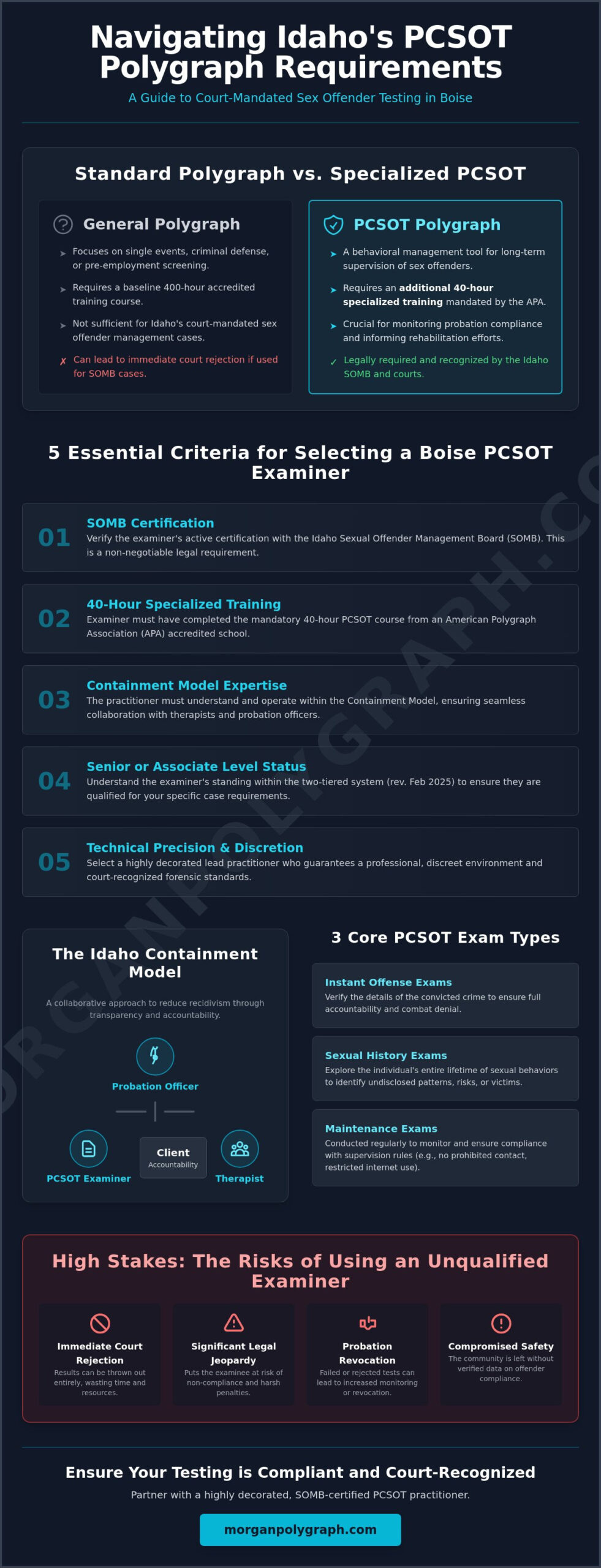
A general examiner might handle criminal defense cases or private issues, but PCSOT requires a different clinical approach. The American Polygraph Association (APA) mandates that examiners complete an additional 40 hours of specialized training beyond the basic 400-hour accredited course. This ensures the practitioner understands the psychological nuances of offender management. To understand the baseline technology, one might ask, What is a polygraph? and how does it function? While the underlying technology is consistent, the application in PCSOT focuses on three specific exam types:
- Instant Offense Exams: These verify the details of the crime for which the individual was convicted to ensure accountability.
- Sexual History Exams: These explore the individual’s entire lifetime history of sexual behaviors to identify undisclosed patterns or risks.
- Maintenance Exams: These are conducted regularly to ensure compliance with supervision rules, such as avoiding prohibited contact or restricted internet use.
Legal Mandates for Sex Offender Testing in Idaho
Idaho Code establishes strict parameters for post-conviction supervision. The legal system in Boise utilizes these results to determine the intensity of an individual’s supervision. If a test suggests high risk or non-compliance, it can lead to increased monitoring or probation revocation. Using an examiner who lacks the specific SOMB certification can result in the court throwing out the results entirely. This creates significant legal jeopardy for the examinee and leaves the community without verified safety data. Finding a PCSOT certified examiner in Boise who understands these Idaho-specific standards ensures that the testing process is legally defensible and professionally executed. These results directly influence the “Containment Model,” a collaborative approach used by Idaho’s supervision teams to reduce recidivism through transparency and accountability.
The Idaho SOMB Framework: Regulatory Standards for Boise Examiners
The Idaho Sexual Offender Management Board (SOMB) acts as the primary regulatory body for sex offender management in the state. Their oversight ensures that every professional involved in the containment model meets rigorous, evidence-based criteria. According to Idaho’s official definition, a certified examiner must possess specific qualifications that go far beyond general polygraphy. When you’re finding a PCSOT certified examiner in Boise, you’re looking for someone who has navigated a strict certification path. This includes a minimum of 400 hours of basic polygraph training followed by 40 hours of specialized PCSOT instruction at an APA-accredited school.
SOMB doesn’t stop at initial training. The board requires ongoing continuing education to maintain certification. This ensures that examiners remain current with the latest research in behavioral observation and data-driven detection. For those seeking the highest level of expertise, the Senior/Approved status requires the examiner to have completed over 100 examinations within a three-year window. This volume of work must include a specific mix of sexual history and maintenance exams. Such depth of experience is what separates a novice from a seasoned professional who can provide court-recognized results.
Verifying an Examiner’s SOMB Status
The most reliable way to confirm credentials is to consult the Idaho SOMB provider roster. This public document lists every individual currently authorized to perform these sensitive tests. Don’t hesitate to ask an examiner directly about their current standing and their specific certification level. A significant red flag is any practitioner who claims to have years of experience but cannot produce a current SOMB certification number. Without this state-specific approval, the results will likely be rejected by the court or the Idaho Department of Correction.
Adherence to ASTM and APA Standards
Professional polygraphy relies on standardized protocols set by the American Society for Testing and Materials (ASTM) and the American Polygraph Association (APA). These protocols ensure that every test is conducted with scientific validity and ethical integrity. Idaho standards are intentionally aligned with these international best practices to maintain a high level of accuracy. If an examiner mentions proprietary or secret questioning techniques, it’s a major warning sign. Boise legal cases require transparency and methodology that can withstand rigorous cross-examination. For those who value this level of specialized forensic expertise, selecting an examiner who prioritizes these standards is the only way to ensure compliance.
5 Essential Criteria for Selecting a PCSOT Examiner in Boise
Selecting a professional for high-stakes forensic testing requires a methodical approach that prioritizes state-specific compliance over general experience. When you are finding a PCSOT certified examiner in Boise, the criteria must be stringent to ensure both legal validity and community safety. The process involves identifying a practitioner who bridges the gap between traditional polygraphy and modern forensic science. Here are five essential benchmarks to guide your selection:
- Current Idaho SOMB Certification: This is the non-negotiable baseline for any search. Without this state-specific approval, results will not be recognized by the Idaho Department of Correction or the courts.
- Documented Experience with the Containment Model: A qualified examiner must demonstrate a history of collaborative communication with Probation Officers and therapists. This triad ensures that testing data is used effectively for supervision and treatment.
- Court-Recognized Expert Status: Inquire if the examiner has a history of providing expert testimony in Idaho. This standing confirms that their methodology can withstand intense legal scrutiny during probation hearings.
- Advanced Technology and Software: The industry is evolving toward data-driven detection. Look for practitioners who utilize validated scoring algorithms and innovative tools, such as behavioral speech analysis, to enhance accuracy.
- Professional Discretion and Ethics: The sensitive nature of these exams demands maximum confidentiality. A reputable examiner maintains a methodical, organized operation that protects the privacy of all involved parties.
Evaluating Real-World PCSOT Experience
In the field of sex offender management, the specific volume of PCSOT exams conducted is more critical than total years in general polygraphy. A Senior/Approved examiner in Idaho must have completed at least 100 examinations within a three-year period, including a specific balance of sexual history and maintenance tests. This level of repetition ensures they are familiar with the nuances of offender behavior. Furthermore, the value of an examiner who understands the Idaho Sex Offender Registry nuances cannot be overstated. Practitioners who have worked extensively with the Idaho Department of Correction bring a level of insight that generalists simply cannot match.
The Importance of a Professional Environment
The physical testing location in Boise significantly impacts the validity of the results. Professional providers are moving away from mobile testing in favor of controlled office environments. To meet APA standards, the testing suite must be free from external distractions and equipped with precise climate control to prevent physiological artifacts. High-fidelity recording equipment is also essential for quality assurance and provides a clear record for review by supervision teams. Ensuring that finding a PCSOT certified examiner in Boise leads you to a dedicated, professional facility is a vital step in securing accurate, court-ready results.
The Role of Polygraphy in the Containment Model: What to Expect
The “Containment Model” is the foundational strategy used by Idaho’s supervision teams to manage sex offenders within the community. This approach moves away from isolated supervision and instead relies on a collaborative triad of professionals. This team consists of the Probation or Parole Officer, the Treatment Provider (Therapist), and the Polygraph Examiner. Finding a PCSOT certified examiner in Boise who understands this specific synergy is essential for the model to function correctly. Each member of the triad shares information to create a comprehensive web of oversight, ensuring that the individual’s behavior remains transparent and aligned with legal requirements.
Within this framework, the polygraph serves as a truth-verification tool that facilitates “therapeutic disclosure.” In many cases, an individual may withhold information during therapy due to shame or fear of legal consequences. The presence of regular testing encourages honest communication with the therapist, which is necessary for genuine rehabilitation. Once a test is completed, the examiner provides a detailed report to the treatment team in Boise. This report doesn’t just list “pass” or “fail” results; it provides context on the individual’s disclosures and physiological reactions, allowing the PO and therapist to adjust supervision levels or treatment plans accordingly.
The Maintenance and Monitoring Exam Process
In Boise cases, maintenance exams are typically required every six months, though the frequency may vary based on the specific risk level assigned by the court. These sessions focus strictly on compliance with supervision rules, such as internet restrictions, contact with prohibited persons, or travel limitations. The ultimate objective of these examinations is to facilitate long-term behavior modification and community safety rather than simply identifying isolated instances of deception. By verifying that an individual is following their “contract of supervision,” the examiner helps the team identify potential red flags before they escalate into new offenses.
Preparing for a PCSOT Examination
Preparation begins with a thorough pre-test interview. During this phase, the examiner reviews the individual’s sexual history or the specific supervision rules being tested. This is a methodical process designed to ensure the examinee fully understands every question before the sensors are attached. Honesty during this pre-test phase is the most critical factor for success. Most “failures” occur not because of the technology, but because the individual attempted to minimize their actions or withhold details during the interview.
It’s natural to feel some level of stress, but a professional examiner will work to address anxiety and debunk common myths regarding how a polygraph test works. The physical environment is kept clinical and quiet to ensure accuracy. If you are a legal professional or a supervision officer looking to integrate this level of precision into your case management, consider scheduling a PCSOT session with a recognized expert who specializes in the Idaho containment model.
Partnering with Morgan Polygraph for Court-Recognized PCSOT
Finding a PCSOT certified examiner in Boise often leads legal professionals and supervision officers to a single conclusion: the necessity of high-level forensic expertise. Morgan Polygraph stands at the intersection of decades of experience and forward-thinking methodology. As a lead instructor for PCSOT training, Chip Morgan doesn’t just meet Idaho’s standards; he helps define them for the next generation of practitioners. This deep integration with state regulations ensures that every examination is conducted with a level of precision that is recognized by courts throughout the state. It is the persona of a seasoned expert that defines our approach, providing a sense of calm, collected confidence for clients in high-stakes situations.
Our Boise facility is a dedicated professional environment specifically designed for forensic accuracy and client privacy. Unlike mobile services that may compromise on quality, our office provides a controlled, climate-controlled suite that meets all APA requirements for distraction-free testing. This methodical and organized operation is vital for maintaining the integrity of the physiological data collected. Our commitment to the containment model is reflected in our seamless communication with Boise therapists and probation officers. We provide the data-driven insights necessary for the triad of supervision to make informed decisions regarding community safety and offender rehabilitation.
Why Attorneys and Agencies Trust Morgan Polygraph
Legal practitioners often find that a psychosexual evaluation paired with expert polygraphy provides the most robust framework for case management. Our reputation for providing objective, unbiased, and technically perfect examinations makes us a trusted partner in high-stakes criminal defense and supervision cases. We understand the human stress involved in these proceedings and approach every interaction with compassion and respect. This professional balance ensures that while the testing is clinically rigorous, the environment remains approachable and respectful of the individual’s dignity.
Scheduling Your PCSOT Exam in Boise
The intake process at Morgan Polygraph is straightforward and designed to avoid ambiguity. When finding a PCSOT certified examiner in Boise, it’s important to have all court or probation documentation ready for review. Our office requires these records to ensure that the testing objectives align with Idaho Department of Correction mandates. Confidentiality is a central theme of our practice; every piece of data is stored and shared according to strict Idaho legal protocols. We only release results to authorized members of the containment team, protecting the privacy of sensitive information. Please contact our Boise office directly to discuss current availability and to receive specific instructions on how to proceed with your examination.
Securing Legal Compliance and Community Safety
Ensuring your polygraph results meet the rigorous standards of the Idaho Sexual Offender Management Board is a critical step in any post-conviction supervision plan. The process of finding a PCSOT certified examiner in Boise shouldn’t be left to chance or general practitioners. By selecting an examiner who’s deeply integrated into the state’s containment model, you ensure that every test provides the forensic accuracy required by courts and supervision teams. This specialized approach protects the integrity of the legal process while supporting genuine rehabilitation efforts.
Morgan Polygraph offers a unique level of expertise. Our Principal Examiner serves as a Lead Instructor for PCSOT training, ensuring that our methodology remains at the forefront of the industry. We operate out of a state-of-the-art forensic testing facility in Boise, designed to prioritize both privacy and data integrity. Whether you’re an attorney, a probation officer, or an individual seeking compliance, our Idaho SOMB certified and court-recognized status provides the reliability you need for high-stakes testing.
Take the next step toward meeting your legal obligations with a partner you can trust. Schedule a Certified PCSOT Examination with Boise’s Leading Expert. We’re here to provide the professional, discreet, and accurate results your case requires.
Frequently Asked Questions
What is the difference between a PCSOT examiner and a regular polygrapher?
A PCSOT examiner has completed at least 40 hours of specialized training beyond the standard 400-hour polygraph course. Finding a PCSOT certified examiner in Boise ensures the practitioner understands the clinical nuances of sexual history and maintenance exams. Regular polygraphers often focus on single-issue criminal or civil cases and lack the state-mandated credentials required by the Idaho Sexual Offender Management Board.
Are PCSOT polygraph results admissible in Idaho courts?
Polygraph results are admissible in Idaho courts under specific circumstances. Admissibility usually occurs when both parties stipulate to the results or during probation revocation hearings. Trial court judges also have the discretion to admit this evidence. In the context of sex offender management, these results are primarily used as a supervision tool within the containment model rather than as standalone evidence for new charges.
How much does a PCSOT polygraph cost in Boise in 2026?
Rates for these examinations are determined by individual providers and vary based on the complexity of the case. While some firms describe their pricing as competitive, you must contact a specific office to receive a current quote. Factors such as the examiner’s certification level and the type of exam required will influence the final cost.
How often do I need to take a PCSOT exam if I’m on probation in Idaho?
Most individuals on probation for sexual offenses are required to undergo maintenance testing every six months. This frequency is established by the Idaho Sexual Offender Management Board and the specific terms of your supervision. Your probation officer or treatment provider may request more frequent testing if there are concerns regarding compliance or if your risk level changes during the supervision period.
Can a PCSOT examiner also perform my psychosexual evaluation?
The polygraph examiner and the evaluator are typically separate professionals to ensure objective results. The examiner focuses on truth verification regarding specific behaviors or history, while the evaluator uses that data to form a clinical opinion. This separation of roles is a standard part of the containment model, which relies on a triad of distinct professionals to manage and monitor offenders effectively.
What happens if I fail a PCSOT maintenance exam in Boise?
Failure to pass an exam is immediately reported to your probation officer and treatment team. This result may lead to a review of your supervision terms, increased monitoring, or a change in your treatment plan. In some instances, a failed test can be used as grounds for a probation revocation hearing if it indicates a violation of court-ordered rules or undisclosed prohibited behaviors.
Is the Idaho SOMB certification different from the national APA certification?
Yes, the Idaho SOMB certification is a state-specific requirement that is distinct from American Polygraph Association (APA) membership. While the APA sets national training and ethical standards, the SOMB provides the legal authority to conduct post-conviction testing in Idaho. Finding a PCSOT certified examiner in Boise who holds both credentials ensures that your testing meets both national scientific standards and local legal mandates.
How long does a typical PCSOT examination take to complete?
You should expect the entire process to take between two and four hours. This duration allows for a comprehensive pre-test interview, the physiological data collection phase, and a post-test discussion of the results. A methodical approach is necessary to ensure the highest levels of accuracy and to allow the examinee to fully understand the questions being asked before the testing begins.