
The term “lie detector” often brings to mind dramatic scenes from movies and television, but the reality of a professional polygraph test is far more nuanced and scientific. It is a serious diagnostic tool used to verify truthfulness and gain clarity in situations where honesty is paramount. Whether you are facing a legal challenge, navigating a personal issue, or undergoing pre-employment screening, understanding the process is the first step toward confidence. This guide will walk you through exactly how a polygraph test works, what it is used for, and how to interpret the results with expert insight.
What is a Polygraph Test? A Professional Definition
Fundamentally, a polygraph test is not a “lie detector.” No machine can definitively detect a lie. Instead, it is a sophisticated diagnostic instrument that measures and records a person’s involuntary physiological responses while they answer a series of questions. These responses include changes in breathing, heart rate, blood pressure, and perspiration. A highly trained and certified examiner then analyzes this data to form a professional opinion about whether the person was being truthful. The examiner’s expertise is just as, if not more, important than the machine itself. The ultimate goal is to verify truthfulness and identify deceptive responses through objective data.
How Does a Polygraph Machine Work?
During an examination, several non-invasive sensors are attached to the body to record physiological data. The equipment measures multiple signals simultaneously to create a comprehensive picture of the subject’s reactions. The primary components include:
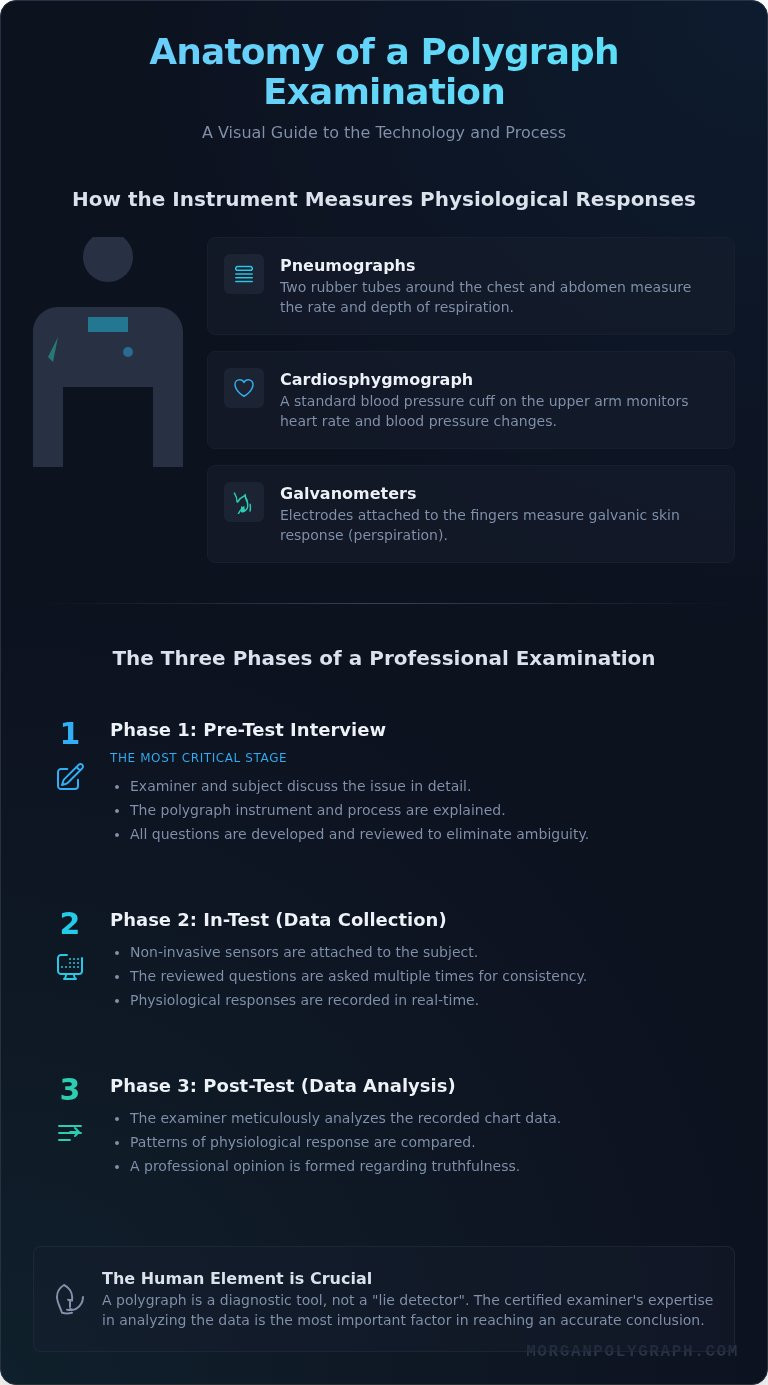
- Pneumographs: Two rubber tubes are placed around the chest and abdomen to measure the rate and depth of respiration.
- Cardiosphygmograph: This is a standard blood pressure cuff placed on the upper arm to monitor heart rate and blood pressure changes.
- Galvanometers: These are small electrodes attached to the fingers to measure galvanic skin response, or the amount of sweat produced by the skin’s pores.
The Three Phases of a Professional Polygraph Examination
A professional polygraph is a structured process consisting of three distinct phases, each crucial for an accurate outcome.
- Phase 1: The Pre-Test Interview. This is the most critical stage of the examination. The examiner will discuss the issue in detail, explain how the instrument works, and develop the exact questions that will be asked. This ensures the subject fully understands every question and eliminates any ambiguity.
- Phase 2: The In-Test (Data Collection). During this phase, the sensors are attached, and the examiner asks the questions that were reviewed during the pre-test interview. The questions are typically asked multiple times to ensure consistency in the data.
- Phase 3: The Post-Test (Data Analysis). After the questions are complete, the examiner meticulously analyzes the physiological data recorded on the charts. Based on this analysis, the examiner forms a professional opinion regarding the truthfulness of the answers provided.
Common Uses for Polygraph Testing
Polygraph examinations are not a one-size-fits-all solution. They serve specific, important purposes across legal, private, and governmental sectors, with each test format carefully tailored to the unique situation and objective.
Criminal and Civil Legal Cases
In the legal field, polygraphs are a valuable tool for defense attorneys seeking to verify a client’s account of events or to demonstrate their client’s truthfulness to prosecutors. In civil litigation, they can help resolve disputes and provide clarity in internal corporate investigations. While not always admissible in court, the results can provide significant leverage in legal negotiations and plea-bargaining discussions.
Relationship and Infidelity Issues
For individuals facing painful doubts about a partner’s fidelity, a polygraph offers a confidential and structured way to find the truth. It allows couples to address specific incidents with focused, unbiased questions, providing a path toward resolution and helping to rebuild trust after a period of suspicion or accusations.
Pre-Employment Screening
Many government and law enforcement agencies, such as police departments and federal bodies, require pre-employment polygraph tests for roles involving national security or public trust. These examinations verify the information provided on applications and in background checks. The use of polygraphs in the private sector is strictly governed by the Employee Polygraph Protection Act (EPPA).
Post-Conviction and Therapeutic Testing (PCSOT)
Post-Conviction Sex Offender Testing (PCSOT) is a specialized application used to monitor offenders on probation or parole. It is a key tool in treatment and management programs, ensuring compliance with court-ordered conditions. These tests encourage accountability and provide therapists with verified information, fostering honesty within the therapeutic process.
Accuracy and Reliability: What Does the Science Say?
The accuracy of polygraph testing is a common subject of public debate and media speculation. However, when conducted by a certified examiner using modern techniques and validated testing formats, polygraph examinations yield a very high rate of accuracy. It is crucial to understand that the reliability of a test is not just about the machine; it depends heavily on the examiner’s skill, the specific-incident test format, and adherence to established best practices.
Factors That Influence Polygraph Accuracy
Several key factors contribute to a reliable polygraph result. The single most important element is the examiner’s training, experience, and professional certifications. Furthermore, the specific-incident test format, which focuses on a known, single event, is considered the most reliable method. Finally, the subject’s physical and psychological condition must be suitable for testing, which a professional examiner will assess beforehand.
Can You ‘Beat’ a Polygraph Test?
The idea of “beating” a polygraph often involves so-called countermeasures, which are deliberate attempts to alter physiological responses to manipulate the results. However, skilled examiners are extensively trained to recognize the signs of these attempts, which often register on the charts as anomalies inconsistent with truthful or deceptive responses. In many cases, attempting countermeasures is itself interpreted as an indication of deception. For a truly accurate result, honesty is always the best and most effective strategy.
How to Prepare for a Polygraph Test
Proper preparation for a polygraph examination is about being mentally and physically ready to take the test accurately, not about learning how to deceive it. The primary goal is to eliminate any external factors that could interfere with the results. Following the examiner’s instructions carefully is the best way to ensure a smooth and valid process.
What to Do Before Your Examination
To ensure you are in the best possible condition for an accurate test, it is important to take a few simple steps. Be sure to get a full night’s sleep before the test to ensure you are well-rested. You should avoid consuming alcohol or non-prescription drugs prior to your appointment, as these can affect your physiological responses. Finally, arrive on time for your appointment, ready to be fully honest and cooperative with the examiner.
What to Expect on the Day of the Test
A professional polygraph examination is a lengthy and thorough process, typically taking between two and four hours to complete. A significant portion of this time is dedicated to the pre-test interview, where you will review every single question with the examiner before the test begins. There are no surprise questions during a properly conducted exam, giving you full transparency into the process. If you have questions or feel you are ready to find answers, you can Schedule a confidential consultation with our expert examiners.
Frequently Asked Questions
Are polygraph tests admissible in court?
The admissibility of polygraph results varies by jurisdiction and the specific circumstances of a case. In many states, they may be admitted if both the prosecution and defense agree to it beforehand (a stipulation). However, they are more commonly used as an investigative tool and for leverage in legal negotiations rather than as direct evidence in a trial.
How much does a professional polygraph test cost?
The cost of a polygraph test can vary depending on the type of examination (e.g., infidelity, criminal, employment) and the complexity of the case. It is best to contact a certified examiner directly to discuss your specific situation and receive an accurate price quote.
Can being nervous make me fail the test?
No. It is completely normal to be nervous, and a professional examiner expects this. The polygraph measures physiological changes in response to specific questions, not your baseline level of anxiety. The examiner establishes your unique baseline during the pre-test and control question phases to differentiate between general nervousness and deceptive reactions.
How long does a polygraph examination take?
A complete examination is a meticulous process and typically lasts between two to four hours. This includes the detailed pre-test interview, the data collection phase, and the post-test analysis.
Will I know the results of the test right away?
In many cases, the examiner can provide a preliminary result immediately following the examination after a review of the charts. A formal, detailed written report is usually provided later.
Is the polygraph process completely confidential?
Yes. Professional polygraph examiners operate under strict codes of ethics that require complete client confidentiality. The results are only released to the person or parties who arranged for the examination, unless required by law.
Navigating a situation that requires a polygraph can be stressful, but with the right professional guidance, it can be a definitive step toward finding the truth. The process is designed to be fair, objective, and conclusive when handled by experts. If you need clarity and resolution, consider what a professional examination can do for you. Contact Morgan Polygraph for a professional and confidential examination. Our services are conducted by nationally certified and court-recognized experts who utilize state-of-the-art technology, serving Boise, Idaho with the utmost discretion and professionalism.