
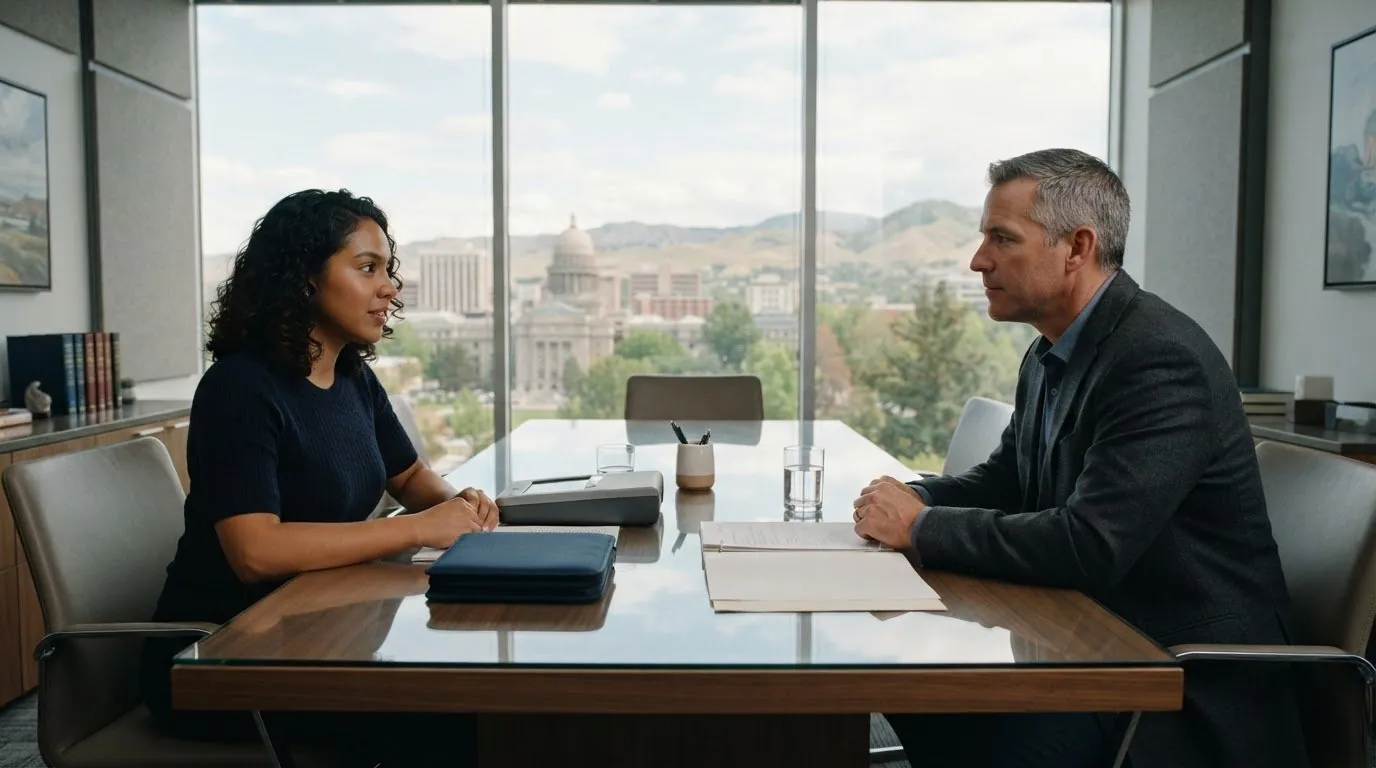
A favorable polygraph result can support a conversation, but it cannot decide a criminal case. If you are searching for “presenting exculpatory polygraph results to a prosecutor Boise,” speak with your defense attorney before sending a report to the prosecutor. It is understandable to want information that supports your account to reach the person handling your case. But sharing sensitive details without counsel’s guidance may affect how the result is considered.
In Idaho, polygraph results generally are not admissible in court unless all parties agree beforehand to their admission. A favorable result may be discussed as part of a legal strategy, but it does not establish innocence or guarantee that a prosecutor will review or act on it. The examiner’s role is to conduct the examination and prepare a professional report, not to provide legal advice.
This article explains what to discuss with your attorney before sharing a result, which examination details may matter, and how to set realistic expectations. It also covers what to verify before an examination and why qualified Idaho counsel should review the timing and terms of any agreement about evidence before testing or contacting a prosecutor.
Key Takeaways
- Before presenting exculpatory polygraph results to a prosecutor Boise, discuss the report and any disclosure plan with your defense attorney.
- Ask counsel to review the examination’s scope, the report’s wording, and how the result relates to the broader case record.
- Keep complete, accurate copies of examination documents. Do not alter the report or share selected pages without your attorney’s guidance.
- A prosecutor’s response can vary. A favorable result may be considered alongside other case information, but no particular action is assured.
- Before arranging an examination, clarify its scope and ask the Boise examiner what the professional report will cover.
What a favorable polygraph result means in a Boise criminal case
A favorable polygraph result may be relevant to a discussion about a case, but it is not a legal finding that a person is innocent. The examiner reports findings from a specific examination. A prosecutor may decide whether to consider the report, while a court separately applies the relevant evidence rules. These are distinct steps, and none guarantees a particular outcome.
For anyone researching “presenting exculpatory polygraph results to a prosecutor Boise,” the practical step is to review the report with defense counsel before sharing it. Its significance depends on the examination, the other facts and evidence, and current Idaho procedures. Qualified Idaho counsel can assess how those issues apply to your case.
What does an exculpatory polygraph result actually say?
Use the examiner’s exact wording when describing the result. Terms such as “favorable” or “exculpatory” should not be expanded into claims that the test proved innocence or established what happened. An examination addresses defined questions under stated conditions. It cannot resolve every disputed fact or answer questions that were not asked.
Read the report in context. The questions, the examination’s scope, and the examiner’s conclusions all matter. For background on polygraph methods and scientific debate about their interpretation, see this overview of polygraphy and its scientific context.
Why a favorable result is not the same as a legal finding
An examiner’s report records examination findings. It does not replace decisions made by a judge or jury, and it does not require a prosecutor to change a case. A prosecutor may assess the report in context, but any response depends on the circumstances and applicable procedures.
In Idaho, polygraph results generally are not admissible in court unless all parties stipulate to admissibility beforehand. Whether counsel considers a report useful in a case discussion is a separate question. A favorable result alone does not guarantee dismissal, a charging change, prosecutorial review, or admissibility.
Understanding the examination process can help you interpret what a report does and does not cover. Morgan Polygraph’s polygraph examination process guide explains the process. Morgan Polygraph conducts criminal and civil case examinations and prepares professional reports intended for legal proceedings. The examiner’s role is to conduct the examination and document findings, not to provide legal advice or determine a case’s outcome.
How Boise defense counsel can assess a polygraph report before disclosure
Before sending a polygraph report to a prosecutor, speak with the defense attorney handling the case. Counsel can assess whether the report is relevant, how to understand its wording, and whether sharing it could affect defense strategy or other disclosure obligations. That review matters even when the result appears clearly favorable.
Have counsel assess the report and its implications before deciding whether, when, or how to share it. The decision may depend on the case record, the examination’s scope, and applicable rules. Do not assume that a favorable result is confidential, protected from disclosure, or appropriate to send directly to the prosecutor. Ask your attorney to evaluate those issues for your circumstances.
What materials should the attorney review?
Provide the complete, unaltered final report and any explanation the examiner supplied about its terminology or limitations. Note the examination date and identify the questions addressed. If you have related records, ask counsel which ones are relevant instead of deciding on your own what to include. Reviewing the full context helps the attorney assess what the report does and does not address.
Which questions should you ask before anyone shares the result?
Keep the discussion focused. Ask your attorney:
- Could disclosure affect defense strategy, confidentiality, or any case-related obligations?
- Who should communicate with the prosecutor, and what method or timing is appropriate?
- Do any case-specific Idaho procedures or evidence rules apply?
- Does the report’s wording accurately reflect the examination’s scope and stated limitations?
These are questions for qualified counsel, not assumptions to resolve using general information. For comparison, the Department of Justice policy on polygraphs describes the federal government’s position. It does not establish the policy of an Idaho prosecutor’s office or determine how a state case will be handled.
If your attorney recommends learning more about an examination or report, Morgan Polygraph conducts criminal and civil case polygraphs in Boise and prepares professional reports intended for legal proceedings. An examiner can clarify examination-related questions, but that discussion is not a substitute for legal advice or counsel’s decision about disclosure. After consulting your attorney, you can review information about criminal and civil case polygraph examinations.
What happens when a Boise prosecutor receives a favorable polygraph result?
There is no guaranteed response. If a defense attorney shares a favorable report, a prosecutor might consider it as one piece of information, ask questions about the examination, give it limited weight, or decide it does not change the case. The response depends on the case facts, the report, and applicable legal issues. Do not assume a particular Ada County practice without current, authoritative confirmation.
For people considering presenting exculpatory polygraph results to a prosecutor Boise, keep one distinction in mind: a prosecutor’s review of a report is not the same as admitting it as evidence in court. Idaho generally bars polygraph results from being admitted unless all parties stipulate to their admission beforehand. Review Idaho’s rule on polygraph admissibility, and ask qualified local counsel how it applies to your case.
Can a prosecutor consider the report without accepting it as evidence?
Potentially, but do not assume the report will be reviewed or given particular weight. A lawyer may raise it during case discussions while recognizing that informal consideration is different from presenting it as evidence at trial. Formal admissibility depends on the applicable rules and case-specific circumstances, including whether the required prior stipulation exists.
Ask your attorney who should communicate with the prosecutor, what materials should be provided, and whether sharing the report could affect defense strategy or other obligations. The fact that a result is favorable does not predict the prosecutor’s response.
What outcomes should a person avoid assuming?
A favorable report does not guarantee dismissal, reduced charges, a change in plea discussions, or a particular trial result. Nor does it decide disputed facts. A prosecutor may assess it alongside other available evidence and legal issues, but the report remains one part of a broader case.
Do not assume there is an Ada County policy establishing how prosecutors handle exculpatory polygraph reports. Ask qualified Idaho counsel to verify the procedures that apply to your case. Before drawing conclusions, ask what the report could realistically contribute, which limitations matter, and whether any next step is appropriate. That guidance can help set expectations without treating the examination as a legal finding or a promise of a specific outcome.
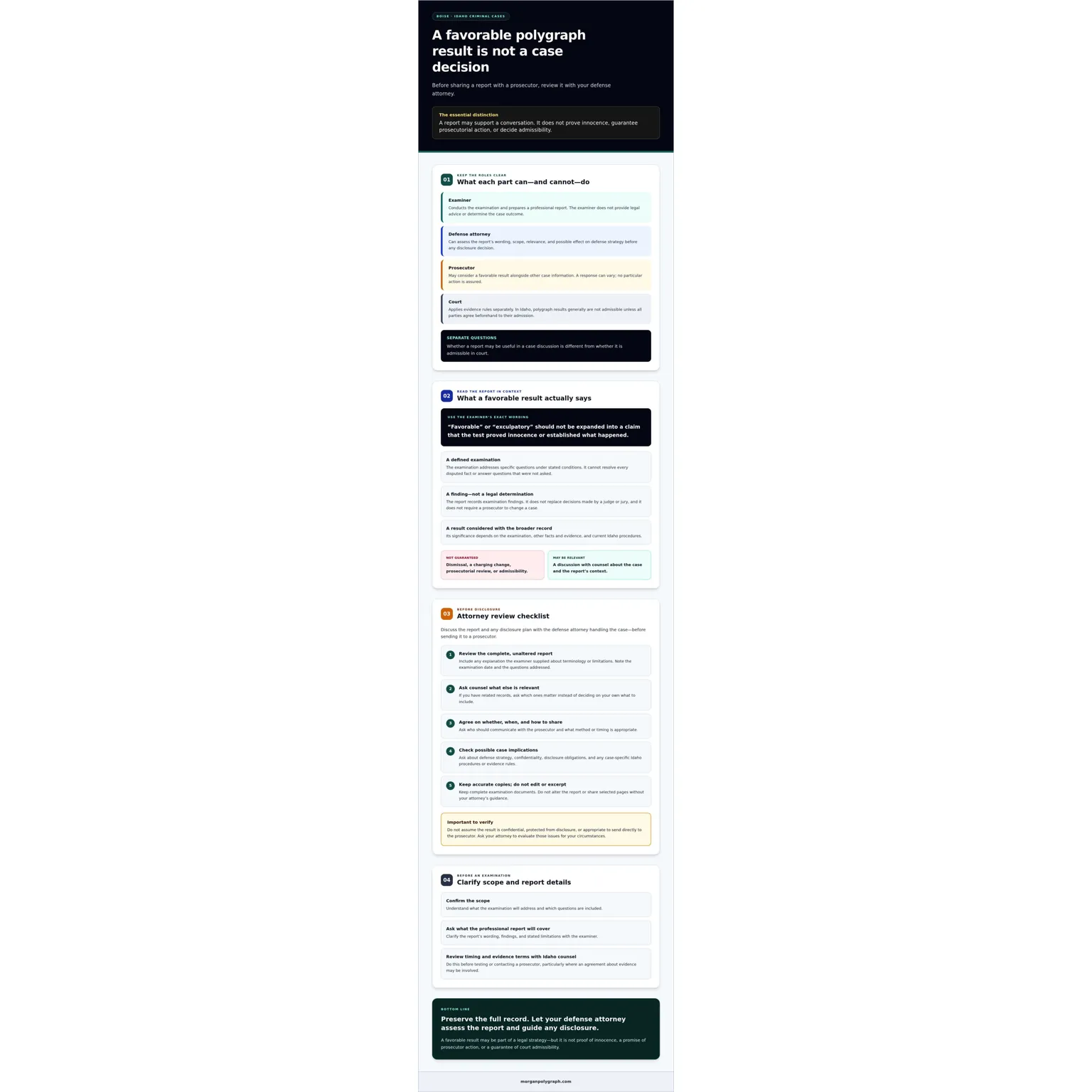
A Boise-focused checklist for discussing the result with your attorney
Start with your defense attorney, not the prosecutor. Before sharing a polygraph report or discussing sensitive case details, confirm that you are communicating with the attorney responsible for your case. If you are unsure who represents you or which case details to provide, verify that first.
Use this checklist to prepare for a focused conversation about presenting exculpatory polygraph results to a prosecutor Boise. Boise or Ada County procedures matter only if your case is being handled in that jurisdiction. Your attorney can confirm which rules and processes apply.
Before the attorney meeting
- Gather complete records. Organize the final report and communications from the examiner. Keep the documents unchanged, including pages or explanations that may seem less relevant.
- Note the examination details. Write down the date, questions addressed, and any terms or limitations you want clarified. Use the examiner’s wording instead of paraphrasing the result as a broader conclusion.
- Prepare questions. Ask what the findings mean, what the examination covered, and whether timing could matter before any disclosure decision.
- Protect sensitive information. Confirm the attorney’s identity and your case details before sending records or discussing confidential facts through a communication channel you have not verified.
During the conversation about possible disclosure
Ask counsel to decide whether the report should be shared and, if so, how that communication should happen. Avoid contacting the prosecutor yourself unless your attorney specifically advises you to do so. Counsel can assess the case context and explain any disclosure concerns or procedures that may apply.
- Who will communicate with the prosecutor, if anyone?
- Which documents or explanations, if any, should be provided?
- When would communication be appropriate in this case?
- What should you do next, and what should you avoid while counsel reviews the matter?
Keep a note of the guidance and any questions that need follow-up. Do not edit the report, remove pages, or selectively share excerpts to make the result appear stronger. Let counsel decide what context is relevant and how to proceed.
This article provides general information, not legal advice. Polygraph disclosure decisions are case-specific. For examination-related questions after speaking with your attorney, you can learn about criminal and civil case polygraph examinations. Morgan Polygraph conducts examinations and prepares professional reports intended for legal proceedings. It does not provide legal representation or decide whether a report should be disclosed.
How to get discreet polygraph guidance in Boise
Morgan Polygraph provides criminal and civil case polygraph examinations in Boise. Its examiners conduct examinations and prepare professional reports intended for legal proceedings. A report is not a legal opinion, a guarantee of admissibility, or a promise that a prosecutor will review or act on the result.
If you are considering an examination in connection with a criminal case, speak with your defense attorney before arranging testing or sharing case information. That conversation can help you assess whether an examination fits your case strategy and identify questions to raise with an examiner. Decisions about presenting exculpatory polygraph results to a prosecutor Boise should be made in consultation with counsel.
What to clarify before arranging a legal polygraph examination
Before arranging an examination, ask the examiner to explain its proposed scope, process, reporting, and stated limitations. Clarify which questions it is designed to address and what the report will describe. Then confirm with your attorney that the proposed examination aligns with counsel’s guidance and the needs of your case.
A polygraph examination does not replace legal representation, case investigation, or a court’s decision-making. Morgan Polygraph provides examinations, not legal advice or representation. Verify examiner credentials and any descriptions of court recognition, and ask qualified Idaho counsel about current procedures that may apply.
Where to find further information about Boise examiners
For background, read the guide to finding a certified polygraph examiner and the factual review of polygraph accuracy. These resources can help you prepare informed questions, but they do not determine whether an examination or its report is appropriate for your case.
For a service inquiry about a criminal or civil case examination, contact Morgan Polygraph and ask about the examination process and report. Discuss case-related decisions with your defense attorney. No examination can guarantee a particular prosecutorial response or case outcome.
Take the next step with care and clear expectations
A favorable polygraph report is something for your attorney to assess, not a guarantee of what a prosecutor or court will decide. Before presenting exculpatory polygraph results to a prosecutor Boise, consult defense counsel, review the complete report, and confirm how the result fits your case and applicable procedures.
If you are considering an examination, coordinate with your attorney before arranging testing or sharing sensitive case information. Morgan Polygraph provides Boise-based criminal and civil case examinations. Its nationally certified, court-recognized examiners prepare professional reports intended for legal proceedings. The company provides examinations, not legal advice or representation, and cannot guarantee that a prosecutor will review, accept, or act on a report.
For an inquiry about a Boise legal examination, contact Morgan Polygraph to discuss your examination needs. Bring case-specific legal questions to your attorney, and take the process one careful step at a time.
Frequently Asked Questions
Can a Boise prosecutor use a favorable polygraph result to dismiss a case?
A favorable result may be brought to a prosecutor’s attention through your defense attorney, but it does not require the prosecutor to dismiss a case. The report may be considered with other facts and legal issues, or it may not change the prosecutor’s position. No particular response is assured. Ask your attorney whether the result could be relevant to your case and what, if anything, should happen next.
Should I give a polygraph report directly to the prosecutor?
Speak with your defense attorney before giving the report to a prosecutor. Counsel can assess the full report, the examination’s scope, and whether disclosure could affect strategy or other case obligations. If you are researching “presenting exculpatory polygraph results to a prosecutor Boise,” first confirm who represents you and ask that attorney to guide any communication. Do not send selected pages or contact the prosecutor about the report without discussing it with counsel.
Is a favorable polygraph result admissible in an Idaho criminal case?
Generally, Idaho courts will not admit polygraph results unless all parties stipulate to their admissibility beforehand. This requirement is stated in Idaho Admin. Code r. 62.01.01.484. A prosecutor’s possible consideration of a report outside court is different from admitting it as evidence in a proceeding. Ask qualified Idaho counsel to confirm the current rule and explain whether any case-specific agreement or procedure could apply.
What should I do after receiving an exculpatory polygraph result?
Preserve the complete, unaltered report and any related explanation from the examiner, then contact your defense attorney. Note the examination date, questions addressed, and any terms or limitations you want clarified. Avoid sending the report directly to the prosecutor or describing the result as proof of innocence. Your attorney can review the materials and advise whether a discussion about disclosure is appropriate for your case.
Can a prosecutor ignore a favorable polygraph result?
A favorable report does not guarantee that a prosecutor will review it, accept it, or take action based on it. If counsel shares the report, the prosecutor’s response may depend on the case facts, other available evidence, and relevant legal issues. Do not assume a particular public Ada County policy establishes how a prosecutor will respond. Your attorney can help set realistic expectations and explain what follow-up, if any, makes sense.
Does a polygraph report prove that someone is innocent?
No. A polygraph report describes an examiner’s findings from an examination focused on defined questions and conditions. It does not determine guilt or innocence, establish every disputed fact, or replace decisions made by a judge or jury. Use the examiner’s exact wording when discussing the result. Ask your attorney to explain what the report addresses, what it leaves unresolved, and how it relates to the rest of the case.
How can a Boise defense attorney review a polygraph report?
Your attorney can review the complete report, examination date, questions asked, stated limitations, and any examiner-provided explanation of the terminology. Counsel can then consider the report in the context of the case and assess disclosure, timing, and applicable evidence rules. Provide complete records without editing or removing pages. Because the legal significance depends on the circumstances, ask qualified Idaho counsel how current procedures apply to your case.