
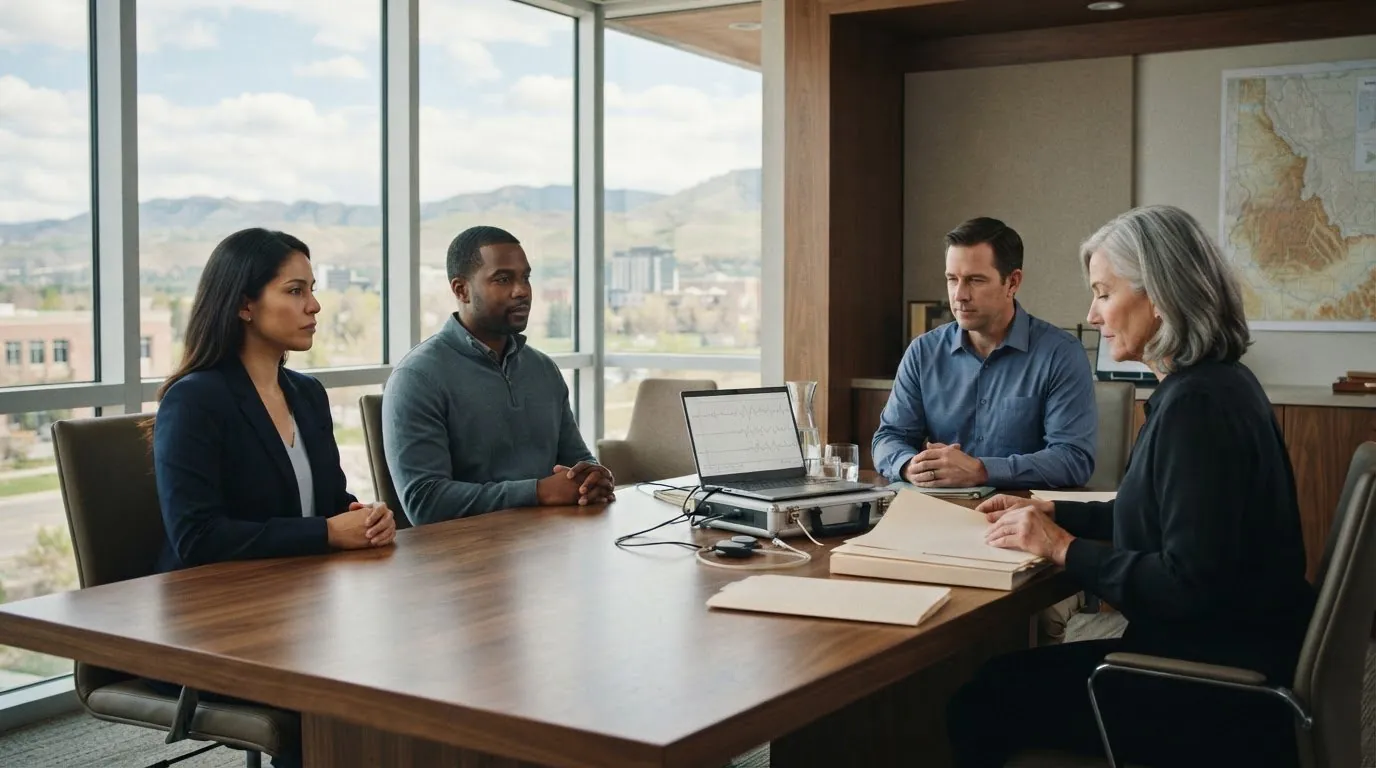
When accounts conflict, a polygraph may add information for counsel to consider, but it can’t decide who’s telling the truth in court. People searching for a “polygraph for he-said-she-said civil case Meridian” are often looking for a way to clarify what happened. An examiner’s assessment may be one piece of information, but it doesn’t independently prove truth, liability, or the outcome of a case.
Investigative usefulness and courtroom admissibility are separate questions. In Idaho, polygraph results are generally not admissible unless all parties agree in a written stipulation. The other party’s participation is a separate matter, and an examination can’t compel their agreement. Before arranging testing, ask an Idaho attorney to review current rules and whether an examination fits your case.
This article explains the possible role and limits of a civil-case polygraph, what to discuss with counsel about consent and potential use, and how to evaluate an examiner. Morgan Polygraph is based in Boise and serves clients in Idaho, including in civil matters. The aim is to help you consider next steps with clear expectations, not to replace legal advice or promise a courtroom result.
Key Takeaways
- Consider a polygraph as one possible source of information, not a substitute for records, witnesses, or other evidence.
- Before pursuing a polygraph for he-said-she-said civil case Meridian, ask an Idaho attorney whether testing fits the disputed issue and your case strategy.
- Clarify who would participate, how the examination would be coordinated, and what the examiner’s report can and cannot establish.
- Compare the potential value of testing with other ways to address conflicting accounts, and preserve relevant records as your case proceeds.
- If counsel considers an examination appropriate, confirm the examiner’s qualifications and process. Morgan Polygraph is based in Boise and serves legal and civil clients in Idaho.
When a Polygraph May Help a He-Said-She-Said Civil Case in Meridian
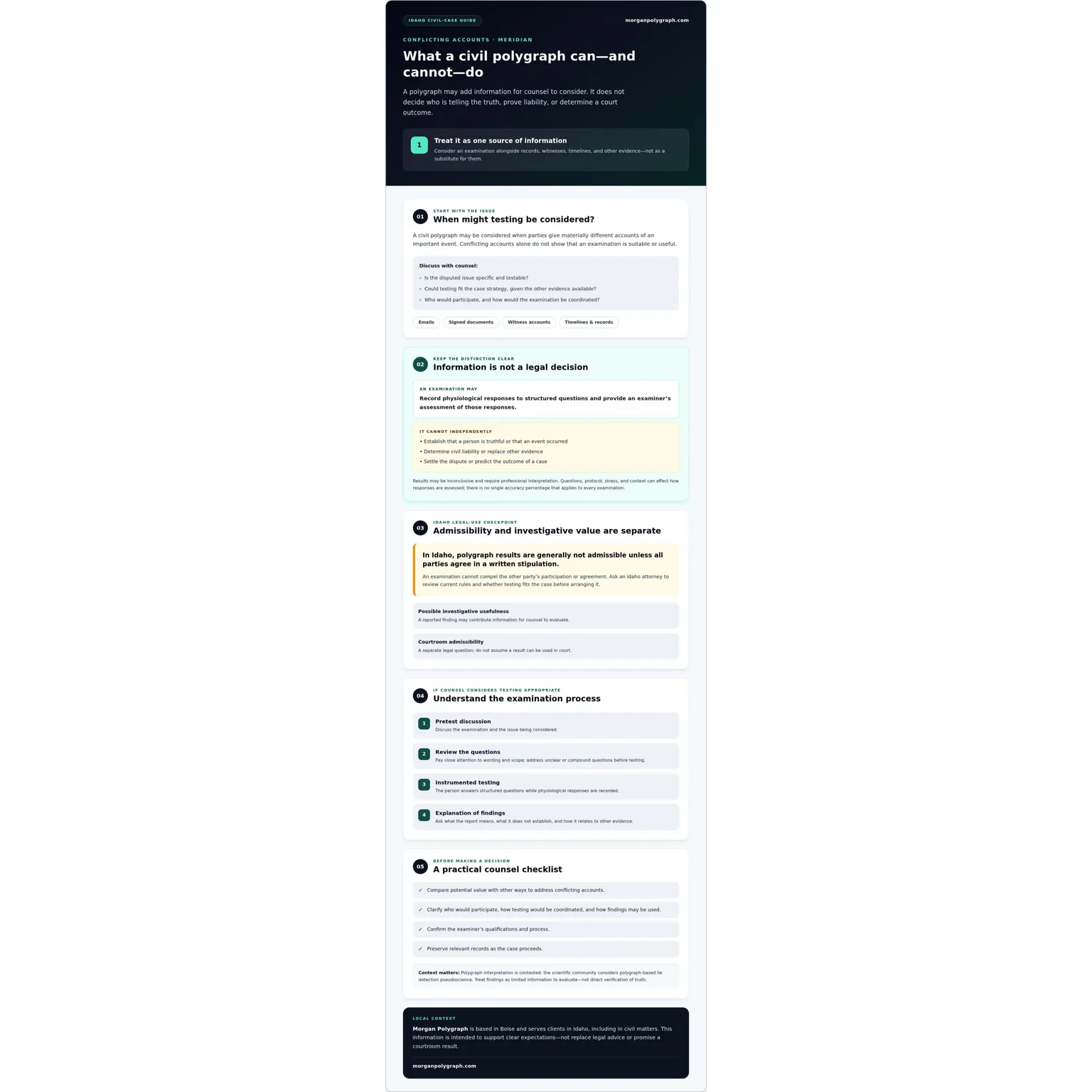
A polygraph examination records physiological responses while a person answers structured questions. In a civil dispute, testing may be considered when the parties give materially different accounts of an important event. But conflicting accounts alone don’t show that an examination is suitable or useful. The disputed issue, other available evidence, and guidance from counsel all matter.
Civil disputes can involve different questions and procedures from criminal cases. Criminal standards shouldn’t simply be transferred to a civil lawsuit, and a polygraph result doesn’t decide which party is legally responsible. It isn’t automatic proof, a court ruling, or a replacement for other evidence. For individuals pursuing justice in serious civil disputes, trial firms such as cowperlaw.com emphasize building cases on tangible proof, where documents, witness accounts, timelines, and records provide critical context and support an account independently.
What makes a civil dispute a he-said-she-said case?
The phrase describes a dispute in which parties give materially different accounts of a key event. For example, one party may recall a contract conversation differently from the other, or the parties may dispute what happened during a business interaction. Neither disagreement establishes that either person is dishonest. Emails, signed documents, witnesses, calendar entries, and other records may help clarify the sequence and context.
What question can an examination answer?
A relevant examination focuses on defined, testable issues established during preparation. It doesn’t ask an examiner to decide an entire dispute. The examiner assesses recorded responses within a structured protocol and reports findings related to the examination. The assessment has limits, so consider it alongside other case information. An examination reports on responses to defined questions; a court decides the legal issues.
Polygraph interpretation is also contested. The scientific community considers polygraph-based lie detection pseudoscience, reflecting broader debate about what physiological responses can establish. This is another reason not to treat a result as direct verification of truth. For someone considering a polygraph for he-said-she-said civil case Meridian, the practical question is whether a carefully framed examination could add relevant information for counsel to evaluate, not whether it can settle the dispute on its own.
What a Civil Polygraph Can, and Cannot, Tell You
A civil polygraph records physiological responses during a structured examination. The examiner interprets those responses in relation to the questions and examination protocol. The result is a reported finding, not independent corroboration. Emails, contracts, witness accounts, timelines, and other records remain separate evidence that may support or challenge a person’s account.
A polygraph result cannot independently determine civil liability. It doesn’t establish that a person is truthful, prove that an event occurred, or decide who is legally responsible. There’s no single accuracy percentage that applies to every examination. Results depend on factors such as the questions, the protocol, and how findings are interpreted. Treat a result as limited information to evaluate alongside the full record, not as a definitive answer.
What happens during the examination?
The process generally includes a pretest discussion, review of the questions, instrumented testing, and an explanation of the findings. Question wording and scope deserve careful attention before testing begins. Counsel and the examiner should understand the specific issue being examined and address unclear or compound wording before the session. For more detail, see this guide to the polygraph examination process.
Why results require careful interpretation
An examination may produce an inconclusive result, and findings may require professional interpretation. Stress, context, question quality, and the protocol can affect how responses are assessed. A reader shouldn’t diagnose the cause of a response from a report alone. Ask what the reported finding means, what it doesn’t establish, and how it relates to other available evidence. Morgan Polygraph’s factual review of polygraph accuracy offers further context.
Legal use is separate from what an examination may contribute to case discussions. Idaho’s administrative rule says parties must stipulate to admissibility for polygraph results to be admitted. Discuss current rules and any proposed use with an Idaho attorney before arranging a test. If counsel believes an examination could help clarify a defined issue, you can review civil-case examination options with Morgan Polygraph, a Boise-based provider serving legal and civil clients in Idaho.
Polygraph Admissibility in Idaho: Separate Legal Use from Case Strategy
Private testing doesn’t guarantee that a court will admit or consider the result. A polygraph may be discussed as part of case preparation, but that is different from sharing it in settlement discussions or offering it as evidence. Each possible use raises separate questions about disclosure, procedure, and legal effect.
For a polygraph for he-said-she-said civil case Meridian, ask Idaho counsel to assess current authority and the circumstances of the case before testing, disclosing results, proposing a stipulation, or relying on a finding. The American Psychological Association has discussed concerns about validity, including no evidence of polygraph validity as a unique physiological response to deception. That scientific debate is relevant context, but it doesn’t replace legal analysis of a particular case.
Can a polygraph result be used in an Idaho civil case?
Whether a result may be used depends on applicable law, the facts, and judicial decisions. Don’t assume that arranging a private examination makes the report admissible, or that agreement between parties guarantees a particular court outcome. Ask an Idaho attorney to verify current rules and any requirements that may apply before anyone signs an agreement or presents a result to the court.
How counsel may assess strategic value
Counsel may consider whether testing could inform case evaluation or further investigation. That possible value isn’t a promise of negotiation leverage or settlement. Disclosure may create risks, including disagreement about the questions or protocol and undue reliance on one result. Broader legal context is available in this guide to polygraphs in criminal cases, but criminal procedure shouldn’t be treated as the rule for a civil dispute.
Keep the purposes distinct:
| Potential use | Who decides | What to verify |
|---|---|---|
| Private case evaluation | You and your counsel | Whether testing could inform the attorney’s assessment, and how results will be handled. |
| Settlement discussions | The parties and their counsel | Whether disclosure is appropriate, what may be shared, and how the result could be characterized. |
| Evidence in court | The court under applicable law | Current Idaho authority, procedural requirements, and whether any agreement affects admissibility. |
Before arranging a civil-case examination, discuss its intended purpose and possible risks with counsel. If counsel considers testing, Morgan Polygraph provides examinations for legal and civil matters in Idaho. The examiner can answer questions about the process, but can’t replace legal advice.
Deciding to Arrange a Meridian-Area Civil Polygraph
Before scheduling an examination, use a deliberate process. The right choice depends on the specific dispute, the potential value of testing, and how a result could be handled. For a polygraph for he-said-she-said civil case Meridian, work through these steps with counsel rather than treating testing as an automatic next move.
- Consult your attorney. Ask whether an examination serves a defined purpose in your civil matter. Discuss possible disclosure, timing, consequences, and alternatives before contacting an examiner or making commitments.
- Define the issue. Identify the specific question the examination would address. Ask your attorney to review the proposed wording and any related agreement before testing begins.
- Assess other options. Consider whether contracts, messages, witness information, timelines, or other records could clarify the disputed account. Preserve relevant materials, and avoid informal contact with the other party or witnesses that could complicate the dispute. Ask counsel how communications should be handled.
- Confirm examiner fit. Ask about experience with civil matters, credentials, examination procedures, confidentiality practices, and the scope of any report. Clarify how questions are developed, what outcomes may be reported, and how examination records are handled.
- Decide with the full context in view. Discuss the other party’s willingness to participate, any consent or agreement issues, and the procedural context with your attorney. Decide whether the potential value justifies the limitations and risks.
Questions to resolve with your attorney first
Be direct. Ask what the examination is intended to clarify, whether its timing could affect the case, and what might happen if the result is disclosed or challenged. Discuss alternatives and the possible consequences before scheduling. Your attorney can review the proposed questions and any agreement. An examiner shouldn’t be asked to replace independent legal advice.
What to confirm with an examiner
Ask whether the examiner has relevant civil-case experience, and confirm qualifications, examination protocol, confidentiality practices, and report scope. Find out how question wording is reviewed, what outcomes may be reported, and how records are maintained. Morgan Polygraph is based in Boise and serves legal and civil clients in Idaho. Verify the details relevant to your matter and coordinate with counsel.
Once you’ve discussed whether testing fits your case, you can discuss a civil-case examination with Morgan Polygraph. An examiner can explain the examination process. Your Idaho attorney should guide decisions about legal strategy and procedure.
Working with Morgan Polygraph on an Idaho Civil-Case Examination
Morgan Polygraph is based in Boise and serves clients in Idaho who are considering polygraph examinations for legal and civil matters. The firm describes its examiners as nationally certified and court-recognized. Before making decisions based on a credential or intended court use, confirm the examiner’s current qualifications and discuss the legal context with your attorney. Recognition doesn’t guarantee that a particular result will be accepted by a court.
For someone considering a polygraph for he-said-she-said civil case Meridian, an initial inquiry can focus on fit and process. You don’t need to send sensitive case documents or a detailed account in your first message. Start with the general type of dispute, whether you have counsel, and what you hope an examination might clarify. Ask what information is needed to assess the request, how the examination scope is discussed, and what logistics may apply.
What to expect when making an inquiry
A provider can discuss whether the matter appears to fit the scope of a civil-case examination, what preparation involves, and what information may be needed before proceeding. Ask how questions are developed, what the examiner’s report covers, and how records are handled. Don’t assume that an inquiry establishes confidentiality terms, confirms availability, or means a result will be accepted in court. Request clarification before sharing sensitive details or scheduling.
Coordination matters. If you have an attorney, ask what information the examiner should receive and whether counsel should review the proposed scope or questions before the examination. This can keep the examination focused on a defined issue while leaving legal decisions with your attorney.
A careful next step for Meridian-area readers
Before arranging an examination or sharing results, consult an Idaho attorney about potential consequences, timing, and legal use. A polygraph is one possible information-gathering tool. It doesn’t decide a civil dispute or guarantee a legal outcome. Morgan Polygraph is based in Boise, not Meridian, and serves legal and civil clients in Idaho. Ask the provider directly about service options for your circumstances.
If you and your counsel decide an examination is worth discussing, contact Morgan Polygraph about a civil-case examination. Start with general questions about scope and process, then determine with your attorney whether any next step is appropriate.
Take a Careful, Informed Next Step
A polygraph may offer an examiner’s assessment of responses to defined questions, but it can’t independently establish truth, liability, or a court’s decision. Its potential value depends on the specific issue and how counsel believes a result should be handled. Before arranging testing or sharing a report, ask an Idaho attorney about strategy, disclosure, consent, and current admissibility rules.
If you’re considering a polygraph for he-said-she-said civil case Meridian, Morgan Polygraph provides legal and civil examinations and professional reports for clients in Idaho. The business describes its examiners as nationally certified and court-recognized. Confirm the specific credentials and their relevance to your matter directly.
Discuss the general scope of the case with the examiner, and coordinate next steps with your attorney. Contact Morgan Polygraph to discuss an Idaho civil-case examination. A measured approach can help you consider your options with clearer expectations.
Frequently Asked Questions
Can a polygraph help in a he-said-she-said civil case in Meridian?
It may provide an examiner’s assessment of responses to defined questions, but it can’t independently establish what happened or resolve the dispute. A polygraph for he-said-she-said civil case Meridian may be worth discussing if counsel identifies a clear issue testing could address. Consider its limits alongside documents, witnesses, timelines, and other records. Potential usefulness depends on the case and shouldn’t be assumed from conflicting accounts alone.
Are polygraph results admissible in Idaho civil court?
Idaho’s administrative rule generally bars polygraph results from admission unless all parties agree in a formal written stipulation. Even with an agreement, don’t assume the court will accept the evidence or that it will affect the outcome. Admissibility depends on applicable law and the circumstances. Ask an Idaho attorney to verify current rules and case-specific requirements before arranging testing, disclosing a result, or relying on an agreement.
Can one party make the other person take a polygraph?
A party generally shouldn’t assume they can require another person to take a privately arranged polygraph. Participation, consent, and any relevant court order or procedural issue depend on the circumstances. Don’t pressure the other party or treat refusal as proof of anything. Ask your attorney what options apply in your case and whether raising the issue could have legal or strategic consequences.
What happens if a polygraph result is inconclusive?
An inconclusive result means the examination didn’t produce a clear reported finding under the examiner’s protocol. It shouldn’t be treated as proof for or against either person. Ask the examiner to explain the report’s scope and limitations, then consult your attorney about what, if anything, the result means for your case. Don’t arrange another examination or share the result more broadly without discussing possible consequences first.
Should I talk to an attorney before scheduling a civil polygraph?
Yes. Speak with an Idaho attorney before scheduling, agreeing to share results, or signing a stipulation. Ask whether testing serves a defined purpose, how disclosure could affect the case, what timing makes sense, and whether other evidence or approaches may be more useful. Your attorney can also review proposed questions and agreements. An examiner can explain the examination process, but can’t provide legal advice or determine your case strategy.
How should someone prepare for a civil polygraph examination?
First, coordinate with your attorney and the examiner about the purpose, scope, question wording, and any documents needed. Follow the examiner’s instructions, and ask about the process before the appointment if anything is unclear. Avoid trying to rehearse answers or change relevant records. Don’t send sensitive case materials until you understand how they’ll be handled and have discussed with counsel what information should be provided.
Does a polygraph prove who is telling the truth?
No. A polygraph records physiological responses that an examiner interprets within a structured protocol. It doesn’t directly verify truth or determine legal responsibility. Question wording, context, and examination procedures matter, and results may be inconclusive. Evaluate any reported finding alongside independent evidence such as records or witness information. Neither a favorable nor an unfavorable result establishes who is telling the truth or decides a civil case.