
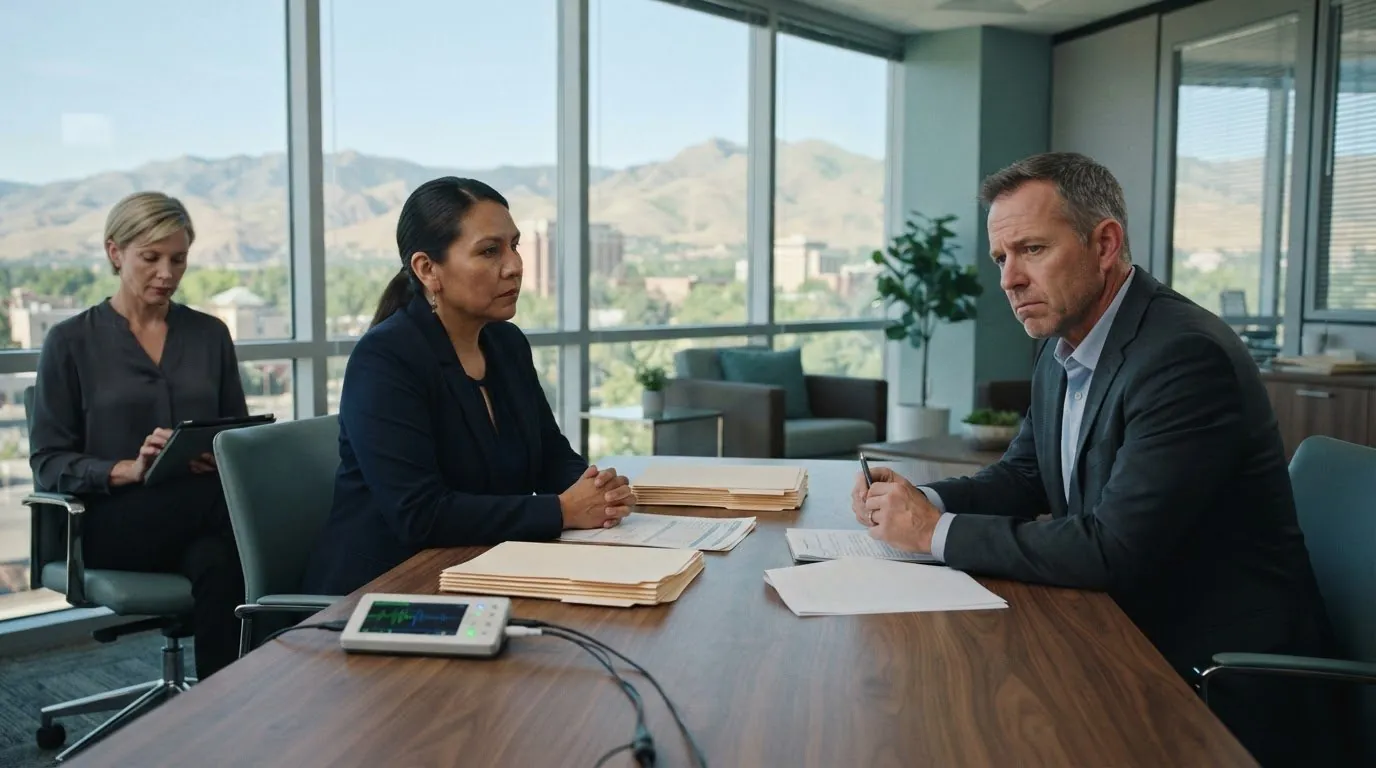
Could a polygraph for partnership dissolution disputes Ada County help move a stalled conversation forward? When business partners give conflicting accounts of a specific event or statement, it’s understandable to look for a way to assess those claims. A polygraph is best viewed as one possible aid to discussion, not a substitute for financial records, other evidence, or legal advice.
This guide explains when civil polygraph testing may help clarify disputed statements and where its limits matter. Before considering an examination, discuss with your attorney whether testing fits your circumstances and whether results could have a role in negotiations or a court proceeding. Polygraph results are not automatically admissible in court. Any written agreement about their use should be reviewed with legal counsel before testing, and it does not guarantee that a court will admit them.
Morgan Polygraph provides civil testing for private and court-ordered matters from its Boise office, serving Southern and Southwest Idaho. The process begins with a required, free intake conversation. This guide outlines what to consider so you can make an informed decision while leaving legal rights and outcomes to the proper process.
Key Takeaways
- A polygraph for partnership dissolution disputes Ada County may examine a specific disputed statement, but it cannot decide ownership, liability, or the outcome of a dispute.
- Consider testing alongside financial records, agreements, communications, witness accounts, and legal guidance.
- Before an examination, identify the precise factual issue and discuss with your attorney whether testing fits your circumstances.
- Morgan Polygraph’s process begins with a required, free intake conversation. Appointments are scheduled by telephone or email.
- Examinations average 90-120 minutes. Allow at least two hours for the appointment. Morgan Polygraph’s examiners have over 50 years of combined polygraph testing experience.
When Could a Polygraph Help in an Ada County Partnership Dissolution?
Winding down a business can be difficult even when partners agree on what happened. If they disagree about a key conversation, instruction, or representation, decisions about assets and next steps may stall. In that situation, a polygraph for partnership dissolution disputes Ada County may be considered as one way to examine a specific disputed statement, not as a means of resolving the entire conflict.
For example, one partner might say they told the other that a major expense had been approved, while the other denies receiving that instruction. They may also disagree about whether a particular promise was made during a meeting. An examination can focus on a clearly defined issue like these. It does not establish who owns a business asset or determine whether either person breached an agreement.
Polygraph examinations involve physiological measurements and questions about specific matters. The general overview of the Polygraph (Lie Detector) describes varied uses and ongoing debate about accuracy. Treat an examination as a limited source of information, not a stand-alone answer.
A polygraph may help clarify a disputed account; only the appropriate legal process can determine rights and remedies. Contracts, accounting records, emails, bank statements, and testimony provide different kinds of information. A test result cannot replace those materials or advice from an attorney familiar with the dispute.
Which disputed statements might be clearly framed?
Start with one material statement or event. Describe what was said or done, when it happened, and what is disputed, using neutral wording rather than broad accusations. For instance, the issue might be whether a partner gave a specific instruction during a meeting or made a particular representation about a transaction. Avoid framing the issue as whether someone is “dishonest” or “stole from the business.” A narrow, understandable account is easier to discuss during intake than a broad claim about the entire partnership.
What a polygraph cannot decide in an Idaho partnership dispute
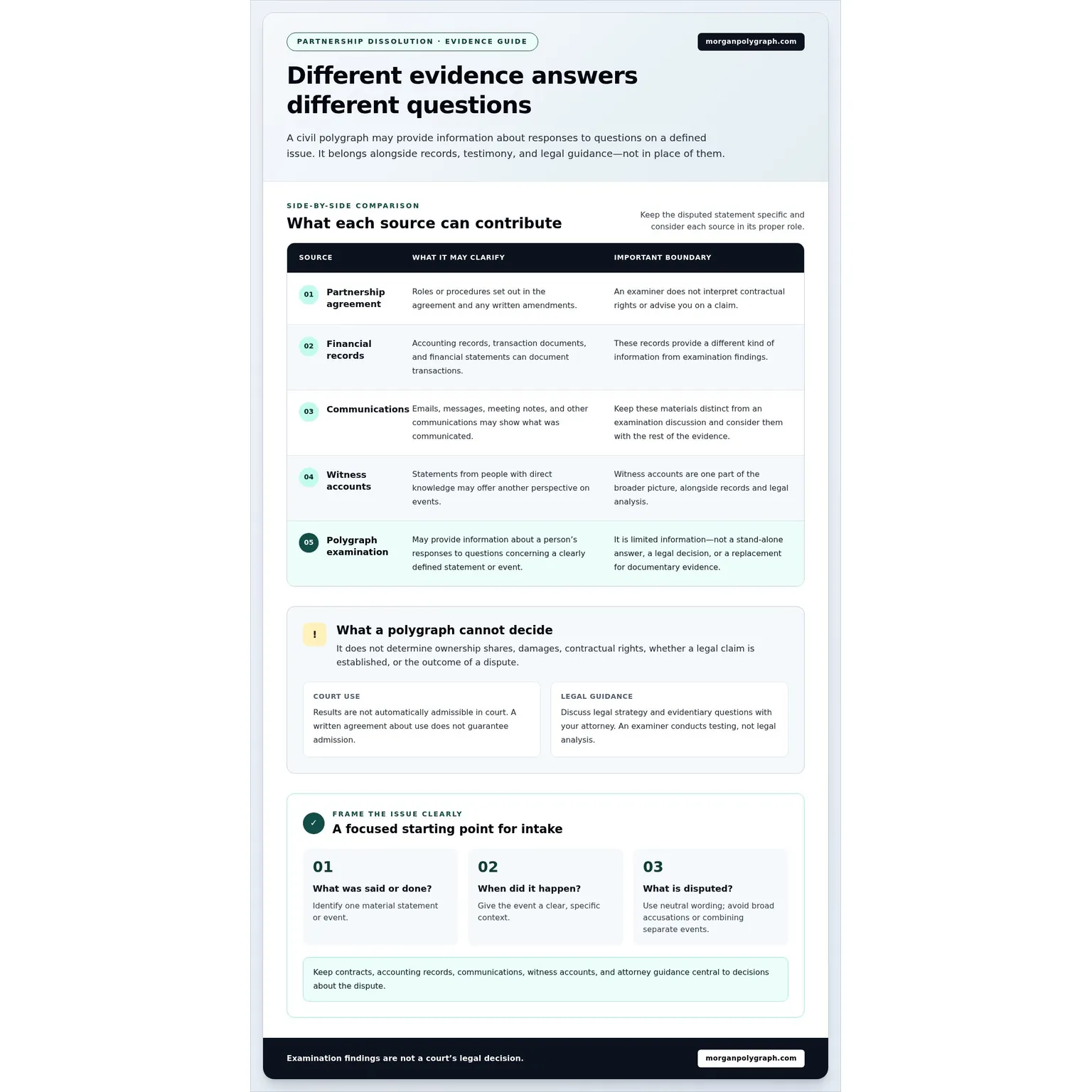
An examination does not determine ownership shares, damages, or contractual rights. It cannot establish a legal claim, replace documentary evidence, or guarantee a settlement. Its potential role is limited to providing information about a person’s responses to questions concerning a defined issue. Before proceeding, discuss your legal strategy and any evidentiary questions with your attorney, including whether testing could affect your case. Keep the underlying records and legal analysis central to decisions about dissolution.
How Civil Polygraph Testing Fits Alongside Partnership Evidence
Civil polygraph testing is a structured examination that addresses specific, relevant statements. In a partnership dissolution, it may provide information about a person’s responses to a defined issue, but it belongs within the broader picture of the dispute. A polygraph for partnership dissolution disputes Ada County is not a replacement for records, testimony, or legal analysis.
Keep different information sources distinct. A partnership agreement may set out roles or procedures. Accounting records may document transactions. Emails and meeting notes may show what was communicated, while witness accounts may offer another perspective. Examination findings are a separate source of information; their meaning and possible use depend on the circumstances and legal advice.
An examiner’s findings are not a court’s legal decision. A result cannot decide whether a contract was breached or determine what either partner is entitled to receive. The U.S. Department of Justice discusses legal issues involving polygraph evidence in federal proceedings in its resource on Admissibility of Polygraph Evidence in Court. That federal overview does not establish how a result would be treated in an Idaho civil dispute. Ask your attorney to verify current rules and their relevance to your case.
How to keep examination questions focused
Questions should address clear, relevant statements, not conclusions about someone’s character or broad claims about the business relationship. Avoid combining separate events into one issue. For example, a question that bundles a disputed instruction, an expense approval, and a later conversation may be difficult to understand as a single matter. During the required initial intake, the examiner discusses the issue and its framing. Prepare a concise account of the event and the points that are disputed to make that conversation more precise.
Why records and legal advice remain essential
Organize relevant materials separately from any examination discussion. Depending on the disagreement, these may include:
- The partnership agreement and any written amendments
- Accounting records, transaction documents, and financial statements
- Emails, messages, meeting notes, and other communications
- Statements from people with direct knowledge of the events
These sources can document terms, transactions, and communications in ways an examination cannot. An examiner conducts testing, not legal analysis, and does not interpret contractual rights or advise you on a claim. Your attorney can explain how the evidence fits together and whether an examination makes sense alongside it.
Before deciding, raise questions about disclosure, admissibility, confidentiality, or strategy with your attorney. These issues can depend on the specific case and current legal rules, so do not assume a result can be used in a negotiation or proceeding in a particular way. You can review Morgan Polygraph’s civil testing information as you consider next steps with counsel.
How to Assess Whether Testing Fits Your Ada County Dispute
Consider the nature of the disagreement before deciding whether a polygraph for partnership dissolution disputes Ada County belongs in your next steps. Testing is more relevant to a specific factual issue than to a broad business disagreement about fairness, strategy, or how a company should be divided. Use this framework to organize the question, not to assume an examination is right for every partner or dispute.
| Consideration | What to identify | Question for counsel |
|---|---|---|
| Defined disputed statement | One clear statement or event, with enough context to understand what is disputed. | Does this issue matter to the case strategy? |
| Available records | Relevant agreements, accounting materials, emails, messages, or meeting notes. | Do existing records address the issue, and how should they be handled? |
| Legal context | Any concerns about disclosure, confidentiality, court orders, or possible use of results. | What current Idaho rules or case-specific orders may apply? |
A narrow factual question is generally easier to assess than a broad allegation involving multiple transactions and years of business history. For example, you might be able to describe a single disputed instruction and the circumstances around it. If the issue shifts between several events or depends on complicated financial analysis, testing may not address the central disagreement. It should not replace reviewing business records or resolving legal questions.
Questions to discuss with your attorney first
Ask whether an examination aligns with your case strategy and whether the disputed issue is sufficiently clear to consider. Discuss confidentiality, disclosure, and any potential use of results before making a decision. Have your attorney verify current Idaho rules and any case-specific court orders. General information cannot determine how a court or another party may treat a result in your circumstances.
Signs a focused examination may be worth discussing
Consider whether you can identify one statement, explain why it matters, and describe its context without widening the issue into broad accusations. If you cannot, pause and clarify the facts with counsel. Also pause if you feel pressured to participate or have unresolved legal questions. Participation should be informed and voluntary, with the decision discussed during the required intake. This does not replace reviewing any applicable court order with your attorney.
A practical decision is not simply “test or don’t test.” First determine whether the question is precise, whether records already speak to it, and whether counsel sees a reason to explore testing. Examination findings do not replace financial analysis, documentary evidence, or legal advice. A careful review can help you decide whether a focused examination merits further discussion or whether other sources of information should remain the priority.
What to Expect Before a Partnership Dispute Polygraph in Boise
A step-by-step approach can make the process clearer when you’re considering a polygraph for partnership dissolution disputes Ada County. Morgan Polygraph provides civil testing from its Boise office and serves Southern and Southwest Idaho. A free initial intake conversation is required before an examination. The process is as follows:
- Contact Morgan Polygraph. Call (208) 573-9405 or email lieguy@gmail.com to arrange the intake conversation.
- Complete the free intake. Discuss the situation and the statement or event you want to address. The conversation helps establish whether the issue can be framed clearly for an examination.
- Define the issue. Work toward a focused description of the disputed matter, rather than a broad summary of the partnership conflict.
- Schedule an appointment. Testing is by appointment, scheduled by telephone or email.
- Attend the examination. The average examination lasts 90-120 minutes. Allow at least two hours for the appointment.
What to prepare for the free intake conversation
Before the intake, write a concise account of the statement or event in dispute and note relevant context, such as when it occurred or who was involved. You can also note dates or records connected to the issue. Ask your attorney how to handle sensitive case materials and what details are appropriate to discuss.
Keep the description factual and focused. Identify the conversation or instruction at issue and explain why it matters to the dispute. If there are several disagreements, note them separately rather than combining them into one accusation. The intake provides an opportunity to discuss the concern respectfully and consider whether it is clearly defined for testing.
Scheduling and appointment-day logistics
Appointments are scheduled by phone or email. The Boise office is at 6126 W. State Street, Suite 208, Boise, Idaho 83703. Plan for at least two hours at the appointment, even though the average examination duration is 90-120 minutes. Phones are turned off during an examination, so arrange any necessary communications beforehand.
For information about the intake process, contact Morgan Polygraph by telephone or email. The initial conversation can help clarify the issue and next steps, but an examination does not determine legal rights or resolve the partnership dispute.
Discuss Civil Polygraph Testing with Morgan Polygraph in Ada County
If a partnership dispute turns on a specific, contested statement, civil polygraph testing may be one professional option to discuss. It can provide examination findings about a defined issue, but it cannot determine a partner’s legal rights, establish ownership or liability, or decide how a dispute should end. Consider testing alongside available records and your attorney’s advice, not in place of either.
Morgan Polygraph’s examiners are court-recognized experts with over 50 years of combined polygraph testing experience. Chip Morgan is a Nationally Certified Polygraph Examiner and Senior Polygraph Instructor. These credentials reflect professional experience and expertise; they do not guarantee a particular finding or mean a result will be accepted in court. Questions about legal strategy or possible use of results belong with your attorney.
A discreet, professional civil testing option in Boise
Morgan Polygraph conducts civil testing from its Boise office at 6126 W. State Street, Suite 208, Boise, Idaho 83703, serving Southern and Southwest Idaho. Partnership dissolution can involve sensitive business and personal concerns. The testing process is handled professionally and respectfully, with attention to the examination’s defined purpose. A polygraph can address a focused factual issue, but it cannot replace financial analysis, contract interpretation, or legal advice.
Before arranging an examination, consider whether you can describe the disputed statement clearly and whether you have discussed testing with counsel. That conversation can help you understand how an examination might fit alongside other information and what legal questions need attention. Morgan Polygraph conducts testing; it does not advise either partner on claims, contractual rights, or the legal outcome of the dissolution.
Arrange the required intake conversation
A free initial intake conversation is required before an examination. It provides an opportunity to explain the issue and discuss whether it can be framed for testing. Appointments are scheduled by telephone or email. The average examination lasts 90-120 minutes, so allow at least two hours for the appointment. Do not assume a test will settle the disagreement or determine a court’s decision.
If you’ve discussed the idea with your attorney and want to explore civil testing for a defined disputed statement, contact Morgan Polygraph to arrange the required intake. Call (208) 573-9405 or email lieguy@gmail.com. The conversation is a first step toward understanding the examination process, not a substitute for legal guidance on your partnership dispute.
Take a Clear Next Step in Your Partnership Dispute
Before deciding whether a polygraph for partnership dissolution disputes Ada County is appropriate, identify the question you still need answered. A brief written note can help separate the disputed fact from the larger business conflict: what statement is at issue, what information already addresses it, and what remains unclear? Bring those points to your attorney so you can consider testing in the context of your case, rather than treating it as a shortcut to resolving the dispute.
If you and your counsel decide it’s worth exploring, an initial conversation can clarify the examination process and whether the issue is suitable for further discussion. Morgan Polygraph conducts civil testing from its Boise office, with court-recognized examiners and over 50 years of combined experience. Those qualifications support a professional examination, not a promise about findings or legal outcomes.
Arrange your required free intake conversation with Morgan Polygraph to discuss the disputed issue and the examination process.
Frequently Asked Questions
Can a polygraph determine who is legally responsible in an Ada County partnership dissolution?
No. A polygraph examination does not decide ownership, contractual responsibility, damages, or any other legal issue. It concerns specific statements discussed during the examination. For example, it may address a person’s account of a particular conversation, but it cannot establish what a contract means or who owes money. Partnership agreements, business records, and legal arguments remain separate matters. Speak with an attorney about the dispute and how examination information could relate to your case.
Is a polygraph result automatically admissible in an Idaho civil case?
Do not assume a polygraph result will be admitted or excluded automatically. Its admissibility and possible use depend on applicable law, court rules, and the circumstances of the case. General information cannot establish how a court would treat a particular result. Morgan Polygraph does not provide legal advice. Ask your attorney to verify current Idaho requirements and explain whether an examination is appropriate for your partnership dissolution and any proceedings involved.
Can one business partner require another partner to take a polygraph?
This FAQ cannot determine whether a partner can be compelled to participate in a specific dispute. The answer may depend on agreements, court orders, and the facts of the case. Before approaching the other partner, ask your attorney whether and how to raise the idea. Morgan Polygraph conducts civil testing, including private and court-ordered examinations, but an examiner cannot advise you about whether someone is legally required to participate.
What happens if partners disagree about the questions for an examination?
The issue should be clearly described before testing, and the required intake conversation gives the examiner an opportunity to discuss it. If partners disagree about a question, identify whether the difference concerns its wording, the events included, or the context being tested. Several unrelated allegations can make the focus difficult to define. Each person should consult their own attorney about proposed questions and any possible use of examination information before deciding how to proceed.
How long should I set aside for a partnership dispute polygraph appointment?
Plan for at least two hours. The examination itself averages 90-120 minutes, so do not treat the appointment as a brief meeting or an instant-result process. A free initial intake conversation is required before an examination and can be arranged separately. Scheduling is by telephone or email. If you’re coordinating around business obligations or counsel’s availability, allow enough time for the full appointment without rushing.
Does Morgan Polygraph provide legal advice about partnership dissolution?
No. Morgan Polygraph provides polygraph testing, including civil examinations, but does not provide legal counsel or advice. During the required intake, the examiner can discuss the examination process and the specific issue you want to address. For guidance on partnership agreements, court procedures, admissibility, or case strategy in Ada County, consult an attorney familiar with your matter. Keep legal questions with counsel and use the intake to discuss testing-related questions.