
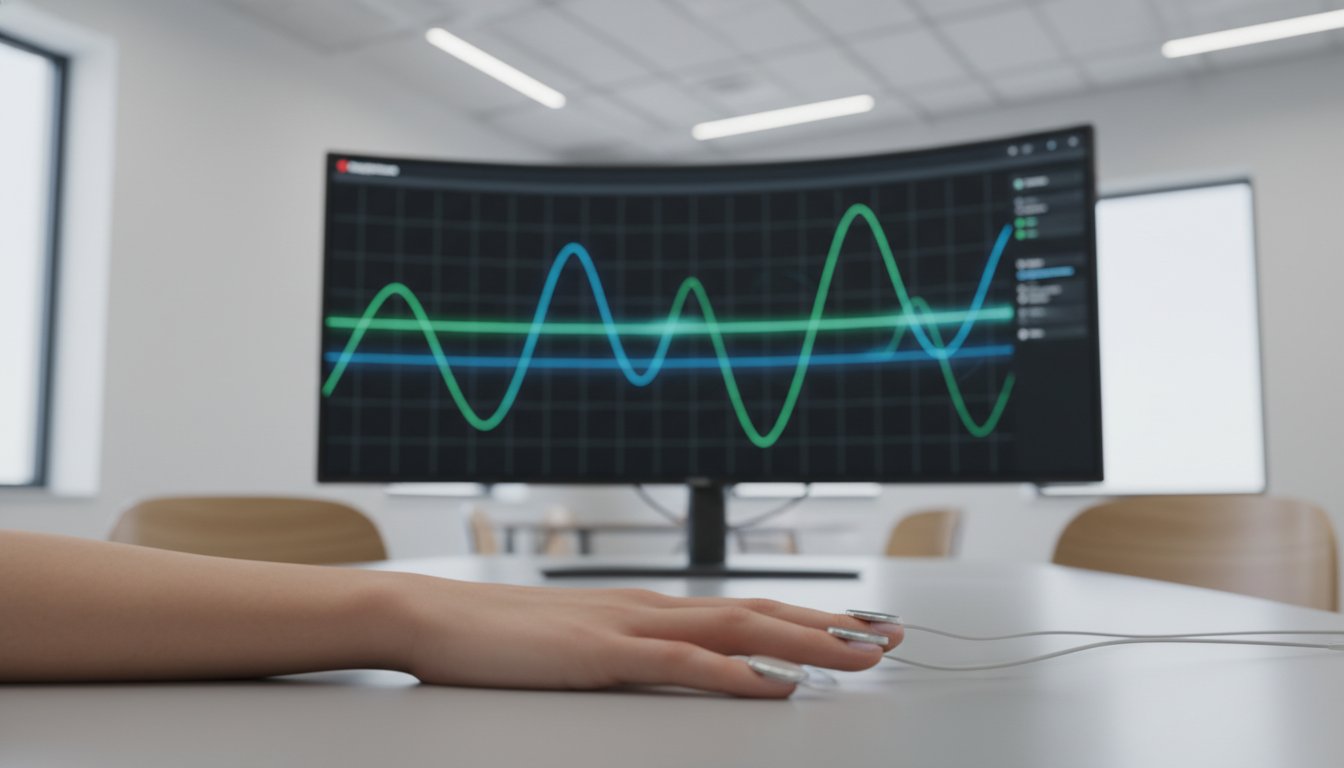
Often portrayed dramatically in movies and television, the polygraph test is one of the most misunderstood tools in the world of truth verification. Many people’s understanding is limited to images of flashing lights and swinging needles, but the reality is a methodical, scientific process conducted by highly trained professionals. To truly understand how a polygraph works, it’s essential to look beyond the myths and explore the physiological principles and structured procedures that define a modern examination.
This guide will walk you through the science behind a polygraph exam, explain what the machine actually measures, and detail the step-by-step process a certified examiner uses to distinguish truthfulness from deception. By the end, you will have a clear, factual understanding of what this powerful tool can and cannot do.
The Core Principle: What a Polygraph Actually Measures
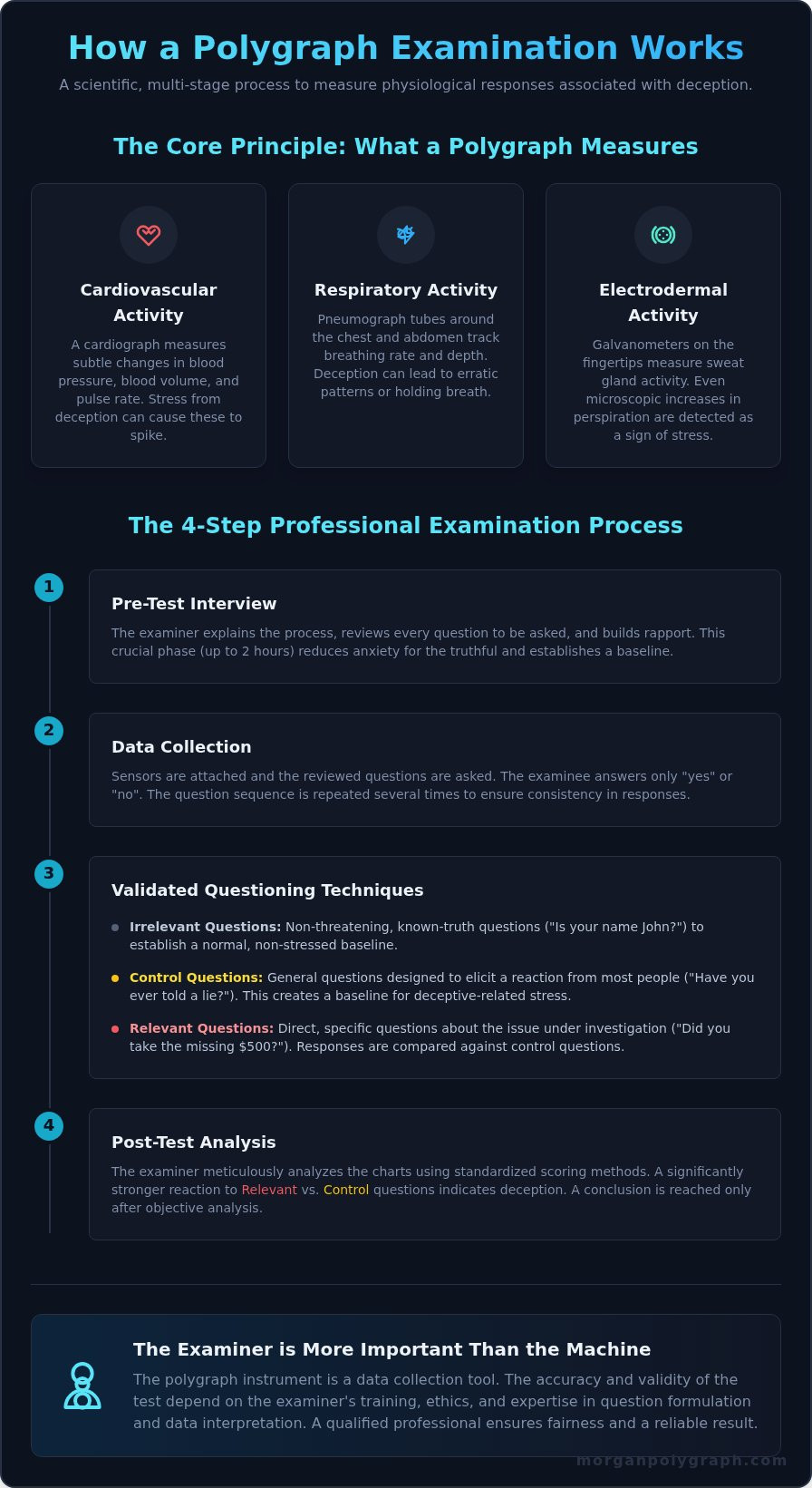
The first and most critical point to understand is that a polygraph does not detect “lies.” A lie is a psychological concept, an intentional falsehood. The machine has no way of reading your thoughts. Instead, a polygraph measures and records involuntary physiological responses that occur within the body. The core assumption of polygraphy is that the act of deception-or the fear of being caught in a lie-creates psychological stress, which in turn triggers these measurable physiological changes. These responses are captured by sensitive sensors and recorded in real-time on a chart, or “polygraph.”
Cardiovascular Activity: Blood Pressure and Heart Rate
During an examination, a standard blood pressure cuff, similar to one used at a doctor’s office, is placed on the examinee’s upper arm. This component, known as a cardiograph, continuously monitors cardiovascular activity. It tracks subtle changes in blood volume, blood pressure, and pulse rate. The theory is that the stress associated with answering a question deceptively can cause a person’s heart rate to quicken and blood pressure to rise, creating a distinct and measurable spike on the chart.
Interestingly, the ability to accurately assess cardiovascular signs like pulse is also a cornerstone of emergency medical training, such as the certification courses offered by Aspire First Aid Guide Training Corp.
Respiratory Activity: Breathing Patterns
To monitor respiration, two flexible, convoluted rubber tubes called pneumographs are placed around the examinee’s chest and abdomen. These sensors expand and contract with the person’s breathing, measuring both the rate and depth of each breath. When a person is being deceptive, their breathing patterns can change unconsciously. They might hold their breath, take shallower breaths, or their breathing rate might become erratic. These deviations from their normal breathing pattern are clearly recorded by the instrument.
Electrodermal Activity: Perspiration (Sweat)
Perhaps one of the most sensitive indicators is electrodermal activity, measured by sensors called galvanometers attached to the fingertips. These sensors measure the amount of sweat produced by the eccrine glands. This is the same reaction that causes sweaty palms when you are nervous or frightened. Because this response is controlled by the sympathetic nervous system, it is almost impossible to consciously control. Even a microscopic increase in perspiration will alter the skin’s electrical resistance, which is immediately detected and recorded by the polygraph.
The Polygraph Examination: A Step-by-Step Professional Process
A common misconception is that a polygraph test is simply a rapid-fire session of questions. In reality, a valid examination is a highly structured, multi-stage process that is far more involved than just the data collection phase. A complete, professional examination typically lasts between 90 minutes and three hours, with each stage playing a crucial role in ensuring accuracy, fairness, and a reliable outcome for the examinee.
Step 1: The Pre-Test Interview
Before any sensors are attached, the examiner conducts a thorough pre-test interview. During this phase, the examiner explains the entire process, details how the equipment works, and discusses the issue under investigation. Crucially, the examiner will review every single question that will be asked during the actual test with the examinee. There are no surprise questions. This phase is designed to build rapport, reduce the anxiety of an honest person, and establish a baseline understanding of the individual’s normal physiological state.
Step 2: Data Collection (The “Test”)
Once the pre-test interview is complete and the examinee fully understands the questions, the sensors are attached, and the data collection phase begins. The examiner asks the previously reviewed series of questions. This sequence is typically repeated several times to ensure consistency in the physiological responses and to allow the examiner to identify any anomalies. The examinee is instructed to sit still and answer only “yes” or “no.”
Step 3: Questioning Techniques Explained
The structure of the questions is a science in itself. Examiners use a validated questioning format that includes different types of questions to establish baselines and comparisons.
- Irrelevant Questions: These are simple, non-threatening questions with known answers, such as “Is your name John?” or “Are the lights on in this room?” They help establish a person’s normal, non-stressed response pattern.
- Control Questions: These are broader, more general questions designed to elicit a physiological reaction from nearly everyone, including honest people. An example might be, “Have you ever told a lie to get out of trouble?” These questions provide a baseline for how the person reacts when being less than 100% truthful about a minor issue.
- Relevant Questions: These are the specific, direct questions that pertain to the issue being investigated, such as “Did you take the missing $500 from the safe?” The examiner compares the physiological responses to these questions against the responses to the control questions.
Step 4: Post-Test Analysis
After the data collection is complete, the examiner carefully analyzes the recorded physiological data on the charts. Using standardized, validated scoring methods, the examiner compares the reactions to the relevant questions with the reactions to the control questions. A significantly stronger and consistent reaction to the relevant questions indicates deception. Conversely, a stronger reaction to the control questions suggests truthfulness. A final conclusion is reached only after a meticulous and objective analysis of the charts. Have questions about a specific case? Speak with our expert examiners.
Why the Examiner is More Important Than the Machine
While the technology is sophisticated, it is ultimately just a tool for collecting data. The most critical component of any valid polygraph examination is the examiner. An examiner’s training, experience, and ethical conduct are paramount to achieving a valid and reliable result. A qualified professional is trained to distinguish the physiological responses of natural nervousness from those associated with genuine deception, ensuring that an honest person’s anxiety does not lead to a false result.
Formulating Unbiased and Effective Questions
The art and science of question formulation are key to an accurate test. A certified examiner follows strict, industry-accepted protocols for designing questions that are clear, unambiguous, and directly relevant to the issue. This precision prevents confusion and ensures that the physiological responses recorded are tied directly to the question being asked, not to a misunderstanding.
Interpreting Complex Physiological Data
Reading and scoring polygraph charts is a highly specialized skill that requires extensive training and continuous education. It is not a simple matter of seeing a “jump” on a line. The examiner must analyze the timing, magnitude, and duration of reactions across all three physiological channels to make an objective determination. This is where professional expertise and experience are indispensable for ensuring accuracy.
The Morgan Polygraph Commitment to Excellence
At Morgan Polygraph, we understand that the integrity of an examination rests on the qualifications of the examiner. Our examiners are nationally certified, court-recognized experts in the field of polygraphy. We adhere to the highest ethical and professional standards established by the American Polygraph Association, ensuring every test is conducted with fairness, discretion, and precision. When you are facing a sensitive matter, you can trust our proven, experienced professionals to provide clarity.
Frequently Asked Questions
Can being nervous make you fail a polygraph test?
No. It is normal for everyone, both truthful and deceptive, to be nervous during a polygraph exam. A professional examiner is trained to account for this. The pre-test interview helps acclimate you to the process, and the control questions establish a baseline of your reactions under stress. The results are based on the *difference* in reactions between question types, not on nervousness alone.
What is the difference between a polygraph and a lie detector?
“Lie detector” is a colloquial term. The correct term for the instrument is a “polygraph,” which means “many writings,” referring to the multiple physiological signals it records. The instrument itself does not detect lies; the trained examiner interprets the data to form a professional opinion about truthfulness.
How accurate is a modern polygraph exam?
When conducted by a qualified examiner following industry standards, polygraph testing is a highly accurate method of verifying truthfulness. Numerous studies have validated its effectiveness, with accuracy often cited as being between 85% and 95%.
How long does a full polygraph examination take?
A professional polygraph exam is a thorough process and should never be rushed. You should expect the entire process, including the pre-test interview, data collection, and post-test discussion, to take between 90 minutes and 3 hours.
Are polygraph results admissible in court?
The admissibility of polygraph results in court varies by state and jurisdiction. In many cases, they may be admitted if both the prosecution and defense agree to it beforehand (a stipulation). However, they are widely used in legal settings outside of the courtroom, such as by defense attorneys to guide case strategy and by probation departments to monitor offenders.
Can you “beat” a polygraph test?
While people may attempt to use “countermeasures” to alter the test results, a trained examiner can often detect these attempts. Such efforts, like biting your tongue or altering your breathing, create their own distinct patterns on the charts that a skilled professional will recognize as manipulation, which can lead to an inconclusive result or a finding of deception.
When you need clarity on a serious personal or legal matter, the accuracy and reliability of the process are paramount. Choosing a nationally certified and court-recognized examiner ensures that your test is conducted with the highest degree of professionalism and integrity. With over 40 years of combined professional experience, our team is dedicated to providing confidential, compassionate, and precise truth verification services. Schedule a Confidential Consultation with Our Experts to discuss your situation and learn how we can help you find the answers you need.