

Facing a court-ordered polygraph can be a confusing and stressful experience. You likely have questions about the legal mandate, feel anxiety about the examination process itself, and have concerns about finding a qualified professional you can trust with such a sensitive matter. If you are required to undergo post-conviction sex offender testing in Idaho, know that clear, professional guidance is available. Navigating this complex requirement with confidence and discretion is possible when you are properly informed and prepared.
This complete guide is designed to provide that clarity and demystify the entire process. We will walk you through the specific legal requirements of Idaho’s Post-Conviction Sex Offender Testing (PCSOT) program, explain exactly what to expect during a professional examination, and discuss how the results are used by treatment and supervision teams. Furthermore, we will provide actionable steps for locating a compassionate, trustworthy, and Idaho Sex Offender Management Board (SOMB) certified examiner. Our goal is to replace uncertainty with understanding, ensuring you are fully prepared to meet your obligations and move forward successfully.
Understanding PCSOT in the Idaho Legal and Therapeutic Framework
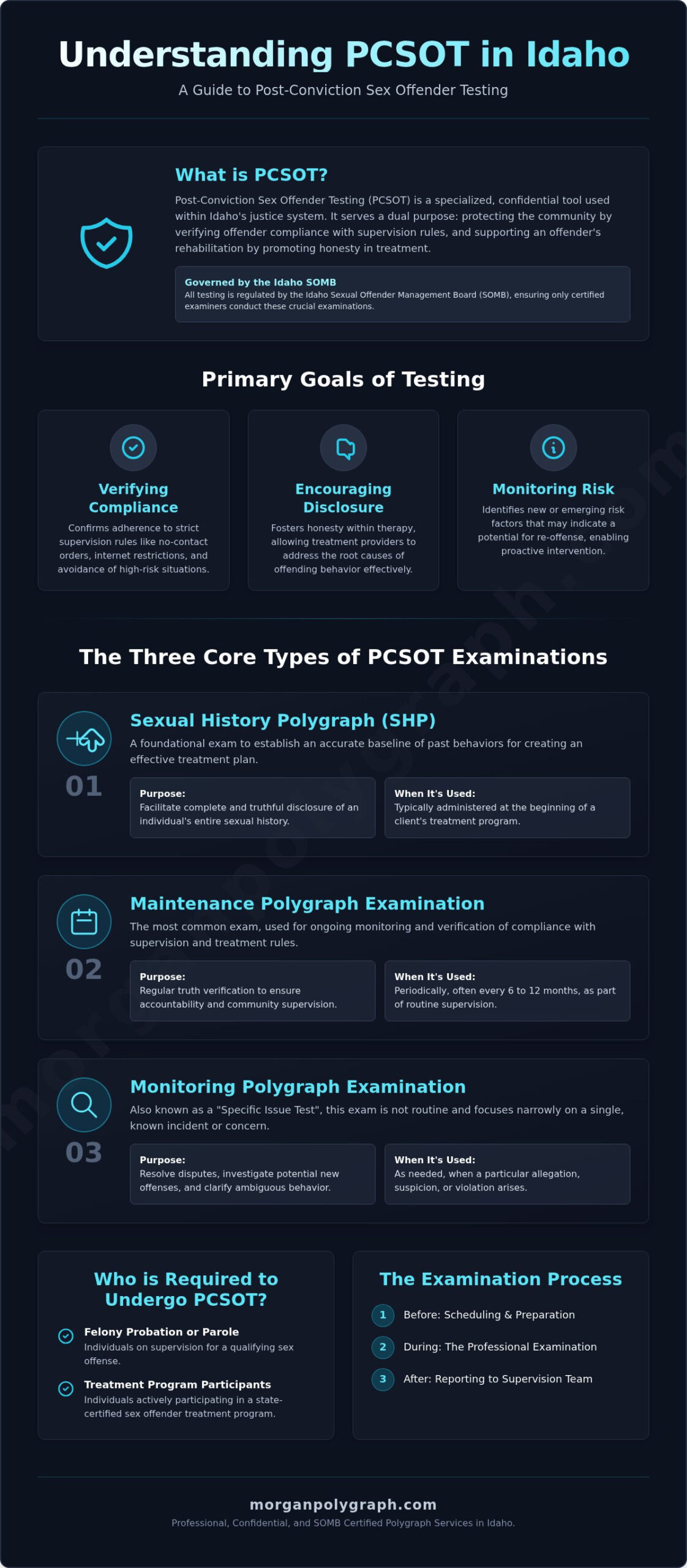
Post-Conviction Sex Offender Testing (PCSOT) is a specialized and confidential tool utilized within Idaho’s justice system. This process of post-conviction sex offender testing Idaho employs serves a crucial dual purpose: protecting the community by ensuring offender compliance and supporting an offender’s rehabilitation by promoting honesty in treatment. This is not a standalone procedure but an integrated component of a comprehensive supervision and treatment plan. In Idaho, PCSOT is typically mandated by the Courts, Probation and Parole officers, or the Idaho Department of Correction (IDOC) to monitor individuals convicted of sex offenses.
The Role of the Idaho Sexual Offender Management Board (SOMB)
To ensure the highest standards of professionalism and accuracy, all services related to post-conviction sex offender testing Idaho offers are governed by the Idaho Sexual Offender Management Board (SOMB). This board establishes and enforces rigorous standards for both polygraph examiners and treatment providers. Critically, only examiners who are certified by SOMB are authorized to conduct these court-ordered examinations. A public roster of these certified professionals is maintained to ensure transparency and access to qualified experts.
Primary Goals of Post-Conviction Polygraph Testing
The objectives of PCSOT are specific and targeted toward effective offender management and public safety. While not a substitute for therapy or supervision, the polygraph serves as an essential verification tool. Key goals include:
- Verifying Compliance: Confirming adherence to strict supervision rules, such as no-contact orders, internet usage restrictions, and avoidance of high-risk situations.
- Encouraging Truthful Disclosure: Fostering an environment of honesty within therapeutic settings, allowing treatment providers to address the root causes of offending behavior effectively.
- Monitoring Progress and Risk: Identifying new or emerging risk factors that may indicate a potential for re-offense, enabling proactive intervention from the supervision team.
Who Is Required to Undergo PCSOT in Idaho?
Undergoing PCSOT is not an optional procedure but a mandatory condition of supervision for specific individuals. The mandate for post-conviction sex offender testing Idaho enforces applies to those on felony probation or parole for a qualifying sex offense and individuals actively participating in a state-certified sex offender treatment program. These examinations are a critical part of the containment model, providing supervisors and therapists with vital information that might not otherwise be disclosed. For those new to the process, a general guide to Understanding Polygraph Examinations can provide foundational context on how the technology functions as a tool for truth verification in this specialized field.
The Three Core Types of PCSOT Polygraph Examinations
In the structured environment of post-conviction supervision and treatment, polygraph examinations are not a single, uniform tool. Instead, they are a series of specialized instruments designed to support specific stages of rehabilitation. The decision on which type of examination to administer rests with the client’s treatment provider or supervising officer, ensuring the test aligns with therapeutic goals and supervision requirements. This approach is guided by state standards, and you can review the official Idaho Administrative Code definitions for PCSOT to better understand the regulatory framework. Each test is a distinct component in the comprehensive process of post-conviction sex offender testing in Idaho.
The Sexual History Polygraph (SHP)
Typically administered at the beginning of a client’s treatment, the SHP is foundational. Its primary goal is to facilitate a complete and truthful disclosure of the individual’s entire sexual history. This is not about current compliance but about creating an accurate baseline of past behaviors. By obtaining a full history, a therapist can develop a more effective and targeted treatment plan tailored to the client’s specific needs and risk factors, forming the bedrock of their rehabilitation journey.
The Maintenance Polygraph Examination
The Maintenance Polygraph is the most frequently used examination in ongoing supervision, often conducted periodically, such as every six to twelve months. Its purpose is to monitor and verify a client’s compliance with the specific rules of their treatment program and probation or parole. Questions are direct and tailored to these conditions, such as, “Since your last polygraph, have you had any unauthorized contact with minors?” This regular truth verification is a cornerstone of effective community supervision and accountability.
The Monitoring Polygraph Examination
Also known as a Specific Issue Test, the Monitoring Polygraph is not part of a routine schedule. It is utilized when a particular concern, allegation, or suspected violation arises during supervision. The examination focuses narrowly on the details of that single, known incident. This targeted approach helps treatment providers and supervising officers resolve disputes, investigate potential new offenses, and clarify ambiguities in a client’s reported behavior, ensuring both accountability and community safety are maintained.
The PCSOT Process: What to Expect Before, During, and After
Understanding the steps involved in a polygraph examination can significantly reduce anxiety and help ensure the process is smooth and effective. At Morgan Polygraph, we are committed to a professional, structured, and confidential approach. This guide provides a clear walkthrough of what you can expect, from scheduling your appointment to the final report. The entire process is designed to be a respectful and objective tool for truth verification. Your honesty and cooperation are crucial for an accurate outcome.
Before the Exam: Scheduling and Preparation
Proper preparation is the first step toward a successful examination. To begin, you or your supervising agent can schedule an appointment with one of our certified examiners. To ensure you are at your best physically and mentally, we provide the following instructions:
- Rest: Get a full night of sleep before your exam.
- Abstain: Avoid consuming alcohol or non-prescribed drugs for at least 24 hours prior to your test. Continue taking any prescribed medication as directed by your doctor.
- What to Bring: Please arrive with a valid government-issued photo ID, the required payment, and any specific paperwork provided by your probation officer, therapist, or the court.
During the Exam: The Interview and In-Test Phase
The examination itself is a methodical, multi-stage process that typically lasts between two and three hours. It begins with a thorough pre-test interview where the examiner will discuss your medical history, explain your rights, and review every question that will be asked during the test. The structured nature of post-conviction sex offender testing in Idaho requires this detailed preparation to ensure fairness and accuracy. Following the interview, the examiner will explain how the polygraph instrument works and attach the simple, painless sensors. The in-test phase involves asking the prepared questions several times. Our process is always professional, non-accusatory, and conducted with respect.
After the Exam: Reporting and Confidentiality
Once the in-test phase is complete, the examiner conducts a careful analysis of the physiological data recorded by the polygraph instrument to form a professional opinion. A formal, detailed report is then prepared. We uphold the strictest standards of confidentiality. This final report is sent only to the specific parties authorized to receive it, which typically includes your supervising probation or parole officer, your treatment provider, and, if required, the court. Your results are protected information and are never shared with unauthorized individuals.
How to Choose a SOMB-Certified Polygraph Examiner in Idaho
Selecting the right polygraph examiner is a critical decision for anyone involved in the post-conviction supervision process. In Idaho, this choice is governed by strict legal standards to ensure fairness, accuracy, and compliance with court and probation requirements. A qualified examiner does more than administer a test; they uphold a standard of professionalism and expertise essential for the integrity of the results.
Verifying Certification on the Idaho SOMB Roster
Your first and most important step is to confirm the examiner is on the official Idaho Sex Offender Management Board (SOMB) provider roster. This is not just a recommendation-it is a legal requirement. The SOMB maintains this list to ensure all approved examiners meet rigorous standards for training, ethics, and procedural correctness. Using an examiner not on this official list will result in the test being invalid for legal purposes, a costly and time-consuming mistake.
Experience and Professionalism: What to Look For
Beyond certification, the examiner’s background and professional conduct are vital. Not all certified examiners offer the same level of expertise or create an environment conducive to accurate testing. When vetting a provider for post-conviction sex offender testing in Idaho, look for these key qualifications:
- Specialized PCSOT Experience: Look for an examiner with extensive, specific experience in the PCSOT field. This specialized knowledge is crucial for formulating appropriate questions and accurately interpreting results within the context of treatment and supervision.
- Professional Testing Environment: The examination must be conducted in a secure, professional office, not a private residence. A dedicated facility ensures confidentiality, eliminates distractions, and upholds the serious nature of the process.
- Respectful Demeanor: A professional examiner remains impartial, calm, and respectful. This approach is essential for reducing unnecessary anxiety and facilitating a fair and accurate examination for all parties involved.
Why Morgan Polygraph is a Trusted Choice for PCSOT
At Morgan Polygraph, we are committed to upholding the highest standards of integrity and expertise. Our examiners are not only SOMB-certified but are also court-recognized experts with decades of combined experience in criminal and post-conviction polygraphs. We understand the sensitive nature of these examinations and provide a professional, confidential, and respectful environment for every client. Our commitment to accuracy and ethical conduct has made us a trusted partner for legal professionals, treatment providers, and individuals across the state.
We are here to provide the expert, reliable service you require. Contact us to discuss your court-ordered testing needs.
Navigating Your PCSOT Requirements with Confidence
Navigating the requirements of post-conviction sex offender testing Idaho can be a complex and demanding process. Understanding the state’s legal and therapeutic framework, the different types of examinations, and what to expect is crucial for a successful outcome. Choosing a highly qualified, certified examiner is not just a preference-it is essential for ensuring accuracy, fairness, and compliance.
At Morgan Polygraph, we provide the expertise and professionalism required for these sensitive matters. Our team of court-recognized polygraph experts is fully certified by the Idaho Sexual Offender Management Board (SOMB) and possesses over 40 years of combined experience. We are committed to a process that is discreet, respectful, and compassionate.
Take the next step with a team you can trust. Schedule a confidential PCSOT consultation with our certified Idaho examiners. Facing these requirements with the right support can make all the difference in moving forward successfully.
Frequently Asked Questions About PCSOT Polygraph Exams
How long does a typical PCSOT polygraph examination take?
A standard PCSOT polygraph examination is a comprehensive process that typically lasts between two and three hours. This timeframe includes a detailed pre-test interview to review your history and the test questions, the in-test phase where physiological data is collected, and a brief post-test discussion. We allocate this time to ensure the procedure is conducted thoroughly and respectfully, allowing for a professional and accurate assessment in a controlled setting.
What happens if the polygraph results indicate deception?
If the physiological data indicates deception, our certified examiner performs a detailed analysis of the polygraph charts. A confidential, comprehensive report is then prepared and provided directly to the requesting party, such as your probation officer or treatment provider. This expert report outlines the relevant questions, your answers, and the examiner’s professional opinion based on the data. All subsequent actions are determined by your supervision or treatment team.
Is the polygraph result the only factor in a probation or treatment decision?
No, the polygraph is a vital tool but is not the sole factor in case management decisions. Your probation officer and treatment team consider the examination results as one component of your overall supervision. Other critical factors include your progress in therapy, compliance with all supervision terms, and general behavioral reports. The polygraph provides objective data to help guide the overall treatment and public safety plan.
Can I have my attorney present during the PCSOT examination?
To maintain the scientific integrity and accuracy of the examination, only the certified examiner and the client are permitted in the room during the procedure. This is a standard industry protocol necessary to prevent outside influence or distraction that could compromise the results. We are committed to maintaining a strictly controlled and professional environment to ensure the most reliable outcome is achieved for every client.
How much does post-conviction sex offender testing cost in Idaho?
The cost for professional post-conviction sex offender testing Idaho can vary depending on the specific requirements and complexity of the case. We provide expert, court-recognized services at highly competitive rates. For a precise, confidential quote tailored to your situation, please contact our office directly. We believe in transparency and will provide a clear cost structure with no hidden fees before you commit to an appointment.
Are the questions a surprise, or will I know them beforehand?
There are absolutely no surprise questions during a Morgan Polygraph examination. A critical part of our professional process is the pre-test interview, where the examiner will review every single relevant question with you, word-for-word. You will know the exact phrasing of each question before the in-test portion begins. This standard ensures the process is fair, transparent, and focused on verifying the truth without ambiguity or confusion.