
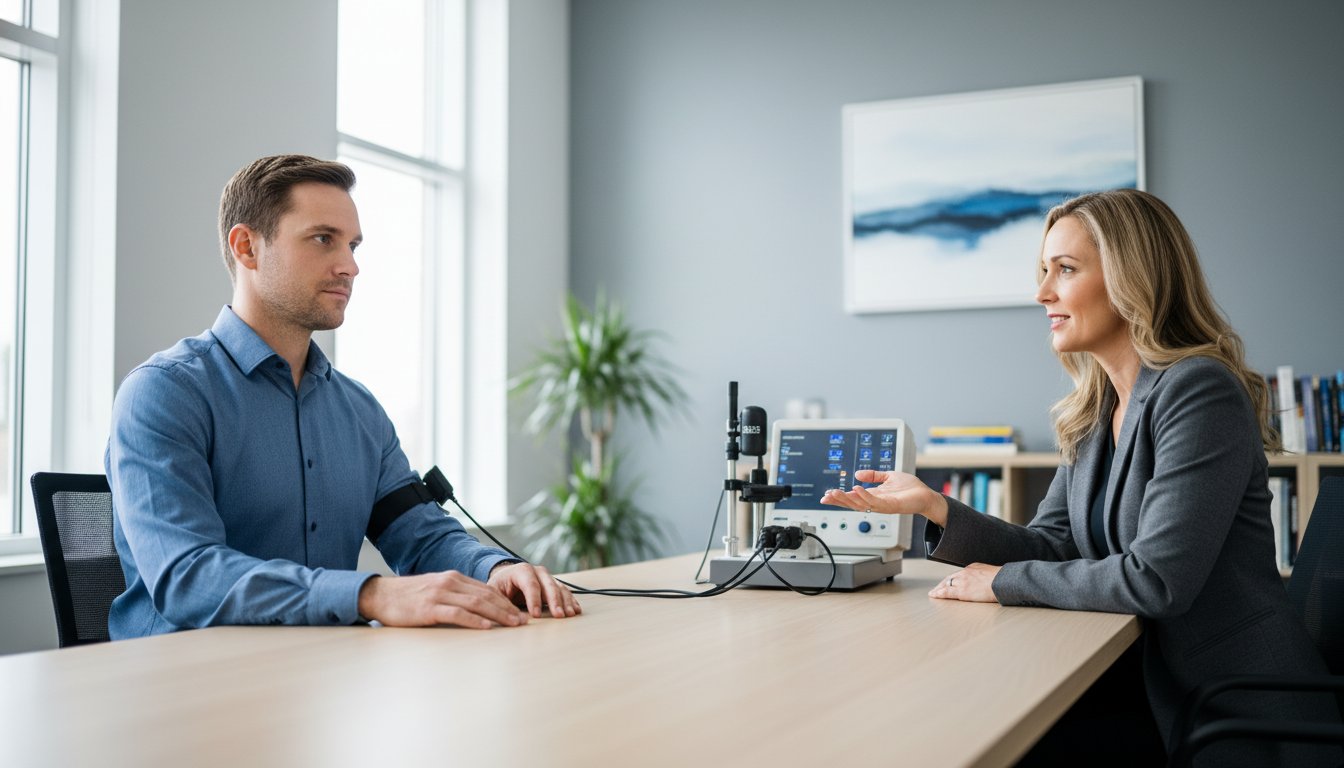
Your heart is pounding, your palms are sweating, and a single thought is racing through your mind: ‘What if they think I’m lying just because I’m nervous?’ This is one of the most common and understandable concerns for anyone facing a polygraph examination. It raises the critical question: can nervousness affect a polygraph test and cause an innocent person to fail? The truth is, while nearly everyone feels anxious during a test, a professional examiner not only expects it but is expertly trained to differentiate the body’s natural stress response from the specific physiological reactions associated with deception. Your anxiety will not automatically make you look guilty.
In this article, a court-recognized expert will explain the methodical process used to ensure accuracy and fairness. We will demystify the examination, showing you how the pre-test interview, question construction, and data analysis are all designed to isolate deceptive responses from general anxiety. By the end, you will understand how to prepare for your test with confidence, reassured that the process is built to recognize the truth, even when you’re feeling the pressure.
Key Takeaways
- Learn why certified examiners expect every examinee to be nervous and how this is factored into the professional polygraph process.
- Discover the multi-stage examination process that allows an expert to establish your unique baseline physiological patterns before critical questions are asked.
- Find out how the question “can nervousness affect a polygraph test” is addressed by understanding what the instrument actually measures-involuntary physiological responses, not deception itself.
- Recognize why attempts to “beat the test” often create suspicious results and learn the simple, expert-recommended approach for a fair and accurate examination.
The Core Concern: Will My Nervousness Cause Me to Fail a Polygraph?
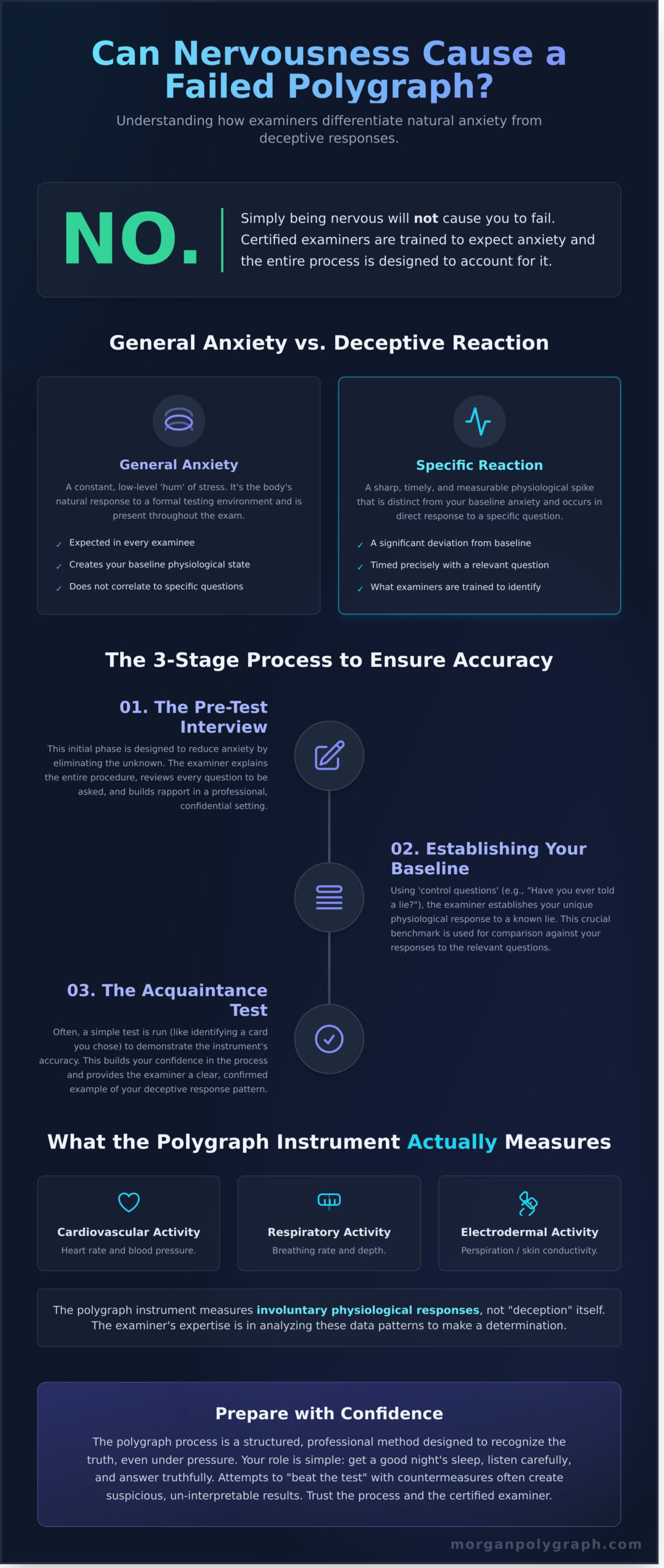
This is the single most common question we receive, and the answer is direct: No, simply being nervous will not cause you to fail a polygraph test. It is completely normal and, in fact, expected for every person to experience some level of anxiety during this process. The entire protocol of a professional truth verification exam is structured with this universal human response in mind.
A certified examiner’s expertise lies in differentiating between the body’s natural reaction to a stressful situation and the distinct physiological responses that are correlated with deception. The central question isn’t whether you are nervous, but rather how your body reacts to specific questions. Understanding this distinction is key to answering the question, “can nervousness affect a polygraph test?” The answer lies in the data patterns, not the presence of stress itself.
Understanding General Anxiety vs. Specific Reactions
Think of general anxiety as a constant, low-level hum of stress-your body’s baseline response to being in a formal testing environment. A deceptive reaction, by contrast, is a sharp, timely, and measurable physiological spike that occurs in direct response to a specific question. A professional examiner analyzes the data from what a polygraph instrument measures-such as heart rate, respiration, and skin conductivity-to identify these specific reactions, which are distinct from your baseline anxiety.
An Analogy: The ‘White Coat Syndrome’
A helpful comparison is the “white coat syndrome” commonly seen in a doctor’s office, where a patient’s blood pressure is temporarily elevated due to the stress of a clinical setting. Medical professionals are trained to recognize this and look for consistent patterns over time rather than relying on a single high reading. Similarly, a polygraph examiner establishes your unique physiological baseline during the pre-test interview and by asking non-threatening control questions, allowing them to accurately interpret your responses beyond any initial nervousness.
How Examiners Account for Nerves: A Look Inside the Process
A primary concern for many individuals is whether their anxiety can negatively impact the results. The answer to “can nervousness affect a polygraph test?” lies in understanding that a professional examination is far more than simply being connected to an instrument. It is a multi-stage, methodical process specifically designed by certified examiners to filter out the ‘noise’ of general anxiety.
Every step is calibrated to understand your unique physiological patterns in a controlled environment. This ensures that the only reactions that stand out are those directly related to the relevant questions, not to the inherent stress of the situation itself.
The Critical Pre-Test Interview
The examination begins long before any sensors are attached. During the pre-test interview, the examiner will thoroughly explain the entire procedure, detail how the polygraph instrument functions, and review every single question that will be asked. This complete transparency eliminates the fear of the unknown, which is a major source of anxiety. It is a professional and confidential opportunity to build rapport and ensure you are comfortable and fully informed.
Establishing Your Unique Baseline with Control Questions
To accurately interpret your results, the examiner must first understand how your body reacts when you are being untruthful about something minor and expected. This is achieved through control questions (sometimes called ‘known lie’ questions), such as, “In your entire life, did you ever tell a lie?” Your physiological response to this type of question establishes a crucial baseline. This benchmark is then used for comparison, allowing the examiner to distinguish a significant reaction from the baseline nervousness of an innocent subject, a factor even the U.S. Department of Justice recognizes in its examination guidelines.
The Acquaintance Test (Stim Test)
To build your confidence in the process and confirm the equipment is calibrated to you, a brief demonstration called an acquaintance test is often conducted. You may be asked to choose a number or playing card and then answer “no” to a series of questions, including one about the item you secretly selected. When the examiner accurately identifies your choice based on your physiological data, it serves two purposes: it proves to you that the instrument is working, and it provides the examiner with a clear example of your deceptive response.
Ultimately, these procedural safeguards work in concert. A trained and expert examiner uses this structured approach to ensure that your general nervousness does not interfere with an accurate outcome for truth verification.
What the Polygraph Instrument Actually Measures
A common misconception is that a polygraph is a “lie detector.” In reality, the instrument does not detect lies; it detects and records specific, involuntary physiological changes in your body. These reactions are controlled by your autonomic nervous system (ANS)-the same system that makes your heart race or your palms sweat when you feel anxious or threatened. This direct link between emotion and physiology is precisely why the question can nervousness affect a polygraph test is so prevalent. The fact is, both deception and general anxiety can trigger similar bodily responses, a variable that even the U.S. Department of Justice acknowledges. A professional examiner’s expertise lies in differentiating between these reactions through a structured and validated process.
The Four Key Channels of Data
To build a complete picture of your physiological state, a certified examiner simultaneously records data from multiple sensors. This method provides a comprehensive view for accurate pattern analysis. The primary channels include:
- Cardiovascular Activity: A blood pressure cuff measures changes in your heart rate and blood pressure.
- Respiratory Activity: Two pneumograph tubes placed around your chest and abdomen track your breathing rate and pattern.
- Electrodermal Activity: Sensors attached to your fingertips measure changes in sweat gland activity, often referred to as galvanic skin response.
- Motion Sensor: A sensor pad on the chair detects physical movements, which helps identify any attempts to use physical countermeasures to manipulate the results.
Why a Single ‘Spike’ on the Chart Doesn’t Mean Failure
It is critical to understand that a single, isolated reaction on the chart does not indicate deception. A sudden cough, a deep breath, or a fleeting moment of anxiety can all cause a temporary spike in the data. Professional polygraph examiners are trained to look for patterns, not anomalies. A deceptive result is determined by identifying timely, consistent, and significant physiological reactions that occur specifically in response to the relevant questions, as compared to your baseline responses on control questions.
The final conclusion is never based on one chart reading or a single question. It is a meticulous analysis of the totality of the data collected throughout the entire examination. This methodical approach ensures that temporary nerves are properly distinguished from the distinct patterns associated with deception. An expert examiner from Morgan Polygraph is trained to interpret this complex data with the highest degree of professional accuracy.
How to Prepare and Manage Anxiety (Without Using Countermeasures)
While it’s natural to feel nervous before a polygraph, the most effective way to manage this anxiety is through honest preparation, not by attempting to manipulate the results. The goal of a professional examination is truth verification, and your cooperation is essential to achieving an accurate outcome. Trying to “beat the test” is counterproductive and often leads to inconclusive or deceptive findings.
Practical Steps for the Day of Your Exam
To ensure you are in the best possible state for an accurate and fair examination, we advise following these straightforward guidelines. These steps help minimize extraneous stress, allowing the examiner to get a clear reading of your physiological responses to the questions.
- Get a good night’s sleep. Arriving well-rested helps you think clearly and remain calm. Fatigue can add unnecessary stress to the process.
- Eat a normal meal. Do not skip meals, but also avoid consuming excessive amounts of caffeine, sugar, or other stimulants that can artificially alter your heart rate and other responses.
- Arrive on time. Rushing to your appointment will only elevate your stress and anxiety levels before the test even begins. Give yourself plenty of time to travel to our office.
- Listen carefully. Your examiner will provide detailed instructions. Paying close attention ensures you understand the process and the questions, which reduces confusion and anxiety.
The Danger of Countermeasures
Countermeasures are deliberate actions taken to distort polygraph results, such as controlling breathing patterns, tensing muscles, or inflicting mild pain to create a physiological spike. It is critical to understand that these attempts are almost always obvious to a trained, certified examiner. Experienced professionals are taught to identify the unnatural physiological data these tactics produce. Being caught using countermeasures is a significant red flag and is typically interpreted as a sign of deception, severely damaging your credibility.
Communicate with Your Examiner
Your best tool for a successful polygraph is open and honest communication. If a question is confusing or ambiguous, ask for clarification-never guess or assume. During the pre-test interview, be candid with the examiner about your anxiety. Discussing your concerns helps the examiner establish a proper baseline and differentiate between general nervousness and deceptive reactions. Instead of worrying about if can nervousness affect a polygraph test, focus on creating a transparent and cooperative environment.
The entire process is designed to be fair, methodical, and precise. Our certified examiners are trained to conduct professional and compassionate tests, ensuring that your natural anxiety is properly understood and accounted for.
Trust the Process: Your Guide to a Clear Polygraph Result
Ultimately, the answer to the question “can nervousness affect a polygraph test?” is more nuanced than a simple yes or no. While it’s a valid concern, remember two key takeaways from our discussion: a certified examiner is expertly trained to differentiate between general anxiety and deceptive responses, and the polygraph itself measures specific physiological reactions, not just a baseline state of nervousness. A professional will always account for your natural anxiety to ensure the focus remains on accurate truth verification.
When facing a situation that requires absolute clarity, the expertise of your examiner is paramount. The Court-Recognized Experts at Morgan Polygraph bring over 40 years of combined experience to every session. We are committed to providing a professional, compassionate, and discreet service to guide you through this sensitive process with respect and understanding. If you need definitive answers, trust our team to deliver them with integrity.
Take the next step toward resolution with confidence. Schedule a Confidential Consultation with Our Certified Examiners today and let our expertise bring you peace of mind.
Frequently Asked Questions About Nerves and Polygraph Testing
What if I have a diagnosed anxiety disorder or am on medication?
It is essential to disclose any diagnosed medical conditions, including anxiety disorders, and all medications to the examiner during the pre-test interview. A certified professional is trained to account for these factors when establishing your physiological baseline. Honesty about your health and prescriptions is critical, as some medications can influence autonomic responses. This disclosure allows the examiner to properly calibrate the test and accurately interpret the resulting data for a valid assessment.
Will my heart racing cause me to automatically fail the polygraph?
No, a racing heart will not cause an automatic failure. A key question people have is can nervousness affect a polygraph test, and the answer is that examiners expect it. The instrument measures significant changes in physiological responses to specific questions, not just a high baseline level of arousal. Your examiner will establish your unique baseline, which includes your nervous state, during the initial phase of the test. A consistently elevated heart rate is factored into the final analysis.
Is it a good idea to tell the examiner that I am nervous about the test?
Yes, you should absolutely inform the examiner that you are nervous. This is a completely normal and expected reaction. Communicating your anxiety helps the examiner establish a more accurate physiological baseline during the pre-test interview. This transparency fosters a professional and cooperative environment, which ultimately assists the examiner in conducting a fair and precise examination. It demonstrates that you are being open and honest throughout the entire process.
What happens if the results are ‘inconclusive’ because of my reactions?
An ‘inconclusive’ result is not a ‘fail.’ It simply means the data collected did not clearly or consistently indicate either truthfulness or deception according to established scoring metrics. Extreme nervousness can sometimes be a contributing factor. In this event, the examiner will review the charts. Depending on the circumstances and the agreement with the client who requested the test, a re-examination may be recommended for a later date to pursue a conclusive outcome.
Can I do anything to practice staying calm before the test?
The best preparation is to be well-rested and committed to being truthful. We advise getting a full night’s sleep, eating a normal meal, and arriving on time to avoid unnecessary stress. You should avoid caffeine, energy drinks, and any non-prescribed medications before your appointment. While you cannot “practice” for the test, focusing on your breathing and listening carefully to the examiner’s instructions will help ensure the process is as smooth as possible.
Are the questions designed to make me nervous on purpose?
The questions are structured scientifically to elicit different types of responses, not to make you arbitrarily nervous. A test includes neutral questions, relevant questions, and “control” questions. Control questions are intentionally broad and designed to create a physiological reaction that can be compared against your reactions to the relevant questions. This comparison is fundamental to the polygraph technique and helps differentiate between general anxiety and deception-indicated responses.