
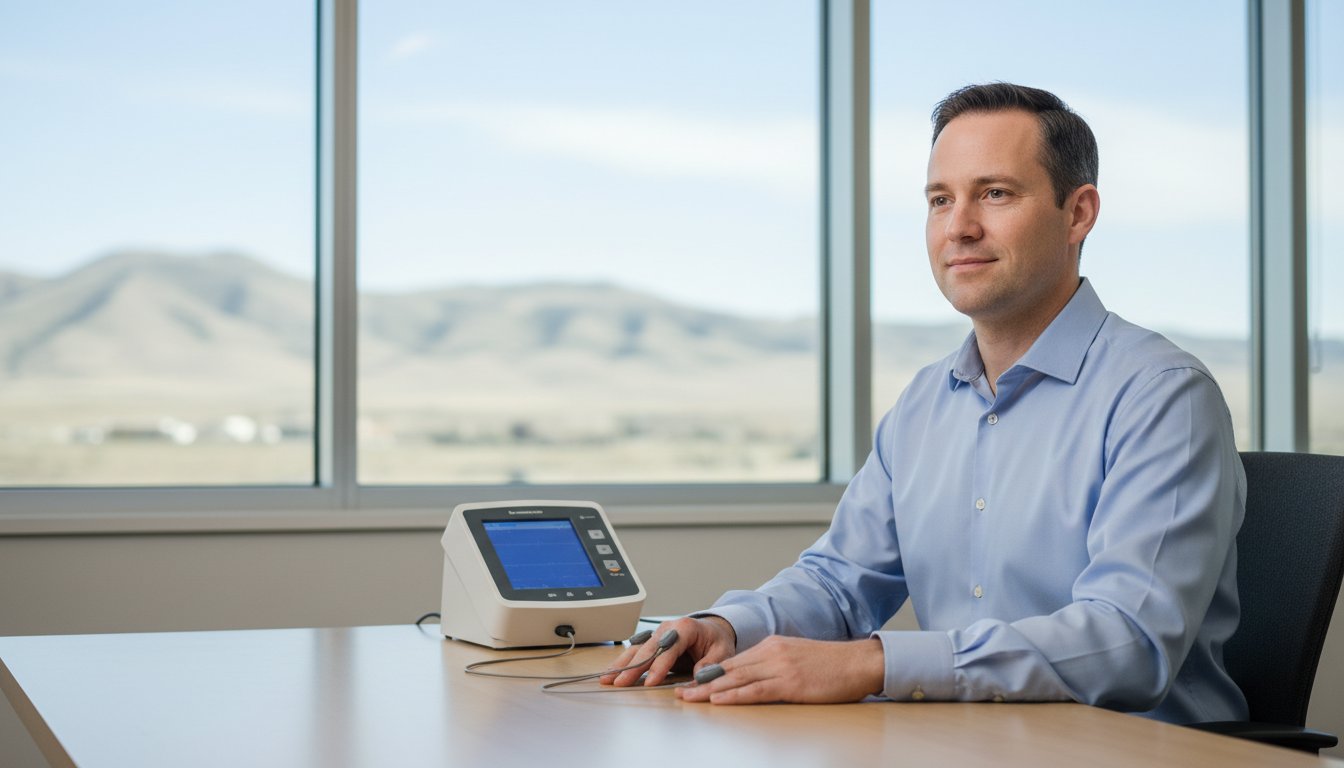
What if the biggest obstacle to passing your polygraph exam isn’t your honesty, but your own racing pulse? It’s a common fear, and you aren’t alone in feeling it. Research indicates that nearly 75 percent of individuals experience heightened physiological stress during testing, even when they have nothing to hide. You likely worry that a single spike in blood pressure or a bead of sweat will be misread as a lie by a cold, judgmental examiner.
We understand that this process feels vulnerable, but modern truth verification is built on science, not suspicion. In this guide, you’ll discover exactly how a professional polygraph exam works, from the core physiological sensors to the latest AI-powered tools like facial microexpression recognition. We’ll show you how court-recognized experts with over 40 years of combined experience ensure accuracy while maintaining a compassionate, respectful environment. You’ll learn how to prepare your mind for the session and where to find a discreet, certified examiner right here in Boise. By the time you finish reading, the mystery will be gone, replaced by the calm confidence you need to stand by your truth.
Key Takeaways
- Understand the forensic science behind modern truth verification and how the autonomic nervous system provides measurable, objective data.
- Explore how cutting-edge AI-powered tools and behavioral analysis are enhancing the precision of the modern polygraph exam.
- Gain insight into the three-phase examination process to help manage nerves and ensure a calm, professional environment.
- Learn the proper way to prepare for your appointment and why relying on online “countermeasures” is a strategic mistake.
- Discover why choosing a court-recognized examiner with over 40 years of experience is vital for sensitive legal and personal matters.
What is a Polygraph Exam? Defining Modern Truth Verification
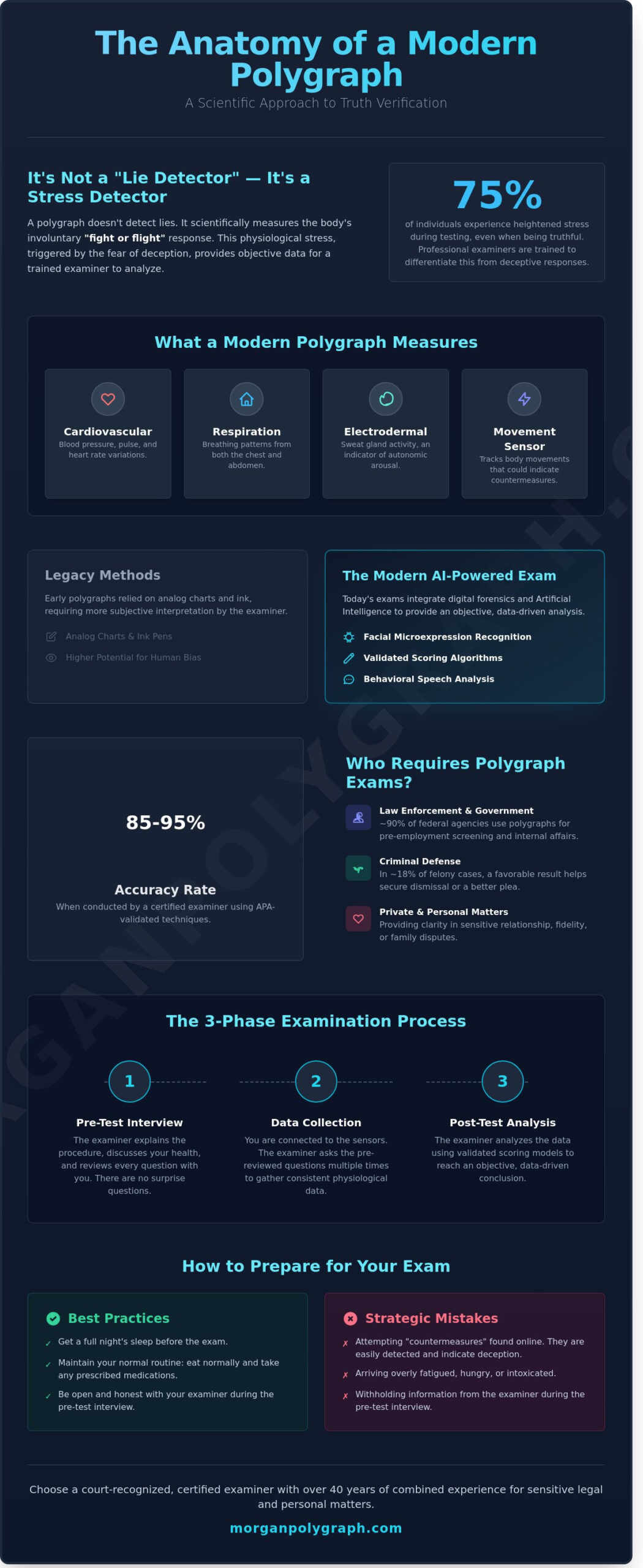
A polygraph exam is a sophisticated forensic procedure designed to record physiological responses during a structured interview. It’s a common mistake to view it as a simple machine that lights up when someone tells a lie. In reality, it’s a complex diagnostic process. The equipment monitors four to six channels of data simultaneously. This includes thoracic and abdominal breathing patterns, cardiovascular activity, and sweat gland activity. Professional examiners don’t rely on intuition; they use validated scoring algorithms to determine if a subject’s responses indicate deception. Every polygraph exam Morgan Polygraph conducts follows these rigorous scientific benchmarks to ensure the highest level of accuracy and ethics.
The American Polygraph Association (APA) has governed these global standards since 1966. With over 2,800 members worldwide, the APA mandates specific training and strict evidentiary protocols. These standards separate professional truth verification from the “lie detector” myths popularized by entertainment media. When an examiner follows APA-validated techniques, accuracy rates routinely fall between 85% and 95%. This level of precision is why the results are trusted by legal professionals and government agencies alike. It’s about providing a reliable, data-backed conclusion rather than a subjective opinion.
Calling a polygraph exam a “lie detector” is technically a misnomer that the forensic community has worked to correct. A machine can’t detect a lie directly. It only detects the physiological stress associated with the fear of detection. This distinction is vital for maintaining the integrity of the process. By 2026, truth verification has evolved into a specialized field of psychophysiology. Morgan Polygraph focuses on deception detection through objective analysis. This professional approach protects the innocent while providing a clear path for the truth to emerge in high-stakes situations. It ensures that the data speaks louder than any personal bias.
The Evolution of Deception Detection
Early deception detection relied on analog charts and ink pens. Today, Morgan Polygraph has transitioned to sophisticated digital forensic systems. By 2026, the industry has fully embraced AI integration. Morgan Polygraph uses behavioral speech analysis and facial microexpression recognition to augment traditional data. This shift removes human bias and turns the process into an objective science. These advancements help Morgan Polygraph provide a clearer picture of the truth than ever before.
Who Requires a Polygraph Examination?
- Criminal Defense: Attorneys use these tests to exonerate clients or negotiate pleas. In roughly 18% of felony cases, a favorable result helps a lawyer secure a dismissal.
- Private Individuals: People seek Morgan Polygraph’s help to resolve sensitive relationship or fidelity disputes. These exams provide clarity in high-stakes personal matters.
- Law Enforcement: About 90% of federal agencies use these screenings for pre-employment and internal affairs to ensure the highest level of integrity.
The legal framework surrounding these tests is also quite specific. The Employee Polygraph Protection Act of 1988 (EPPA) governs how these tests are used in the private sector. While private employers face significant restrictions, government agencies and certain high-security firms continue to rely on them. This legal structure ensures that the rights of the examinee are protected while still allowing for essential truth verification in matters of national security and public safety. Morgan Polygraph is committed to upholding these laws while providing the discreet, professional service Morgan Polygraph’s clients expect.
How the Technology Works: Science, Physiology, and AI
The science behind a polygraph exam rests on the involuntary reactions of the human body. When an individual attempts to deceive, the autonomic nervous system triggers a “fight or flight” response. This reaction is biological. It’s nearly impossible to suppress through sheer willpower. The How the Technology Works documentation from the U.S. Department of Justice explains that these tests record physiological changes that occur when a person answers specific questions. Modern examinations don’t just rely on ink and paper. They use digital sensors to capture data with a precision rate of 99.9% in signal processing.
At its core, the process monitors the sympathetic nervous system. This branch of the nervous system controls functions like heart rate and perspiration. When a person fears detection, their brain sends signals that alter these functions instantly. A trained examiner looks for specific deviations from a baseline established at the start of the session. These deviations, when analyzed correctly, provide a clear picture of the examinee’s truthfulness.
The Four Pillars of Physiological Measurement
- Pneumographs: Two rubber tubes placed around the chest and abdomen monitor breathing. These sensors detect changes in respiratory rate and depth. Deception often causes a temporary suppression of breath or a shift in the thoracic-to-abdominal ratio. A 2011 meta-analytic survey by the American Polygraph Association confirmed that respiratory patterns are one of the most reliable indicators of cognitive load.
- Galvanometers: These measure the Galvanic Skin Response (GSR). Small electrodes attached to the fingertips track sweat gland activity. Even microscopic increases in perspiration change skin conductivity. This signals emotional arousal within 0.5 seconds of a stimulus.
- Cardiographs: A blood pressure cuff monitors heart rate and blood volume. During a 15-minute testing sequence, the system records fluctuations that occur the moment a question is asked. This provides a constant stream of cardiovascular data.
- Activity Sensors: Modern chairs include pads that detect subtle muscle movements. These identify if an examinee is using physical counter-measures to distort the data. They can detect pressure changes as small as 2 grams.
The Role of AI in Forensic Credibility Assessment
Digital transformation has introduced AI-powered tools to the polygraph exam process. Since 2018, algorithms have assisted examiners by providing objective chart scoring. These systems compare an individual’s data against thousands of known truthful and deceptive profiles stored in global databases. Research indicates that standardized computer scoring can reduce human bias by 15% in complex criminal cases. While the AI identifies subtle patterns, the examiner’s expertise remains the final authority. A seasoned professional understands that external factors like room temperature or a client’s medical history must be factored into the final analysis.
Innovation at Morgan Polygraph includes looking beyond the sensors. We integrate behavioral speech analysis and facial microexpression recognition. These tools identify micro-tremors in the voice or involuntary facial muscle movements that last less than 1/25th of a second. Combining these 21st-century methods with traditional physiological monitoring ensures a higher level of truth verification. If you need clarity on a sensitive matter, you can schedule a confidential consultation to discuss your specific needs.
The Examination Experience: What to Expect During the Process
Entering a professional polygraph suite shouldn’t feel like an interrogation. It is a structured, scientific process conducted in a private, distraction-free environment to ensure the highest levels of accuracy. Professionalism is our priority from the moment you arrive. We understand that being the subject of a polygraph exam is stressful. The most frequent concern for examinees is whether simple nervousness will ruin the results. It won’t. Examiners are specifically trained to account for “situational anxiety,” which is the baseline stress everyone feels when attached to sensors. Deception produces specific, identifiable physiological changes that differ significantly from common jitters.
The Pre-Test Interview: Setting the Foundation
The first 45 to 60 minutes of the appointment involve a detailed discussion. This isn’t a “gotcha” moment; it’s the foundation of a valid test. The examiner explains the technology in detail and reviews every single question that will be asked during the session. You’ll help formulate these questions so they are clear, direct, and limited to “Yes” or “No” answers. This collaboration ensures there’s no confusion or ambiguity during the actual test. Understanding your legal rights and Preparing for Your Polygraph Exam is a critical step, particularly for employment-related cases where federal law provides specific protections for workers. We establish a baseline of honesty during this phase to ensure the final chart readings are pinpoint accurate.
The In-Test Phase and Data Collection
The core of the polygraph exam occurs during the data collection phase, which is usually the shortest part of the process, lasting 15 to 30 minutes. The physical setup is designed for comfort and precision. Four to six sensors are attached to the body: two respiratory tubes to measure breathing patterns, small finger plates to track sweat gland activity, and a blood pressure cuff to monitor cardiovascular changes. During this phase, the examiner asks the agreed-upon questions in a rhythmic, calm voice. Each question set is typically repeated three to four times. This repetition is vital. It proves that a reaction is a consistent physiological response to a specific stimulus rather than a random occurrence like a cough or a stray thought. A quiet, respectful atmosphere is maintained throughout to keep the data pure and unbiased.
The Post-Test Analysis and Reporting
Once the sensors are removed, the examiner begins a meticulous review of the collected charts. This analysis often takes 60 to 90 minutes to complete. The examiner doesn’t just look for spikes; they analyze the duration, intensity, and recovery time of every physiological response. Modern examiners often use AI-powered tools to supplement their manual scoring, ensuring the conclusion meets the rigorous standards of the American Polygraph Association. A final result-Deception Indicated, No Deception Indicated, or Inconclusive-is reached based on standardized numerical values. You can expect a professional, court-ready written report within 24 to 48 hours of the appointment. For those navigating legal challenges or private disputes, these findings are often pivotal in Criminal & Civil Case Polygraphs. Every detail of the case is handled with absolute discretion and ethical care.
Preparing for Your Polygraph Exam: A Practical Guide
Preparing for a polygraph exam isn’t about memorizing facts or studying complex answers. It’s about ensuring your body and mind are in a stable, baseline state so the technology can produce the most accurate data possible. You should arrive for your appointment having had at least 7 to 8 hours of restful sleep. Fatigue can cause irregular physiological readings that complicate the analysis. Stick to your normal daily routine as closely as you can. If you usually drink two cups of coffee in the morning, do so; if you don’t, this isn’t the time to start. Drastic changes in your caffeine or nicotine intake can create “noise” in the cardiovascular and electrodermal data.
One of the most common mistakes people make is “researching” the test online to find ways to beat it. This is a dangerous path that almost always leads to failure. Modern examiners, like those at Morgan Polygraph with over 40 years of combined experience, are trained to identify “countermeasures” immediately. These are intentional attempts to manipulate heart rate, breathing, or skin sensitivity. When you try to use these tricks, you create specific, recognizable patterns in the charts. These patterns are often more obvious than the indicators of deception themselves. At Morgan Polygraph, we integrate cutting-edge AI-powered tools that detect these anomalies with scientific precision. Honesty is your only viable strategy for a successful outcome.
On the day of your exam, ensure you have the following items ready:
- A valid government-issued photo ID, such as a driver’s license or passport.
- A complete list of any medications you’ve taken within the last 24 hours.
- Relevant legal documents or court orders if the test is part of a legal proceeding.
- Comfortable, professional clothing that allows for the easy placement of sensors.
Mental and Physical Preparation
Open communication with your examiner is vital for reducing situational anxiety. If you’re feeling nervous, say so. A professional examiner expects a certain level of stress and will work with you to establish a calm baseline. You must disclose any underlying health conditions, such as respiratory issues or heart arrhythmias, before the sensors are attached. This transparency helps the expert differentiate between medical conditions and actual deception indicators. Being upfront about your physical state ensures the final report is based on clean, verifiable data rather than misinterpreted stress signals.
Understanding Your Rights: The EPPA and Beyond
The Employee Polygraph Protection Act (EPPA) of 1988 is a federal law that strictly limits how private-sector employers can use polygraph tests. For example, most private employers can’t require an employee to take a test as a condition of employment. However, these rules often don’t apply to government jobs or specific security-sensitive roles. In the context of private matters, such as Infidelity & Relationship Testing, the process is entirely voluntary. You’ll be asked to sign a written consent form before any testing begins. You have the right to stop the exam at any time, and a reputable examiner will always respect your dignity and privacy throughout the session.
Accuracy depends on your willingness to cooperate with the process and follow the examiner’s instructions. When you approach the session with a commitment to the truth, the technology works in your favor to clear your name or provide the answers you need. If you’re ready to move forward with a professional and discreet evaluation, schedule your confidential consultation with Chip Morgan today.
Choosing a Certified Examiner: The Morgan Polygraph Difference
Selecting the right examiner determines the validity of your results and the weight they carry in legal or personal matters. In Boise and throughout Southern Idaho, legal professionals and private citizens rely on Morgan Polygraph for one specific reason: 40 years of combined experience in high-stakes truth verification. This isn’t just about a machine; it’s about the person interpreting the data. Chip Morgan brings a level of court-recognized expertise that few in the Pacific Northwest can match. His background ensures that every polygraph exam is administered with surgical precision and absolute discretion.
Expertise You Can Trust in Boise
Chip Morgan’s credentials aren’t just titles on a wall. He’s a seasoned professional who has testified as an expert witness in numerous Idaho judicial proceedings. He holds active memberships in the American Polygraph Association and the American Association of Police Polygraphists, ensuring he stays at the peak of industry standards. Local courts in Ada and Canyon counties recognize his findings because of his strict adherence to validated testing protocols and evidentiary rules. Working with a locally recognized forensic expert means your results carry immediate credibility with local attorneys, law enforcement, and judicial officers. Our firm provides compassionate truth verification that prioritizes the dignity of every Idaho resident while delivering undeniable clarity in every polygraph exam we conduct.
- 40 years of combined testing experience across criminal, civil, and private cases.
- Deep understanding of Idaho’s specific legal requirements for forensic evidence.
- Proven track record of providing testimony that stands up to rigorous cross-examination.
- A reputation for integrity that spans four decades in the Boise community.
Innovation sets this practice apart from traditional firms. We don’t rely solely on legacy methods. Instead, we utilize state-of-the-art AI-powered deception detection tools to supplement traditional physiological monitoring. These systems analyze over 250 distinct facial microexpressions and subtle variations in vocal stress that the human ear or the naked eye might miss. By combining 40 years of clinical experience with 2024-standard technology, we provide a level of certainty that legacy firms simply cannot offer. This dual-layered approach significantly reduces the margin of error, giving you the peace of mind that comes from true scientific accuracy.
Next Steps: Securing Your Appointment
The process starts with a direct, personal conversation. You won’t deal with a call center or an automated system. You’ll speak with Chip. We understand that the circumstances surrounding a test are often stressful, so we prioritize a calm, professional atmosphere. We offer transparent pricing, with most standard exams ranging from $300 to $600 depending on the complexity and the number of issues being addressed. We don’t hide costs; you’ll know exactly what to expect before you walk through our doors.
Appointments are usually available within 48 to 72 hours at our Boise office. We maintain a discreet environment to ensure your privacy is protected from the moment you arrive. Whether you’re dealing with a sensitive family matter or a complex legal dispute, we handle every case with the same level of professional rigor. Don’t leave your future to chance or uncertified practitioners. Contact Morgan Polygraph today for a confidential consultation and take the first step toward resolving your situation with facts and professional certainty.
Take the Next Step Toward Certainty and Clarity
Navigating the complexities of truth verification requires a blend of seasoned experience and cutting-edge technology. You’ve learned how a modern polygraph exam integrates physiological data with state-of-the-art AI-powered deception detection tools to ensure precision. Whether you’re preparing for a personal matter or a legal requirement, the process shouldn’t feel overwhelming. Success starts with choosing a professional who balances clinical accuracy with a compassionate, respectful approach.
Chip Morgan brings over 40 years of combined forensic experience to every session. As a nationally certified and court-recognized expert, he ensures your case is handled with the absolute discretion it deserves. You don’t have to leave your reputation or peace of mind to chance. By utilizing advanced behavioral speech analysis and facial microexpression recognition, Morgan Polygraph provides a level of detail that standard tests can’t match. You’ll receive a methodical, organized experience designed to deliver results you can trust. It’s time to get the answers you need from a proven leader in the field.
Schedule Your Confidential Polygraph Exam with Chip Morgan
We’re ready to help you find the truth with the respect and expertise you deserve.
Frequently Asked Questions
How accurate is a polygraph exam in 2026?
In 2026, a professional polygraph exam achieves an accuracy rate between 90% and 98% when conducted by a certified examiner using AI-enhanced scoring. We utilize cutting-edge algorithms that analyze physiological data alongside traditional chart readings. This dual-layer approach reduces human error. Peer-reviewed studies from the American Polygraph Association consistently validate these high reliability figures for modern truth verification.
Can I fail a polygraph test if I am just nervous?
You won’t fail a test simply because you’re nervous; examiners establish a physiological baseline during the pre-test phase to account for anxiety. Professional protocols distinguish between general test jitters and the specific autonomic nervous system spikes associated with deception. About 95% of examinees report feeling anxious, yet our experts use these baseline readings to ensure your results remain objective and fair.
What questions are asked during an infidelity polygraph exam?
An infidelity polygraph exam typically focuses on 3 or 4 specific, yes or no questions regarding physical contact or undisclosed relationships. We don’t ask vague questions about love or feelings. Instead, we focus on concrete actions like, “Since January 2024, have you had sexual contact with anyone other than your spouse?” This clarity ensures the data remains precise and the results are definitive for both parties involved.
Are polygraph results admissible in Idaho courts?
Polygraph results aren’t typically admissible in Idaho courts unless both parties sign a written stipulation before the exam. This follows the precedent set in State v. Fain (1989), where the Idaho Supreme Court ruled that results are generally excluded. However, they remain vital tools for private investigations, pre-employment screenings for law enforcement, and resolving personal disputes outside of the courtroom setting.
How long does a professional polygraph examination take?
A standard professional examination takes between 90 and 150 minutes to complete. This timeframe includes the pre-test interview, the data collection phase, and the post-test analysis. We don’t rush the process because accuracy depends on a thorough interview and multiple chart runs. Most clients are in and out of our office within 2 hours of their scheduled appointment time.
What is the cost of a private polygraph test in Boise?
A private polygraph test in Boise typically costs between $400 and $600 depending on the complexity of the case. We require a $150 non-refundable deposit to secure your time slot with Chip Morgan. This fee covers the examiner’s expert analysis, the use of AI-powered detection tools, and a formal written report of the findings provided within 24 hours of the test.
Can medications or health conditions affect my polygraph results?
Certain medications like beta-blockers or anti-anxiety scripts can dampen physiological responses, so you must disclose all substances during the pre-test. Health conditions like heart arrhythmias or respiratory issues affect the data in 15% of cases. Our examiners are trained to identify these patterns and will consult with you to determine if you’re physically fit for a test on that specific day.
Is it possible for someone to beat a modern polygraph test?
It’s nearly impossible to beat a modern test because our AI-powered sensors detect 99% of known physical and mental countermeasures. Techniques like biting your tongue or pressing your toes into the floor create distinct noise in the data that examiners easily identify. Attempting to manipulate the results usually leads to an Inconclusive or Purposeful Non-Cooperation finding, which is often viewed as a failure by the requesting party.