

What if the missing piece to your most painful conflict wasn’t a louder argument, but a scientific data point? When an accusation of theft or a breach of trust stalls your progress, utilizing a professional lie detector test to settle a dispute transforms an emotional deadlock into a methodical search for the truth. You’re likely exhausted by the circular arguments and the heavy weight of unresolved suspicion that can tear families and business partnerships apart. It’s a vulnerable position to be in, but you don’t have to navigate it alone.
Discover how professional polygraph examinations provide a data-driven path to resolving family, legal, and private disputes with absolute discretion. This article explores how modern forensic tools offer the objective proof needed to settle conflicts once and for all. We’ll examine the 89% accuracy rate of event-specific diagnostic tests and explain how a professional report provides the clarity required for legal or therapeutic use. By the end, you’ll understand how to bridge the gap between accusation and resolution with calm, collected confidence and move toward lasting peace of mind.
Key Takeaways
- Break the cycle of “he-said, she-said” arguments by using a forensic tool designed to provide clarity when traditional evidence isn’t available.
- Discover how a professional lie detector test to settle a dispute can resolve high-stakes conflicts involving family inheritances, relationship trust, or civil cases.
- Rely on advanced biometric measurements that offer a path to resolution through scientific observation rather than emotional confrontation.
- Understand the structured process of a polygraph exam, which often encourages truth-telling even before the sensors are attached.
- Explore the benefits of working with a certified expert in Boise who prioritizes absolute discretion so you don’t have to worry about your privacy.
Why Private Disputes Reach a Deadlock (and How Polygraphy Breaks It)
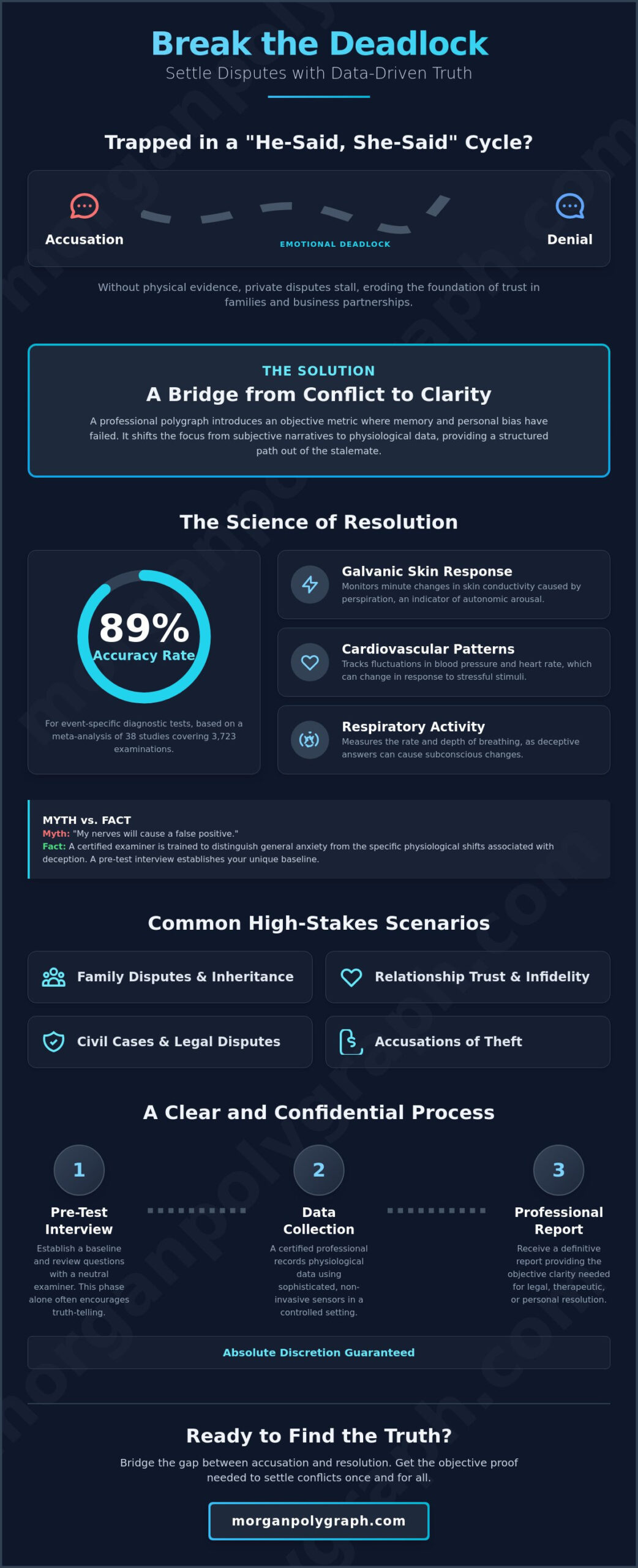
Private conflicts often stall because they occur behind closed doors. Without video footage or digital footprints, parties get stuck in a “he-said, she-said” cycle that offers no clear exit. This deadlock isn’t just frustrating; it’s destructive to the foundation of trust. Utilizing a professional lie detector test to settle a dispute introduces an objective metric where memory and personal bias have failed. By shifting the focus from subjective narratives to physiological data, we provide a structured path out of the stalemate.
To understand this shift, one must look at The Science of Truth: How Modern Polygraphs Resolve Conflicts. A polygraph doesn’t read minds; it records autonomic nervous system responses to specific, targeted stimuli. In a private dispute, this forensic approach bypasses the emotional noise that prevents resolution. By 2026, the cost of leaving these issues unsettled has become too high. Financial losses from undocumented theft or the emotional erosion of a family unit can become permanent if left to fester without a data-driven intervention.
A neutral third-party examiner is essential to this process. Unlike a family member or a legal adversary, the examiner has no stake in the outcome. Their sole objective is the integrity of the collected data. This neutrality removes the personal bias that often fuels the fire of a dispute. We don’t view the test as a trap to catch a liar, but as a bridge to closure. Whether the result confirms an account or reveals a deception, it provides the “ground truth” necessary for all parties to make a final, informed decision.
The Psychology of the Unresolved Dispute
Cognitive dissonance creates a heavy mental load for everyone involved. The accuser wants to believe their intuition, while the accused struggles with the weight of being doubted. In private settings, the “burden of proof” is often impossible to meet through conversation alone. Professional polygraphs help resolve this by providing a definitive report. This clarity allows individuals to either restore a relationship on a foundation of proven truth or end it with the certainty that they aren’t making a mistake based on a hunch.
When is a Lie Detector Test the Right Choice?
Not every disagreement requires a forensic examination. A lie detector test to settle a dispute is most effective when the stakes are high, such as in cases of significant financial loss or serious relationship breaches. It’s the right choice when physical evidence is absent and participation is voluntary. We distinguish between “frivolous” complaints and “resolvable” disputes by looking for specific incidents. Success requires both parties to agree to the process, signaling a shared commitment to truth rather than just winning an argument.
The Science of Truth: How Modern Polygraphs Resolve Conflicts
The modern polygraph is a sophisticated forensic instrument designed to record physiological changes in the human body. It doesn’t detect lies in the way popular media suggests; rather, it measures the autonomous nervous system’s reaction to specific stimuli. When someone chooses a lie detector test to settle a dispute, they’re relying on a data-driven methodology that removes the guesswork from human interaction. According to a 2026 analysis of 38 studies encompassing 3,723 examinations, event-specific diagnostic tests maintain an 89% accuracy rate. This level of precision is why the American Polygraph Association continues to validate these techniques for high-stakes resolutions.
Many individuals worry that their general anxiety or “nerves” will trigger a false positive. However, a certified examiner is trained to distinguish between situational stress and the specific physiological shift associated with deception. This distinction is crucial in Common Dispute Scenarios: From Family Theft to Civil Litigation, where the emotional weight of the situation is naturally high. By establishing a baseline through a pre-test interview, the examiner ensures the results reflect the truth of the statement rather than the stress of the environment.
Physiological Markers of Deception
The examination process monitors three primary systems: respiratory activity, galvanic skin response, and cardiovascular patterns. During the test, sensors track the rate and depth of breathing, the conductivity of the skin, and changes in blood pressure or heart rate. A deception response isn’t a single “tell” but a cluster of physiological shifts that occur when a person’s brain perceives a threat from a deceptive answer. The pre-test interview is a vital phase of this process, as it allows the practitioner to calibrate the equipment to the subject’s unique physiological baseline, ensuring the data is individualized and accurate.
2026 Advancements in Polygraph Technology
By 2026, the industry has shifted significantly toward digital algorithm-assisted scoring. These modern systems use machine learning to analyze physiological data with an objectivity that exceeds manual chart reading alone. Modern sensors are also equipped with advanced filtering technology to eliminate ambient noise and involuntary physical movements that might have obscured data in the past. Today’s polygraph is a precise data-collection tool rather than an emotional judge. If you’re facing a stalemate, consulting with a professional examiner can help you determine if this technology is the right path for your specific situation.
Common Dispute Scenarios: From Family Theft to Civil Litigation
The application of a forensic polygraph extends far beyond the interrogation rooms seen on television. In private life, people often use a lie detector test to settle a dispute that has reached a psychological or legal impasse. These situations range from deeply personal family betrayals to complex corporate allegations where physical evidence is non-existent. By providing a data-driven result, the examination offers a path toward resolution that isn’t dependent on who can argue more persuasively. It’s about replacing suspicion with certainty.
When trust is the central issue, the psychological impact of being falsely accused is just as damaging as the act of deception itself. Understanding The Science of Truth: How Modern Polygraphs Resolve Conflicts is often the only way to validate a person’s integrity when their reputation is at stake. This scientific backing is critical because it moves the conversation from emotional accusations to verifiable data. It provides a neutral ground where the facts can finally speak for themselves, regardless of the emotional history between the parties involved.
Family Theft and Inheritance Conflicts
Family dynamics are often strained by accusations of missing jewelry or misappropriated estate funds. These conflicts can cause permanent fractures if left unresolved. A professional polygraph provides the objective proof needed to clear an innocent family member, effectively stopping the cycle of suspicion before it destroys the household unit. When the dispute involves intimate partners, an Infidelity Test: A Complete Guide to Finding the Truth offers a specialized approach to finding clarity when trust has been compromised. Clearing the air in these sensitive matters requires a blend of technical precision and human empathy.
Civil Litigation and Attorney-Led Disputes
In the legal arena, attorneys in Boise frequently utilize polygraphy as a pre-litigation tool. Settling an internal theft or breach of contract allegation through a private exam can save parties thousands of dollars in court fees and years of stress. Our practitioners provide professional reports that meet high standards of clarity for legal use. When undergoing a Polygraph Examination, the process follows court-recognized protocols to ensure the data is robust enough for civil proceedings. This methodical approach allows businesses and individuals to resolve allegations with absolute discretion. Criminal defense support also plays a role, as a lie detector test to settle a dispute can help defense teams verify client statements before proceeding with costly legal strategies.
Preparing for a Dispute-Resolution Polygraph: What to Expect
A professional polygraph examination is a methodical, three-phase process designed to ensure both technical accuracy and the subject’s comfort. Understanding what happens during the appointment helps reduce situational anxiety, which is vital for a clean physiological recording. When you choose a lie detector test to settle a dispute, the examiner acts as a neutral facilitator, guiding both parties through a structured environment where the truth can emerge without the interference of emotional outbursts or circular arguments. This forensic approach ensures that every participant is treated with respect and professional clarity.
One of the most powerful aspects of this process is the “Bogus Pipeline” effect. This psychological phenomenon often leads to a resolution before the actual examination begins. When individuals realize they’re about to face a highly accurate forensic instrument, the pressure to maintain a false narrative often collapses. It’s common for subjects to provide a full disclosure during the pre-test phase, effectively settling the dispute through a voluntary admission of truth. This outcome is just as valuable as the test results themselves, as it provides the immediate closure the parties have been seeking for months or even years.
We also address the common myths regarding countermeasures. Popular online forums often suggest that physical “tricks” or controlled breathing can bypass the sensors, but these claims are outdated and incorrect. Modern equipment includes motion sensors and sophisticated algorithms that detect subtle attempts to manipulate physiological data. Rather than helping, these attempts are immediate red flags for a trained examiner. Success in a polygraph depends on transparency, not manipulation. Attempting to “beat” a lie detector test to settle a dispute only serves to undermine the subject’s credibility and the integrity of the process.
The Pre-Test Interview: Building the Framework
During this phase, the examiner reviews every single question with the subject. There are no “surprise” questions during the actual test. This review ensures the subject fully understands the terminology and the “Yes/No” format required for objective measurement. By removing ambiguity and ensuring the subject is comfortable with the phrasing, we ensure the physiological baseline is an accurate reflection of their calm state. This calibration is what allows the examiner to distinguish between general stress and a specific deception response later in the session.
Post-Test Analysis and Reporting
After the data collection is complete, the examiner performs a detailed analysis of the charts using standardized scoring systems. You’ll typically receive a professional report within 24 to 48 hours. This document provides a clear, data-backed conclusion that can be used in legal proceedings, private mediation, or family discussions. For those interested in the statistical foundation of these results, please review Are Polygraphs Accurate?. If you’re ready to move forward with a forensic solution, schedule your examination today to begin the process of resolution.
Professional Dispute Resolution in Boise: The Morgan Polygraph Advantage
Choosing a local Boise examiner provides a layer of accountability and logistical ease that national directories simply cannot match. Our facility at 6126 W. State Street, Boise, is designed to be a sanctuary of professional clarity and absolute discretion. When you employ a lie detector test to settle a dispute, the credibility of the examiner is what ultimately determines the weight of the report in a legal or professional setting. We understand the regional landscape of Idaho, including the specific expectations of local attorneys and civil mediators who require data-driven results they can trust.
A professional environment is essential for maintaining the integrity of the physiological data. Our office is structured to minimize external stressors, allowing subjects to remain in a focused, calm state throughout the pre-test and examination phases. This commitment to a discreet, clinical setting ensures that the results are a reflection of the truth rather than a reaction to an uncomfortable atmosphere. For residents of the Treasure Valley, having access to nationally certified expertise within their own community means they don’t have to travel or rely on unverified practitioners for high-stakes resolutions.
Why Credentials Matter in Dispute Resolution
The standing of your examiner within the professional polygraph community is a critical factor in the acceptance of the results. Our lead practitioner brings decades of experience and recognized credentials that carry significant weight with Boise agencies and legal teams. This expertise is particularly evident in specialized areas such as Psychosexual Evaluation and criminal defense support. When an examiner is trusted to handle sensitive, court-mandated testing, that same level of forensic rigor is applied to your private or business dispute. This professional standing ensures that your report is viewed as a serious, authoritative document by all parties involved.
Taking the Next Step Toward Resolution
Resolving a long-standing conflict begins with a single, confidential consultation. We recommend that both parties are informed about the process beforehand to ensure the highest level of cooperation and data accuracy. Preparing for the appointment involves a commitment to transparency and a willingness to let the forensic data guide the outcome. If you’re ready to break the cycle of accusation and reach a definitive conclusion, we’re here to facilitate that transition. Contact Morgan Polygraph to Settle Your Dispute Today and regain the peace of mind that only the truth can provide.
Restoring Trust Through Forensic Clarity
Unresolved conflicts don’t just stall progress; they erode the very foundation of your personal and professional relationships. By choosing a lie detector test to settle a dispute, you’re opting for a scientific path that bypasses emotional bias and focuses on verifiable physiological data. We’ve examined how this forensic tool provides the objective proof needed to break through stalemates in family matters, civil litigation, and internal business allegations. You now understand that a professional examination is a structured, respectful process designed to provide clarity for all parties involved.
Our discreet Boise, Idaho location offers the perfect environment for these sensitive sessions. We combine nationally certified and court-recognized expertise with state-of-the-art 2026 technology to ensure your results are both accurate and authoritative. Whether you need a report for legal use or simply the peace of mind that comes with the truth, our methodical approach ensures you’re in capable hands. Don’t let suspicion continue to tear your life apart when a data-driven solution is available.
Schedule a Professional Polygraph to Resolve Your Dispute and take the final step toward a definitive resolution. You deserve the clarity and confidence that only a professional forensic examination can provide. Let us help you move forward with your life today.
Frequently Asked Questions
Can a lie detector test be used in an Idaho civil court case?
Polygraph results are generally not admissible in Idaho courts unless all parties involved stipulate to their admissibility. According to Idaho Administrative Code r. 62.01.01.484, the court requires a mutual agreement before these results can be entered as evidence. Despite this, many legal professionals use a lie detector test to settle a dispute during the pre-litigation or mediation phases to avoid the expense of a full trial.
What happens if the person refuses to take the polygraph test?
Participation in any polygraph examination must be entirely voluntary. We cannot compel an individual to undergo testing, and they have the right to withdraw their consent at any point during the process. In private or family matters, a refusal is often viewed by the other party as a barrier to transparency, but it carries no direct legal penalty in a civil context.
How much does a lie detector test to settle a dispute cost in 2026?
The cost of a professional examination depends on the complexity of the issue and the number of subjects involved. While we don’t provide fixed pricing here, it’s important to understand that professional fees reflect the use of 2026-standard technology and the expertise of a certified practitioner. In the industry, “bargain” offers are often a red flag for sub-standard equipment or lack of forensic certification.
Can medications or medical conditions affect the dispute resolution test?
Yes, certain medications and physical conditions can influence autonomic nervous system responses. Substances such as beta-blockers or conditions like heart arrhythmias should be disclosed during the pre-test interview. Our examiners are trained to evaluate these factors to ensure that the subject is fit for testing and that the physiological data collected will be stable and interpretable for a valid result.
Is the polygraph result 100% guaranteed to be correct?
No forensic tool can provide a 100% guarantee of absolute certainty. While single-issue diagnostic tests reach high levels of accuracy, the polygraph is a high-probability instrument designed to provide data-driven clarity. We view the results as a powerful piece of evidence to guide your decision-making process rather than an infallible verdict, which is why we maintain such rigorous testing protocols.
How long does a typical dispute-resolution polygraph take?
A standard examination usually requires between 90 and 120 minutes to complete. This timeframe allows for a comprehensive pre-test interview, the actual data collection phase, and a preliminary review of the charts. We don’t rush the process, as the integrity of a lie detector test to settle a dispute relies on a calm, unhurried environment where the subject can provide stable physiological readings.
Will the examiner tell me the results immediately after the test?
Formal results are typically delivered in a professional report within 24 to 48 hours of the appointment. While an examiner might discuss a preliminary impression with the subject, the final determination requires a methodical analysis of the algorithmic scoring and physiological charts. This unhurried review ensures that the conclusion you receive is based on a thorough and accurate interpretation of all recorded data.
Can I stay in the room while my family member is being tested?
No, third-party observers are not permitted in the examination room during the testing phase. The presence of another person, especially a family member involved in the conflict, creates a “distraction factor” that can skew physiological responses and compromise the results. We maintain a strictly controlled, private environment to ensure the subject remains focused and the data remains as clean and objective as possible.