

What if the polygraph wasn’t a trap designed to trigger a parole violation, but a specialized clinical tool meant to support your long term success? If you’re currently under supervision, you likely understand the pressure of maintaining absolute transparency during post-conviction sex offender testing Idaho mandates. The fear of technical errors or confusion over different exam types can make the process feel overwhelming. It’s a high stakes environment where your freedom and your reputation are on the line every time you sit for an evaluation.
By understanding the standards set by the Idaho Sexual Offender Management Board, you can move through your evaluations with less anxiety and a clearer path toward completing your court-ordered requirements. This guide provides a comprehensive look at the requirements, processes, and legal standards for PCSOT polygraphs to ensure you remain in compliance and support your treatment goals. We’ll break down the specific protocols, the roles of the containment team, and the modern techniques used to ensure your results are both accurate and fair.
Key Takeaways
- Learn how the Idaho Sexual Offender Management Board (SOMB) regulates testing to ensure it serves as a clinical tool for monitoring and treatment.
- Discover the three primary types of examinations and why different stages of your supervision require specific, specialized polygraph formats.
- Understand the critical importance of the Idaho Central Roster and why only certified examiners can legally perform the post-conviction sex offender testing Idaho requires for compliance.
- Get a clear walkthrough of the examination process, from the pre-test interview to the final results, to help reduce anxiety and ensure accurate representation.
- Find out how working with experienced, court-recognized professionals in a discreet Boise environment supports your long-term success within the Idaho Containment Model.
What is Post-Conviction Sex Offender Testing (PCSOT) in Idaho?
Post-Conviction Sex Offender Testing (PCSOT) in Idaho is a specialized application of polygraph science used to monitor individuals who have been convicted of sexual offenses. Unlike standard criminal investigations, which focus on a single past event, PCSOT is a recurring clinical tool used to verify compliance with supervision and treatment requirements. The process is designed to foster transparency, ensuring that individuals under supervision provide an honest account of their behaviors and history to their treatment providers and supervising officers. This specialized testing is a mandatory requirement for many individuals who fall under the Idaho Sex Offender Registry guidelines, providing a layer of accountability that traditional supervision alone cannot offer.
The primary objective of these examinations is public safety. By utilizing post-conviction sex offender testing Idaho authorities can identify high risk behaviors or violations of supervision rules before they escalate. It’s a proactive approach to risk management that relies on data driven detection and behavioral observation. A broad Sex Offender Overview indicates that post-incarceration monitoring is most effective when it combines supervision with specialized treatment and regular verification. In Idaho, this verification is handled through a rigorous, standardized polygraph process that adheres to both state and national benchmarks.
The Role of the Sexual Offender Management Board (SOMB)
The Idaho Sexual Offender Management Board (SOMB) is the governing body responsible for setting the standards and practices for all PCSOT providers in the state. They oversee the certification of examiners, ensuring that only those with specialized training in post-conviction protocols are permitted to conduct these tests. Adhering to the IDAPA 57.01.01 standards, which were updated as of March 23, 2022, is essential for the legal validity of any examination. As of 2026, the SOMB maintains exclusive authority over the Central Roster of certified polygraph examiners, ensuring that every practitioner meets the highest levels of professional and ethical conduct.
Why Idaho Uses the Containment Model
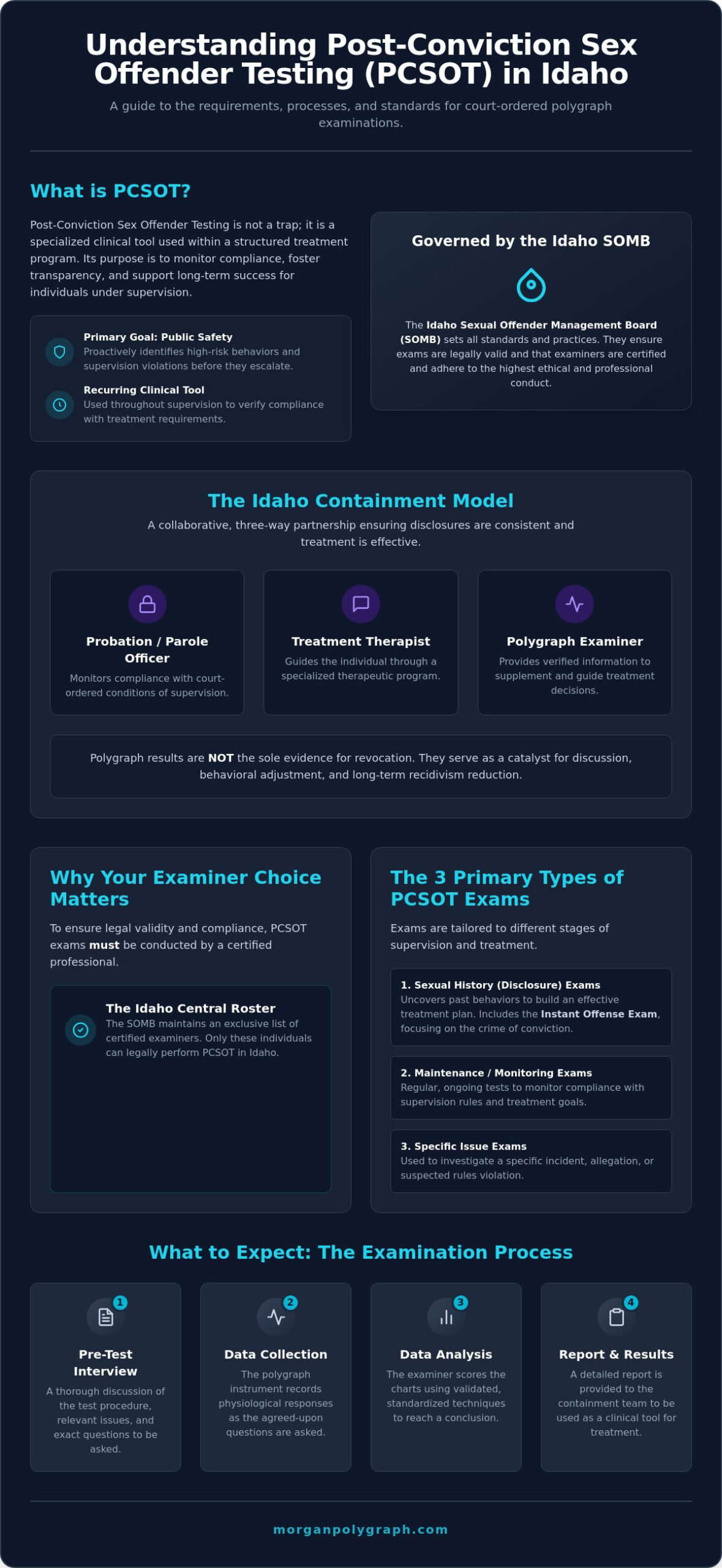
Idaho manages risk through a collaborative framework known as the “Containment Model.” This model involves a three way partnership between the probation or parole officer, the treatment therapist, and the polygraph examiner. By working together, this team ensures that the individual’s disclosures are consistent across all platforms of supervision. Polygraph results are used as a clinical supplement to supervision, providing the team with verified information to guide treatment decisions. It’s important to understand that polygraph results are not used as the sole evidence for a parole or probation revocation; instead, they serve as a catalyst for deeper discussion and behavioral adjustment. This focus on long term recidivism reduction through honest disclosure is what makes the model an effective tool for community safety.
The Three Primary Types of PCSOT Examinations
Post-conviction sex offender testing Idaho protocols are not uniform; they’re tailored to specific stages of an individual’s supervision and treatment progress. Because these examinations carry significant legal weight, Idaho standards require that examiners undergo specialized training beyond basic polygraph education. This ensures that the protocols used are scientifically validated and ethically applied. The timing and type of exam are typically dictated by the treatment provider or the court, ensuring that the polygraph serves as a meaningful data point within the larger containment model. When facing these requirements, many individuals naturally wonder, are polygraphs accurate? The answer lies in the rigorous application of standardized techniques by certified professionals who understand the nuances of therapeutic testing.
Sexual History (Disclosure) Examinations
The disclosure process is often the first major milestone in a treatment program. These exams are designed to uncover the full extent of past behaviors, providing a foundation for an effective treatment plan. There are two distinct levels of disclosure testing used in Idaho:
- Instant Offense Exam: This focuses specifically on the details of the crime of conviction. It ensures the individual is taking full responsibility for the actions that led to their current legal status and clarifies any discrepancies in the official record.
- Comprehensive Sexual History Exam: This covers lifetime behaviors and prior allegations. It’s intended to identify patterns and triggers that treatment providers must address to prevent future recidivism.
Full disclosure is critical for therapeutic progress in Idaho programs. Without a complete and honest understanding of an individual’s history, therapists cannot accurately assess risk or provide the necessary interventions to support long term success. This transparency is the primary goal of the initial testing phase.
Maintenance and Monitoring Examinations
Once the initial history is established, the focus shifts to current behavior and ongoing compliance. These exams are conducted periodically to ensure the individual is adhering to the strict requirements of their supervision. Maintenance exams verify compliance with current treatment rules and probation terms, such as avoiding prohibited contact, staying away from restricted locations, or following internet usage rules. Monitoring exams are broader, verifying that no new sexual offenses have been committed since the date of conviction.
The frequency of these tests is usually dictated by Idaho Department of Correction (IDOC) protocols, often occurring every six to twelve months depending on the individual’s specific risk level and treatment phase. If you have questions about which exam type applies to your current situation, it’s helpful to speak with a professional examiner who can explain the specific requirements of your referral in a discreet and respectful environment.
The Idaho Central Roster: Why Your Examiner Choice Matters
Choosing a practitioner for post-conviction sex offender testing Idaho requires more than just finding a local office. In this specialized field, legal validity depends entirely on the examiner’s standing with the Idaho Sexual Offender Management Board (SOMB). The SOMB maintains a Central Roster, which is a strictly regulated list of professionals authorized to conduct these sensitive evaluations. If you engage an examiner who isn’t currently listed on this roster, the Idaho Department of Correction and the courts will likely reject the results. This doesn’t just result in lost time and financial expense; it can lead to immediate complications with your supervision status and treatment progress.
The Central Roster categorizes practitioners into two primary tiers, each with distinct levels of authority. Senior or Approved examiners have demonstrated extensive experience and have met the highest benchmarks for independent practice. They’re authorized to conduct all phases of PCSOT without oversight. In contrast, Associate or Supervised examiners are highly trained professionals who are still in the process of fulfilling specific experience requirements. They must work under the direct guidance of a Senior examiner. Understanding these distinctions ensures that your testing meets the specific mandates of your court order or treatment contract.
Maintaining a spot on the Central Roster isn’t a one-time achievement. Idaho PCSOT practitioners must adhere to rigorous continuing education requirements to stay current with evolving legal standards and scientific methodologies. This commitment to ongoing training ensures that every exam conducted under the SOMB’s purview reflects the most accurate, evidence-based practices available in the industry.
Verifying Certification and Credentials
Attorneys, probation officers, and examinees should prioritize verifying an examiner’s credentials before scheduling a session. You can confirm an individual’s standing by accessing the SOMB’s public roster, which was updated as recently as October 2025. It’s also vital to look for affiliations with the American Polygraph Association (APA). The APA sets the global gold standard for ethical conduct and technical accuracy, which Idaho’s state standards mirror. Morgan Polygraph’s experts are court-recognized leaders who consistently meet these stringent Idaho criteria, providing a level of expertise that stands up to intense legal scrutiny.
State-of-the-Art Technology in PCSOT
Modern post-conviction sex offender testing Idaho relies on sophisticated computerized polygraph systems that significantly reduce the potential for human error in data collection. These systems don’t just record physiological responses; they use advanced algorithms to ensure data integrity. Practitioners at the forefront of the field also utilize specialized software designed for sexual offender risk assessment scoring. By integrating the latest peer-reviewed methodologies, such as those supported by the latest APA research, examiners provide the most reliable results possible. This dedication to innovative technology ensures that every disclosure is documented with clinical precision, supporting the ultimate goal of successful community reintegration.
What to Expect During Your PCSOT Exam in Boise
Sitting for a post-conviction sex offender testing Idaho session can be an anxiety-inducing experience, but knowing the exact steps involved can help you prepare with confidence. At our Boise office, located at 6126 W. State Street, we prioritize a calm, clinical atmosphere that respects your privacy while adhering to rigorous SOMB standards. The polygraph examination begins with a thorough pre-test interview. During this stage, the examiner reviews every question on the questionnaire with you to ensure there is no ambiguity. This is your opportunity to clarify details and ensure you fully understand what is being asked before the sensors are even attached.
The data collection phase follows, where state-of-the-art technology records your physiological responses. Specialized sensors measure your respiration patterns, sweat gland activity, and blood pressure changes in real time. This process is non-invasive and focused entirely on data-driven detection. Once the charts are collected, a post-test discussion occurs. This is a critical step where you can explain any specific physiological reactions recorded during the test. This dialogue ensures the final analysis is as accurate and fair as possible, reflecting a complete picture of the session.
Preparing for the Examination
Your physical state significantly impacts the quality of the data collected. We instruct all examinees to continue taking their prescribed medications as usual; don’t skip a dose out of fear it will affect the results. It’s equally important to get adequate sleep the night before and eat a balanced meal before your appointment. While technical accuracy is our priority, your honesty during the pre-test interview remains the most critical factor for a successful outcome. If you have specific concerns about your physical readiness, you can schedule a consultation with our Boise team to discuss your upcoming evaluation.
Confidentiality and Reporting
In the context of PCSOT, the limits of confidentiality differ from private relationship or pre-employment testing. Because these exams are a core component of the post-conviction sex offender testing Idaho framework, the final report is shared directly with your Containment Team. This typically includes your probation or parole officer, your treatment therapist, and occasionally the court. Our professional reports are structured to provide these stakeholders with clear, actionable data regarding your compliance and disclosure progress. This transparency allows the team to support your treatment goals effectively while maintaining the necessary standards for public safety.
Why Morgan Polygraph is Idaho’s Trusted PCSOT Provider
Morgan Polygraph has established itself as a cornerstone of the Idaho Containment Model through decades of dedicated service. Our Boise office serves as a specialized hub for individuals requiring the post-conviction sex offender testing Idaho mandates for supervision compliance. We understand that these evaluations aren’t just technical procedures; they’re pivotal moments in an individual’s treatment journey. By working closely with the Idaho Department of Correction and various local courts, we’ve developed a reputation for providing data that’s both technically precise and legally unassailable. Our location at 6126 W. State Street offers a discreet and professional environment for clients throughout Southern Idaho, ensuring that your requirements are met with the highest level of confidentiality.
The balance we maintain between innovation and tradition sets our practice apart. While we utilize futuristic technology for data-driven detection, we never lose sight of the human element. Our practitioners are trained to approach every session with a measured, professional demeanor that reduces examinee stress. This calm environment is essential for obtaining the most accurate physiological data. We don’t just provide a service; we act as a credible partner in the ongoing effort to manage risk and support successful community reintegration through reliable, expert verification.
Expertise You Can Count On
The credibility of our firm is anchored by our lead practitioner’s standing within the professional community. With nationally recognized credentials and a history of published work in the field of polygraph science, our principal expert brings an academic gravitas to every examination. This high level of specialization ensures that our reports aren’t just summaries; they’re expert documents designed to withstand intense legal scrutiny. We focus on the human element specifically to minimize the anxiety that can lead to inconclusive results. When you choose Morgan Polygraph, you’re choosing a seasoned expert who understands the complexities of Idaho’s legal and therapeutic standards.
Scheduling and Contact Information
Scheduling an appointment at our Boise facility is a straightforward process, though it requires specific documentation. Because post-conviction sex offender testing Idaho cases are integrated into a larger supervision framework, we require a formal court order or a referral from your treatment provider before we can proceed. This ensures that the examination is properly tailored to your specific treatment goals and supervision requirements. Our office at 6126 W. State Street is organized to handle these sensitive cases with the utmost care and systematic precision. To begin the process or to clarify any logistical details, you should contact Morgan Polygraph for professional PCSOT services in Idaho. Our team is ready to provide the authoritative and discreet support you need to maintain compliance.
Securing Your Future Through Compliance and Transparency
Navigating the complex requirements of post-conviction sex offender testing Idaho doesn’t have to be a source of constant anxiety. By focusing on transparency and choosing the right professional partners, you can successfully meet your court-ordered obligations while supporting your personal treatment goals. The validity of your results depends entirely on working with SOMB-certified examiners on the Central Roster. Using court-recognized experts ensures your disclosures are documented accurately and respected by your containment team, preventing costly legal or supervision complications.
Preparation and understanding are the keys to a low-stress experience. When you arrive at our discreet Boise location at 6126 W. State Street, you’ll enter a professional environment designed to ensure technical precision and respect. This methodical approach helps you provide the clear data your providers need to verify your progress and maintain community safety. We combine decades of traditional experience with innovative technology to give you the most reliable evaluation possible.
Schedule your SOMB-certified PCSOT exam with Morgan Polygraph today to move forward with confidence. Our team is dedicated to providing the authoritative and discreet testing required for your success. You have the tools to complete this process; we’re here to provide the expert verification that proves it.
Frequently Asked Questions
How often am I required to take a PCSOT polygraph in Idaho?
The frequency of your examinations is determined by your specific supervision level and treatment phase as mandated by the Idaho Department of Correction. Most individuals undergo testing every six to twelve months. Your supervising officer or treatment provider will establish the exact schedule based on your risk assessment and progress within the containment model.
Can a failed polygraph test send me back to prison in Idaho?
A physiological reaction indicating deception does not automatically result in a return to prison. In Idaho, polygraph results are used as one component of the containment model to guide treatment and supervision. While a failed test often leads to increased scrutiny or a requirement for further disclosure, revocation typically requires evidence of a specific violation of your parole or probation terms.
What happens if I admit to a new crime during a disclosure exam?
Admissions of new criminal activity or undisclosed victims are subject to mandatory reporting requirements. If you disclose a new offense during post-conviction sex offender testing Idaho examiners are ethically and legally obligated to include this information in their report to your containment team. This information is used to assess current risk levels and adjust your treatment plan accordingly.
Are the results of a PCSOT exam admissible in court?
The admissibility of polygraph results in Idaho courts is limited and depends on the specific nature of the legal proceeding. While results are frequently used in administrative hearings, such as probation or parole revocations, they’re generally not admissible as evidence in a new criminal trial to prove guilt or innocence. Your attorney can provide specific guidance regarding how these results may impact your particular case.
Who pays for the post-conviction sex offender polygraph test?
The individual under supervision is generally responsible for the cost of the examination. This is a standard condition of most treatment programs and court orders in Idaho. In some specific cases, specialized programs or state agencies may provide funding, but you should plan to cover the fee at the time of your appointment unless your referral paperwork states otherwise.
Can I bring my attorney or therapist to the polygraph exam?
Only the examinee and the certified examiner are permitted in the testing room during the data collection phase. This protocol prevents external distractions from affecting the physiological data. However, your attorney or therapist may participate in the pre-test interview or the post-test discussion if the examiner and the supervising agency approve their involvement beforehand.
What if I have a medical condition that might affect the results?
You must disclose all medical conditions and prescribed medications during the pre-test interview. Most conditions don’t prevent a valid test from being conducted, but the examiner needs this information to accurately interpret your physiological responses. Our practitioners use specialized techniques to account for health factors, ensuring the data collection remains as accurate as possible.
How long does a typical PCSOT examination take?
A comprehensive PCSOT examination typically lasts between two and three hours. This timeframe allows for a thorough pre-test interview, the actual data collection phases, and a post-test discussion. Rushing the process can compromise the integrity of the results, so we ensure every session is conducted with the methodical care required by SOMB standards.