
For many Idahoans under supervision, the polygraph isn’t just a test; it’s the primary bridge between continued freedom and a parole violation. Preparing for a post-conviction sex offender polygraph Idaho exam is naturally stressful. You’re likely worried about how the results will impact your status with the Idaho Department of Correction or the Commission for Pardons and Parole. It’s understandable to feel overwhelmed by technical requirements and the fear of an uncertain outcome.
This guide provides the clarity you need to approach your testing with confidence. You’ll learn how to meet every Sexual Offender Management Board (SOMB) requirement while maintaining your dignity. We’ve designed this resource to help you understand exactly what to expect during the process. We’ll explore the different types of PCSOT exams, such as sexual history and maintenance testing, and explain how modern, court-recognized technology helps you achieve full compliance. By the end, you’ll know how to find a discreet, professional environment in Boise that prioritizes both accuracy and respect.
Key Takeaways
- Understand the rigorous standards established by the Idaho Sexual Offender Management Board (SOMB) to ensure your examiner is fully certified and court-recognized.
- Learn the critical differences between Sexual History Disclosure and Maintenance Exams when scheduling your post-conviction sex offender polygraph Idaho.
- Discover how the Containment Model utilizes polygraphy as a tool for transparency, bridging the gap between supervision and therapeutic treatment.
- Gain actionable advice on physical and mental preparation to help you manage stress and maintain focus during your scheduled examination.
- Identify why choosing a Boise-based expert with nationally certified credentials ensures a professional, discreet, and technologically advanced testing environment.
PCSOT Regulations in Idaho: Understanding SOMB Requirements
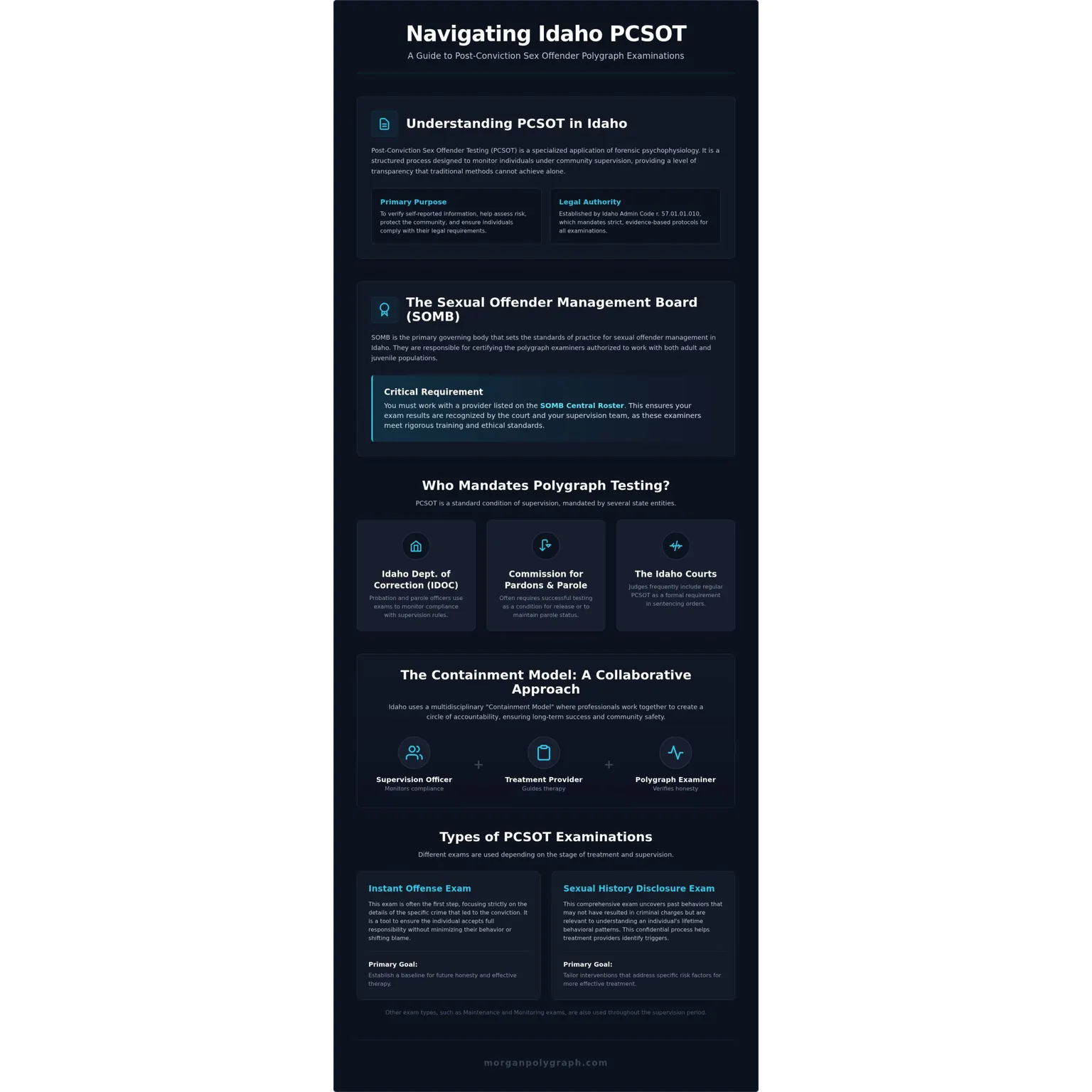
In Idaho, Post-Conviction Sex Offender Testing (PCSOT) serves as a specialized application of forensic psychophysiology. It’s a structured process designed to monitor individuals convicted of sexual offenses who are currently under community supervision. To understand what a polygraph is in this specific legal context, you have to look at the state’s regulatory framework. Idaho Admin Code r. 57.01.01.010 establishes the legal authority for these examinations, ensuring that every post-conviction sex offender polygraph Idaho residents undergo is conducted according to strict, evidence-based protocols.
The state mandates these tests because they provide a level of transparency that traditional supervision cannot achieve alone. By verifying self-reported information, the Idaho Department of Correction and the courts can better assess risk and protect the community. The process isn’t meant to be a trap. Instead, it’s a tool for honesty that helps individuals stay in compliance with their legal requirements.
The Role of the Sexual Offender Management Board (SOMB)
The SOMB is the primary governing body responsible for setting the standards of practice for sexual offender management in Idaho. They certify the polygraph examiners who are authorized to work with both adult and juvenile populations. In February 2025, the SOMB updated its “Standards and Guidelines for Adult Sexual Offender Management Practices” to reflect current best practices in the field.
It is vital to work with a provider listed on the SOMB Central Roster. Examiners on this roster have met rigorous training benchmarks and adhere to specific continuing education requirements. These standards ensure that every exam is conducted with a high degree of consistency, accuracy, and professionalism across the state. Using a certified expert ensures your results are recognized by the court and your supervision team.
Who Requires PCSOT in Idaho?
Polygraph testing is a standard condition of supervision for those on probation or parole for sexual offenses. Several entities have the authority to mandate a post-conviction sex offender polygraph Idaho exam:
- Idaho Department of Correction (IDOC): Probation and parole officers utilize these exams to monitor compliance with supervision rules.
- Commission for Pardons and Parole: This body often requires successful testing as a condition for release or to maintain parole status.
- The Idaho Courts: Judges frequently include regular PCSOT as a formal requirement in sentencing orders.
This requirement is part of Idaho’s “Containment Model.” This multidisciplinary approach involves the supervision officer, the treatment provider, and the polygraph examiner working in tandem. The goal is to create a circle of accountability where the polygraph verifies that the individual is following their treatment plan and avoiding high-risk situations. This collaborative effort helps ensure long-term success and community safety.
Types of Post-Conviction Sex Offender Polygraph Exams
Not all examinations are identical. The type of post-conviction sex offender polygraph Idaho residents are required to take depends on where they are in their treatment and supervision journey. There are four primary categories of testing used by the Sexual Offender Management Board (SOMB) to maintain oversight and ensure public safety. Each exam serves a distinct purpose within the containment model, moving the individual from disclosure toward long-term stability.
An Instant Offense Exam is often the first step in the process. It focuses strictly on the details of the specific crime that led to the conviction. This ensures the individual accepts full responsibility without minimizing their behavior or shifting blame. Acceptance of the facts is essential for beginning effective therapy and establishing a baseline for future honesty.
The Sexual History Disclosure Examination
Effective treatment requires a complete understanding of an individual’s lifetime behavioral patterns. A Sexual History Disclosure Exam uncovers past behaviors that may not have resulted in criminal charges but are relevant to identifying risk factors. This process occurs in a confidential, professional setting. It allows the individual to be completely honest about their past. According to the Idaho Administrative Code on Polygraph Examinations, these tests must be performed by certified examiners who follow specific state standards. Treatment providers use this data to identify triggers and tailor interventions that address specific behavioral patterns. This deep dive into one’s history is often a one-time requirement that sets the stage for all subsequent therapeutic progress.
Maintenance and Monitoring: Ensuring Ongoing Compliance
Once a baseline is established, supervision shifts toward ongoing oversight. Maintenance exams are scheduled regularly, often every six months, to verify that the individual is following all probation or parole conditions. These tests check for “clean” behavior, such as avoiding prohibited contact, staying away from restricted locations, or adhering to internet use rules. Monitoring exams differ slightly. They are typically triggered by specific allegations or suspicious behaviors reported by a supervision officer. These exams play a vital role in supporting the requirements of the Idaho sex offender registry, as they verify that the registered individual is living at their reported address and following all legal mandates.
Results are categorized as No Deception Indicated (NDI) or Deception Indicated (DI). A “clean” test result builds trust with the containment team and demonstrates a commitment to the recovery process. If you need to schedule a mandatory exam, you can find specialized PCSOT services that prioritize both technical accuracy and professional discretion.
The Role of Polygraphy in Idaho’s Containment Model
Idaho’s approach to managing individuals in the community isn’t a solo effort. It relies on a framework known as the Containment Model. This model brings together three distinct pillars: supervision, treatment, and the post-conviction sex offender polygraph Idaho residents must complete. By integrating these elements, the state creates a comprehensive safety net that addresses both legal compliance and therapeutic progress. This collaborative structure ensures that no single agency carries the burden of risk assessment alone.
The polygraph often acts as a functional “truth serum” within this clinical application. While it doesn’t physically compel speech, it facilitates a level of honesty that’s difficult to achieve through traditional interview methods. When examinees know their statements will be verified by physiological data, they’re more likely to provide full disclosures. This transparency is vital. Therapy cannot address behaviors that remain hidden, and supervision cannot manage risks that aren’t disclosed.
The Triangle of Supervision
The Containment Model functions like a triangle, with each point supporting the others. The Probation or Parole Officer (PO) focuses on external control; they enforce the rules and monitor daily activity. The Treatment Provider focuses on internal change, using cognitive-behavioral techniques to reduce recidivism. The Polygraph Examiner serves as the objective data collector, providing the verification that links the other two roles. This objective data helps the team move past “he-said, she-said” scenarios.
This collaboration is seamless. If an examiner identifies deceptive patterns during a maintenance test, that information is shared with the PO and the therapist. The therapist then uses those results to adjust counseling goals, focusing on the areas where the individual is struggling most. Because approximately 80% of adult sex offender treatment programs in the United States utilize this methodology, it’s considered a national standard for high-stakes clinical management.
Benefits for the Examinee and the Community
While the process may feel intrusive, it offers significant benefits for the individual under supervision. Consistent honesty in testing can eventually lead to reduced supervision levels. It demonstrates to the court and the Idaho SOMB that the individual is committed to their recovery and poses a lower risk to the public. Many clients also report a psychological benefit from “clearing the air” through full disclosure, as it removes the burden of maintaining secrets. It provides a path toward earned trust.
Ultimately, community safety is the primary goal. Critics often ask, are polygraphs accurate enough for such serious applications? When used within the structured SOMB framework by certified experts, they provide a reliable mechanism for risk assessment. This data-driven approach ensures that supervision is based on facts rather than assumptions. It allows the state to allocate resources where they’re needed most while giving compliant individuals a clear way to prove their progress.
How to Prepare for Your Idaho PCSOT Examination
Preparation for a post-conviction sex offender polygraph Idaho residents face is as much about physical readiness as it is about mental clarity. Arriving at the Boise office in an optimal state ensures that your physiological readings are a true reflection of your responses. We recommend getting a full night’s rest and eating a balanced meal before your appointment. You should continue taking all medications as prescribed by your physician. Abruptly stopping a prescription can cause physiological fluctuations that complicate the data collection process.
Mental preparation requires a commitment to total transparency. The containment model discussed earlier relies on your honesty to facilitate progress. Before you arrive, take time to reflect on the specific areas your probation officer or therapist has highlighted. Bring the following items to your appointment:
- Valid government-issued photo identification.
- Copies of relevant court orders or supervision requirements.
- Current treatment records or disclosure forms if requested.
What Happens During the Exam?
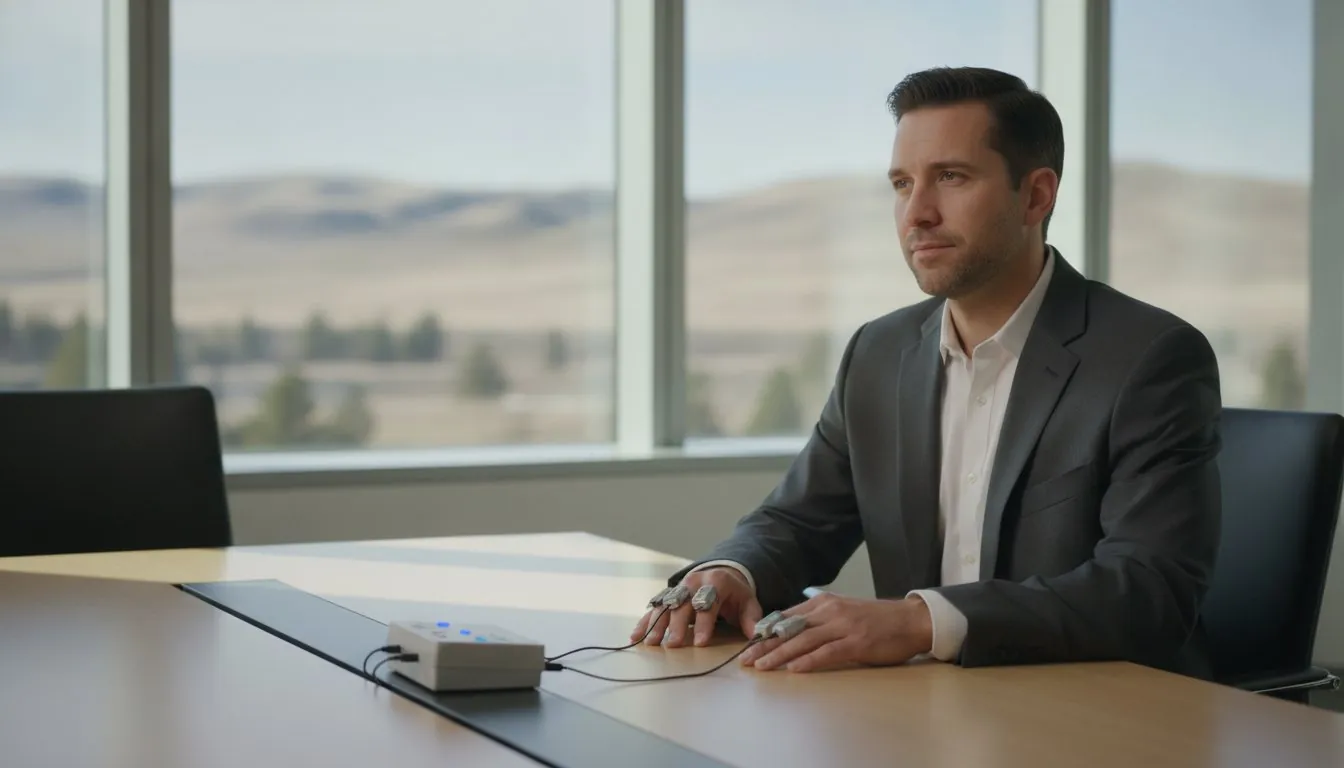
The process begins with a comprehensive pre-test interview. During this phase, the examiner reviews every question with you. There are no surprise questions once the sensors are attached. This structured polygraph examination uses advanced sensors to monitor specific physiological markers. These include your respiratory patterns via chest tubes, cardiovascular activity through a blood pressure cuff, and sweat gland activity using finger plates. After the data collection, the examiner will discuss the preliminary results with you, providing a transparent overview of the findings.
Common Misconceptions and Anxiety
It’s natural to feel anxious about the possibility of a “false positive.” However, modern scoring systems are designed to distinguish between general situational nervousness and the specific physiological arousal associated with deception. The fear of failing simply because you’re nervous is a common misconception. Our examiners maintain a professional and respectful environment to help you remain as calm as possible.
Attempting to “trick” the test through physical or mental countermeasures is highly discouraged. These tactics are easily detected by modern software and experienced practitioners. Such attempts are often viewed as a sign of non-compliance by the Idaho Department of Correction. If you’re ready to proceed with your court-ordered testing, you can schedule your professional PCSOT session today to ensure you stay in full compliance with your supervision terms.
Expert PCSOT Services in Boise: Why Morgan Polygraph?
Morgan Polygraph stands as a cornerstone of the legal and therapeutic community in Treasure Valley. For decades, our practitioners have provided the specialized testing required to manage Idaho’s complex supervision landscape. Choosing the right provider for a post-conviction sex offender polygraph Idaho mandates is a decision that impacts both your legal standing and your therapeutic progress. We offer a level of expertise that goes beyond a simple name on a state roster. Our examiners are nationally certified and fully recognized by the Idaho Sexual Offender Management Board (SOMB).
Our commitment to the highest ethical standards ensures that every client is treated with dignity and respect. We understand the high stakes involved in these examinations. This is why we maintain a professional environment designed to minimize situational stress while maximizing data accuracy. This balance of compassion and technical precision is what defines our practice. We don’t just collect data; we provide a clear path toward compliance.
A Specialized Approach to Sensitive Cases
Managing the unique stresses of PCSOT requires more than just technical skill. It requires an understanding of the human element. At Morgan Polygraph, we provide a bridge between the examinee and the containment team. Our expert report writing is specifically tailored to meet the strict requirements of Idaho courts and the Department of Correction. These reports provide the clarity and detail necessary for supervision officers to make informed decisions.
We also ensure our testing integrates seamlessly with other clinical assessments. For example, our results often provide critical data that supports or clarifies the findings of a psychosexual evaluation. By aligning our methodology with the broader treatment plan, we help create a more accurate picture of an individual’s risk profile and progress. This holistic view is essential for long-term success in the containment model.
Contact Our Boise Office Today
Accessibility and discretion are central to our service. Our office is located at 6126 W. State Street, Suite 208, Boise, ID 83703. This location offers a private setting where you can complete your court-ordered requirements without unnecessary exposure. We serve clients from across the region, providing a local resource for those who need a post-conviction sex offender polygraph Idaho experts can stand behind.
Whether you’re an individual under supervision, a treatment provider, or a legal professional, we’re here to assist. Our scheduling process is straightforward and designed to respect your time and privacy. Don’t leave your compliance to chance. Schedule your professional PCSOT exam with Morgan Polygraph today and take the next step toward meeting your supervision goals with confidence.
Secure Your Compliance with Certified Idaho PCSOT Services
Navigating the complexities of the Idaho Sexual Offender Management Board (SOMB) requirements doesn’t have to be a source of constant anxiety. By understanding the Containment Model and the specific purposes of each exam type, you can approach your testing as a constructive part of your supervision. Success relies on your commitment to honesty and choosing a partner who understands the high stakes of your legal and therapeutic journey.
Morgan Polygraph provides the professional oversight you need to meet every court-ordered mandate. As an SOMB Certified Examiner utilizing state-of-the-art technology, we deliver court-recognized reports that stand up to the most rigorous scrutiny. Whether you’re fulfilling a sexual history disclosure or a routine maintenance test, our Boise office offers the discreet and expert environment you deserve.
Take control of your future and ensure your post-conviction sex offender polygraph Idaho requirements are handled with the highest level of professional care. We’re here to support your progress every step of the way. Schedule Your Court-Recognized PCSOT Exam in Boise today.
Frequently Asked Questions
Is a post-conviction polygraph mandatory in Idaho?
Polygraph testing is typically a mandatory condition of supervision for individuals on probation or parole for sexual offenses in Idaho. The Idaho Department of Correction and the Commission for Pardons and Parole require these exams to ensure compliance with the Containment Model. Failing to complete a scheduled post-conviction sex offender polygraph Idaho residents are ordered to take can result in a formal violation of supervision terms. Always check your specific court order for requirements to ensure you don’t miss a deadline.
What happens if I fail a PCSOT polygraph in Idaho?
A “Deception Indicated” result is not an automatic arrest, but it does trigger specific actions within the containment team. The results are shared with your probation officer and treatment provider to identify areas of risk. They may adjust your treatment goals or increase supervision levels. Repeated failures or disclosures of new criminal activity during the exam can lead to more serious legal consequences or a motion to revoke your parole. Professional reports help the team make informed decisions.
How often do I need to take a maintenance polygraph?
Maintenance exams are generally conducted every six months, though the frequency depends on your specific supervision level and treatment progress. Some individuals may require testing more or less frequently based on the recommendations of their containment team. Your probation officer or treatment provider will establish the schedule required for your case. Regular testing ensures you remain in full compliance with all Idaho Sexual Offender Management Board standards and guidelines. This routine verification supports long-term success and community safety.
Can my probation officer see the results of my sex history disclosure?
Yes, your probation officer is a core member of the containment team and will have access to the results of your sexual history disclosure. This transparency is a fundamental part of the multidisciplinary approach used in Idaho. While the information is handled with professional discretion, it’s shared between the examiner, the officer, and the treatment provider. This ensures everyone is working from the same factual baseline to manage risk and support your successful reintegration into the community.
Are the results of a PCSOT polygraph admissible in Idaho courts?
In Idaho, polygraph results are generally not admissible as evidence in a criminal trial unless both parties stipulate to their use. However, they are widely used and accepted in probation and parole revocation hearings. Because the court or the Commission for Pardons and Parole mandates these tests as a condition of release, the results carry significant weight in determining whether you are meeting the requirements of your community supervision and treatment plan. They provide objective data for the court.
What should I do if I am too nervous to take the test?
It’s normal to feel situational anxiety before an exam. Our examiners are trained to distinguish between general nervousness and the physiological indicators of deception. You should arrive early to our Boise office to allow yourself time to settle. During the pre-test interview, the examiner will explain the process in detail and review all questions with you. This transparency helps reduce uncertainty and allows the sensors to capture accurate data reflecting your honesty. We prioritize a respectful, professional environment for every client.
Do I have to pay for my own court-ordered polygraph in Idaho?
In most cases, the individual under supervision is responsible for the costs associated with their court-ordered polygraph testing. This is considered a standard part of the costs of supervision and treatment in Idaho. You should verify your specific financial obligations with your probation officer or the Commission for Pardons and Parole. Our Boise office provides professional, court-recognized reports that fulfill these legal requirements while ensuring you remain in compliance with state mandates. We offer a discreet environment for all testing.
How long does a typical PCSOT examination last?
A typical post-conviction sex offender polygraph Idaho session lasts between two and three hours. This duration includes the comprehensive pre-test interview, the actual data collection phase where sensors are attached, and the post-test discussion. We don’t rush the process because accuracy requires a methodical and organized approach. Each phase is designed to ensure you understand the questions and that the physiological data collected is as precise and reliable as possible for your containment team to review.