
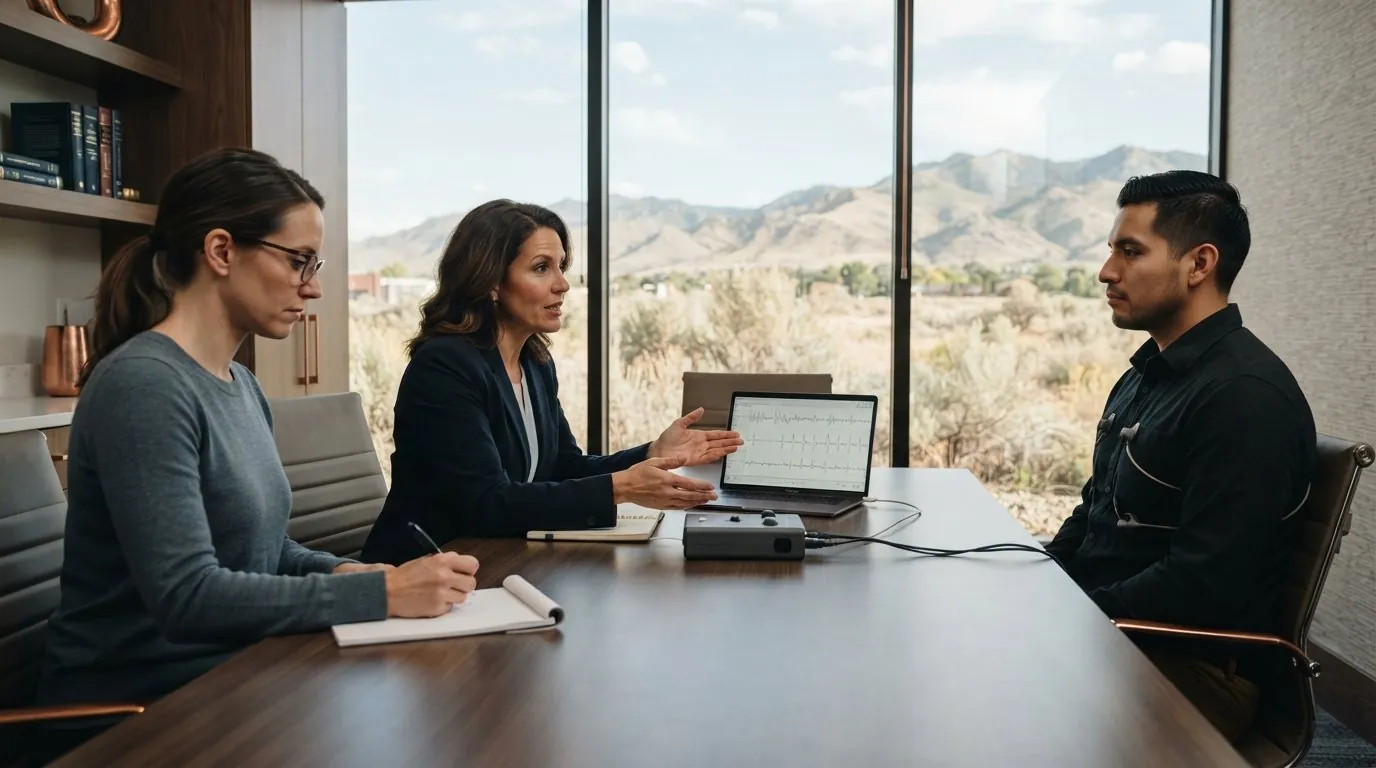
In the high-stakes environment of a Canyon County courtroom, a polygraph isn’t merely a test of truth; it’s a tactical asset used to shift the momentum of a criminal case. Facing felony charges in Nampa or Caldwell often feels like an uphill battle against a skeptical prosecution that’s already decided your guilt. You understand that without a breakthrough, the path to a dismissal or a favorable plea deal remains blocked by a lack of objective, exculpatory evidence. This is where a Canyon County criminal defense investigation polygraph becomes a critical tool for your legal team.
This guide explores how professional examinations provide the leverage needed to challenge the state’s narrative and establish credibility with your legal counsel. You’ll learn how a methodical, data-driven report can be used during sensitive plea negotiations to influence prosecutorial discretion. We’ll examine the strategic integration of modern technology and expert analysis that helps turn the tide in complex criminal investigations. By bridging the gap between investigative data and legal strategy, you can present a more compelling defense before your case ever reaches a jury.
Key Takeaways
- Understand why a voluntary polygraph is a strategic pre-trial asset for challenging the prosecution’s narrative in serious felony cases.
- Learn how a Canyon County criminal defense investigation polygraph integrates directly into your attorney’s workflow to identify and address key exculpatory issues.
- Discover the “stipulation” requirements for admissibility in Idaho and how results serve as critical leverage during sensitive plea negotiations.
- Identify the essential physical and mental preparation steps necessary to ensure accurate physiological data and reliable examination outcomes.
- Recognize the importance of using nationally certified examiners to produce professional reports that build immediate credibility with legal counsel.
The Role of Polygraphs in Canyon County Criminal Defense
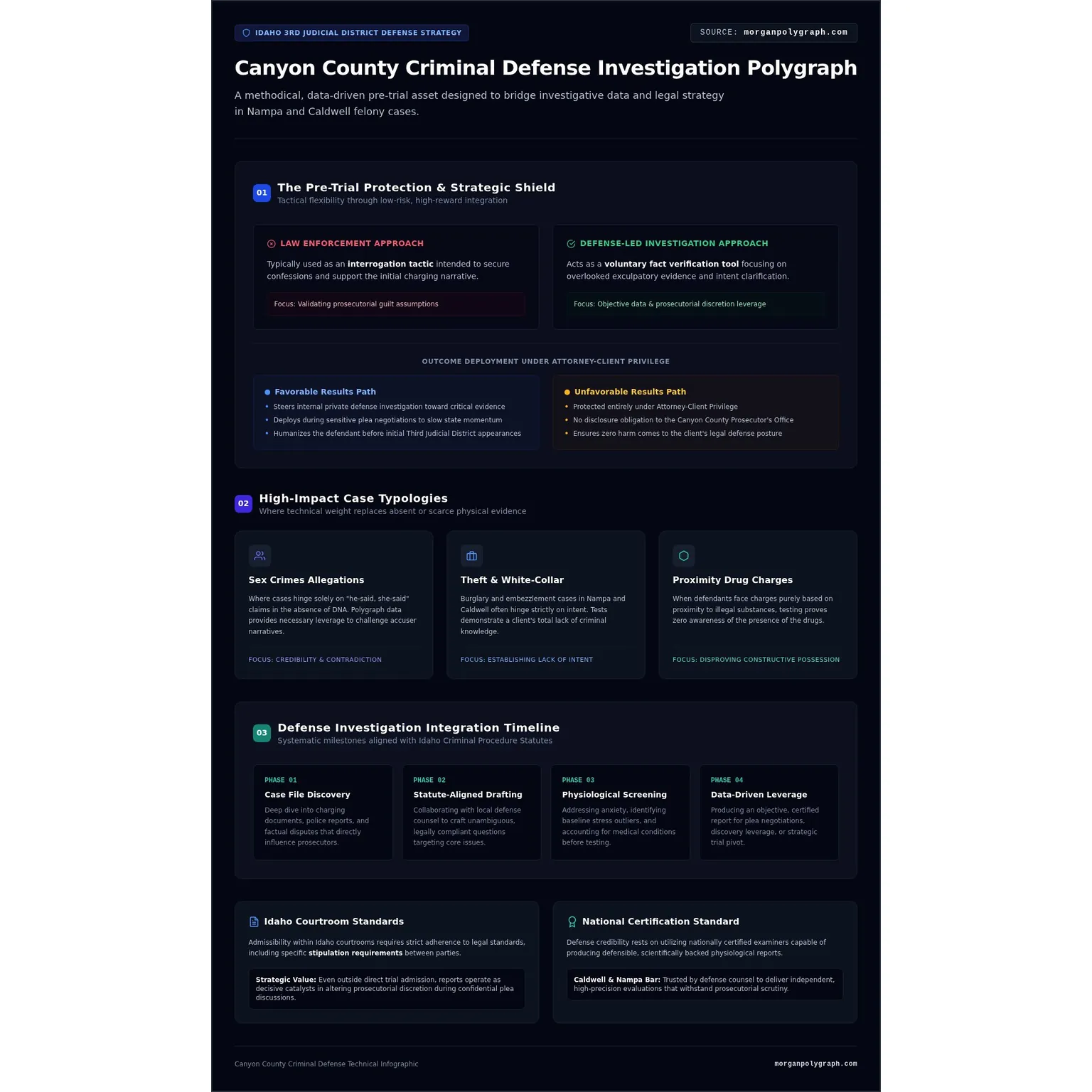
Within the Idaho legal landscape, a Canyon County criminal defense investigation polygraph serves as a voluntary, high-precision tool. It isn’t a substitute for legal counsel; instead, it acts as a bridge between raw investigative data and a robust legal strategy. While law enforcement agencies often use a polygraph examination as an interrogation tactic to secure confessions, the defense-led version focuses on verifying facts that police might’ve overlooked. This early data allows a defense team to pivot their internal investigation toward evidence that supports a client’s innocence or mitigates their involvement.
Using these results during the pre-trial phase provides a layer of protection. If the results are favorable, they can be used to steer the direction of a private investigation, helping your attorney focus resources on the most impactful evidence. If the results are unfavorable, they remain protected under attorney-client privilege, ensuring no harm comes to the defense’s position. This tactical flexibility makes the examination a low-risk, high-reward asset for those facing serious allegations.
Navigating the Third Judicial District Court System
The Caldwell courthouse and the Canyon County Prosecutor’s Office operate within a rigorous, high-volume environment. Prosecutors often view defendants through a clinical lens of police reports and initial charging documents. A successful polygraph helps humanize a defendant before the first court appearance by providing a documented record of truthfulness. This “clearing the air” phase is vital in felony cases where the prosecution’s skepticism is at its peak. By presenting a professional report early, the defense can often slow the momentum of the state’s case and encourage a more thorough review of the facts.
Types of Cases Where Polygraphs Are Most Effective
A Canyon County criminal defense investigation polygraph is particularly potent in cases where physical evidence is scarce. In these scenarios, the examination provides a technical weight to the defendant’s word that traditional testimony lacks.
- Sex Crimes: Allegations often rely solely on “he-said, she-said” testimony. In the absence of DNA, a polygraph provides the necessary leverage to challenge an accuser’s narrative.
- Theft and White-Collar Crime: Cases in Nampa and Caldwell involving embezzlement or burglary often hinge on intent. An examination can clarify a client’s lack of criminal knowledge.
- Drug Charges: When a client is charged based on proximity to illegal substances, a polygraph can demonstrate they had no knowledge of the drugs’ presence.
By applying these data-driven methods, defense teams can move beyond simple denials and present a credible, scientifically backed position to the court.
Integrating Polygraphy into the Defense Investigation Workflow
Successful defense strategies aren’t built on guesswork. A Canyon County criminal defense investigation polygraph works best when it’s woven directly into the existing investigative timeline. This systematic approach starts with a deep dive into the case file to ensure the examination targets the specific factual disputes that will sway a prosecutor. By treating the polygraph as a milestone in the discovery process, legal teams can make informed decisions about whether to push for a trial or seek a settlement.
Collaborating with Defense Attorneys
We work closely with local counsel to maintain the highest standards of confidentiality. This collaboration ensures that every question drafted aligns with Idaho criminal procedure statutes regarding evidence and discovery. Often, an attorney will request a confidential test as a first step. This allows the defense team to review the results before deciding whether to disclose them to the state. We focus on drafting relevant, non-ambiguous questions that meet strict legal standards, ensuring the final report is a reliable tool for negotiations.
Once the strategy is set, we focus on the human element. Preparing a client involves more than just explaining the procedure. We take the time to address anxiety and identify physiological outliers, such as medical conditions or high-stress responses, that could affect the data. This methodical preparation ensures that the physiological responses recorded are a true reflection of the client’s statements. If you’re looking for a partner to provide this level of technical depth, consider how specialized legal testing can strengthen your case.
The Technology of Modern Lie Detection
Modern detection has evolved far beyond the scrolling paper charts of the past. At our Boise facility, we utilize state-of-the-art computer-based scoring and complex algorithm analysis to interpret physiological data. This data-driven approach removes much of the subjectivity found in older methods. Our environment is specifically optimized for accurate data collection, minimizing external distractions that could lead to inconclusive results during a Canyon County criminal defense investigation polygraph.
A comprehensive examination also incorporates detailed behavioral observation. We look at the totality of the interaction, from the initial interview to the post-exam analysis. This holistic view provides a more complete picture for the defense team. After the examination is complete, we deliver a professional, court-ready report that details our findings with clinical precision, giving your attorney the data they need to proceed with confidence.
Legal Admissibility and Strategic Leverage in Idaho
Understanding the legal status of a Canyon County criminal defense investigation polygraph is essential for any defendant. In Idaho, the results of an examination generally require a “stipulation” between the defense and the prosecution to be admitted as evidence in a trial. This means both parties must agree in writing before the test that the results will be presented to the jury. While this hurdle exists, it doesn’t diminish the strategic power of the tool during the early stages of a case. Most legal victories occur long before a jury is even seated, and a polygraph is often the catalyst for those wins.
The exculpatory value of a passed test cannot be overstated. When a report shows no deception, it often prompts the state to re-examine their own evidence. This might lead them to interview new witnesses or review digital forensics they previously ignored. Additionally, polygraphs can be used during sentencing to clarify specific facts or demonstrate a client’s level of involvement. By providing clarity on disputed points, the examination can help mitigate the severity of a sentence, even if a full dismissal isn’t on the table.
Plea Bargaining in Caldwell and Nampa
Prosecutors in the Third Judicial District handle heavy caseloads and must prioritize cases with the highest likelihood of conviction. When a defense attorney presents a professionally administered polygraph report, it introduces a significant element of risk for the state. If a defendant passes a test conducted by a nationally certified examiner, the prosecutor’s confidence in their primary witnesses or evidence may falter. We’ve seen cases where theft or assault charges were significantly reduced or dismissed once the prosecution realized their “star witness” was contradicted by objective physiological data.
The psychological impact on opposing counsel is profound. A defense team that’s willing to put their client through a rigorous examination signals that they’re confident in their position. This confidence often leads to more favorable plea negotiations, as prosecutors may prefer a guaranteed, lesser charge over the risk of an acquittal at trial.
Addressing the “Inadmissible” Myth
A common misconception is that polygraphs are useless because they aren’t always seen in the courtroom. In reality, they function as a truth-verification tool that guides the entire defense strategy. It helps your legal team decide whether to push for a dismissal or negotiate a settlement. Even when results aren’t introduced as evidence, they influence the decisions made by everyone involved in the case. The examiner can also serve as an expert witness, testifying to the scientific reliability of the methodology used during the Canyon County criminal defense investigation polygraph. This expertise adds a layer of academic gravitas to the defense’s overall narrative, ensuring the client’s side of the story is heard and respected.
Preparing for a Criminal Defense Polygraph in Canyon County
Preparation is the foundation of a reliable result. When you’re scheduled for a Canyon County criminal defense investigation polygraph, your physical and mental state directly impacts the clarity of the physiological data collected. We recommend securing at least seven to eight hours of sleep the night before your appointment. Consistency is key; you should continue taking all prescribed medications and maintain your regular dietary habits. Arriving on an empty stomach or after an excessive amount of caffeine can create physiological noise that complicates the scoring process.
Mental readiness is equally vital. It’s helpful to view the examination as a neutral tool designed to verify your statement rather than a trap set to catch you in a mistake. During the “Pre-Test” interview, you’ll have a dedicated opportunity to clarify your narrative in your own words. This conversation ensures that the questions asked during the actual exam are clear, concise, and fully understood by both parties before the sensors are even attached. If you’re ready to move forward, you can schedule your professional examination to begin the verification process.
Managing Client Anxiety
Many clients worry that their natural nervousness will be interpreted as deception. This is a common misconception. Professional examiners are trained to distinguish between the generalized anxiety of being in a high-stakes legal situation and the specific physiological spikes associated with deceptive answers. We prioritize transparency, explaining every step of the process to lower your stress levels. Our examiners handle sensitive criminal allegations with the compassion and respect you deserve during a vulnerable time. We don’t judge the circumstances; we focus on the data.
Discretion and Privacy Standards
Privacy is a non-negotiable standard in our practice. Our facility, located in Boise near the Canyon County line, provides a quiet, professional, and non-threatening environment designed for clinical precision. All results are strictly confidential and are only shared with your designated legal team to protect attorney-client privilege. We adhere to the highest ethical standards of the American Polygraph Association, ensuring that your Canyon County criminal defense investigation polygraph is conducted with the utmost integrity. This methodical approach ensures that the physical environment supports, rather than distracts from, a successful and accurate examination.
Why Legal Professionals Trust Morgan Polygraph
Legal professionals throughout Idaho require more than just a test; they need a partner who understands the evidentiary weight of their findings. A Canyon County criminal defense investigation polygraph is only as strong as the examiner’s credentials and the methodology behind the final report. We’ve built a reputation for integrity by providing data-driven results that stand up to the scrutiny of both defense counsel and the prosecution. Our examiners are nationally certified and court-recognized experts who bring decades of experience to every case. We bridge the gap between traditional investigative skills and futuristic technology to ensure the highest level of precision.
Expertise in Legal and Criminal Defense Testing
Our specialized training includes Post-Conviction Sex Offender Testing (PCSOT), a field that requires the most rigorous standards of accuracy and ethical conduct. We provide clear, actionable reports that attorneys can use immediately to refine their strategy or present during plea negotiations. While we rely on state-of-the-art technology, we never lose sight of the human element. We understand the stress involved in a criminal defense investigation and treat every client with the compassion and respect their situation demands. This balance of clinical accuracy and human empathy is why we’re the trusted choice for complex legal proceedings.
Serving Canyon County and Beyond
Our Boise facility is strategically located to serve clients from Caldwell, Nampa, and Middleton. We understand that legal timelines are often unforgiving. To support your defense, we offer flexible scheduling designed to meet tight court deadlines and critical investigation windows. Whether you’re dealing with a first-time felony or a complex white-collar case, our team is prepared to provide the technical leverage you need. Contact us today to discuss how a Canyon County criminal defense investigation polygraph can support your specific defense strategy. We’re here to help you navigate the complexities of the legal system with confidence and clarity.
Strengthening Your Defense with Technical Precision
Integrating a Canyon County criminal defense investigation polygraph into your legal strategy is a proactive step toward achieving a favorable outcome. By bridging the gap between raw investigative data and courtroom-ready evidence, you provide your attorney with the tools needed to challenge the prosecution’s narrative effectively. Whether you’re navigating the complexities of the Third Judicial District or seeking leverage in plea negotiations, the technical depth of a professional examination offers a clear path forward. We’ve seen how objective data can slow the momentum of a state’s case and encourage a more thorough review of the facts.
Our team specializes in providing the clarity you need through state-of-the-art technology and methodical analysis. As court-recognized experts and nationally certified examiners, we focus on the human element while maintaining clinical precision. You don’t have to face these high-stakes allegations without objective support. We’re dedicated to ensuring your side of the story is heard with the authority it deserves.
Contact us for professional Legal and Criminal Polygraph Testing to support your investigation. We’re committed to helping you establish credibility and protect your future with the highest standards of discretion and expertise.
Frequently Asked Questions
Is a polygraph test admissible in Canyon County courts?
Admissibility in Canyon County courts generally hinges on a written stipulation between the defense and prosecution. Without this agreement, the Third Judicial District Court rarely allows polygraph results as direct evidence at trial. However, the true value lies in the pre-trial phase. Attorneys use these results to influence the prosecutor’s perspective during discovery or to highlight weaknesses in the state’s evidence before the case ever reaches a judge.
Can a defense attorney use a polygraph to get charges dismissed?
A defense attorney can certainly use a successful examination as leverage to seek a dismissal of charges. While the examiner doesn’t have the power to drop charges, a professional report provides the defense team with objective data to present during plea negotiations. If the results contradict a primary witness’s testimony, the Canyon County Prosecutor’s Office may decide the case is too risky to take to trial, leading to reduced or dismissed charges.
How long does a criminal defense polygraph examination take?
A standard Canyon County criminal defense investigation polygraph typically takes between two and three hours to complete. This timeframe includes the essential pre-test interview, the actual data collection phase, and a brief post-test analysis. We don’t rush these examinations because accuracy requires a calm and methodical environment. Every step is designed to ensure the physiological data collected is reliable and ready for use in a professional legal report.
What happens if a defendant fails a private polygraph test?
If a defendant doesn’t pass a private examination, the results are typically protected by attorney-client privilege and are not disclosed to the prosecution. This allows the defense team to assess the situation discreetly without damaging their client’s legal standing. The information helps the attorney adjust their strategy, perhaps focusing on mitigation rather than total exoneration. It’s a low-risk way to verify facts before committing to a specific courtroom narrative.
Are polygraph results confidential under attorney-client privilege?
Polygraph results are confidential when the examination is conducted at the direction of your legal counsel. This protection falls under the work-product doctrine and attorney-client privilege, ensuring that the findings remain private unless your attorney chooses to disclose them. We only share reports with the designated legal team. This high level of discretion is a cornerstone of our practice, allowing you to explore investigative leads without fear of self-incrimination.
How should I prepare for my polygraph exam in Boise?
Preparation for an examination at our Boise facility involves maintaining your normal routine. You should get a full night’s sleep and continue taking any prescribed medications as directed by your doctor. It’s best to avoid excessive caffeine or nicotine on the day of the test, as these can affect your physiological responses. Arrive at our office near the Canyon County line with an open mind, understanding that the process is a neutral verification tool.
Do polygraphs work for serious felony allegations like murder or sexual assault?
Polygraph examinations are highly effective in serious felony cases where physical evidence is limited. In allegations of murder or sexual assault, the case often depends on conflicting testimonies. A professionally administered test provides a data-driven layer to your defense, helping to verify your version of events. This is especially useful in Nampa and Caldwell cases where the prosecution’s narrative relies heavily on a single accuser’s word without supporting forensic data.
Can I take a polygraph if I am on probation in Canyon County?
You can take a polygraph while on probation, and in many cases, it’s a requirement of your supervision. We provide specialized Post-Conviction Sex Offender Testing (PCSOT) for individuals in Canyon County who must demonstrate compliance with court-ordered treatment or probation terms. These examinations are handled with the same clinical precision and professionalism as a Canyon County criminal defense investigation polygraph, helping you maintain your standing with the court and your supervision officers.