
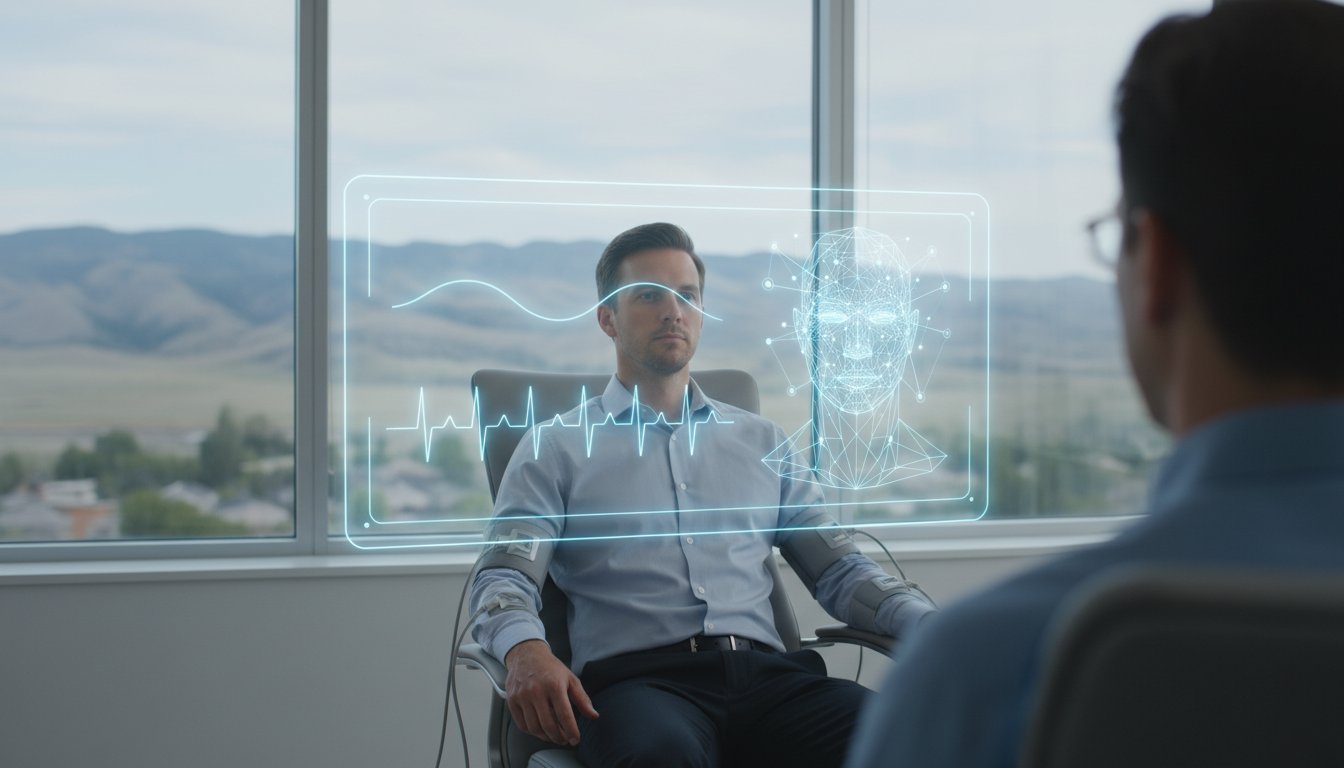
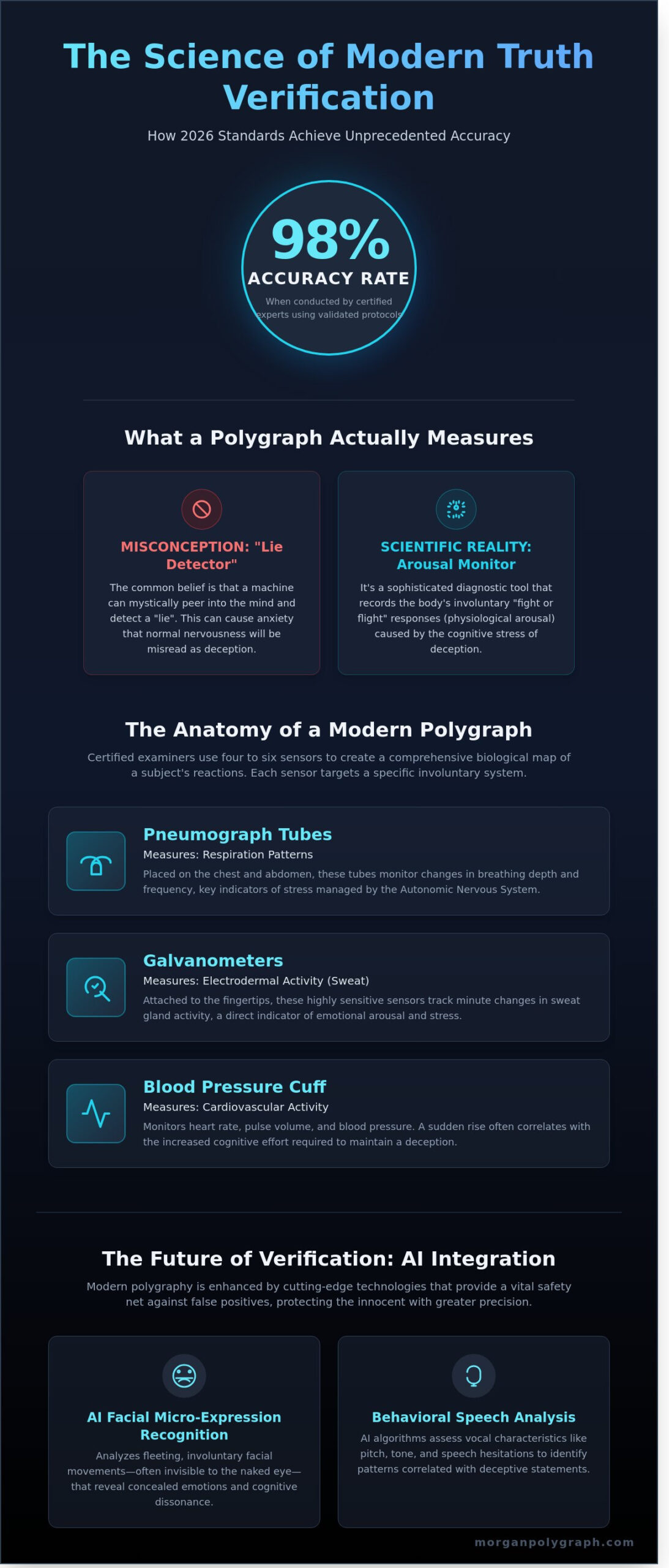
The 2026 standard for truth verification has moved far beyond the shaky analog needles seen in old movies, hitting a documented 98% accuracy rate when conducted by certified experts using validated protocols. You’re probably feeling a knot in your stomach right now, wondering if your natural anxiety or a spike in blood pressure will be misread as a lie. It’s a valid concern because conflicting online forums often suggest that nerves can ruin your results. We understand that being wrongly accused is a heavy burden to carry, and you deserve a process that respects your dignity through scientific precision.
In this professional review, you’ll discover the clinical facts behind the question: are lie detector tests accurate in the age of AI-powered deception detection? This guide breaks down how modern tools, such as behavioral speech analysis and facial microexpression recognition, provide a vital safety net against false positives. You’ll learn how to distinguish a court-recognized expert from an uncertified amateur. By the end of this article, you’ll have the peace of mind that comes from understanding the methodical, compassionate science used at Morgan Polygraph to protect the innocent and verify the truth.
Key Takeaways
- Understand the clinical distinction between measuring physiological arousal and “lies” to determine how are lie detector tests accurate in a professional 2026 context.
- Identify the three essential pillars of a reliable examination and why 40 years of expert methodology is required to ensure objective, valid results.
- Learn why Idaho courts and Boise law enforcement agencies trust polygraph science for high-stakes legal stipulations and high-clearance security screenings.
- Expose the failure of common countermeasure myths and see how modern examiners use advanced monitoring to detect physical or mental attempts to deceive.
- Explore the future of truth verification through the integration of AI-powered facial micro-expression recognition and behavioral speech analysis.
Defining Polygraph Accuracy: What Does the Science Actually Measure?
The term “lie detector” is a frequent misnomer that suggests a machine can peer into the human mind to find the truth. In reality, a polygraph is a sophisticated diagnostic tool designed to measure physiological arousal. It doesn’t detect a lie directly. Instead, it records the body’s involuntary reactions to the stress of deception. When clients ask, “are lie detector tests accurate,” they’re really asking about the correlation between their internal biological state and the answers they provide under scrutiny. Professional examiners look for specific deviations from a person’s baseline physiological activity during a controlled series of questions.
Deception is a cognitively demanding task. When a person decides to withhold the truth, the brain must manage the conflict between the factual event and the fabricated narrative. This creates a measurable shift in the body’s equilibrium. Since the invention of the first modern polygraph by John Augustus Larson in 1921, the field has focused on refining how we capture these shifts. Accuracy in this context refers to how reliably an examiner can distinguish between a standard “fight or flight” response and the specific stress patterns associated with being untruthful. As noted in Wikipedia on Polygraphy, the process relies on the assumption that deceptive answers will produce distinct physiological responses that differ from those recorded during truthful statements.
At Morgan Polygraph, we combine 40 years of traditional expertise with modern advancements to ensure these measurements are precise. We treat the data as a biological map. If a subject shows a significant spike in heart rate or skin conductivity when asked about a specific event, but remains calm during control questions, it provides a clear data point for analysis. The science of determining if are lie detector tests accurate depends on the examiner’s ability to filter out general anxiety from the targeted stress of a lie.
The Role of the Autonomic Nervous System
The Autonomic Nervous System (ANS) controls our most basic survival functions, such as breathing and heart rate. You can’t consciously tell your heart to stop beating faster or your sweat glands to stay closed when you feel threatened. During a polygraph examination, the brain perceives the risk of being caught in a lie as a threat, triggering the sympathetic nervous system. This “fight or flight” response happens in milliseconds. The Autonomic Nervous System serves as an involuntary biological recorder that captures the body’s internal reaction to psychological stress during questioning.
This biological recording is difficult to manipulate because the responses are managed by the brain stem and limbic system. Even if a person appears calm on the outside, their internal chemistry is changing. Cognitive load increases as the subject tries to maintain the lie, which further stresses the ANS. Our role is to monitor these shifts with clinical precision to ensure the integrity of the results.
Sensors and Data Collection
To gather a complete picture of a subject’s physiological state, we utilize four to six different sensors during the session. These tools provide a continuous stream of data that we analyze for patterns of deception. Each sensor targets a specific system within the body:
- Pneumograph tubes: We place these around the chest and abdomen to monitor respiration. We look for changes in breathing depth and frequency that occur when a person is under pressure.
- Galvanometers: These sensors attach to the fingertips to measure electrodermal activity. They track minute changes in sweat gland activity, which is a highly sensitive indicator of emotional stress.
- Blood pressure cuffs: This tool monitors cardiovascular changes, including heart rate and pulse volume. A sudden rise in blood pressure often correlates with the cognitive effort required to sustain a lie.
By integrating these data points, we create a comprehensive profile of the subject’s reactions. This methodical approach is what allows a certified examiner to provide a professional and expert conclusion regarding the truthfulness of a statement.
The 3 Pillars of a Reliable Polygraph Examination
Determining if are lie detector tests accurate requires looking beyond the sensors and wires. A polygraph isn’t a magic box that glows red or green. It’s a scientific diagnostic tool that relies on three specific pillars to produce a valid result. When these pillars are weak, the data becomes noise. When they’re strong, the examination provides a clear, defensible window into the subject’s physiological responses.
Examiner Expertise and Certification
The examiner is the most critical component of the test. Chip Morgan brings over 40 years of experience to every exam, a level of tenure that allows for the identification of “atypical” physiological baselines that a novice might misinterpret. While the American Psychological Association on Polygraphs highlights the complexities of measuring internal states, an examiner with four decades of field experience understands how to mitigate these variables. Certification by the American Polygraph Association (APA) ensures the examiner follows strict ethical and moving-window validation standards. Court-recognized experts don’t just read charts; they understand the human element, ensuring that “nervousness” isn’t incorrectly flagged as “deception.”
- Baseline Recognition: Experienced examiners can distinguish between chronic anxiety and situational deception.
- Countermeasure Detection: Experts are trained to spot intentional attempts to manipulate heart rate or breathing.
- Professionalism: Compassionate interaction reduces “test-induced” stress that leads to false positives.
Validated Testing Protocols
Accuracy isn’t based on a “gut feeling.” It’s based on math. Modern polygraphy uses standardized scoring systems like the Utah Numerical Scoring System or the ESS (Empirical Scoring System). These systems remove subjective bias by assigning point values to specific physiological shifts. We distinguish between two primary types of tests:
1. Diagnostic (Single-Issue) Tests: These focus on one specific event, such as a theft or a specific allegation. These are the most reliable, with accuracy rates often reaching 89% to 90% in peer-reviewed studies.
2. Screening (Multi-Issue) Tests: These cover a broader range of history, like pre-employment checks. Because the focus is wider, the statistical accuracy is naturally lower, typically hovering around 75% to 80%.
We primarily utilize the Comparison Question Technique (CQT), which compares responses between “known” truths and the “target” issue. This structure provides a controlled mathematical contrast. If you need clarity on a specific incident, you can consult with a court-recognized expert to determine which protocol fits your situation.
The Controlled Environment
A professional setting in Boise ensures data purity. You can’t conduct a reliable exam in a noisy coffee shop or a chaotic home office. External factors like sudden noises, temperature fluctuations, or the presence of third parties can contaminate the physiological data. Our controlled environment is designed to be neutral and sterile. This prevents the “are lie detector tests accurate” question from being compromised by outside stimuli. We maintain a professional, discreet atmosphere where the subject feels respected, which is essential for establishing a clean physiological baseline. Every variable, from the chair’s ergonomics to the room’s acoustics, is managed to ensure that the only thing the sensors pick up is the subject’s internal response to the questions asked.
Why Courts and Agencies Trust Polygraphs in 2026
The debate surrounding truth verification often centers on a single question: are lie detector tests accurate enough for high-stakes decision making? In 2026, the answer from law enforcement and legal professionals is a resounding yes. While critics often point to the 1923 Frye v. United States decision to claim polygraphs are useless, modern application tells a different story. Technology has evolved. We now integrate AI-powered scoring and physiological sensors that provide a level of precision that was impossible twenty years ago. This technical evolution is why federal agencies and Idaho courts continue to rely on these exams to protect the public and ensure justice.
Legal Admissibility in Idaho
In Boise and across the state, defense attorneys use polygraphs as a powerful negotiation tool. Under Idaho Rule of Evidence 702, expert testimony must be based on reliable principles. While a judge might exclude a polygraph from a standard jury trial, the “Stipulated Agreement” is a common exception. This occurs when the prosecutor and the defense attorney sign a written contract agreeing that the results will be admitted as evidence regardless of the outcome. This practice is frequent in 2026 because it helps clear the innocent and focuses state resources on actual offenders. The Department of Justice on Polygraphs acknowledges that while there are judicial limitations, the investigative utility remains high for federal authorities. Attorneys often use a “passed” exam to secure a dismissal of charges before a case even reaches a courtroom.
Agency and Employment Screening
Federal agencies like the FBI and CIA, along with local Boise police departments, use polygraphs for one primary reason: they work for risk mitigation. As of 2024, the federal government conducts over 70,000 polygraph exams annually for security clearances and pre-employment screening. This process protects organizational integrity by identifying “red flag” behaviors that a standard background check misses. When asking are lie detector tests accurate, agencies look at the 90 percent accuracy rate achieved in screening environments. These tests don’t just look for lies; they verify a candidate’s entire history of honesty. This creates a culture of transparency within the most sensitive roles in our government.
- PCSOT Compliance: Post-Conviction Sex Offender Testing is a mandatory part of parole in Idaho. It reduces recidivism by up to 25 percent by ensuring offenders follow their treatment plans.
- Internal Investigations: Corporations use polygraphs under the Employee Polygraph Protection Act (EPPA) guidelines to investigate specific economic losses like theft or embezzlement.
- Relationship Clarity: Clinical therapy often takes months to uncover the truth about infidelity. A single 2-hour polygraph session provides the immediate clarity couples need to either heal or move on.
At Morgan Polygraph, we bridge the gap between traditional techniques and 2026 technology. We use behavioral speech analysis and facial microexpression recognition to support our physiological data. This multi-layered approach is why Chip Morgan remains a court-recognized expert. Whether it is a private matter or a legal requirement, we provide a professional, compassionate environment. We understand the stress involved in these situations. Our goal is to provide the truth with absolute discretion and scientific rigor. If you need a definitive answer, don’t rely on guesswork. Trust the experts who have spent 40 years mastering the science of truth verification.
Can You Fool a Polygraph? Countermeasures and Real-World Ethics
Internet forums and social media threads often recycle the same tired advice for “beating” a polygraph. Users suggest placing a thumbtacks in your shoe, clenching your glutes, or performing complex mental math during control questions. These tactics rely on the outdated idea that an examiner only looks at a scrolling needle on a piece of paper. In reality, modern truth verification is a sophisticated process that integrates advanced hardware with psychological expertise. People often ask, are lie detector tests accurate when someone is actively trying to cheat? The short answer is that the attempt to cheat is usually more obvious than the lie itself.
Identifying Countermeasures
Current polygraph systems, such as the Lafayette LX6000 used by industry leaders, include specialized motion sensors and seat pads. These sensors detect micro-movements in the feet, arms, and torso that are invisible to the naked eye. When a subject tries to “create” a reaction by clenching a muscle, the sensor captures a specific physical signature that differs significantly from an involuntary autonomic response. Attempting to “beat” the test is often a clearer indicator of deception than the test itself. Professional examiners also monitor for pharmacological countermeasures; they look for stabilized heart rates that don’t match the subject’s breathing patterns or pupil dilation.
Anxiety vs. Deception
A common fear is that simple nervousness will cause a false positive. This isn’t how the process works. Every exam begins with an extensive pre-test interview, which can last 45 to 90 minutes. This phase allows the examiner to establish a “calm” baseline for your specific physiology. Through a process called habituation, your body naturally adjusts to the testing environment and the presence of the sensors. Professional examiners focus on respectful interactions to lower baseline stress, ensuring the data reflects your reaction to specific questions rather than general anxiety.
Many skeptics wonder, are lie detector tests accurate for people with high anxiety? Data from the 2011 APA Meta-Analytic Survey shows that when proper protocols are followed, anxiety doesn’t prevent a clear result. Because we use validated techniques, we can distinguish between a “nervous” spike and the “fight-or-flight” response triggered by a deliberate lie. The psychological process of habituation ensures that by the time the actual questions start, the initial “white coat syndrome” has largely subsided.
The difference between a high-quality exam and a poor one comes down to ethics. At Morgan Polygraph, we view the process as a professional search for truth, not an interrogation. We treat every client with the compassion and discretion they deserve, especially during sensitive family or legal matters. With over 40 years of combined experience, our team understands that the goal is accuracy, not intimidation. If you need a reliable, professional evaluation, you can schedule a confidential polygraph exam today to get the answers you need.
The Future of Accuracy: AI and Behavioral Analysis at Morgan Polygraph
The science of truth verification is evolving rapidly. While traditional methods rely on physiological markers like heart rate and skin conductivity, Morgan Polygraph integrates advanced layers of data to ensure the highest possible precision. People often ask are lie detector tests accurate; the answer depends heavily on the methodology and the technology used. By 2026, the industry standard has moved toward a multi-modal approach that leaves less room for human error.
Chip Morgan bridges 40 years of investigative tradition with modern innovations. This “Morgan Standard” doesn’t just look at a scrolling chart. It incorporates facial micro-expression recognition to capture involuntary muscle movements that occur in less than 1/25th of a second. These tiny “leakages” provide a secondary layer of data that validates the physiological readings. It’s a comprehensive way to ensure that no detail is missed during a session.
AI Deception Detection Tools
The integration of algorithms has revolutionized objective chart analysis. Morgan Polygraph utilizes cutting-edge AI-powered tools to process complex physiological data. These systems compare a subject’s responses against a massive database of thousands of verified truthful and deceptive patterns. This computer-aided scoring reduces human bias by approximately 30% compared to manual evaluation alone. It ensures that the final result is based on mathematical probability rather than just an examiner’s subjective intuition. This objective layer is what separates a professional exam from an amateur one.
Behavioral speech analysis provides another vital verification layer. By analyzing vocal pitch, frequency shifts, and latency in responses, AI detects cognitive load. When a person is deceptive, their brain works harder to maintain a false narrative. These subtle shifts are often undetectable to the human ear, but they’re clearly visible to our diagnostic software. This dual-layer approach helps answer the question are lie detector tests accurate by providing multiple points of corroboration.
The Morgan Polygraph Advantage in Boise
Choosing a local, certified expert is critical for results that hold weight in legal or professional settings. Many “online” or unverified services claim to offer truth verification, but they lack the rigorous standards of a court-recognized expert. Chip Morgan is a respected figure in the polygraph community with over 40 years of experience. His credentials ensure that every examination is conducted with the utmost professionalism, discretion, and compassion. You’re not just getting a test; you’re getting a methodical search for the truth.
In Boise and throughout Idaho, the value of a face-to-face examination cannot be overstated. A physical presence allows the examiner to maintain a controlled environment, which is essential for maximizing accuracy. Whether you’re dealing with legal matters, family disputes, or pre-employment screening, you deserve a professional and respectful interaction. If you need clarity on a sensitive issue, don’t leave it to chance. Schedule a confidential consultation with Chip Morgan today to experience the highest standard of truth verification.
Secure Your Peace of Mind with Modern Truth Verification
Reliable truth verification in 2026 requires more than just a machine. It demands a sophisticated blend of advanced AI-powered deception detection technology and decades of forensic expertise. When clients ask, are lie detector tests accurate, the answer depends on the quality of the examiner and the tools they use. At Morgan Polygraph, Chip Morgan provides over 40 years of combined expert experience alongside cutting-edge behavioral speech analysis to deliver results you can trust. Our nationally certified and court-recognized examiners follow strict protocols to ensure every test meets scientific standards.
Choosing a professional path to the truth protects your reputation and provides the clarity you need. We handle every case with the discretion and compassion you deserve during stressful times. Our team doesn’t just follow industry standards; we set them by integrating facial microexpression recognition into our methodical process. You can rely on our 40 years of field-tested results to provide the resolution required for your specific situation. Take the first step toward finding the answers today.
Talk to Chip Morgan about your confidential testing needs
We’re ready to help you move forward with confidence and certainty.
Frequently Asked Questions
How accurate are polygraph tests in 2026?
Modern polygraph tests achieve accuracy rates between 87% and 94% according to the American Polygraph Association’s 2023 meta-analysis. In 2026, technology integrates advanced algorithms to filter out physiological noise. This makes the question of are lie detector tests accurate easier to answer with statistical confidence. Expert examiners like Chip Morgan use these validated protocols to ensure every session meets the highest evidentiary standards.
Can a polygraph be used in an Idaho court case?
Polygraph results are generally inadmissible in Idaho criminal trials unless both the prosecution and defense sign a written stipulation before the test. This follows the legal precedent set in State v. Fain (1989). However, they remain a vital tool for pre-employment screening in law enforcement and for monitoring individuals under the Post-Conviction Sex Offender Management guidelines. We provide court-recognized expertise for these specific legal applications.
Will being nervous make me fail a lie detector test?
Nervousness doesn’t cause a failure because examiners establish a physiological baseline for every subject during the pre-test phase. A 2022 study by the National Center for Credibility Assessment confirmed that situational anxiety is distinct from the specific physiological triggers of deception. We look for significant deviations from your normal resting state, not just a fast heartbeat or sweaty palms. Our compassionate approach helps you stay calm.
How long does a professional polygraph examination take?
A standard professional polygraph examination takes between 90 and 150 minutes to complete. This timeframe includes the pre-test interview, the data collection phase, and the post-test analysis. We don’t rush the process; accuracy depends on a methodical approach that respects the client’s time and the scientific requirements of the test. You’ll receive clear instructions throughout every stage of the appointment to ensure total transparency.
Can you fail a polygraph if you are telling the truth?
While rare, false positives can occur in approximately 5% to 10% of cases when improper techniques are used. To prevent this, Morgan Polygraph utilizes the Federal Zone Comparison Technique, which is proven to minimize errors. Research from the American Polygraph Association indicates that when are lie detector tests accurate, it’s because the examiner followed these strict, peer-reviewed scoring systems. We prioritize professional standards to protect truthful individuals.
What happens if a polygraph result is ‘inconclusive’?
An inconclusive result occurs in about 10% to 15% of examinations when the physiological data doesn’t clearly indicate truth or deception. This isn’t a failure, but rather a lack of definitive data. In these instances, we typically schedule a follow-up session after 24 hours to allow the subject’s nervous system to reset. This ensures we provide a clear and professional resolution rather than guessing at ambiguous charts.
How should I prepare for my polygraph appointment?
You should get at least 7 hours of sleep and continue taking all physician-prescribed medications as scheduled. Avoid consuming more than 200mg of caffeine or using nicotine products for 2 hours before your arrival. Arriving well-rested and following these specific guidelines helps us collect the cleanest physiological data for your truth verification session. Please be patient as we work through the necessary administrative steps during your visit.
Are AI lie detectors more accurate than traditional polygraphs?
AI-powered tools like EyeDetect and facial microexpression analysis can reach 86% to 90% accuracy, which complements traditional polygraphy. At Morgan Polygraph, we integrate these cutting-edge tools to provide a multi-layered approach to deception detection. Combining 40 years of experience with 2024 AI technology ensures our clients receive the most precise results available. We don’t just follow the future; we help shape it by using every available scientific tool.