

You might assume that undergoing both a psychosexual evaluation and a polygraph is a redundant, costly hurdle. However, in the realm of sex offender management, these two tools serve entirely different functions that rely on one another for accuracy. While one maps the complex landscape of your psychological history, the other verifies the facts of that map. Understanding the nuances of a psychosexual evaluation vs polygraph is essential for anyone managing the requirements of the Idaho legal system in 2026.
It’s natural to feel anxious about how these assessments impact your probation or your finances. We understand that the pressure of failing a test can be heavy, especially when your future and reputation are on the line. This article provides the clarity you need by detailing the specific methodologies and legal roles of each process. You’ll learn why both are often required by the Idaho Sexual Offender Management Board and how to prepare for each with confidence. By the end, you’ll have the knowledge to choose a certified examiner in Boise who prioritizes both technical precision and professional respect.
Key Takeaways
- Understand the fundamental distinction between a psychosexual evaluation, which assesses psychological risk and personality, and a polygraph, which verifies specific factual statements through physiological data.
- Learn the logistical differences in a psychosexual evaluation vs polygraph, including why clinical evaluations often require up to eight hours of assessment while polygraph exams typically take two to three hours.
- Discover the symbiotic relationship between these tools, specifically how a disclosure polygraph provides the verified data necessary for a valid psychosexual risk assessment.
- Gain clarity on how these results impact your standing with the Idaho Sexual Offender Management Board and your specific requirements for probation and registry tiering.
- Identify the essential certifications to look for in a Boise examiner, ensuring they possess the specialized PCSOT training required for post-conviction testing.
What is the Difference Between a Psychosexual Evaluation and a Polygraph?
The distinction between a psychosexual evaluation vs polygraph is often lost on those facing legal requirements in Idaho. However, the difference is fundamental. One procedure assesses internal risk, while the other verifies external behavior. In the context of sex offender management, they aren’t interchangeable. They serve as two distinct layers of a comprehensive safety and rehabilitation protocol.
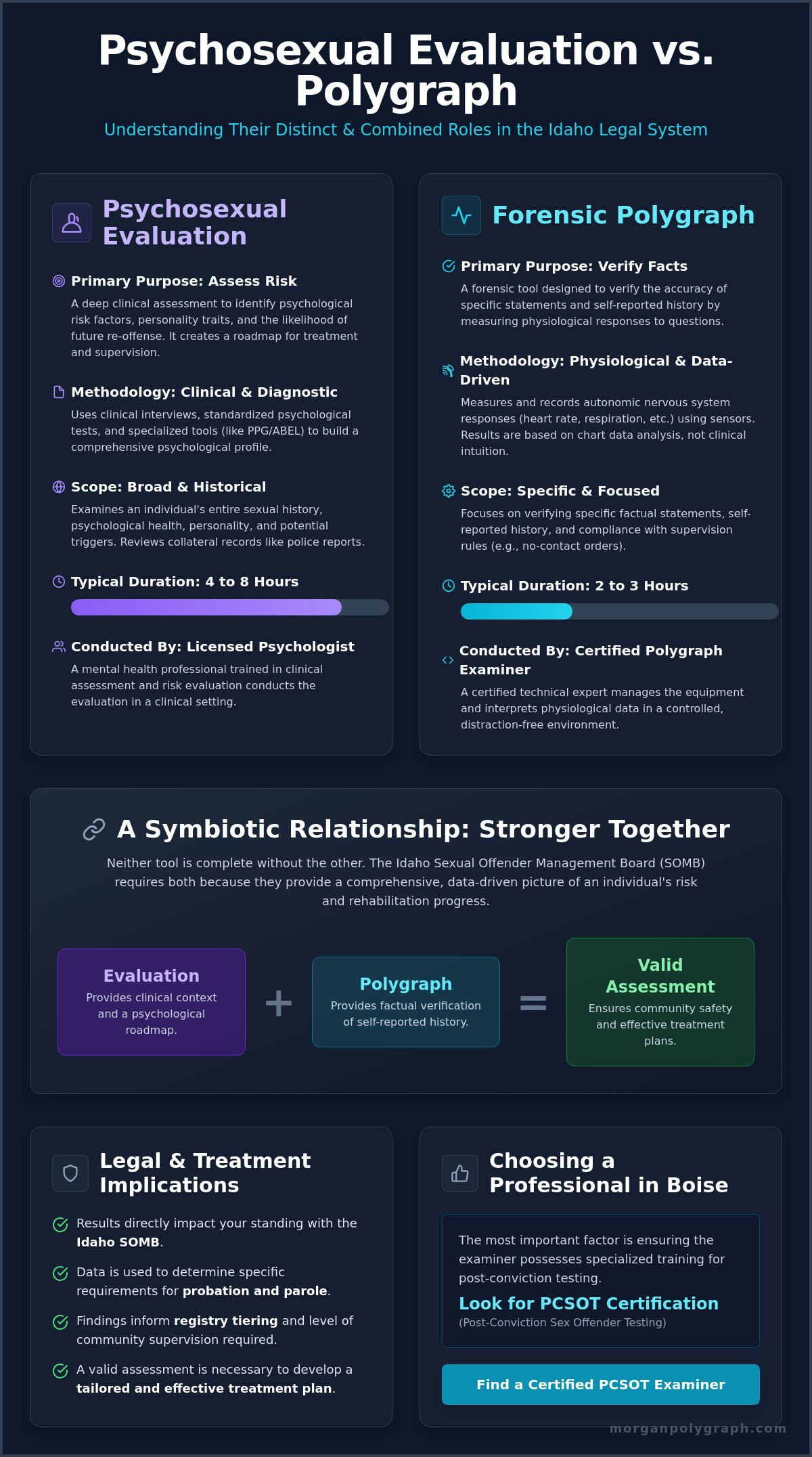
A psychosexual evaluation is a deep clinical assessment. It integrates an individual’s sexual history, personality traits, and psychological health to determine the likelihood of future offenses. Conversely, a polygraph is a forensic instrument designed to measure autonomic nervous system responses, such as heart rate and respiration, while a subject answers questions about past or current behaviors. For anyone navigating the 2026 legal standards in Idaho, understanding how these two tools interact is the first step toward successful compliance.
The Purpose of a Psychosexual Assessment
The primary objective of this evaluation is to identify recidivism risk. Certified practitioners in Boise use clinical interviews and standardized testing to build a complete profile of the individual. This process often includes specialized tools like PPG or ABEL testing to evaluate sexual interests and arousal patterns. The final report doesn’t just label a person; it identifies specific triggers and personality traits that could lead to a relapse. This data is then used to develop a tailored treatment plan, which is a standard requirement for probation or parole in 2026. It provides the legal system with a roadmap for how much supervision an individual requires based on their specific psychological profile.
The Purpose of a Forensic Polygraph
If you are asking What is a Polygraph?, it’s best understood as a truth-verification engine in this context. Its purpose isn’t to diagnose a disorder or predict future feelings, but to verify the accuracy of a subject’s self-reported history. In Post-Conviction Sex Offender Testing (PCSOT), the polygraph monitors compliance with supervision rules. These might include “no-contact” orders or restrictions on internet use. By acting as a verification tool, the polygraph ensures that the psychologist conducting the psychosexual evaluation vs polygraph comparison has accurate data. It prevents the clinical evaluation from being based on omitted or falsified information.
In 2026, the Idaho Sexual Offender Management Board (SOMB) requires both assessments because they are symbiotic. Without the polygraph, the evaluation lacks factual verification. Without the evaluation, the polygraph results lack clinical context. Together, they provide the state with a data-driven picture of an individual’s rehabilitation progress and overall community safety.
Comparing Methodologies: Scope, Time, and Execution
While both procedures are rigorous, the physical and technical environments of a psychosexual evaluation vs polygraph differ significantly. A psychosexual evaluation usually occurs in a clinical setting, designed for open communication and psychological inquiry. In contrast, a polygraph examination takes place in a controlled, distraction-free room focused on physiological data collection. The roles of the professionals involved are also distinct. A licensed psychologist conducts the evaluation, focusing on mental health and risk factors, whereas a certified polygraph examiner manages the technical equipment and interprets physiological charts.
Time commitments vary as well. A comprehensive psychosexual evaluation is an exhaustive process, often requiring four to eight hours of direct contact. This is necessary to review complex collateral records, such as police reports and discovery materials, which provide the objective background against which a person’s statements are measured. A polygraph exam is more focused, typically lasting two to three hours. During this time, the examiner relies on real-time data from physiological sensors rather than clinical intuition alone. Understanding The Role of Polygraphs in Psychosexual Evaluations helps illustrate why these two methodologies are paired to ensure the highest level of community safety.
What Happens During a Psychosexual Evaluation?
The evaluation begins with an extensive clinical interview. The psychologist explores family dynamics, social history, and sexual development to identify patterns of behavior. They also review “Discovery” materials, including previous criminal records and victim statements, to ensure the subject’s account aligns with documented facts. Finally, the practitioner administers psychometric tests, such as the MMPI-3 or Static-99R. These tools quantify risk and personality traits, providing a data-driven basis for a long-term treatment plan. If you need a professional to guide you through these requirements, contacting an experienced Boise polygraph examiner is a vital first step in coordinating your testing schedule.
What Happens During a PCSOT Polygraph?
A Post-Conviction Sex Offender Testing (PCSOT) polygraph starts with a thorough pre-test interview. The examiner reviews every question with the subject to eliminate surprise or confusion. Once the subject is ready, the examiner attaches sensors, including pneumographs for breathing, galvanometers for skin conductance, and a cardio-cuff for blood pressure. During the “In-Test” phase, the examiner records physiological data while the subject answers the pre-vetted questions. The resulting charts are then analyzed using validated scoring systems to determine truthfulness or deception regarding specific behaviors or rule violations.
The Symbiotic Relationship: How They Work Together
The interaction between these two forensic tools creates a closed loop of information that is far more reliable than either test performed in isolation. When analyzing a psychosexual evaluation vs polygraph, it’s clear that the evaluation provides the “why” of behavior, while the polygraph confirms the “what.” This partnership is essential because clinical evaluations often fail when they rely solely on unverified self-reporting. By introducing a physiological check, the legal system ensures that the psychologist is working with a complete and honest dataset.
According to research published by the U.S. Courts on Polygraph Use in Offender Management, the integration of polygraphy can lead to a significant increase in the disclosure of prior offenses. This data is critical. If a polygraph reveals inconsistencies in a subject’s history, the evaluator must adjust the risk score. For instance, discovering additional victims through a disclosure exam directly impacts the Static-99R results, potentially shifting an individual into a higher risk tier. This combined approach effectively reduces the “denial” phase of rehabilitation, forcing a confrontation with factual reality.
The Role of the Sexual History Disclosure
Therapists and probation officers require a comprehensive sexual history before any meaningful treatment can begin. A disclosure polygraph acts as a prerequisite, identifying hidden victims or unknown offenses that the individual might have omitted during initial interviews. It’s a tool designed to break through the wall of denial that often accompanies sex offenses. Ultimately, the accuracy and validity of psychosexual evaluation results depend on the honesty verified by polygraphy.
Improving Treatment Outcomes
Accurate data leads to more effective, and potentially more streamlined, treatment. When an individual is honest about their history from the start, therapists can target the specific behavioral triggers identified in the evaluation. This requires constant communication between the polygraph examiner and the evaluator. In Idaho, this collaborative approach is central to the “Containment Model” mandated by SOMB standards. This model brings together the therapist, the probation officer, and the polygrapher to form a unified supervision team. By sharing data across these disciplines, the team can monitor compliance more effectively and ensure that the treatment plan remains relevant to the individual’s actual behavior rather than a sanitized version of their past.
Legal and Treatment Implications in 2026
The legal landscape surrounding a psychosexual evaluation vs polygraph is often defined by a paradox. While polygraph results are generally inadmissible in Idaho criminal trials unless both parties agree, they are a mandatory pillar of post-conviction supervision. In 2026, the Idaho Sexual Offender Management Board (SOMB) utilizes these assessments to determine an individual’s placement on the Idaho sex offender registry. A high-risk score on an evaluation or a failure to pass a disclosure polygraph can lead to more restrictive tiering, affecting where a person can live or work. These tools aren’t just used for punishment; they are the primary evidence required for “Certificate of Rehabilitation” applications, where a subject must prove their low risk to the community.
When a polygraph returns a “Deception Indicated” result, the consequences for treatment are immediate. It often stalls progress, as therapists cannot move forward until the subject addresses the lack of transparency. This delay can extend the duration of court-mandated programs and increase the overall cost of supervision. If you’re facing these requirements, it’s vital to consult with a certified PCSOT examiner to understand how to approach these high-stakes sessions with the necessary preparation.
Probation and Parole Compliance
In the Idaho system, sex offenders must adhere to mandatory testing intervals, which often occur every six months. It’s important to distinguish between “Maintenance” and “Disclosure” polygraphs. A Disclosure exam covers your entire life history to ensure no past crimes were omitted during sentencing. A Maintenance exam focuses on your behavior since your last test, verifying you haven’t violated “no-contact” orders or accessed restricted materials. If a psychosexual evaluation recommends a higher level of care, such as intensive outpatient treatment, the polygraph is used to monitor your compliance with those stricter rules.
Attorney and Defense Strategy
Defense attorneys frequently request independent evaluations to provide a counter-perspective to prosecution-led assessments. A “Privileged” polygraph is a strategic tool in this process. It allows a subject to undergo testing under attorney-client privilege, ensuring the results remain confidential unless the defense chooses to disclose them. This helps prepare for court-ordered assessments by identifying potential areas of concern in a safe environment. Furthermore, when challenging a risk assessment in court, attorneys rely on data-driven answers to the question are polygraphs accurate. Using validated scoring systems and the latest 2026 technology, a defense team can argue against overly aggressive risk classifications that aren’t supported by physiological or clinical evidence.
Choosing the Right Professional in Boise, Idaho
Selecting the correct expert for a psychosexual evaluation vs polygraph is not merely a matter of convenience. It is a critical decision that affects the legal validity of your results. In Idaho, the Sexual Offender Management Board (SOMB) maintains rigid standards for practitioners. If your examiner lacks the proper SOMB certification, the court or your probation officer may reject the findings entirely. This requirement ensures that every assessment adheres to the specific forensic protocols necessary for community safety and effective supervision in 2026.
Beyond basic certification, you must verify that your examiner has specialized Post-Conviction Sex Offender Testing (PCSOT) training. Standard polygraphy often focuses on single-event criminal investigations, but PCSOT is a distinct discipline. It requires an understanding of sexual deviancy patterns and the ability to work within the “Containment Model.” This model thrives on seamless coordination. Your polygrapher must be able to communicate effectively with your evaluator to ensure that the physiological data from the polygraph directly informs the risk assessment in the psychosexual evaluation.
Expertise at Morgan Polygraph
Morgan Polygraph provides professional, Boise-based examinations at 6126 W. State Street. Our office is designed to offer a discreet and professional environment, which helps reduce the baseline anxiety often associated with these high-stakes tests. Our examiners are nationally certified and recognized by Idaho courts and state agencies for their technical precision. We are deeply committed to the Containment Model, ensuring that our data-driven results provide the clarity required for both legal compliance and treatment progress. We understand the stress involved in this process and approach every session with the calm, collected confidence that comes from years of specialized experience.
Next Steps for Legal and Private Clients
If you are ready to move forward, scheduling a confidential appointment is a straightforward process. For PCSOT or legal testing, ensure you have your case information and any specific requirements from your attorney or probation officer ready. When you arrive at our Boise office, you can expect a methodical and organized experience. We begin with a thorough orientation to ensure you understand the equipment and the questions before the recording starts. If you are still searching for polygraph near me experts, contact us for a consultation. We can help you coordinate between your clinical evaluator and our testing schedule to ensure your psychosexual evaluation vs polygraph requirements are met with total accuracy and professional integrity.
Securing Your Path Toward Compliance and Rehabilitation
Navigating the requirements of the Idaho legal system is a significant undertaking, but understanding the synergy of a psychosexual evaluation vs polygraph provides the clarity needed to move forward. These assessments work in tandem to create an accurate profile of risk and a verifiable record of behavior. By ensuring your history is verified through a disclosure exam, you provide the evaluator with the foundation for a valid risk assessment. This integrated approach is the most reliable way to satisfy the Idaho Sexual Offender Management Board while focusing on your successful supervision.
When your reputation and future are at stake, the credentials of your examiner are the most important variable. It’s a process that requires precision, privacy, and specialized skill. Our discreet professional office in Boise utilizes the latest 2026 forensic technology to provide results that stand up to professional scrutiny. We invite you to Schedule Your Certified PCSOT Polygraph in Boise Today. Our SOMB-recognized examiners and nationally certified PCSOT experts are here to help you manage these requirements with professional respect. Taking this step with a seasoned partner ensures your case is handled with the expertise it deserves.
Frequently Asked Questions
Is a psychosexual evaluation the same as a mental health assessment?
No, these assessments serve different purposes. A mental health assessment focuses on diagnosing general conditions like clinical depression or anxiety. A psychosexual evaluation is a forensic tool specifically designed to analyze sexual development, arousal patterns, and the risk of recidivism. It uses specialized psychometric tests and clinical data to help the Idaho legal system determine the appropriate level of supervision and treatment for an individual.
Can I fail a psychosexual evaluation if I pass my polygraph?
Yes, it is possible to pass the physiological portion while still receiving a high-risk score on the evaluation. Passing a polygraph simply means you were truthful about the specific facts or behaviors being questioned. The psychosexual evaluation vs polygraph distinction is that the evaluation looks at broader personality traits, psychological health, and historical data. A psychologist may still find someone to be a high risk based on these other clinical factors.
How much does a psychosexual evaluation cost compared to a polygraph in 2026?
Psychosexual evaluations are significantly more expensive than polygraph exams because they require much more clinical time. In the Boise area, these evaluations typically start at $2,200 and can exceed $2,500 for complex cases. Polygraph costs represent a smaller portion of the overall budget. While prices vary by examiner and the type of test required, the evaluation’s extensive testing battery and record review account for the majority of the total assessment fees.
Who sees the results of these tests in Idaho?
Results are typically shared with a specific circle of professionals involved in your supervision. This includes the Idaho Sexual Offender Management Board (SOMB), your probation or parole officer, and the sentencing court. If you are enrolled in a treatment program, your therapist will also receive the findings to help tailor your care. These reports are handled with professional discretion, but they are not confidential from the legal authorities overseeing your case.
Are psychosexual evaluations required for all sex offenses in Boise?
In most cases, yes. Idaho law and SOMB standards generally mandate these evaluations for individuals convicted of sexual offenses to establish a baseline for community safety. The court relies on these reports to make informed decisions about sentencing and the specific conditions of your release. Even for lower-level offenses, an evaluation is often the primary tool used to determine your risk tier and the intensity of your future supervision.
Can a polygraph result be used to send me back to prison?
A failed polygraph can trigger a probation violation report or a deeper investigation into your activities. While the test result itself is rarely the sole reason for re-incarceration, it often reveals underlying violations of your supervision rules. For example, if the exam shows deception regarding “no-contact” orders or restricted internet use, those specific violations can lead to a revocation of your probation and a return to custody.
What happens if I refuse to take a psychosexual evaluation or polygraph?
Refusing to participate in court-ordered testing is typically a direct violation of your probation or parole terms. This action can lead to an immediate warrant for your arrest and a potential revocation hearing. Compliance with these assessments is a core requirement of the Idaho containment model. It’s often viewed as a sign of your willingness to engage in the rehabilitation process and maintain transparency with your supervision team.
How often do I need to repeat these assessments while on probation?
Psychosexual evaluations are usually a one-time requirement at the start of your supervision unless your behavior changes significantly. Maintenance polygraphs, however, are a recurring requirement. In the Idaho system, these are typically conducted every six months to monitor ongoing compliance with your rules. This regular testing schedule ensures that your treatment team and probation officer have current, verified data regarding your behavior in the community.