

What if the examination you dread most is actually the most reliable tool for maintaining your freedom and proving your commitment to recovery? It’s completely natural to feel a surge of anxiety when your treatment provider or probation officer schedules an Idaho therapeutic maintenance polygraph. The pressure to remain in compliance with strict Idaho Sexual Offender Management Board (SOMB) mandates can feel like a heavy burden, especially when your future depends on the outcome. You aren’t alone in feeling this way, and your concerns about the process are valid.
We promise to provide you with a clear, transparent roadmap of exactly what to expect during your session. By understanding the updated February 2025 SOMB standards and the specific protocols our examiners follow, you can approach your appointment with calm confidence instead of fear. This guide walks you through the purpose of maintenance testing within the containment approach, the technical requirements for recording and documentation, and the practical steps you can take to ensure a successful, compliant experience in your treatment plan.
Key Takeaways
- Learn how the Idaho therapeutic maintenance polygraph functions as a vital component of the state’s containment model to verify compliance with supervision and treatment rules.
- Understand the key differences between maintenance and monitoring exams so you know exactly which behaviors are being evaluated.
- Explore how the three-pronged containment approach uses testing to promote honesty and lower the risk of re-offense.
- Discover the practical steps you can take before your appointment to ensure you’re prepared for a successful, professional session.
- Find out why choosing an SOMB-recognized examiner is critical for maintaining your treatment standing and meeting Idaho’s strict regulatory standards.
What is an Idaho Therapeutic Maintenance Polygraph?
An Idaho therapeutic maintenance polygraph is a specialized forensic assessment tool utilized within the state’s “containment model” for sex offender management. Unlike a standard What is a Polygraph? examination that might focus on a single historical event, the maintenance exam verifies ongoing compliance with treatment rules and supervision conditions. It serves as a vital communication bridge between the treatment provider and the supervising officer. This ensures that the individual’s actions in the community align with the expectations of their management team.
The “therapeutic” designation is intentional and reflects the exam’s role in the recovery process. These sessions help therapists identify specific behavioral patterns or high-risk situations where a client might need additional clinical support. It isn’t just about surveillance. It’s about using honesty as a foundation for long-term behavioral change. By identifying “red flag” behaviors or minor rule violations early, the treatment team can adjust their intervention strategies to prevent a relapse or re-offense before it occurs. This proactive approach prioritizes public safety while supporting the individual’s successful reintegration.
The Statutory Authority in Idaho
These examinations are strictly regulated. They are conducted according to the Idaho Sexual Offender Management Board (SOMB) standards, which are incorporated by reference in the Idaho Administrative Code under IDAPA 57.01.01. The board most recently revised these standards in February 2025 to ensure all testing remains data-driven and evidence-based. While a criminal defense polygraph is often voluntary and focused on a specific legal charge, a maintenance exam is typically a court-mandated condition of parole or probation. Failure to participate or provide truthful disclosures can result in formal violations of supervision.
Who Requires This Examination?
Most individuals currently enrolled in community-based sex offender treatment programs in Idaho will encounter this requirement. This includes adults under the supervision of the Idaho Department of Correction (IDOC) as well as juveniles within the state’s specialized management frameworks. The SOMB guidelines generally limit offenders to four maintenance polygraphs per calendar year. This frequency provides consistent oversight without becoming an overwhelming burden on the treatment process. Whether you’re in a private treatment program or state-mandated supervision, the goal remains the same: maintaining transparency through verified compliance.
The Role of Testing in Idaho’s Containment Model
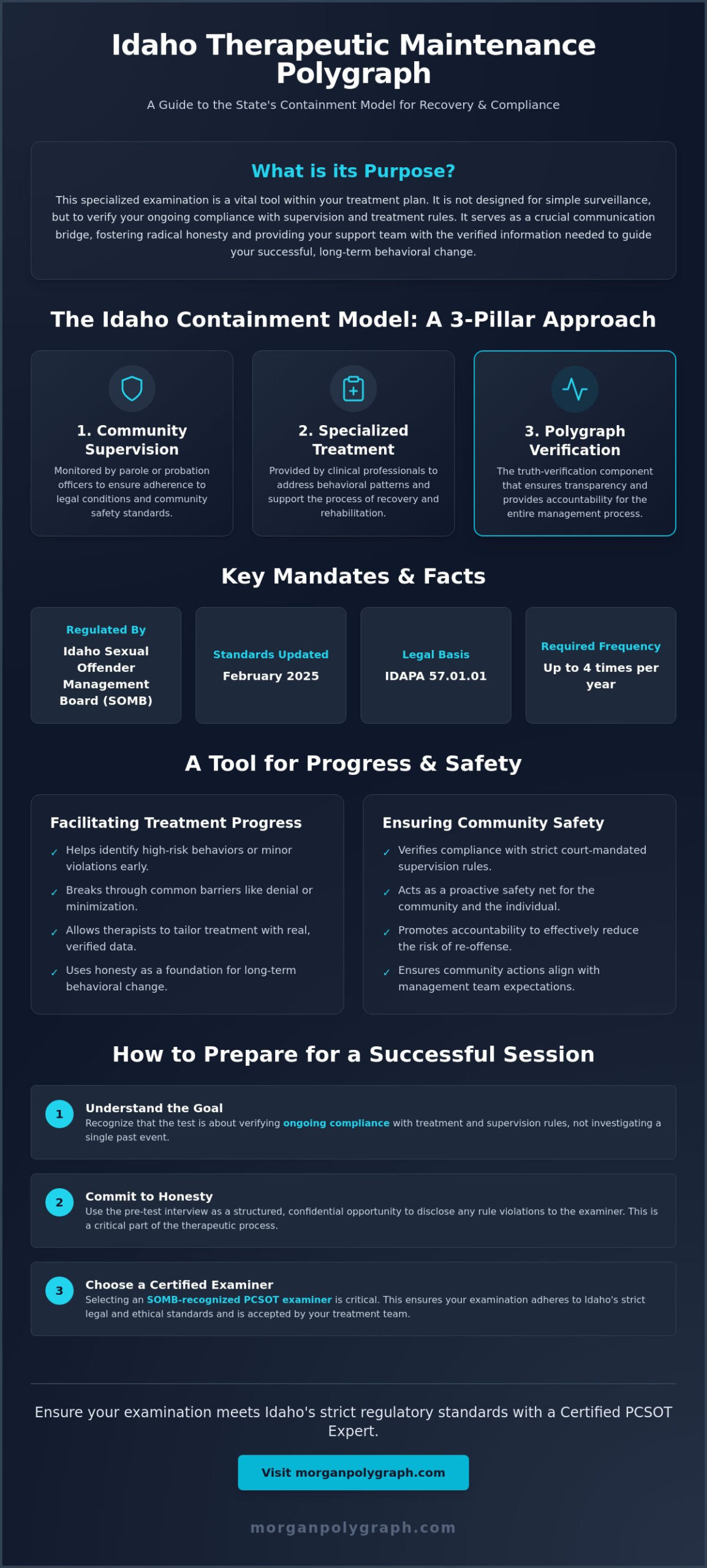
Idaho manages sex offenders through a multidisciplinary approach known as the containment model. This strategy relies on three distinct but interconnected pillars: community supervision by parole or probation officers, specialized treatment from clinical professionals, and periodic verification through the Idaho therapeutic maintenance polygraph. This system ensures that no single entity carries the full burden of monitoring. Instead, information flows freely between the examiner, the therapist, and the supervising officer to create a comprehensive picture of the individual’s behavior.
The polygraph serves as the “truth-verification” component of this model. It isn’t merely a tool for catching lies; it’s a mechanism for promoting radical honesty. When an examinee knows that their compliance with treatment rules will be verified periodically, the incentive to maintain transparency increases significantly. This collaborative framework requires Certified PCSOT Expertise to ensure that every session adheres to the strict legal and ethical standards set by the state. This high level of precision is what makes the containment model effective at reducing recidivism.
Facilitating Treatment Progress
In a clinical setting, the exam helps break through common barriers like denial or minimization. Many individuals struggle to admit to “minor” rule violations that could lead to larger setbacks. The pre-test interview provides a structured environment where the examinee can disclose these behaviors before the sensors are even attached. This process allows therapists to tailor individual treatment plans based on real, verified data rather than just self-reported information. If you’re looking for a professional environment to complete these requirements, Morgan Polygraph offers discreet services tailored to these specific needs.
Ensuring Community Safety
Testing acts as a safety net for both the community and the examinee. It monitors for high-risk behaviors that might not be visible during a standard home visit or office check-in. For example, the exam can verify if an individual is avoiding prohibited contacts or staying away from restricted locations. The deterrent effect of regular, scheduled maintenance testing shouldn’t be underestimated. It provides a constant reminder of the boundaries required for successful community living. By identifying behavioral “red flags” early, the containment team can intervene before a situation escalates into a new offense.
Maintenance vs. Monitoring: Understanding the Differences
Post-Conviction Sex Offender Testing (PCSOT) in Idaho primarily utilizes two distinct exam types to ensure compliance and safety. While both fall under the umbrella of forensic truth verification, their objectives differ significantly. The Idaho therapeutic maintenance polygraph is designed to evaluate how well an individual is adhering to the specific rules of their treatment program and the conditions of their supervision. In contrast, a monitoring exam serves as a broader safety check to ensure no new criminal activity has occurred since the individual’s last evaluation.
Understanding these differences helps reduce the anxiety often associated with the testing process. Maintenance exams are clinical in nature, focusing on the day-to-day choices that lead to long-term success. Monitoring exams are more investigative, acting as a definitive check against recidivism. According to Idaho Sexual Offender Management Board (SOMB) standards revised in February 2025, offenders are generally limited to four maintenance polygraphs per calendar year. This frequency ensures regular oversight while allowing the treatment process to remain the primary focus of the individual’s recovery.
Focus Areas of Maintenance Exams
Maintenance testing centers on the “here and now” of your recovery journey. The examiner will ask questions regarding your adherence to specific supervision mandates. These questions typically cover:
- Strict compliance with “no-contact” orders and internet usage restrictions.
- Honesty regarding “slip-ups” or near-miss situations that could jeopardize your progress.
- Completion of therapeutic homework and active participation in group therapy requirements.
These exams provide a structured space to disclose minor boundary crossings. Addressing these issues early prevents them from evolving into more serious violations. It’s a proactive way to maintain the integrity of your treatment plan.
Focus Areas of Monitoring Exams
Monitoring exams are designed to protect the public by verifying that no new offenses have been committed. These sessions are comprehensive and cover more than just sexual misconduct. The primary focus areas include:
- Detection of any new sexual or non-sexual criminal activity since the last exam.
- Verification of employment and residency disclosures provided to your supervising officer.
- Ensuring full compliance with all Idaho sex offender registry requirements.
By confirming that an individual is not engaging in illegal acts, monitoring exams provide the community and the court with a high degree of confidence in the containment model’s efficacy. While maintenance exams support your personal growth, monitoring exams verify your continued safety within the community.
How to Prepare for Your Polygraph in Boise
Preparing for an Idaho therapeutic maintenance polygraph requires more than just showing up on time. It involves a shift in mindset from defensiveness to transparency. We understand that this process can be intimidating. Our Boise office provides a professional and respectful environment where you can fulfill your legal and treatment obligations with clarity. The goal isn’t to “trick” you, but to verify your progress within the containment model.
To ensure a smooth session, you should bring all relevant documentation. This includes specific court orders, your most recent treatment logs, and a valid form of identification. Having these items ready allows the examiner to verify the rules you’re expected to follow, which streamlines the entire process. Per SOMB standards revised in February 2025, every session is audio-visually recorded to ensure quality assurance and professional accountability. This recording is retained for three years, providing a clear record of the professional conduct maintained during your visit.
Anxiety is a common experience during these exams. It’s vital to distinguish between “test anxiety,” which is a natural reaction to the equipment, and “deception anxiety,” which stems from a fear of being caught in a lie. Our examiners are trained to recognize these differences. Honesty is truly the only path to success. Disclosing a minor rule violation during the interview phase is far better than attempting to hide it once the sensors are active.
The Importance of the Pre-Test Interview
The pre-test interview is typically the longest phase of the appointment. This is where the examiner reviews your history and the specific rules of your supervision. It’s a critical window for you to clarify any misunderstandings. If you’re unsure about a specific question or how a rule applies to your situation, this is the time to speak up. The examiner will explain every question that will be asked during the actual test, ensuring there are no surprises or “trick” questions.
Physical and Mental Preparation
Your physical state can influence the physiological readings during the exam. We recommend getting a full night’s sleep and eating a balanced meal before your appointment. Continue taking all prescribed medications as directed by your doctor. If you’re feeling overwhelmed, discuss your fears with your therapist beforehand. They can help you process your anxiety and reinforce the importance of the containment model in your recovery.
When you arrive at our office, you’ll find a professional, discreet environment designed to put you at ease. We utilize modern methodology to ensure the highest levels of precision while maintaining a compassionate approach. If you’re ready to schedule your session with a certified expert, contact Morgan Polygraph today to proceed with confidence.
Certified PCSOT Expertise at Morgan Polygraph
Selecting an examiner for an Idaho therapeutic maintenance polygraph is a decision that affects your treatment standing and your legal compliance. You must choose a professional who is nationally certified and recognized by the Idaho Sexual Offender Management Board (SOMB). Our lead practitioner’s credentials and decorated history in the industry form the backbone of our practice. At Morgan Polygraph, we provide a level of expertise that combines decades of forensic experience with a forward-thinking approach to modern technology. We’re recognized for our precision and integrity, ensuring every session meets the rigorous demands of the state’s containment model.
We use state-of-the-art methodology to ensure the highest accuracy standards in every examination. By integrating data-driven detection and advanced behavioral observation, we position ourselves as leaders in technical advancements within the field. Technical excellence is only half of the equation; we also maintain a commitment to professional, authoritative, and discreet service. We understand the human stress involved in these sessions. Our goal is to make every client feel they’re in capable and trustworthy hands, even when the subject matter is highly sensitive.
Our Experience with Idaho SOMB Standards
Our long-term industry experience allows us to apply a nuanced understanding to the specific needs of therapeutic testing. We recognize that those in the treatment process are often in a vulnerable state. Because of this, we approach every Idaho therapeutic maintenance polygraph with a secondary focus on compassion and respect. This clinical empathy doesn’t compromise our authoritative stance; rather, it facilitates a more productive and honest testing environment. Our reports are meticulously organized to meet the strict requirements of Idaho courts and the Department of Correction. We ensure all audio-visual recordings and documentation are handled with the absolute confidentiality you expect.
Next Steps: Scheduling and Compliance
Coordination is a key part of the containment model. We work seamlessly with your treatment providers and probation officers to ensure timely reporting and debriefing. After your test is complete, we provide a detailed analysis of the results to your management team. This allows for immediate integration of the findings into your treatment plan, keeping you on the path to successful completion. If you’re ready to proceed with a provider who respects the past while actively shaping the future of the industry, we’re here to help. Contact Morgan Polygraph for professional PCSOT services to ensure your compliance is handled with expert care.
Securing Your Path to Successful Compliance
Meeting the rigorous standards of the Idaho Sexual Offender Management Board is a vital part of your reintegration process. The Idaho therapeutic maintenance polygraph serves as more than just a monitoring tool; it’s a foundation for honest communication between you, your therapist, and your probation officer. By prioritizing transparency during your session, you demonstrate your commitment to the containment model and your long-term success. This verification process ensures that minor boundary issues are addressed before they become significant legal setbacks.
You deserve an examination process that is both accurate and respectful. Our Boise office provides a discreet and professional environment where your privacy is a top priority. As nationally certified PCSOT examiners and court-recognized experts in Idaho, we deliver the precise data-driven results that your management team requires. Schedule your SOMB-certified maintenance polygraph with Morgan Polygraph today. We’re ready to support your progress with the expertise and compassion you need to succeed.
Frequently Asked Questions
What is the difference between a maintenance and a monitoring polygraph?
A maintenance polygraph focuses on your adherence to specific treatment rules and behavioral boundaries, while a monitoring polygraph verifies that you haven’t committed any new crimes. In Idaho, the maintenance exam is a clinical tool used to identify high-risk behaviors before they lead to a re-offense. Monitoring exams act as a broader safety check for the community by confirming no new illegal activity has occurred.
Can I fail a maintenance polygraph because of general anxiety?
No, general anxiety about the test itself won’t cause you to fail. Certified examiners use modern methodology to distinguish between natural test jitters and the specific physiological responses associated with deception. We understand that an Idaho therapeutic maintenance polygraph is a stressful event. We work to create a calm, professional environment to ensure the sensors capture accurate data without interference from normal nervousness.
How often do I need to take a therapeutic polygraph in Idaho?
Offenders are generally limited to four maintenance polygraphs per calendar year according to the Idaho Sexual Offender Management Board (SOMB) standards. This frequency ensures consistent oversight without interfering with your clinical progress. It’s important to note that re-tests or specific issue exams required by the court or your treatment team don’t count toward this standard annual limit.
What happens if my maintenance polygraph shows ‘deception indicated’?
A result of “deception indicated” is reported directly to your treatment provider and probation officer for further review. This usually leads to a clinical debriefing where you can discuss the results and any undisclosed behaviors. The goal is to identify why the deception occurred and adjust your treatment plan to address the underlying risk factors. It’s a tool for intervention rather than just punishment.
Is the information I disclose during a therapeutic polygraph confidential?
No, information disclosed during an Idaho therapeutic maintenance polygraph is not confidential because it’s shared with your containment team. This team includes your therapist, your supervising officer, and the examiner. This transparency is a core requirement of the Idaho SOMB framework. It ensures everyone involved in your management has the same verified information to support your recovery and maintain public safety.
Can I bring my therapist or lawyer into the polygraph examination room?
No, only the examinee and the certified examiner are allowed in the room during the actual testing phase. Having additional people present can interfere with the physiological readings and the technical accuracy of the equipment. However, you’re encouraged to discuss the process with your therapist or legal counsel before and after the appointment. Our examiners maintain a discreet and professional environment throughout the session.
How long does a typical therapeutic maintenance polygraph take?
A typical session lasts between two and three hours from start to finish. The pre-test interview is the most time-consuming portion of the appointment. During this phase, the examiner reviews your history and ensures you fully understand every question that will be asked while you’re attached to the sensors. This thorough approach prevents misunderstandings and ensures the highest levels of precision in the final results.
Does a ‘failed’ polygraph mean I will automatically go back to jail?
A “failed” test doesn’t lead to an automatic return to jail in most cases. Instead, it serves as a clinical indicator that your treatment or supervision plan needs adjustment. The containment team uses the results to manage risk and promote honesty. However, if the deception involves a serious new crime or a major violation of parole, the legal consequences are determined by the court or the Idaho Department of Correction.