
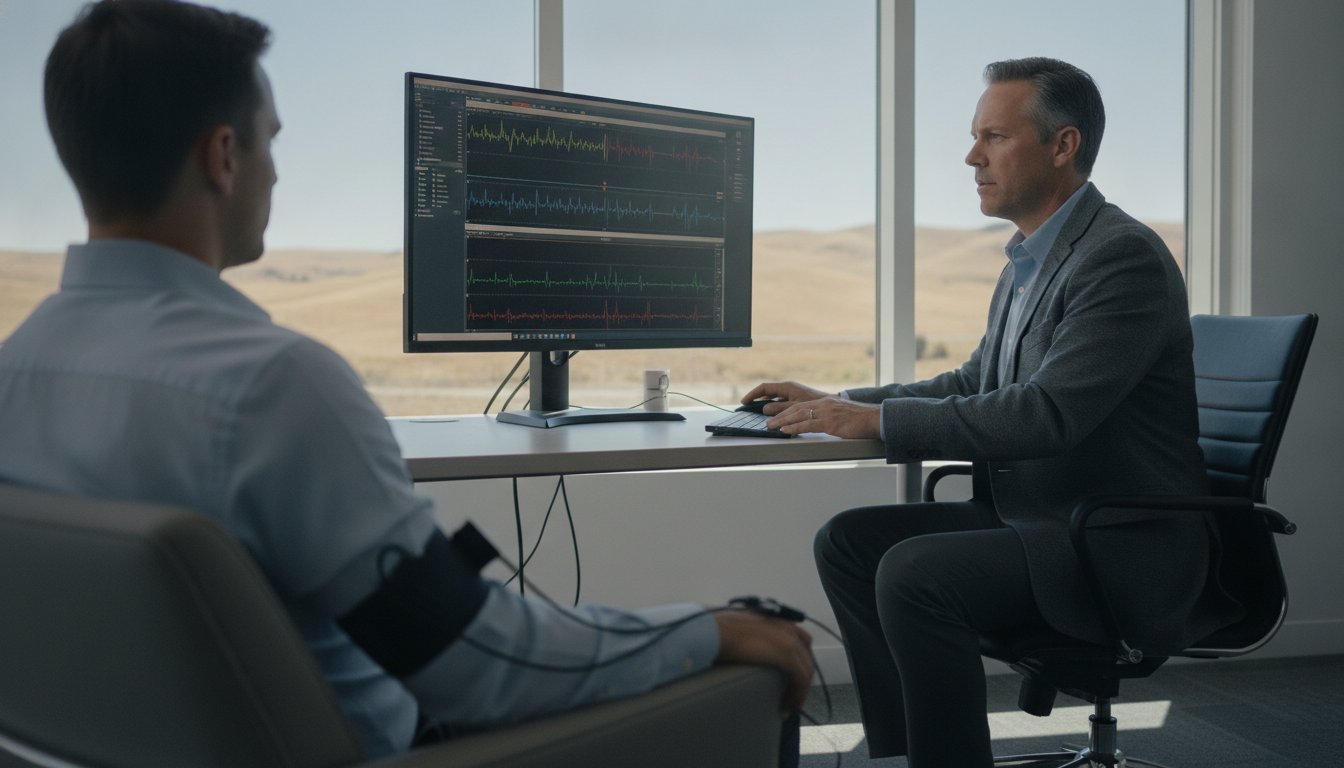
What if the cold, calculating “movie villain” who effortlessly beats a lie detector is actually a scientific impossibility? You might feel a deep sense of uncertainty when dealing with a person who lacks a typical conscience, especially when legal evidence or personal safety is on the line. The common question of whether or not a sociopath can pass a polygraph test often stems from a misunderstanding of how these examinations actually function. While Hollywood suggests that a lack of guilt makes someone untestable, modern forensic science tells a very different story.
We recognize the stress of being manipulated and the need for reliable, data-driven answers. In this article, you’ll discover why the “untestable sociopath” is a flawed concept and how professional examiners use precise physiological indicators to detect deception regardless of a subject’s personality profile. We’ll explore the science behind these tests, including the American Polygraph Association’s rigorous standards updated in August 2024, to help you determine if this tool is the right choice for your specific case. By understanding the methodology behind deception detection, you can move forward with the confidence that expert analysis provides.
Key Takeaways
- Understand why cinematic depictions of sociopaths beating lie detectors are scientifically inaccurate and how forensic psychophysiology provides a more reliable reality.
- Learn how the autonomic nervous system produces involuntary reactions that individuals with Antisocial Personality Disorder cannot fully suppress during a professional exam.
- Discover the specialized sensors and innovative techniques examiners use to identify and neutralize physical or mental countermeasures.
- Evaluate the critical role of American Polygraph Association standards in determining if a sociopath can pass a polygraph test through structured pre-test protocols.
- Find out how to access expert, discreet testing services in Boise for complex criminal defense or relationship transparency cases.
The Myth of the Untestable Sociopath
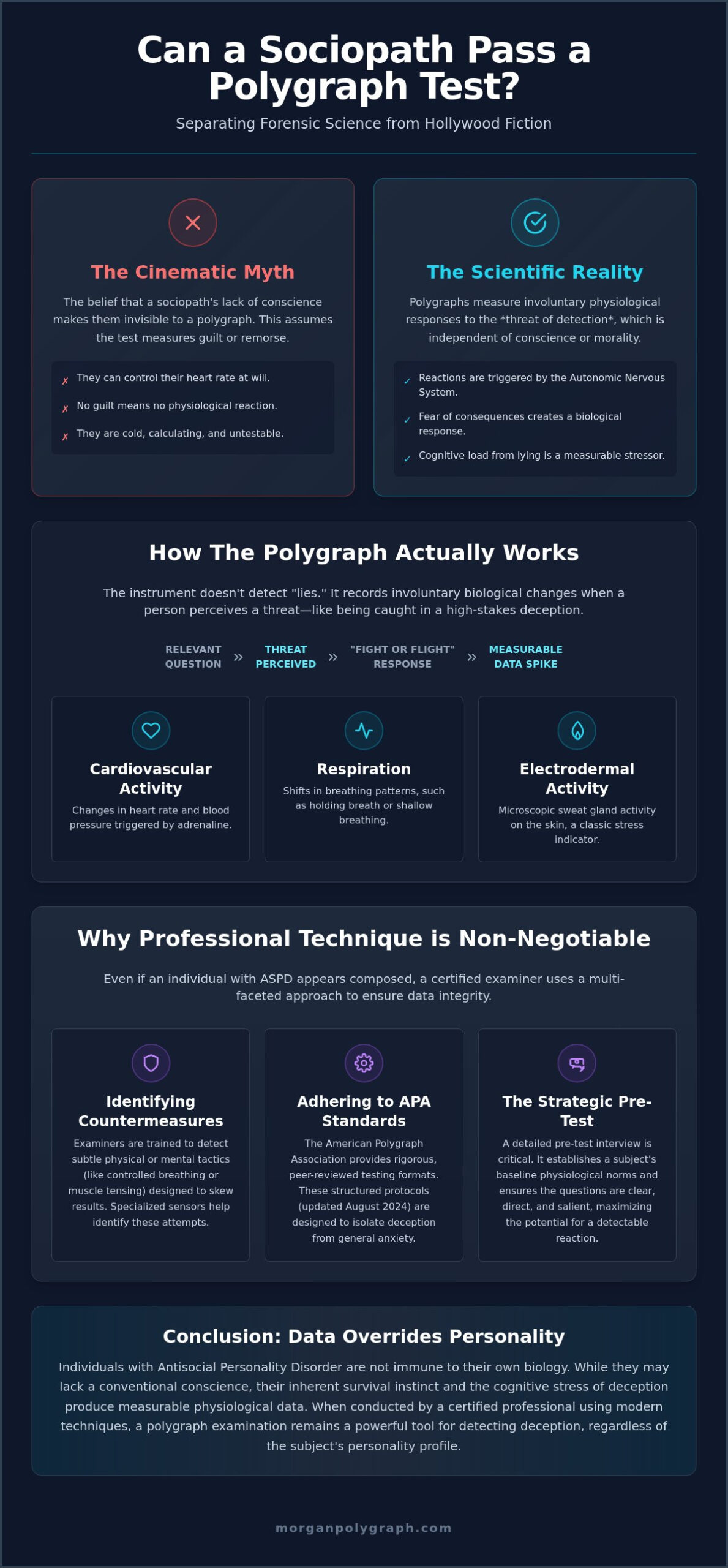
The persistent belief that individuals with Antisocial Personality Disorder (ASPD) can easily deceive modern technology is a staple of crime dramas. It lacks a foundation in forensic reality. Clients often ask, can a sociopath pass a polygraph test by simply remaining calm? While Hollywood portrays these individuals as cold-blooded geniuses who control their heart rate at will, The Science of Deception Detection demonstrates that the autonomic nervous system operates independently of a person’s moral compass. This misconception persists because people confuse a lack of remorse with a lack of physiological reaction.
The term “lie detector” is actually a misnomer. The instrument does not detect lies in a literal sense. It is a sophisticated psychophysiological tool that records involuntary shifts in heart rate, respiration, and skin conductivity. When we move beyond the “lie detector” label, we see that the test measures a subject’s reaction to the threat of being caught. It doesn’t measure their sense of right or wrong. Because the body reacts to the cognitive load of maintaining a lie, the subject’s internal moral alignment becomes irrelevant to the data collection process.
Sociopathy vs. Psychopathy in Testing
The spectrum of ASPD includes both impulsive sociopathy and calculated psychopathy. Sociopaths often struggle with impulse control and may show visible agitation during an interview. Psychopaths might appear composed, but their internal biology still follows predictable patterns. Both groups possess a sympathetic nervous system. This system triggers a “fight or flight” response when they encounter a question that poses a risk to their legal standing or personal reputation. Measurable changes occur because the body prioritizes survival over the person’s desire to appear calm.
The Role of Conscience in Deception
A common error is the belief that guilt is the primary driver of a failing result. In a professional polygraph test, the examiner focuses on the cognitive effort of deception and the fear of consequences. Even if a subject convinces themselves of their own lie, the brain still manages the conflict of suppressing the truth. This mental effort creates measurable data. Deception is a biological stressor. It doesn’t matter if the person feels bad about the lie. It only matters that they recognize the lie as a threat to their situation.
The Science: How the Autonomic Nervous System Reacts
Understanding the biological reality of deception requires looking past the conscious mind and into the involuntary functions of the human body. Many people wonder, can a sociopath pass a polygraph test by simply remaining calm under pressure? While an individual with Antisocial Personality Disorder (ASPD) may excel at emotional manipulation, their biology remains tethered to the sympathetic nervous system. This system acts as the body’s internal alarm, triggering a “fight or flight” response when a person perceives a threat. In a testing environment, the threat isn’t physical violence; it’s the potential consequence of being caught in a lie. Because sociopaths are often highly motivated by self-interest, the risk of failure creates a measurable biological spike that they cannot consciously suppress.
While individuals with ASPD are often characterized by their manipulative nature, as explored in the FBI’s analysis of The Myth of the Untestable Sociopath, their biological infrastructure remains vulnerable to detection. The polygraph instrument records these deep-seated triggers with high precision. It tracks physiological shifts that occur the moment a deceptive answer is provided. These reactions are not based on guilt or remorse. Instead, they are driven by the brain’s recognition of a high-stakes situation. For those navigating complex legal or personal disputes, consulting with a specialized examiner can provide the data-driven clarity needed to move forward with confidence.
The Fight-or-Flight Response
The Autonomic Nervous System functions as the body’s involuntary control center, regulating the physiological shifts that occur when a subject perceives a threat during forensic questioning. When a subject provides a deceptive answer, the brain identifies the question as “salient,” meaning it holds significant importance or risk. Even high-functioning sociopaths experience this salience. Their bodies prepare for a threat by releasing adrenaline and shifting blood flow, regardless of how composed they appear on the surface. They might not feel “bad” about the lie, but their body recognizes the danger of the truth being discovered.
Data Channels and Deception
Modern digital polygraphs analyze multiple channels of data simultaneously to filter out general anxiety and find true deceptive patterns. The process involves three primary sensors:
- The Pneumograph: This measures respiratory patterns, looking for subtle changes in breathing depth or rate.
- The Galvanograph: This tracks skin conductance, measuring microscopic changes in sweat gland activity on the fingertips.
- The Cardiograph: This monitors heart rate and blood pressure fluctuations.
These sensors establish a physiological baseline for each subject. While a sociopath might have a very stable or “flat” baseline due to their calm demeanor, the deviation from that baseline during a critical question is what matters. Advanced software and expert analysis allow examiners to distinguish between a subject’s natural personality and the specific physiological spikes associated with deception.
Can Sociopaths Use Countermeasures to Pass?
The desire to “beat the machine” is a common theme among those who fear the results of a forensic exam. Individuals with high levels of narcissism or Antisocial Personality Disorder often believe they’re clever enough to outsmart the technology. This leads to the frequent question: can a sociopath pass a polygraph test by using specific tricks or countermeasures? While the internet is full of outdated advice on how to fool sensors, modern forensic equipment is designed specifically to identify and neutralize these attempts. In many cases, the act of trying to manipulate the test provides the examiner with more evidence of deception than the physiological spikes themselves.
Attempting to “game” the system often results in a “Purposeful Non-Cooperation” finding. This result is frequently just as damaging as a “Deception Indicated” result in legal or personal contexts. It shows a clear, calculated intent to hide the truth. When a subject hears the phrase “the polygrapher says I manipulated the examination,” it’s because the data channels showed patterns that don’t occur naturally in the human body. These artificial spikes or flatlines are easy for a trained professional to spot, especially when using state-of-the-art digital sensors.
Physical vs. Mental Countermeasures
Old-school physical tricks, such as placing a tack in a shoe or biting the tongue to create a “pain response,” are largely ineffective today. Modern testing environments utilize specialized motion sensor mats placed on the chair and under the feet. these sensors detect even microscopic muscle contractions or shifts in body weight that the subject believes are invisible. Mental countermeasures, such as counting backward or trying to dissociate from the room, are equally difficult to sustain. A structured polygraph examination requires the subject to remain focused on specific, high-stakes questions. The cognitive load required to maintain a mental distraction while processing those questions usually leads to erratic and clearly manipulated charts.
The Examiner’s Counter-Strategy
A certified examiner’s primary role is to ensure the integrity of the data. This is Why Expert Technique and Certification Matter when dealing with subjects who may have manipulative personality profiles. Professionals use a variety of techniques to level the playing field, including:
- Silent Answer Tests: Requiring the subject to answer only in their mind to eliminate vocal artifacts.
- Question Shuffling: Changing the order of questions to prevent the subject from timing a countermeasure.
- Repetition Phases: Running multiple charts to ensure that any physiological reaction is consistent and not a one-time fluke.
When an examiner sees “atypical” chart patterns, such as a subject having a massive reaction to a neutral question but a completely flat line for a critical one, it signals a deliberate attempt to skew the results. These patterns don’t exist in nature. They are the signature of an attempted manipulation, which a seasoned expert will identify immediately.
Why Expert Technique and Certification Matter
The effectiveness of deception detection technology depends heavily on the professional operating the equipment. A common concern for many clients is whether or not a sociopath can pass a polygraph test if the examiner is inexperienced or lacks specialized training. The reality is that the instrument is a tool, not a judge. Its reliability stems from the strict protocols and scientific standards followed by the practitioner. Adherence to American Polygraph Association (APA) standards ensures that the examination remains a methodical, data-driven process rather than a subjective interview. As of August 23, 2024, APA standards require practicing examiners to complete a minimum of 30 hours of continuing education every two years. This commitment to ongoing training ensures that professionals are equipped with the latest forensic methodologies to handle even the most complex personality profiles.
A qualified examiner also adheres to strict daily limits to maintain the highest levels of precision. According to current professional standards, evidentiary examinations are limited to just three per day. This prevents examiner fatigue and ensures that every chart is analyzed with meticulous attention to detail. When these rigorous standards are applied, the subject’s personality traits become secondary to the physiological data. If you are dealing with a sensitive legal or personal matter, it’s essential to engage a certified professional who understands the nuances of antisocial personality profiles and high-stakes testing.
The Pre-test Interview
The pre-test interview is perhaps the most critical phase for neutralizing manipulative behavior. During this time, the examiner establishes what’s known as a “psychological set.” This process focuses the subject’s attention on the specific, relevant issues at hand. It isn’t a casual conversation; it’s a structured interaction designed to establish a baseline of cooperation and identify behavioral red flags before any sensors are attached. For a subject with ASPD, this phase levels the playing field. The examiner defines the questions clearly, leaving no room for the semantic “wiggle room” that manipulative individuals often use to justify their lies. By the time the actual testing begins, the subject understands that their physiological reactions will be the only data that matters.
Validated Questioning Formats
Modern forensic testing relies on validated questioning formats, such as the Comparison Question Technique (CQT). This method uses a specific mix of relevant, irrelevant, and comparison questions to trigger measurable shifts in the autonomic nervous system. The beauty of these structured formats is their resistance to “charming” or manipulative personalities. Because the final report is based on numerical scoring of the physiological charts, the examiner’s personal opinion of the subject’s character is removed from the equation. When clients ask are polygraphs accurate, the answer lies in this objective, mathematical approach. The data speaks for itself, providing a level of certainty that simple behavioral observation can’t match.
Professional Polygraph Services in Boise, Idaho
Morgan Polygraph provides specialized forensic services to the Boise community and the wider Treasure Valley. We combine decades of traditional experience with modern, data-driven methodology to ensure every examination is handled with the highest level of precision. Whether you’re dealing with a sensitive family matter or a complex legal dispute, our commitment to ethical standards and innovative technology remains unwavering. We understand that residents of Southern Idaho often face high-stakes situations where the truth is paramount. By utilizing court-recognized expertise, we provide results that hold weight in both private and legal settings.
One of our core areas of focus involves navigating the complexities of high-stakes infidelity tests. In these personal cases, the question of whether a spouse or partner is being truthful is emotionally taxing. When concerns arise about a partner’s personality profile, the question of can a sociopath pass a polygraph test often comes to the forefront. Our examiners are trained to look past surface-level charm or manipulation to the underlying physiological data, providing the clarity needed for families to move forward with confidence.
Our Expertise in Complex Cases
Our firm has extensive experience handling subjects with complex personality profiles in both legal and therapeutic settings. We regularly work with defense attorneys to provide objective data for criminal cases, ensuring the integrity of the legal process is maintained. This expertise extends to specialized testing such as psychosexual evaluation and Post-Conviction Sex Offender Testing (PCSOT). In these sensitive cases, our methodical approach ensures every chart is scored numerically to remove bias. We provide a neutral, professional environment where facts are prioritized over behavioral manipulation.
Scheduling Your Examination in Boise
If you require a professional examination, our office is conveniently located on W. State Street in Boise. We prioritize confidentiality and discretion for all our clients, providing a secure environment for every appointment. When scheduling, we’ll guide you through the process of ensuring the subject is “testable.” This involves verifying the individual is not under the influence of substances that could interfere with autonomic nervous system responses. We recommend contacting Morgan Polygraph directly for a discreet consultation to discuss the specific needs of your case. Our goal is to provide you with the most accurate, reliable data available through modern forensic science.
Moving Forward with Scientific Clarity
While cinematic myths suggest that a lack of conscience provides a shield against detection, forensic science proves that the autonomic nervous system remains a reliable witness. The persistent question of can a sociopath pass a polygraph test is ultimately answered by the data, which tracks involuntary biological spikes rather than subjective feelings of guilt. By focusing on the cognitive load of deception and the biological fear of consequences, modern examinations bypass the surface-level charm or manipulation often associated with antisocial personality profiles.
Accuracy in these complex cases depends on the integration of state-of-the-art computerized technology and the skill of a seasoned professional. With over 30 years of specialized forensic experience, we ensure that every chart is scored with objective, numerical precision. Our nationally certified and court-recognized examiners provide the discretion and reliability required for high-stakes legal and private decisions. You don’t have to navigate these uncertain situations without support; expert analysis is available to provide the clarity you deserve.
If you are seeking the truth in a legal or personal matter, take the next step toward a definitive resolution. We invite you to Schedule a Professional Consultation with Morgan Polygraph in Boise to discuss your specific needs in a secure environment. We look forward to helping you find the answers you need to move forward with confidence.
Frequently Asked Questions
Is it true that psychopaths can pass a polygraph without reacting?
No, psychopaths cannot pass without reacting because they still possess a functioning sympathetic nervous system. While they may not feel guilt, they do experience a “fight or flight” response when their self-interest is threatened. The question of whether or not a sociopath can pass a polygraph test often hinges on this biological reality. Their bodies prioritize survival, creating measurable spikes in heart rate and sweat gland activity that they cannot consciously control.
What happens if a subject tries to use drugs or medication to pass?
If a subject uses drugs or medication, the examiner will likely identify the physiological interference and terminate the session. Substances like beta-blockers or depressants create “flat” charts that lack the necessary biological variability for a valid result. Examiners are trained to recognize these artificial baselines. In many cases, trying to chemically suppress a reaction makes the subject untestable, which is often viewed as a deceptive tactic in legal or employment settings.
Can a sociopath “trick” the examiner with their charm?
Charm and manipulative behavior do not influence the physiological data collected by the instrument. The pre-test interview is specifically designed to bypass interpersonal manipulation by focusing the subject on the structured, validated questions. An examiner’s expertise allows them to maintain professional boundaries and focus purely on the data channels. Because the final scoring is numerical and mathematical, the subject’s personality has no impact on the objective results of the report.
Do polygraphs work if the person truly believes their own lie?
Polygraphs remain effective even if a subject has rationalized their deception. The brain still manages the cognitive load of suppressing the truth, which acts as a biological stressor. While they might believe their own narrative on a conscious level, the subconscious mind recognizes the conflict. This internal friction triggers the autonomic nervous system, producing the involuntary physiological shifts that the sensors are designed to record with high precision.
How does an examiner handle a subject who is intentionally uncooperative?
Uncooperative behavior is documented as Purposeful Non-Cooperation (PNC). Examiners use specialized motion sensor mats and digital algorithms to detect if a subject is trying to skew the results through physical or mental resistance. If the subject refuses to follow instructions or attempts to manipulate their breathing, the test is stopped. This outcome is generally viewed with the same level of concern as a deceptive result by defense attorneys and legal authorities.
Are the results of a polygraph on a sociopath admissible in court?
Admissibility varies by state and the specific nature of the case. In many jurisdictions, polygraph results are admissible if both parties stipulate to their use before the exam. They are frequently used in Idaho for criminal defense, psychosexual evaluations, and Post-Conviction Sex Offender Testing (PCSOT). While not always a standalone piece of evidence, they provide critical data that helps legal professionals and courts make more informed decisions regarding risk and transparency.
Can a sociopath pass by staying completely calm?
Surface-level calmness is not the same as physiological stability. A subject may appear entirely relaxed while their internal sensors show significant spikes in blood pressure or skin conductance. The test doesn’t measure outward behavior; it measures deep-seated biological triggers. In fact, an unnaturally “calm” or flat baseline can signal to an examiner that the subject is attempting a countermeasure, leading to further scrutiny and the use of specialized sensors to find the truth.
How long does a polygraph test take when ASPD is suspected?
A standard forensic examination typically lasts between two and three hours. When an individual with ASPD is involved, the examiner may spend additional time on the pre-test interview to ensure the questions are framed without ambiguity. This meticulous approach prevents the subject from using semantic manipulation to justify their answers. The actual time the subject is attached to the sensors is relatively short, but the preparation and data analysis require a significant investment of professional time.