
In the high-stakes environment of Idaho’s criminal justice system, the most dangerous variable isn’t the evidence; it’s the witness you haven’t properly vetted. You likely understand the frustration of a case hinging on a person whose story feels fragile under pressure. When the penalties are as severe as those found in Idaho’s statutes, leaving credibility to chance is a risk many legal professionals can no longer afford. Using polygraph to assess witness credibility before trial Idaho has become a sophisticated method for defense teams to filter information and solidify their strategy long before a jury is seated.
This article explores how pre-trial examinations offer a decisive tactical advantage in complex litigation. You’ll discover how these results can influence plea negotiations and provide the leverage necessary to challenge the prosecution’s narrative. We provide a clear roadmap for navigating the Idaho Rules of Evidence, ensuring you understand the role of modern, data-driven detection. From identifying court-recognized examiners at our Boise office on State Street to integrating these findings into your defense, this guide prepares you for the evolving realities of legal practice.
Key Takeaways
- Learn how pre-trial polygraph testing serves as a diagnostic tool to vet witnesses and strengthen defense strategies before entering the courtroom.
- Understand the physiological metrics, including heart rate and galvanic skin response, used by modern technology to evaluate witness statements.
- Discover the tactical advantages of using polygraph to assess witness credibility before trial Idaho, especially concerning its influence on plea negotiations and case direction.
- Navigate the Idaho Rules of Evidence and the specific conditions, such as stipulated polygraphs, under which results may impact legal proceedings.
- Identify the optimal timing within the discovery phase to integrate expert polygraph reports into your trial preparation workflow.
The Role of Polygraphs in Idaho Pre-Trial Credibility Assessment
In Idaho’s legal system, the discovery phase is often where cases are won or lost. Using polygraph to assess witness credibility before trial Idaho serves as a critical diagnostic tool, allowing defense teams to evaluate the reliability of statements before they are entered into the public record. While much debate focuses on whether a test is admissible in court, seasoned attorneys in Boise prioritize its investigative utility. This involves using the exam to verify facts, identify inconsistencies, and determine the overall strength of a witness’s narrative during the initial investigation.
Understanding polygraph technology and its legal history helps clarify why it remains a staple in pre-trial strategy. In high-stakes criminal and civil cases, where penalties are severe, a single unreliable witness can jeopardize an entire defense. By using polygraph to assess witness credibility before trial Idaho, legal teams can effectively filter out noise and focus on the core facts of the matter. This methodical vetting process ensures that counsel makes informed decisions about which individuals to put on the stand and which stories require closer scrutiny.
The Tactical Advantage of Early Witness Vetting
Pre-trial testing provides a safety net for legal professionals. It allows for the identification of “weak links” in a witness list before they are subjected to a rigorous deposition by the prosecution. It’s a proactive approach that offers several benefits:
- Resource Allocation: Attorneys can focus their limited time and investigative budget on testimony that has been verified, rather than chasing leads based on deceptive accounts.
- Strategic Leverage: Knowing the truthfulness of a witness allows for more confident negotiations during plea discussions or settlement meetings.
- Litigation Control: It reduces the risk of “trial by ambush” where a witness changes their story or is easily impeached under cross-examination.
Types of Witnesses Suitable for Credibility Testing
Not every individual involved in a case requires a polygraph, but certain roles carry higher risks. Idaho defense attorneys often request testing for specific categories of witnesses to ensure the integrity of their case file:
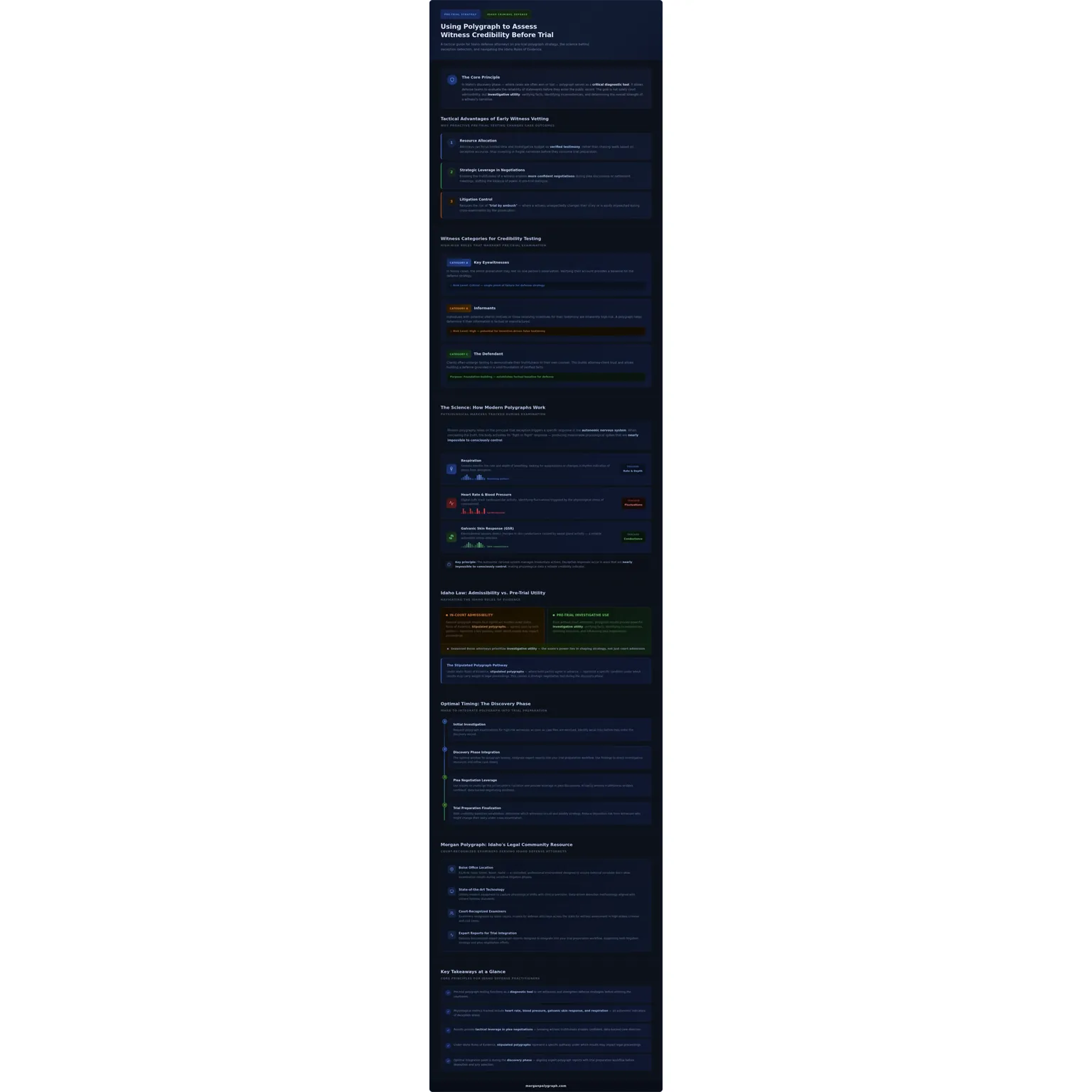
- Key Eyewitnesses: In felony cases, the entire prosecution may rest on one person’s observation. Verifying their account provides a baseline for the defense strategy.
- Informants: Individuals with potential ulterior motives or those receiving incentives for their testimony are inherently high-risk. A polygraph helps determine if their information is factual or manufactured.
- The Defendant: Clients often undergo testing to demonstrate their truthfulness to their own counsel. This builds trust and allows the attorney to build a defense based on a solid foundation of facts.
The Science of Deception: How Modern Polygraphs Evaluate Witnesses
Modern polygraphy relies on the physiological principle that deception triggers a specific response in the autonomic nervous system. It’s about data-driven detection. When a witness provides a statement, their body reacts to the stress of concealment in ways that are nearly impossible to consciously control. At Morgan Polygraph, we utilize state-of-the-art technology to capture these shifts with clinical precision. Our Boise facility at 6126 W. State Street provides the controlled, professional environment necessary to ensure that external variables don’t skew the results during this sensitive phase of litigation.
Physiological Markers and Data Collection
The autonomic nervous system functions as the body’s internal regulator, managing involuntary actions like breathing and heart rate. When an individual attempts to deceive, the “fight or flight” response activates, leading to measurable spikes in these systems. Using polygraph to assess witness credibility before trial Idaho involves tracking several key indicators:
- Respiration: Sensors monitor the rate and depth of breathing, looking for suppressions or changes in rhythm.
- Heart Rate and Blood Pressure: Digital cuffs track cardiovascular activity, identifying fluctuations that occur when a witness is asked specific, relevant questions.
- Galvanic Skin Response (GSR): This measures changes in the skin’s electrical conductivity caused by micro-sweat, a common indicator of psychological arousal.
Modern digital sensors used in 2026 are sensitive enough to detect even subtle fluctuations that older, analog equipment would have missed. A critical part of the process is establishing a physiological baseline. This allows the examiner to distinguish between general situational anxiety and the specific peaks associated with deceptive intent. By comparing responses to neutral control questions against those related to the case, we can isolate the body’s reaction to potential falsehoods.
The Examiner’s Role in Data Interpretation
While data collection is technological, the interpretation remains a specialized human skill. A comprehensive polygraph examination involves more than just reading charts; it requires an expert who can synthesize behavioral observations with physiological data. Validated testing protocols are standardized procedures and scoring systems used by certified examiners to ensure each test meets rigorous scientific and ethical benchmarks. These protocols help eliminate examiner bias and provide a consistent framework for analyzing results.
The process often includes a post-test interview where the examiner can clarify specific reactions or inconsistencies found in the charts. This step is vital for refining the final report. If you’re preparing a complex case, you might consider how an expert report from a court-recognized examiner can clarify conflicting witness accounts. Using polygraph to assess witness credibility before trial Idaho provides the objective data needed to make informed decisions about your trial strategy.
Navigating Idaho Law: Admissibility vs. Pre-Trial Utility
In Idaho, the discussion around polygraphs often centers on the courtroom. However, for Boise attorneys, the real value lies in the investigative phase. While the Idaho Supreme Court has historically limited the admissibility of results, this doesn’t diminish their influence in pre-trial settings. Using polygraph to assess witness credibility before trial Idaho allows legal teams to vet information outside the restrictive environment of a trial, providing a clearer picture of the case’s merits. It’s a tool for truth discovery that operates effectively within the discovery and negotiation stages of a case.
Idaho Rules of Evidence and the Stipulation Process
Under the Idaho Rules of Evidence, polygraph results are generally excluded from trial unless there is a prior written agreement between both parties. This is known as a stipulated polygraph. When both the prosecution and defense agree to the terms, the results can be introduced as evidence. This process requires a high degree of trust in the practitioner. Selecting a nationally certified, court-recognized expert at Morgan Polygraph ensures that the testing meets the rigorous standards expected by the Idaho legal community. Entering a stipulation is a tactical decision. It offers the potential to clear a client’s name but carries the risk of a “failed” result becoming part of the trial record.
Pre-Trial Negotiations and Discovery
Even without a stipulation, polygraph reports are powerful tools during discovery. Attorneys often ask, are polygraphs accurate enough to change a prosecutor’s mind? The answer lies in the data-driven reports provided to counsel. When a key witness passes a certified exam, presenting those findings to the prosecution can highlight the strength of the defense’s position. This often acts as a catalyst for favorable plea negotiations or even the dismissal of charges in felony cases. It provides a methodical way to challenge the prosecution’s narrative before it reaches a jury.
In civil litigation, using polygraph to assess witness credibility before trial Idaho serves a similar purpose in settlement discussions. When a case depends on conflicting “he-said-she-said” testimony, an objective report can break the deadlock. It provides the leverage needed to negotiate from a position of strength, saving clients from the uncertainty and expense of a prolonged trial. Whether the goal is to pivot a defense strategy or secure a settlement, these reports offer a logical path to resolving factual disputes early in the process. This unhurried, methodical approach ensures that legal professionals aren’t flying blind during critical negotiations.
Strategic Implementation: Incorporating Polygraphs into Trial Preparation
Integrating a polygraph into your trial preparation isn’t a last-minute decision. It requires a methodical approach that starts early in the litigation cycle. For Idaho attorneys, the most effective window for testing is during the initial discovery phase, ideally before depositions are scheduled. This allows the defense team to verify or discard testimony before it becomes part of the permanent record. Success depends on close collaboration with a certified polygraph examiner to ensure the testing parameters align with the specific legal challenges of the case.
Preparing the witness is equally vital. They must be physically and mentally capable of undergoing the exam to ensure data accuracy. This means ensuring they are well-rested and not under the influence of substances that could dampen physiological responses. Using polygraph to assess witness credibility before trial Idaho is a delicate process that relies on the witness being in a stable, baseline state. Clear communication regarding the process helps reduce situational anxiety, allowing the examiner to isolate deceptive responses from general nervousness.
Developing Effective Examination Questions
The quality of the results is directly tied to the precision of the questions asked. Examiners use three primary types of questions to build a reliable chart:
- Irrelevant Questions: These establish a physiological baseline by asking simple, undeniable truths.
- Comparison Questions: These trigger a response to a general transgression, providing a metric to compare against case-specific answers.
- Relevant Questions: These focus directly on the core case facts.
Attorneys should work with the examiner to ensure these questions are legally sound and devoid of ambiguous phrasing. Vague language can lead to “Inconclusive” results, which provide little tactical value. Each question must be direct and require a clear “yes” or “no” answer to ensure the physiological data is easy to interpret.
Analyzing the Final Professional Report
Once the exam is complete, the examiner provides a Professional Report. This document is a formal record of the methodology, the questions asked, and the physiological data captured. The two primary results you’ll encounter are No Deception Indicated (NDI), meaning the witness was truthful, and Deception Indicated (DI), suggesting the witness was untruthful. These reports are designed to be clear and authoritative, providing a solid foundation for your next legal move.
Using polygraph to assess witness credibility before trial Idaho allows you to incorporate these findings into your broader case theory. If a witness receives a DI result, it’s a signal to pivot your strategy or seek alternative evidence. Conversely, an NDI result provides the confidence to move forward with that witness as a cornerstone of your defense. If you are ready to strengthen your case with objective data, you can schedule a pre-trial witness examination at our Boise office on State Street.
Why Idaho Attorneys Trust Morgan Polygraph for Witness Assessment
Boise legal circles require a level of precision that only comes from years of specialized practice. Morgan Polygraph has established itself as a court-recognized authority by bridging the gap between traditional investigative techniques and modern, data-driven detection. For defense teams, the choice of an examiner is as critical as the evidence itself. Using polygraph to assess witness credibility before trial Idaho requires a practitioner who understands the local legal landscape and the specific demands of Idaho prosecutors. Our firm specializes in criminal & civil case polygraphs, providing the expert reports necessary for high-stakes litigation.
Our operation is designed to be methodical and organized, ensuring that every legal client receives a professional experience from the initial consultation to the delivery of the final report. We project a persona of calm, collected confidence, making it easier for both attorneys and their witnesses to navigate a process that can often feel stressful. By integrating futuristic technology with a respect for established legal standards, we provide a service that is both innovative and deeply credible.
Nationally Certified and Court-Recognized Expertise
In a field where accuracy is non-negotiable, credentials serve as the foundation of trust. We employ nationally certified examiners who maintain rigorous continuing education standards to stay at the forefront of industry advancements. This commitment ensures that every chart is scored using the most current methodologies available in 2026. By choosing a recognized expert, attorneys protect their case from the risks associated with unverified or amateur testing. Our firm has a long-standing history of providing reliable, expert-led polygraph services to the Boise legal community.
Confidentiality and Professionalism in Boise
We understand that the information handled during a pre-trial investigation is highly sensitive. Every aspect of our operation is designed to maintain the attorney-client privilege and ensure the utmost discretion. The testing environment at 6126 W. State Street, Suite 208, is professional, clinical, and free from external distractions. This controlled setting is essential for obtaining the clear physiological data required for an accurate assessment. We prioritize the human element, treating every individual with the compassion and respect they deserve during their time in our office.
Legal professionals can schedule a consultation for a pending Idaho case by contacting our office directly. We provide clear, actionable instructions for engagement, guiding you through the logistical steps required to secure a testing date. Using polygraph to assess witness credibility before trial Idaho is a strategic move that demands a methodical partner. Our unhurried, systematic approach ensures that you receive the detailed analysis needed to shape your trial strategy with confidence.
Strengthening Your Defense Through Objective Data
Securing a tactical advantage in the Idaho legal system requires a proactive approach to witness vetting. By integrating clinical assessments early in the discovery phase, you identify unreliable narratives before they jeopardize your strategy. This methodical process provides the leverage necessary to influence plea negotiations and resolve factual disputes long before a jury is seated. Using polygraph to assess witness credibility before trial Idaho has evolved into a standard tool for attorneys who demand precision and reliability in high-stakes litigation.
Our Boise-based court recognized experts utilize state-of-the-art technology to provide the Professional Reports your case requires. Working with nationally certified examiners ensures that every interaction is handled with the discretion and expertise necessary for sensitive legal matters. This data-driven detection offers a level of clarity that traditional interviews simply cannot match. It’s about building a foundation of truth in an unhurried, systematic environment that respects both the legal process and the human element involved.
To begin this process, Schedule a Professional Case Consultation with Morgan Polygraph Today. Taking this step ensures you aren’t leaving your case results to chance and provides the peace of mind that your defense is built on verified facts.
Frequently Asked Questions
Are polygraph results admissible in Idaho courts?
Polygraph results are generally inadmissible in Idaho courts unless all parties enter into a formal written stipulation. This requirement follows established legal standards such as State v. Perry, which limits their use in trial settings. However, using polygraph to assess witness credibility before trial Idaho remains a powerful investigative tool for defense teams. It allows counsel to verify facts and strengthen their position during the discovery phase without the immediate pressure of courtroom rules.
How can a polygraph help if it isn’t always admissible in trial?
A polygraph provides significant investigative utility by helping attorneys decide which witnesses to put on the stand and which stories are unreliable. These results can influence a prosecutor’s decision to drop charges or offer a more favorable plea deal. It serves as a diagnostic tool to focus defense resources on verified testimony, providing a tactical advantage during pre-trial negotiations in Boise. This methodical vetting process helps eliminate uncertainty in complex criminal and civil cases.
What happens if a key witness fails a polygraph before trial?
If a witness fails an examination, the attorney can pivot their defense strategy or seek alternative resolutions before the case reaches a jury. Because pre-trial testing is often confidential, it allows counsel to identify “weak links” in their witness list without the results necessarily becoming part of the public record. This prevents trial by ambush and ensures the defense is built on a solid foundation of facts. It’s a discreet way to manage risk in high-stakes litigation.
Can an attorney be present during a witness’s polygraph examination?
Attorneys are typically not present inside the examination room to ensure a controlled environment and prevent physiological interference. However, the examiner will consult with the attorney before the test to develop the question set and discuss the case facts. At our Boise office on State Street, we maintain professional standards that prioritize the integrity of the data while keeping counsel informed throughout the process. This separation ensures that the results remain objective and scientifically sound.
How long does a pre-trial polygraph examination typically take?
A professional polygraph examination usually takes between two and three hours to complete. This time includes a detailed pre-test interview, the actual data collection phase, and a post-test analysis of the physiological charts. We follow an unhurried, methodical approach to ensure that the data captured is accurate and that the witness is comfortable enough to provide a stable baseline for comparison. This systematic process is essential for producing the expert reports that legal professionals rely on.
What is the cost of a professional legal polygraph in Boise?
The cost of a professional legal polygraph varies based on the complexity of the case and the number of witnesses being tested. Morgan Polygraph provides specialized services for criminal and civil cases, and we recommend contacting our Boise office directly for a specific quote. We focus on providing high-quality, court-recognized reports that justify the investment through the strategic leverage they provide during negotiations and litigation. Our pricing reflects our commitment to using state-of-the-art technology.
Do Idaho prosecutors ever accept polygraph results as part of a plea deal?
Yes, Idaho prosecutors may consider polygraph results as a catalyst for plea negotiations, especially when the case hinges on conflicting witness accounts. While they aren’t required to accept them, a “passed” result from a nationally certified examiner can create reasonable doubt or highlight flaws in the state’s narrative. This often leads to a more favorable resolution or the dismissal of charges before trial. It provides the objective data needed to challenge the prosecution’s theory early in the process.
How should I prepare a witness for a polygraph test in Idaho?
Witnesses should arrive well-rested and avoid any substances, such as excessive caffeine or certain medications, that might dampen their physiological responses. It is essential to explain the process clearly to the witness to minimize situational anxiety, as using polygraph to assess witness credibility before trial Idaho depends on an accurate baseline. At our State Street facility, we provide a professional environment where the examinee feels respected, ensuring the most reliable data is captured for your case.