
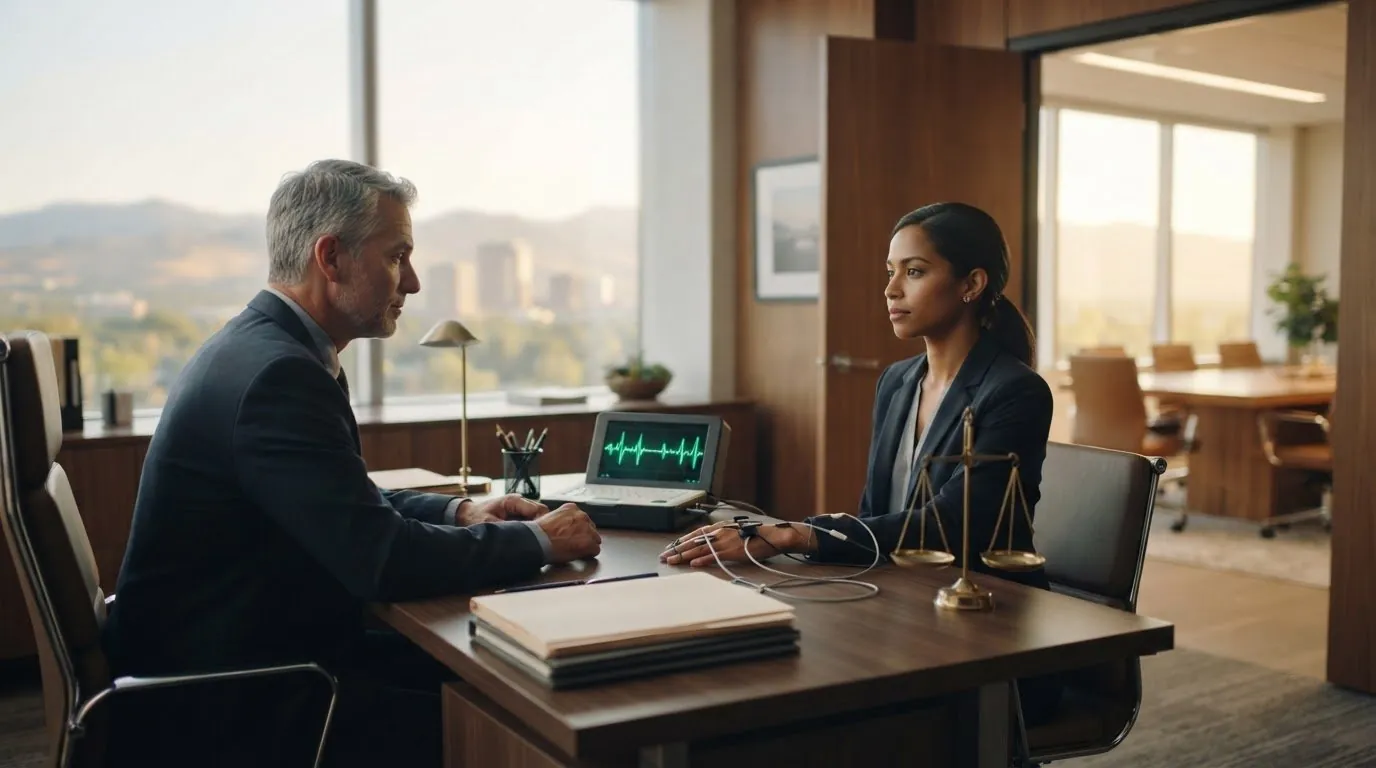
In the Idaho legal system, the difference between a life-altering conviction and a dropped charge often hinges on a single person’s word against your own. When you’re facing high stakes with no physical evidence to back your side of the story, the “he-said, she-said” nature of a prosecution can feel insurmountable. You probably understand that Idaho courts maintain a strict “per se” exclusion of polygraph results during a criminal trial. This makes the decision to use a polygraph to support a motion to dismiss in Idaho a vital strategic choice, even if the jury never sees the results.
Using these results isn’t about the trial itself. It’s about the critical pre-trial window where prosecutorial discretion is most flexible. You’ll discover how a professionally administered examination provides the leverage needed to challenge witness credibility and persuade the state to reconsider its position. We will preview the specific 2026 strategies for using these results to strengthen a Motion to Dismiss under Idaho Criminal Rule 48. This guide explains how a methodical, data-driven approach to credibility can turn the tide in your favor before a single juror is ever seated.
Key Takeaways
- Understand the critical distinction between trial admissibility and pre-trial leverage, where most Idaho case dismissals actually occur.
- Learn how to use a polygraph to support a motion to dismiss in Idaho by creating a “credibility shield” that exposes weaknesses in the prosecution’s theory.
- Navigate the specific Idaho case law, such as State v. Fain, to ensure polygraph results are presented strategically during settlement conferences or Rule 48 hearings.
- Identify the optimal timing for an examination to maximize its impact on a prosecutor’s decision to drop or reduce charges.
- Discover why a professionally documented report from a nationally certified examiner is essential for withstanding prosecutorial scrutiny in Boise.
The Tactical Role of Polygraphs in Idaho Criminal Defense
Idaho criminal defense requires more than just reactive measures. It demands a proactive strategy that addresses the core of the prosecution’s case: witness credibility. In many Boise cases, specifically those involving sexual assault or domestic violence, the entire case rests on a single statement. A professionally administered polygraph examination serves as a tool to disrupt this narrative. While Idaho law generally restricts polygraph results during a jury trial, savvy defense attorneys use a polygraph to support a motion to dismiss in Idaho during the pre-trial phase to highlight factual inconsistencies and lack of probable cause.
The Anatomy of an Idaho Motion to Dismiss
Motions to dismiss are often brought under Idaho Criminal Rule 12(b). These motions typically target defects in the institution of the prosecution or the charging document itself. When a defense attorney presents a motion to dismiss “in furtherance of justice” under I.C.R. 48, the court evaluates the totality of the circumstances. A passed polygraph provides the defense with powerful exculpatory information. This isn’t just about proving innocence; it’s about demonstrating that the state’s reliance on a specific witness is fundamentally flawed. By challenging the reliability of the complaining witness early, counsel can argue that the interest of justice isn’t served by proceeding to trial.
Why Early Polygraph Intervention Matters
Timing is everything in the Idaho judicial system. Engaging an examiner before charges are even filed can prevent a case from entering the court system entirely. This pre-charge strategy allows defense counsel to present exculpatory results to a prosecutor who is still deciding whether to sign a complaint. If charges are already active, the polygraph acts as a catalyst for plea negotiations or a voluntary dismissal. Prosecutors are often more willing to drop a case when they realize their primary witness’s credibility will be a liability. Using a polygraph to support a motion to dismiss in Idaho provides the prosecutor with the political and legal cover they need to abandon a weak case.
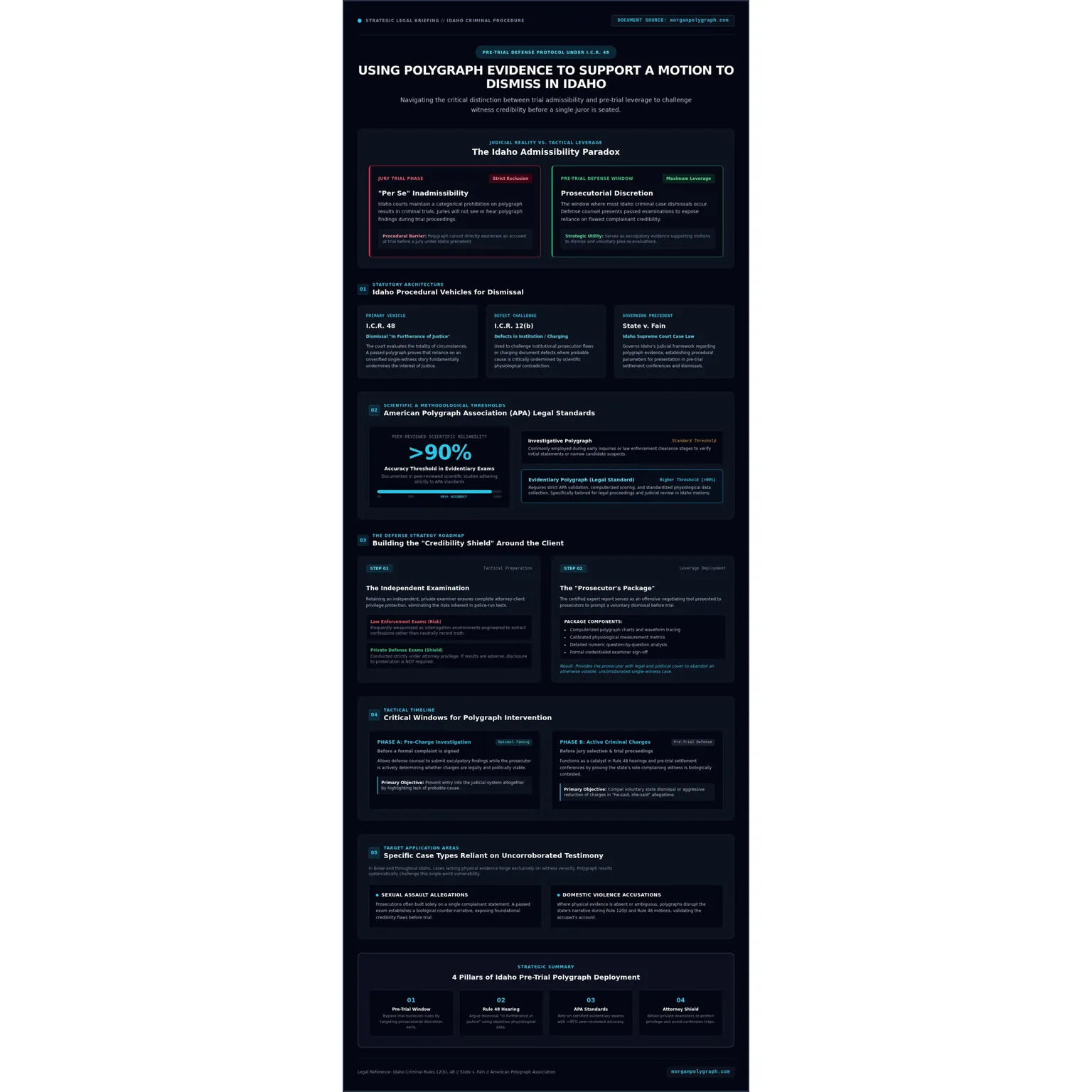
Defense attorneys in Boise distinguish between investigative exams, used to clear a suspect during an initial inquiry, and evidentiary exams, which follow strict American Polygraph Association (APA) standards for use in legal proceedings. Evidentiary exams require higher accuracy thresholds, often exceeding 90% in peer-reviewed studies. By using these high-standard tests, attorneys create early-stage leverage that forces the state to re-evaluate its evidence before the defendant faces the risk of a trial.
How Polygraph Results Strengthen a Motion to Dismiss
A successful defense often relies on shifting the prosecutor’s perspective before the case ever reaches a courtroom. By utilizing a polygraph to support a motion to dismiss in Idaho, defense counsel can build a “Credibility Shield” around their client. This isn’t just a defensive posture; it’s an active challenge to the state’s narrative. When a defendant passes a professionally administered exam, it creates a factual counter-narrative that law enforcement reports often overlook. It pressure-tests the state’s key witnesses by highlighting that their version of events is biologically and physiologically contested by the accused.
Step 1: The Independent Examination
Choosing a private examiner is a safer, more strategic move than agreeing to a police-administered test. Law enforcement polygraphs are often used as interrogation tools designed to elicit confessions rather than to neutrally evaluate truthfulness. A private examination, conducted under an attorney’s direction, ensures that attorney-client privilege remains intact. If the results aren’t favorable, they don’t have to be disclosed to the prosecution. This “safe” testing environment allows for specialized legal-issue testing that focuses strictly on the elements of the alleged crime. For those navigating complex criminal charges, working with a discreet examiner provides the necessary privacy to explore these options without risk.
Step 2: The Expert Report as a Tactical Tool
A professional polygraph report is a sophisticated document. It includes computerized charts, physiological data, and a detailed analysis of the subject’s responses. In Boise, defense attorneys often bundle this report into a “Prosecutor’s Package.” This package is presented to the state to encourage a voluntary dismissal during the pre-trial phase. It provides the prosecutor with a concrete reason to doubt the complaining witness’s story without the public spectacle of a trial.
The legal basis for this tactical move often rests on Idaho Code § 19-3504, which allows a court to dismiss an action in the furtherance of justice. When a prosecutor sees a high-accuracy, exculpatory report from a nationally certified expert, the “interest of justice” shifts. They realize that securing a conviction against a defendant who has scientifically demonstrated their truthfulness is a high-risk endeavor. This pressure often leads to a Rule 48 dismissal request by the court or a significantly reduced charge during plea negotiations.
Navigating Idaho Admissibility: Trial vs. Pre-Trial Strategy
The legacy of State v. Fain often leads people to believe that lie detection has no place in the Idaho courtroom. While it’s true that the Idaho Supreme Court maintains a per se exclusion of results during the trial phase, this rule isn’t an absolute barrier for your defense. The admissibility of polygraph evidence is strictly controlled at trial to prevent “usurping the jury’s role,” but pre-trial proceedings operate under different dynamics. Attorneys frequently use a polygraph to support a motion to dismiss in Idaho during preliminary hearings or bond reduction arguments where the formal Rules of Evidence are less restrictive. By presenting exculpatory results at these early stages, counsel can challenge the state’s probable cause before the case ever gains momentum.
Trial Admissibility vs. Pre-Trial Persuasion
Prosecutors have immense discretion. They don’t need a judge’s permission to drop a case if they believe the interest of justice is served. When defense counsel presents data answering are polygraphs accurate with a 90% or higher accuracy report, it gives the state a reason to pause. This evidence can also influence the Idaho Department of Corrections during pre-sentence investigations or probation considerations. It’s a tool for persuasion, not just a trial exhibit. Even if the results can’t be shown to a jury, they can convince a prosecutor that their star witness is unreliable, leading to a voluntary dismissal under Rule 48.
The Power of the Stipulated Exam
A stipulated exam is a different strategic path. This is a bilateral agreement where both the defense and the State of Idaho agree to the test and its admissibility beforehand. While risky, it can be a “case-ender” if the defendant passes. If you’re considering this, protecting your rights during the process is paramount. You need an examiner who can stand up to prosecutorial scrutiny and win the “battle of the experts” during pre-trial motions. By ensuring the test follows strict American Polygraph Association standards, including the use of at least four physiological channels and computerized scoring, your attorney can argue that the results are too reliable for the state to ignore. This high-standard approach is often what’s needed to secure a polygraph to support a motion to dismiss in Idaho when the prosecution is otherwise hesitant to yield.
Best Practices for Attorneys: Integrating Polygraph Evidence
Integrating a polygraph to support a motion to dismiss in Idaho requires a surgical approach to the legal timeline. The most effective window for dismissal is often the brief period between the initial arrest and the preliminary hearing. During this time, the prosecutor’s file is still being built; a pass result can halt the momentum of the state’s case before it becomes a matter of public record. Attorneys shouldn’t wait until the week before trial to introduce this data. Instead, they should coordinate with an expert early to ensure the test results can be leveraged when the prosecutor is most open to negotiation. Finding a qualified polygraph near me ensures the examiner is familiar with Boise’s local legal culture and can provide the necessary expert testimony if a motion hearing is granted.
Drafting the Motion Language
When drafting the motion, counsel should avoid framing the results as a trial exhibit. Instead, reference the polygraph examination as a foundation for the defense’s theory of the case. The motion should highlight the “truthfulness” finding as a specific reason for the court to reconsider the existence of probable cause. By positioning the report as exculpatory evidence that was previously unavailable, the defense can argue that the interest of justice demands a dismissal under Rule 48 without needing to litigate trial admissibility standards. It’s a method of providing the court with a concrete reason to doubt the state’s charging decision.
Managing Client Expectations
Client management is just as critical as the legal filing. A polygraph isn’t a “get out of jail free” card; it’s a diagnostic tool that requires precision. Attorneys must explain the risks of a “Deception Indicated” result, which could potentially damage the defense’s internal strategy if handled improperly. This is why maintaining a “safe” testing environment through attorney-led referrals is vital. Confidentiality remains the defense’s strongest asset. If the client fails, the results stay private. If they pass, the attorney gains a powerful lever. If you’re ready to integrate this tool into your case, contact a certified Idaho examiner at Morgan Polygraph to discuss your client’s specific needs.
Selecting the right issues for the questionnaire is a skill in itself. Defense counsel should focus on the single most critical “intent” or “action” element of the crime. Broad, sweeping questions often lead to inconclusive results. A narrow, event-specific focus ensures the highest possible accuracy rate, which is necessary to withstand the scrutiny of state prosecutors or specialized evaluators if the case involves complex charges. This methodical preparation ensures the final report from Morgan Polygraph is authoritative enough to influence a prosecutor’s final decision.
Why Idaho Defense Attorneys Trust Morgan Polygraph for Legal Exams
Defense counsel in Boise require more than just a test; they need a partner who understands the evidentiary hurdles of the Idaho judicial system. Our facility on State Street provides a professional, discreet environment where confidentiality is the highest priority. Using a polygraph to support a motion to dismiss in Idaho requires a report that can withstand intense prosecutorial review. We have spent decades working alongside Idaho’s top criminal defense firms, providing the objective, data-driven results necessary to challenge a state’s narrative. Our reputation for integrity ensures that when a report from our office reaches a prosecutor’s desk, it is treated with the gravity the case deserves.
Precision is the foundation of our work. At our Boise office, we utilize state-of-the-art computerized instrumentation to ensure maximum accuracy in every legal exam. If you are wondering what is a polygraph test in a modern forensic context, it is a sophisticated assessment of physiological metrics. We record respiratory, electrodermal, and cardiovascular activity using high-definition sensors and validated scoring algorithms. This technology, combined with our experience as a former senior instructor at the PEAK Credibility Assessment Training Center, allows us to provide a level of expertise that is recognized by courts and legal professionals throughout the Treasure Valley.
The Morgan Polygraph Advantage
The Morgan Polygraph advantage lies in our detailed reports, which are specifically designed for prosecutorial review. These aren’t simple summaries; they are comprehensive documents that include chart analysis and adherence to the American Polygraph Association’s (APA) highest evidentiary standards. We bridge the gap between traditional investigative experience and modern science. By using innovative methodologies like computerized countermeasure detection, we provide defense attorneys with a robust tool to support their pre-trial motions. This methodical approach is why we are the go-to resource for attorneys seeking a polygraph to support a motion to dismiss in Idaho.
Get Started with Your Defense Strategy
Scheduling a consultation for a legal polygraph is a straightforward, professional process. We begin with a case review where we coordinate with defense counsel to formulate precise, event-specific questions. This collaboration ensures the examination focuses on the most critical elements of the alleged crime, maximizing the reliability of the results. Precise question formulation is often the deciding factor in whether a report successfully influences a charging decision. Contact Morgan Polygraph today to discuss your case details and begin the process of supporting your Motion to Dismiss with nationally certified expertise.
Securing Your Legal Future with Strategic Credibility
Navigating the Idaho judicial system requires a sophisticated approach to evidence that extends beyond the trial phase. While courtrooms often limit polygraph results, the pre-trial window offers a unique opportunity to influence a prosecutor’s decision. By utilizing a polygraph to support a motion to dismiss in Idaho, your defense team can present a scientifically backed counter-narrative that challenges the state’s theory of the case. This strategy relies on the professionalism of the report and the credibility of the examiner involved.
Our Boise-based legal specialists provide the precision required for high-stakes defense. As nationally certified examiners and court-recognized experts, we deliver reports designed to withstand prosecutorial review. Taking a proactive step now can significantly alter the trajectory of your case and provide the leverage your attorney needs during negotiations. We understand the stress of a criminal charge and provide a discreet environment to handle your sensitive legal matters.
Strengthen your defense-Schedule a professional legal polygraph with Morgan Polygraph today.
You don’t have to face the uncertainty of the legal process alone; expert support is available to help you protect your reputation and your future.
Frequently Asked Questions
Can a polygraph result be used as evidence in an Idaho courtroom?
Polygraph results are per se inadmissible in Idaho criminal trials as substantive evidence or to vouch for credibility. This standard was established in State v. Fain and reaffirmed in State v. Perry. However, this exclusion doesn’t apply to pre-trial negotiations or certain motion hearings. Using a polygraph to support a motion to dismiss in Idaho is a strategic move that occurs before the trial rules of evidence strictly apply.
Will a prosecutor dismiss my case if I pass a polygraph?
A passed test doesn’t automatically result in a dismissal, but it provides significant leverage. Prosecutors have the discretion to drop charges in the furtherance of justice under Idaho Code § 19-3504. When presented with an exculpatory report from a court-recognized expert, a prosecutor may realize their case is too weak to win at trial. This often leads to voluntary dismissals or significantly reduced charges during the pre-trial phase.
What is the difference between a police polygraph and a private one?
Police examinations are primarily investigative tools used to elicit confessions or narrow a suspect pool. These tests aren’t protected by privilege and can be used against you. In contrast, a private examination conducted for your defense team is protected by attorney-client privilege. If you don’t pass, the results remain confidential. Private examiners also use validated evidentiary protocols that meet the highest American Polygraph Association standards for accuracy and reliability.
How much weight do Idaho judges give to polygraph results in motions?
Judges evaluate polygraph results within the context of Idaho Criminal Rule 48. While they don’t view the results as absolute proof, they consider them when determining if a dismissal serves the interest of justice. The weight given depends on the examiner’s national certification and the use of modern technology. A report from a seasoned expert helps a judge understand why witness credibility is a fatal flaw in the prosecution’s theory of the case.
Can my attorney keep my polygraph results secret if I fail?
Your attorney can maintain complete confidentiality if the exam is structured as attorney work-product. This is often referred to as a “safe” testing protocol. By hiring a private examiner directly, the defense team ensures that the results are only disclosed if they’re exculpatory. If the client fails or the results are inconclusive, the prosecution never learns the test took place. This protects the defendant’s rights while exploring all defense options.
What is a “stipulated” polygraph in Idaho criminal law?
A stipulated polygraph is a formal, written agreement between the defense and the prosecution. Both parties agree to the specific examiner, the questions asked, and the admissibility of the results regardless of the outcome. If the defendant passes, the state may agree to dismiss the case. If they fail, the results can be used as evidence at trial. This is a high-stakes strategy that requires a highly experienced, court-recognized examiner.
How do I find a court-recognized polygraph examiner in Boise?
You should prioritize examiners with national certification from the American Polygraph Association and a history of working with local defense firms. A court-recognized examiner in Boise, like the specialists at Morgan Polygraph, should have extensive experience in criminal investigations and computerized instrumentation. Look for practitioners who have held leadership roles in professional organizations and possess a deep understanding of Idaho’s specific legal requirements for evidentiary reports and pre-trial motions.
Is a polygraph useful for a felony Motion to Dismiss?
A polygraph is highly effective for felony motions, particularly when the state’s case relies on a single witness. While felony dismissals are often without prejudice, an exculpatory result can force the state to re-evaluate its probable cause. Using a polygraph to support a motion to dismiss in Idaho provides a factual basis for the court to find that continuing the prosecution doesn’t serve the interest of justice, potentially preventing a costly and risky felony trial.