

The term “psychosexual analysis” can conjure confusing and outdated ideas, often linked to century-old psychological theories. However, in modern legal and clinical contexts, the process is a structured and comprehensive tool known as a psychosexual evaluation. This assessment is designed to provide objective insights into an individual’s psychological and sexual functioning, primarily to assess risk and inform treatment or supervision plans. This guide will demystify the process, explaining its purpose, components, and the critical role a professional polygraph examination plays within it.
Psychosexual Analysis vs. Evaluation: Understanding the Modern Definition
First, it is crucial to set aside outdated notions. A modern psychosexual evaluation has no connection to Freudian theories of childhood development. Instead, it is a specialized and in-depth assessment used by the legal system, therapists, and probation departments to understand an individual’s behavior, attitudes, and potential risk to the community. The primary goals are not to psychoanalyze the past but to evaluate current functioning and predict future behavior, providing a foundation for effective management and rehabilitation.
When is a Psychosexual Evaluation Required?
A psychosexual evaluation is not a routine procedure; it is typically mandated or recommended in specific, serious situations. These often include:
- Court Orders: Judges may order an evaluation in criminal cases involving sexual offenses or in family law cases where sexual behavior is a concern.
- Legal Defense Strategy: A defense attorney might request a private evaluation for a client to gain a better understanding of the case, identify mitigating factors, or demonstrate a client’s suitability for treatment over incarceration.
- Probation and Parole Requirements: Individuals on probation or parole for certain offenses are often required to undergo these evaluations as a condition of their supervision.
- Treatment Programs: It is a standard component of Post-Conviction Sex Offender Testing (PCSOT), where it serves as a baseline for treatment and a tool for monitoring progress and compliance.
The Core Components of a Psychosexual Evaluation
A credible psychosexual evaluation is never based on a single test or interview. It is a multi-faceted process that combines several sources of information to create a comprehensive and objective profile. Each component is administered by a trained professional and provides a unique piece of the overall picture, ensuring the final conclusions are well-supported and reliable.
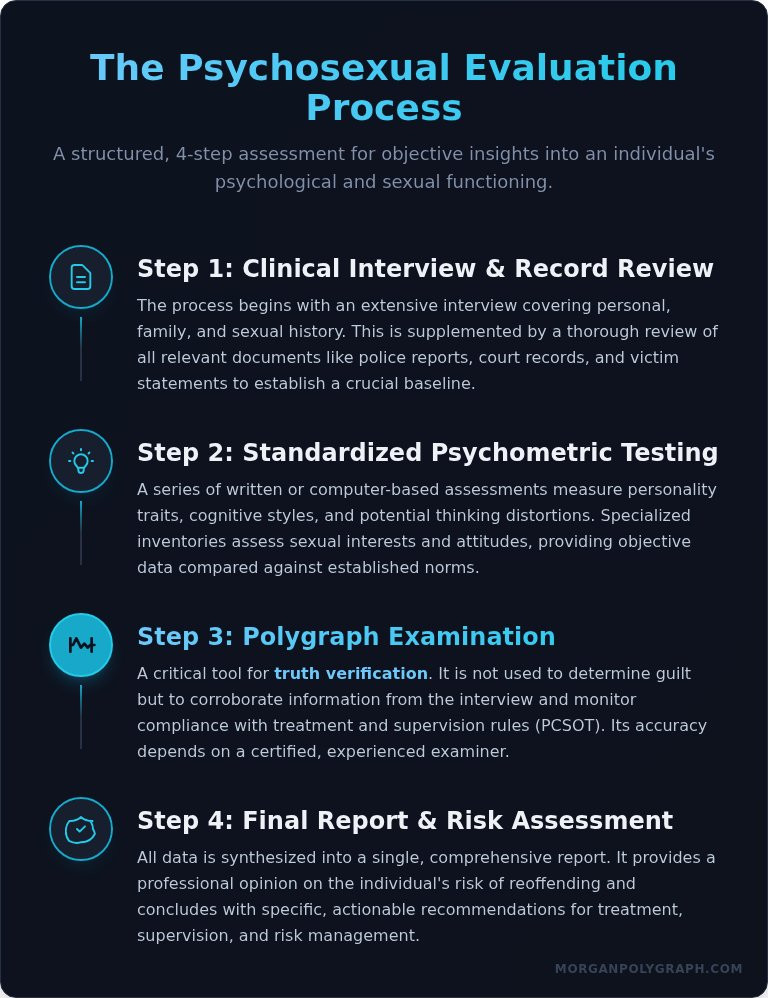
Step 1: The Clinical Interview and Review of Records
The process begins with an extensive clinical interview. The evaluator will discuss the individual’s complete personal history, including family background, education, relationships, employment, and mental and physical health. A significant portion of this interview is dedicated to a detailed sexual history. This is supplemented by a thorough review of all relevant documents, such as police reports, court records, victim statements, and previous psychological assessments. This initial step establishes a crucial baseline for the entire evaluation.
Step 2: Standardized Psychometric Testing
Following the interview, the individual will complete a series of standardized tests. These are typically written or computer-based assessments designed to measure personality traits, cognitive styles, and potential thinking distortions. Specialized psychological inventories may also be used to assess sexual interests, attitudes, and deviancy. These instruments provide objective data that helps the evaluator compare the individual’s responses to established norms.
Step 3: The Role of the Polygraph Examination
Within a psychosexual evaluation, the polygraph serves as a powerful tool for truth verification. It is not used to determine guilt or innocence but to corroborate the accuracy of the information provided by the individual during the clinical interview. In post-conviction cases (PCSOT), the polygraph is essential for monitoring an offender’s compliance with treatment and supervision rules, such as contact restrictions or sobriety. The questions are highly specific and focused on behaviors, history, and adherence to rules. Because of its sensitive and critical role, it is imperative to Trust certified experts for your polygraph needs.
Step 4: The Final Report and Risk Assessment
After all data has been collected, the evaluator analyzes the information from the interview, records, psychometric tests, and polygraph exam. This information is synthesized into a single, comprehensive report. The report details the findings and provides a professional opinion on the individual’s level of risk for reoffending. Crucially, it concludes with specific, actionable recommendations for treatment, supervision, or other interventions designed to manage that risk effectively.
How to Prepare for a Psychosexual Evaluation
Facing a psychosexual evaluation can be an intimidating experience. The most important preparation is a commitment to being completely honest throughout the process. It is designed by experts to be thorough, and attempts to deceive or manipulate the results are often detected and noted in the final report. You should gather any relevant documents, such as court orders or personal records, to provide to the evaluator. Understanding that the goal is an objective assessment-not a judgment-can help reduce anxiety and facilitate a more productive process.
Finding a Qualified Professional for Each Component
The credibility of an evaluation depends entirely on the qualifications of the professionals involved. The overall assessment should be conducted by a licensed psychologist, therapist, or counselor with specific training in forensic evaluation. The polygraph portion, however, requires a different specialist: a certified polygraph examiner. It is vital that the examiner has extensive experience in clinical and PCSOT testing, as this is a highly specialized field. Always verify credentials and ensure you are working with court-recognized experts. Learn about our certified examiners’ qualifications.
Frequently Asked Questions
Is a psychosexual evaluation confidential?
Confidentiality depends on who requested the evaluation. If it is court-ordered, the results will be sent to the court and become part of the legal record. If it is requested by your attorney, it is typically protected by attorney-client privilege, meaning your lawyer decides if and how the report is shared.
What is the difference between a psychosexual evaluation and therapy?
An evaluation is an assessment tool designed to gather information and provide a professional opinion at a single point in time. Therapy, in contrast, is an ongoing treatment process designed to facilitate change, develop coping skills, and address underlying issues over time.
How long does the entire evaluation process take?
The process can take several hours and may be spread across multiple sessions. It includes the clinical interview, several hours of psychometric testing, and the polygraph examination. The evaluator then needs additional time to score the tests and write the comprehensive report.
What happens with the results of the evaluation?
The results, compiled in the final report, are provided to the party that requested the evaluation (e.g., the court, a probation officer, or your attorney). The findings and recommendations are then used to make informed decisions regarding legal proceedings, sentencing, probation requirements, or treatment planning.
Can I refuse to take a psychosexual evaluation?
If the evaluation is court-ordered, refusal can have serious legal consequences, including being held in contempt of court or negatively impacting the outcome of your case. If it is recommended by your attorney, you can refuse, but you should first discuss the potential strategic disadvantages of doing so.
Navigating the complexities of a psychosexual evaluation requires clear information and trusted professionals. The polygraph component is a critical piece of this process, demanding the highest level of expertise and integrity. If you or your client requires a polygraph as part of a Post-Conviction Sex Offender Testing protocol or another clinical assessment, it is essential to work with examiners who are not only certified but also experienced in this sensitive field. Contact Us for a Confidential Consultation on PCSOT Polygraph Testing.