
Facing a legal challenge in Idaho can be daunting, but when the situation calls for a court-ordered polygraph in Boise, the uncertainty can feel overwhelming. Questions immediately arise: Will the results be admissible? How do you find a court-recognized expert you can trust? What does the examination process actually involve, and how is your confidentiality protected? These concerns can add significant stress to an already difficult time, leaving you feeling unprepared and anxious about the next steps in your case.
This guide is designed to replace that anxiety with confidence. We provide a clear, professional overview of the entire process, from understanding the legal standing of polygraph results in Idaho to selecting a certified examiner whose findings will be respected. By reading, you will gain a step-by-step understanding of the examination itself and learn how professional truth verification can become a powerful, strategic asset for your legal team. Our goal is to ensure you feel fully prepared, informed, and empowered as you move forward.
The Role of a Court-Ordered Polygraph in the Idaho Legal System
In the Idaho legal system, a polygraph examination serves as a powerful tool for truth verification. Unlike a private examination, which is conducted confidentially for an attorney or individual, a court-ordered polygraph in Boise is formally integrated into legal proceedings. Its primary purpose is to provide objective insight into a person’s truthfulness regarding specific issues relevant to a case. While a general Polygraph overview shows the science behind the instrument, its practical application in law is strategic and nuanced. Defense attorneys, prosecutors, and probation officers all utilize these examinations to gain clarity, assess credibility, and inform their next steps in both criminal and civil litigation.
Purpose Beyond Proving Guilt or Innocence
While often associated with determining guilt, the strategic use of a court-ordered polygraph extends far beyond a simple pass/fail outcome. It serves several critical functions for legal professionals:
- Verifying Client Statements: An attorney can use a polygraph to confirm the details of their client’s account, allowing them to build a defense strategy on a solid foundation.
- Narrowing Investigations: Results can help investigators focus resources on credible leads and eliminate innocent parties from suspicion.
- Demonstrating Cooperation: A defendant’s willingness to undergo an examination can signal a commitment to transparency, potentially influencing legal decisions.
- Influencing Negotiations: Favorable results can strengthen a party’s position during plea bargaining or sentencing recommendations.
Polygraphs in Civil vs. Criminal Cases
The application of a court-ordered polygraph in Boise is not limited to criminal law. In criminal cases, it is frequently used for matters involving theft, assault, or sensitive sex offense allegations where witness testimony is paramount. However, its role in civil litigation is equally significant. Polygraphs can help resolve disputes in contract fraud, insurance claims, and contentious family law matters. In Boise Family Court, for instance, an examination may be used to verify statements related to accusations of infidelity or hidden assets in high-stakes custody battles.
The Importance of a Stipulation Agreement
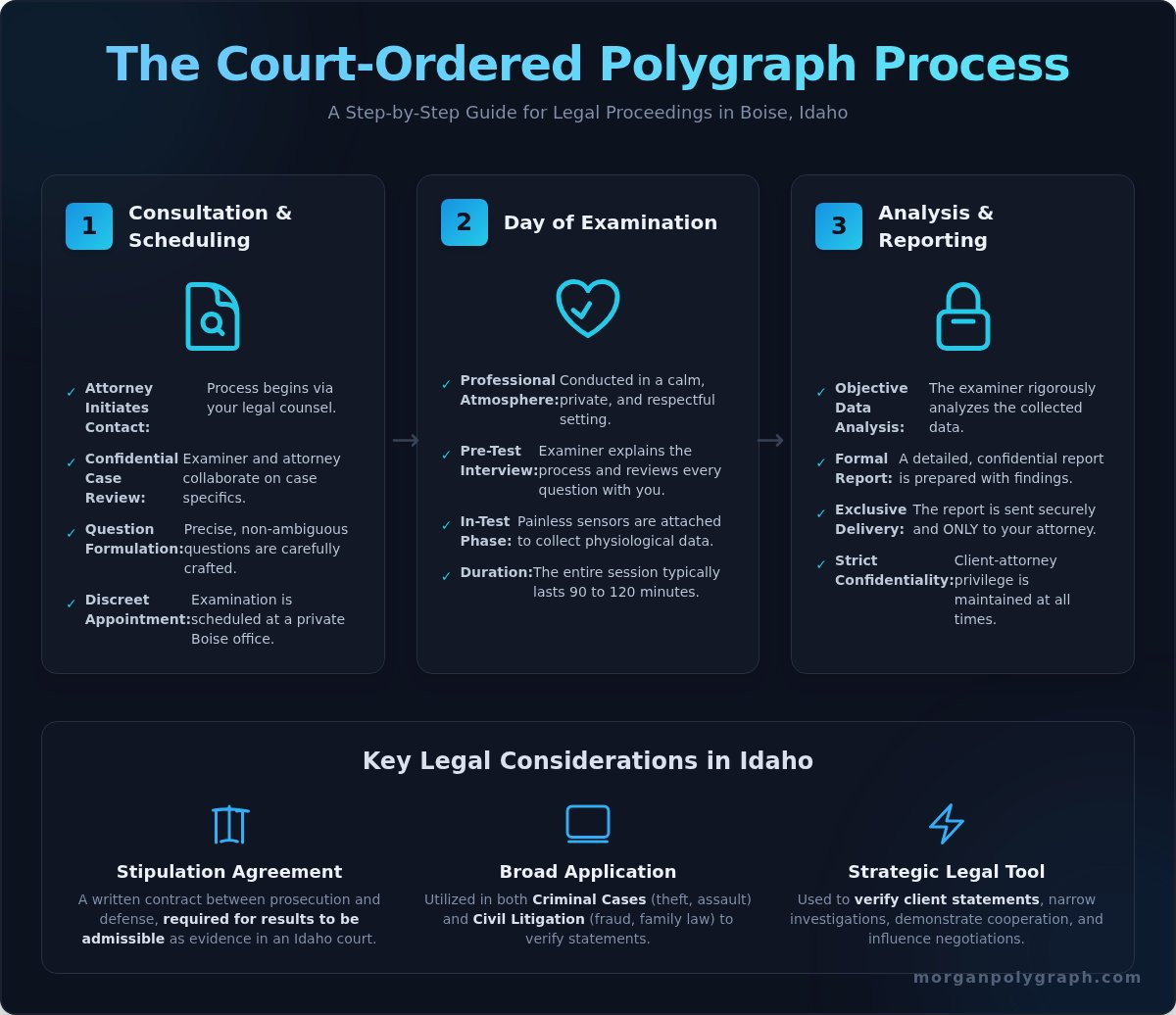
For polygraph results to be admissible as evidence in an Idaho court, both the prosecution and defense must enter into a stipulation agreement. This is a formal, written contract agreeing in advance that the results will be presented in court, regardless of the outcome. Entering into a stipulation is a high-stakes decision; a favorable result can be powerfully persuasive, while a deceptive one can be detrimental. Because the results carry such weight, these agreements almost always require the test to be administered by a certified, impartial, and court-recognized expert examiner.
The Court-Ordered Polygraph Process: A Step-by-Step Guide
Understanding the procedure for a court-ordered polygraph can significantly reduce anxiety. At Morgan Polygraph, we provide a structured, professional, and completely confidential experience designed to support legal proceedings. The entire process is managed with the utmost discretion, recognizing the sensitive nature of legal matters and the specific frameworks, such as the state rules concerning the Admissibility of Polygraph Results in Idaho. From the initial call to the final report, our goal is to provide clarity and objective truth verification in a controlled environment. The full examination typically lasts between 90 minutes and two hours.
Step 1: Initial Consultation and Scheduling
The process almost always begins when your attorney contacts our firm. This initial consultation is a critical, confidential discussion where we review the specific legal issues and objectives of your case. Your attorney works directly with our expert examiner to formulate the precise, non-ambiguous questions relevant to the matter at hand. This collaboration ensures the test is focused and legally sound. Once the scope is defined, we schedule a discreet appointment at our Boise office.
Step 2: The Day of the Examination
We are committed to providing a professional and respectful atmosphere. On the day of your court-ordered polygraph Boise examination, our certified examiner will guide you through a methodical process in a calm, private setting. The session includes:
- The Pre-Test Interview: The examiner will explain how the polygraph instrument works, discuss the issue being tested, and review every test question with you verbatim. This ensures you have a complete understanding of the process.
- The In-Test Phase: The examiner will attach the painless sensors and conduct the test, asking the questions that were reviewed with you. This is the data collection portion of the examination.
Step 3: Post-Test Analysis and Reporting
After the examination is complete, the collected physiological data undergoes a rigorous and objective analysis by the examiner. A formal, detailed report is then prepared, outlining the methodology and the findings. This confidential report is delivered securely and exclusively to your attorney, who is the sole authorized recipient. We maintain strict client-attorney privilege, and results are never shared with any other party without explicit, written authorization from your legal counsel.
Common Scenarios for Court-Ordered Polygraphs in Boise
While often associated with high-stakes criminal trials, the application of polygraph testing in Boise’s legal landscape is remarkably diverse. A polygraph serves as a powerful tool for truth verification, providing clarity in situations where credibility is paramount. The value of a court-ordered polygraph in Boise is directly tied to the skill and integrity of the certified examiner, who must adhere to stringent professional guidelines similar to the federal standards for polygraph examinations that govern their use in other contexts. Understanding these common scenarios can help you determine if a polygraph is a strategic option for your case.
Criminal Defense and Pre-Trial Investigations
For individuals facing criminal accusations, a polygraph can be a critical pre-trial tool used by defense attorneys to build a robust case. It is used proactively to gain leverage and establish facts before a trial ever begins. Common strategic uses include:
- Internal Case Assessment: A client can voluntarily take a polygraph to demonstrate their innocence to their own attorney, allowing the legal team to proceed with confidence and a clear strategy.
- Verifying Key Claims: The test can provide credible support for a defendant’s alibi or a specific factual claim that is central to their defense.
- Influencing Prosecutorial Decisions: Favorable and professionally administered polygraph results can be presented to prosecutors to argue for the dismissal or reduction of charges, potentially resolving the matter without a trial.
Post-Conviction and Probation Compliance (PCSOT)
Polygraph testing is an integral part of post-conviction supervision, particularly in Post-Conviction Sex Offender Testing (PCSOT). In these cases, the goal is not to determine guilt but to ensure ongoing compliance with court-mandated terms of probation or parole. This type of testing is a standard monitoring tool used by probation officers and treatment providers to verify that an individual is adhering to program rules, such as avoiding prohibited contact or refraining from high-risk behaviors.
Family Law and Custody Disputes
In the emotionally charged environment of family court, a polygraph can introduce objective data into contentious disputes. When a judge must make difficult decisions about child custody or spousal support based on conflicting testimonies, a polygraph can help verify specific claims. These tests often address sensitive allegations of infidelity, undisclosed substance abuse, or domestic abuse. In some cases, both parties may mutually agree to undergo testing to resolve a critical point of disagreement and move toward a resolution. Each situation is unique, and it is vital to discuss the specifics of your case with an expert.
Choosing a Court-Recognized Examiner in Boise: Expertise Matters
When the outcome of a legal case can be influenced by truth verification, the selection of a polygraph examiner is the single most critical decision you will make. Not all individuals offering polygraph services in Idaho possess the specialized training and legal background required for court-related matters. The credibility and potential admissibility of a polygraph test depend entirely on the examiner’s expertise, methodology, and professional standing.
An unqualified examiner can render test results useless in a legal context, wasting time, money, and potentially damaging your case. It is essential to choose a professional whose credentials will stand up to judicial scrutiny.
Essential Credentials and Certifications
To ensure the highest standards of professionalism and accuracy, a court-qualified examiner must possess a specific set of credentials. These are not merely suggestions but foundational requirements for credible legal work. Look for an examiner with:
- Graduation from a polygraph school accredited by the American Polygraph Association (APA).
- National certifications from respected bodies like the APA, which sets the global standard for practice.
- A documented commitment to continuing education to stay current with the latest validated techniques and ethical guidelines.
- Active membership in professional state and national polygraph organizations.
Experience in a Legal Setting
Academic qualifications are only the beginning. An examiner handling a court-ordered polygraph Boise case must have proven experience within the judicial system. This practical expertise includes a deep understanding of legal procedures, rules of evidence, and the ability to articulate findings clearly to attorneys and judges. Key indicators of legal experience include a history of testifying as an expert witness, a portfolio of work with both defense attorneys and prosecutors, and the ability to author comprehensive, professional reports suitable for legal proceedings.
Why Morgan Polygraph is Trusted by Boise Attorneys
At Morgan Polygraph, we provide the highest level of expertise required for sensitive legal matters. Our examiners are not only certified and highly trained but are also court-recognized experts in Idaho, respected for their integrity and skill. We utilize state-of-the-art, validated polygraph techniques and maintain the strictest standards of confidentiality and professional ethics. Attorneys across Boise trust us to deliver objective, reliable results that serve the interests of justice. View our examiner’s qualifications and experience.
Admissibility and Legal Weight of Polygraph Results in Idaho
A common misconception is that polygraph results are universally banned from the courtroom. The reality in Idaho’s legal system is far more nuanced. While the path to formal admissibility is narrow, the strategic value and influence of a professionally conducted polygraph examination extend far beyond the witness stand. Understanding this distinction is crucial for anyone involved in a legal case.
The General Rule: Inadmissibility Without Stipulation
As a general rule, the results of a polygraph test are not admissible as evidence in an Idaho trial without prior agreement from all parties. The legal precedent behind this is based on the court’s role in protecting the trial process from information that could be considered overly prejudicial. Because polygraphy is a powerful tool but not infallible, courts prevent its unilateral introduction to ensure a jury’s decision is based on established forms of evidence.
The Exception: Admissibility Through Stipulation
The critical exception to this rule is stipulation. If both the prosecution and the defense agree in writing before the examination takes place that the results will be admissible, then they can be presented to a judge or jury. This is a calculated, strategic decision made by the legal teams, often when a pivotal point of fact needs clarification. Agreeing to a stipulated court-ordered polygraph in Boise can be a high-stakes move that dramatically alters the course of a case.
Informal Uses: The Power of Polygraph Outside the Courtroom
Often, the most significant impact of a polygraph occurs long before a trial begins. The results from a certified, expert examiner provide powerful leverage and clarity for legal professionals. Its informal uses are extensive and influential:
- Influencing Prosecutorial Decisions: A “No Deception Indicated” result can persuade a prosecutor to reconsider filing charges or to drop an existing case. Conversely, a “Deception Indicated” finding can solidify their decision to proceed.
- Guiding Plea Bargain Negotiations: Favorable results provide the defense with significant leverage to negotiate a better plea agreement. Unfavorable results may encourage a defendant to accept a reasonable offer from the prosecution.
- Focusing Investigations: Law enforcement and private investigators use polygraph results to efficiently eliminate persons of interest or to concentrate resources on more credible leads.
- Providing Leverage in Civil Settlements: In civil litigation, the outcome of a polygraph can strongly influence a party’s willingness to negotiate a settlement, often preventing a costly and lengthy trial.
While not a guaranteed ticket into the courtroom, the strategic power of a polygraph is undeniable. If you or your legal counsel are navigating a situation that may require a court-ordered polygraph in Boise, it is essential to engage a court-recognized expert. Contact Morgan Polygraph to ensure your examination is handled with the professional discretion and accuracy your case demands.
Your Next Step: Securing Clarity with a Court-Recognized Expert
Navigating the complexities of the Idaho legal system requires every available advantage. As this guide has shown, a polygraph can be a pivotal tool for truth verification, but its effectiveness hinges on the credibility of the examiner. Understanding the process and the legal weight of the results are the foundational steps toward using this tool to support your case.
When you require a court-ordered polygraph Boise, you cannot afford uncertainty. The integrity of the examination is paramount. At Morgan Polygraph, our Court-Recognized Expert Examiners bring over 40 Years of Combined Experience to every session. We are committed to providing professional, compassionate service, guaranteeing Strict Confidentiality for All Legal Matters.
Gain the clarity and professional support your case deserves. Take the crucial next step to protect your interests. Schedule a Confidential Consultation for Your Legal Case today and face your legal proceedings with confidence.
Frequently Asked Questions About Court-Ordered Polygraphs
How much does a court-ordered polygraph test cost in Boise?
The cost for a professional court-ordered polygraph in Boise typically ranges from $500 to $850. The final price can vary based on the complexity of the case and the specific legal requirements. This fee is comprehensive, covering the extensive pre-test consultation, the in-test examination itself, a thorough analysis of the physiological data by a certified expert, and a formal written report for your legal counsel. We provide a clear quote before any services are rendered.
Is the polygraph examination process confidential?
Absolutely. Confidentiality is the cornerstone of our professional practice. The entire process, from your initial inquiry to the final report, is handled with the utmost discretion. The results of your examination are privileged information and will only be released to you, your attorney, or other parties as designated in writing by you or by court order. We adhere to the strictest professional and ethical standards to protect your privacy throughout your legal matter.
How long does a typical court-ordered polygraph exam take?
You should plan for the entire process to take approximately 90 minutes to two hours. This duration allows for a comprehensive and methodical approach, which includes three critical phases: a detailed pre-test interview to review the facts of the case and the test questions, the in-test phase where the physiological data is collected, and a post-test discussion. This structured process ensures the examination is conducted fairly and accurately, meeting all professional standards.
Can my lawyer be present during the polygraph test?
Your lawyer is strongly encouraged to attend the pre-test interview portion of the examination. This ensures all test questions are legally sound, relevant, and directly address the core issues of the case. However, to maintain a controlled environment and prevent any potential influence on your physiological responses, only the examiner and the examinee are permitted in the room during the actual in-test (data collection) phase. This is standard protocol for ensuring test validity.
What happens if the polygraph results are ‘inconclusive’?
An ‘inconclusive’ result does not mean you were deceptive or truthful. It simply indicates that the physiological data collected was not clear enough for the examiner to render a definitive professional opinion. This can be caused by various factors, including certain medical conditions, medications, or insufficient physiological response. If a result is inconclusive, our expert examiner will discuss the potential reasons with you and your legal counsel to determine the best path forward, which may include a re-test.
Are the test questions a surprise, or can I prepare for them?
There are no surprise questions during a professional polygraph examination. The specific, relevant questions will be formulated and then reviewed with you, word-for-word, during the pre-test interview. You will know the exact questions you will be asked before the test begins. The best way to prepare is to get a good night’s sleep before the exam and be committed to providing honest answers. The process is designed to be transparent, not to trick or confuse you.
What is the accuracy rate of a professionally administered polygraph?
When administered by a certified and experienced examiner following industry-standard protocols, a polygraph test is a highly reliable instrument for truth verification. Extensive research validated by organizations like the American Polygraph Association demonstrates accuracy rates between 87% and 95%. The credibility of the results is directly tied to the examiner’s expertise, the use of modern, calibrated equipment, and adherence to established, validated testing techniques for the specific issue being examined.