

Navigating the world of polygraph testing can feel overwhelming, especially when facing sensitive personal or legal matters. Questions about accuracy, the certification process, and who to trust can create significant uncertainty. This is precisely why selecting a professional and credible certified polygraph examiner Idaho residents can rely on is the most critical first step. In a field where expertise and discretion are paramount, knowing what to look for isn’t just helpful-it’s essential for achieving a clear and accurate outcome.
This comprehensive guide is designed to eliminate that confusion and provide you with confidence. We will demystify the process of truth verification, explain what certification truly means, and provide you with the essential criteria for choosing the right expert for your specific needs. By the end of this article, you will understand how to identify a qualified examiner and feel fully prepared for a professional, compassionate, and confidential polygraph examination.
What is a Certified Polygraph Examiner?
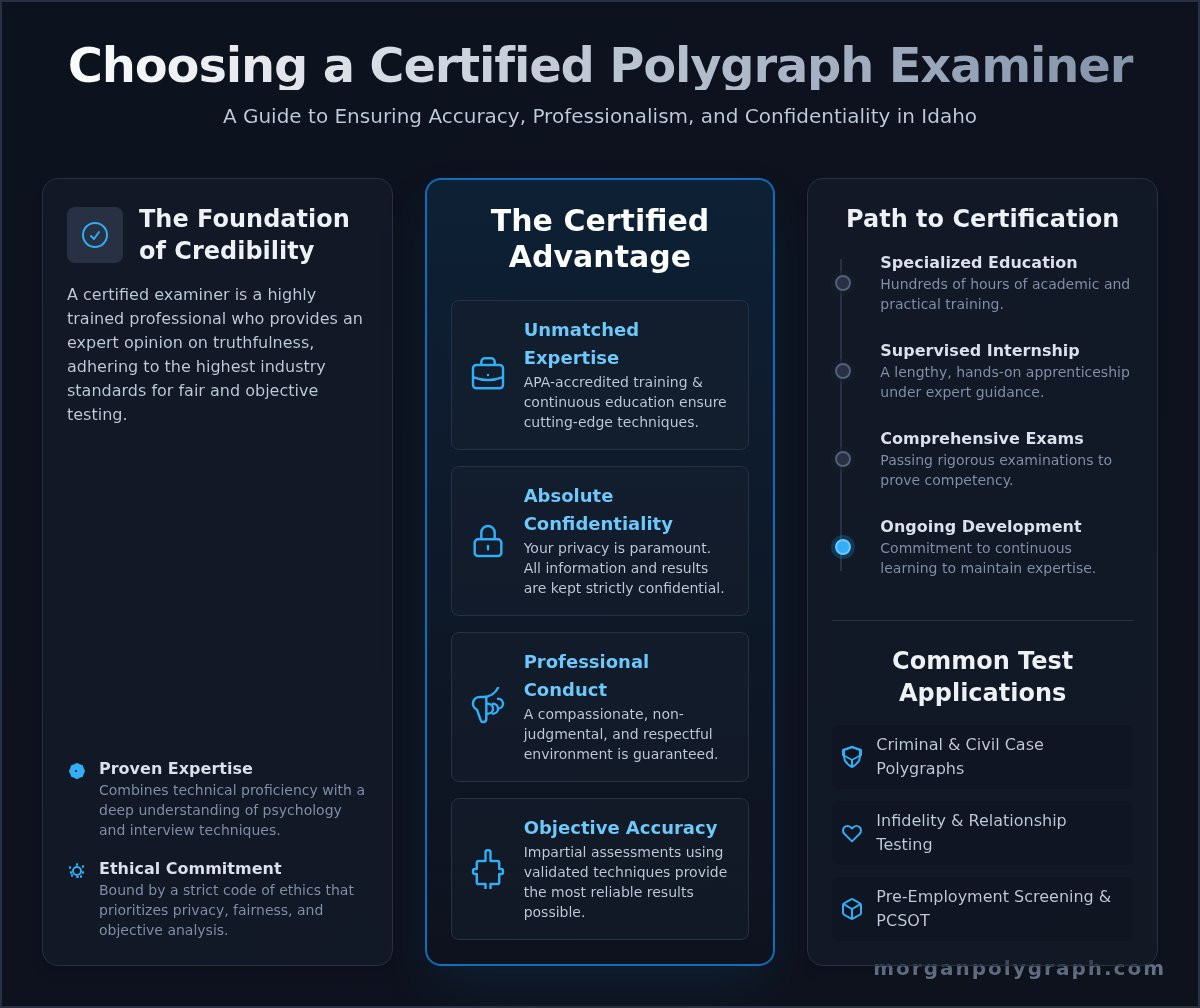
A certified polygraph examiner is a highly trained and licensed professional who uses a polygraph instrument to measure and record physiological responses to a structured series of questions. The primary role of an examiner is to provide an expert opinion on the truthfulness of a person’s statements regarding a specific issue. More than just an operator, a skilled examiner combines technical proficiency with a deep understanding of psychology and interview techniques. While many have a general idea of what a polygraph is, the accuracy and validity of any test depend almost entirely on the examiner’s expertise. The expertise of a certified polygraph examiner Idaho ensures you are working with a professional who adheres to the highest industry standards.
Certification is the cornerstone of credibility in the polygraph profession. It signifies that an examiner has completed rigorous academic and practical training, passed comprehensive examinations, and is committed to a strict code of ethics. This distinction is critical, as it guarantees that the testing process is conducted fairly, objectively, and with validated techniques, providing clients with the most reliable results possible for legal, professional, or personal matters. This level of assurance is precisely what you get when you hire a certified polygraph examiner Idaho.
Certification Standards
To become a certified polygraph examiner Idaho, an individual must meet stringent national requirements, typically established by accrediting bodies like the American Polygraph Association (APA). In Idaho, examiners conducting Post-Conviction Sex Offender Testing (PCSOT) must also meet the standards set by the Idaho Sexual Offender Management Board. The certification process involves hundreds of hours of specialized education, a lengthy supervised internship, and a commitment to ongoing professional development to maintain expertise in the latest proven methodologies.
Types of Polygraph Tests
A professional certified polygraph examiner Idaho offers a range of confidential truth verification services tailored to specific client needs. These examinations are designed to bring clarity and resolution to sensitive and complex situations. Common tests include:
- Criminal and Civil Case Polygraphs: Used by defense attorneys, prosecutors, and private individuals to verify statements, confirm alibis, and assist in legal proceedings.
- Infidelity and Relationship Testing: Conducted in a discreet, compassionate, and professional setting to help couples resolve painful questions about fidelity and trust.
- Pre-Employment Screening and PCSOT: Specialized testing for government agencies, law enforcement, and as a critical component of court-ordered sex offender management and treatment programs.
Why Choose a Certified Polygraph Examiner in Idaho?
When facing a situation that requires absolute clarity and truth verification, the qualifications of your polygraph examiner are paramount. The decision to work with a professional is not just about getting answers; it’s about ensuring the process is fair, accurate, and ethically conducted. Choosing a certified examiner provides a level of assurance that uncertified practitioners simply cannot offer. This certification is a direct reflection of an examiner’s dedication to their craft and their commitment to upholding the highest industry standards for accuracy and professionalism.
Expertise and Experience
A certified examiner brings a proven level of skill and deep knowledge to every test. This expertise goes far beyond simply operating the equipment; it involves a comprehensive understanding of the complex science of psychophysiology, interview techniques, and statement analysis. Certification signifies that an examiner has completed extensive training at an accredited institution, often adhering to the rigorous standards set by leading organizations like the American Polygraph Association (APA). This commitment extends beyond initial training, as certified professionals are required to pursue continuing education to stay at the forefront of deception detection techniques. This recognized expertise is why their findings often carry more weight and may be considered in legal or administrative proceedings.
Confidentiality and Professionalism
Sensitive matters require absolute discretion. A cornerstone of working with a certified polygraph examiner in Idaho is the guarantee of complete confidentiality. Certified professionals are bound by a strict code of ethics that prioritizes your privacy and ensures your case is handled with the respect it deserves. From the initial consultation to the final report, you can expect a professional and supportive environment.
This commitment to professionalism ensures:
- Complete Discretion: All client information and test results are kept strictly confidential.
- Compassionate Conduct: Examinations are conducted in a non-judgmental and respectful manner, recognizing the stress clients may be under.
- Clear Communication: You will receive a thorough explanation of the process, what to expect, and a clear presentation of the results.
- Unbiased Objectivity: A certified examiner is dedicated to providing an objective, impartial assessment based solely on the data collected.
This professional conduct builds a crucial foundation of trust, allowing clients to feel secure and supported throughout the entire process.
How to Find a Certified Polygraph Examiner in Idaho
Locating a qualified and professional polygraph examiner requires careful research and due diligence. The accuracy and integrity of a polygraph examination depend entirely on the skill and ethical standards of the individual administering it. Taking a methodical approach to your search will ensure you partner with a credible expert who can handle your sensitive matter with the required discretion and expertise. When you need to find a certified polygraph examiner in Idaho, begin with reputable sources and be prepared to ask direct questions.
Using Online Resources and Directories
Your search for a competent professional should start with trusted national and state-level organizations. The American Polygraph Association (APA) and the American Association of Police Polygraphists (AAPP) maintain directories of members who adhere to strict standards of practice. These databases are an excellent starting point for finding vetted examiners in your area. Additionally, local online directories and search engines can provide listings, but it is crucial to scrutinize their qualifications and client reviews with a discerning eye, understanding that the confidential nature of the work may limit the number of public testimonials.
Essential Questions for Your Initial Consultation
Once you have a shortlist of potential examiners, an initial consultation is your opportunity to verify their credentials and ensure they are the right fit for your specific needs. A professional examiner will welcome these questions and provide clear, direct answers. We recommend asking the following:
- What are your certifications, and where did you receive your training? A credible examiner will have graduated from an APA-accredited school. Their training should be extensive, often meeting or exceeding the rigorous federal polygraph examiner standards required for government-level work.
- What is your specific experience with the type of test I require? An examiner specializing in civil or family law cases may have a different skill set than one who primarily works on criminal investigations. Ensure their expertise aligns with your situation.
- How do you ensure confidentiality, and what is your reporting process? Understand who will receive the results and how your private information will be protected. A professional will have a strict, clearly defined protocol for handling sensitive data and delivering the final report.
By thoroughly vetting your options, you can confidently select a certified polygraph examiner in Idaho who operates with the highest level of professionalism and integrity.
The Polygraph Testing Process Explained
Understanding the polygraph process is the first step toward gaining clarity and confidence in the results. A polygraph examination is not an interrogation but a structured, professional procedure designed for truth verification. The entire process, typically lasting between 90 minutes and three hours, is conducted in a controlled, private setting to ensure accuracy and confidentiality. It is methodically divided into three distinct phases: the pre-test interview, the in-test (data collection), and the post-test analysis.
During the examination, a series of carefully calibrated sensors are attached to the examinee. These instruments are designed to record physiological responses, including cardiovascular activity, respiratory patterns, and electrodermal activity (sweat gland response). A certified polygraph examiner in Idaho will then ask a series of relevant, irrelevant, and control questions. The core principle is that deceptive answers to relevant questions will produce a distinct physiological response that differs from the response to non-threatening questions.
Preparing for the Test
Proper preparation is crucial for an accurate examination. Your primary goal should be to arrive well-rested and in a calm state of mind, ready to be completely truthful. An examiner will discuss the entire process with you beforehand. Key considerations include:
- Mental State: The most important preparation is the commitment to be honest. Anxiety about the test is normal and will not affect the results; attempting to control your responses will.
- Lifestyle Factors: Get a full night’s sleep before your appointment. Avoid consuming alcohol or non-prescribed drugs for at least 24 hours prior, as this can interfere with the results. Eat a normal meal and continue your regular routine.
- What to Bring: You will need a government-issued photo ID. Bring any relevant case documents or a list of questions you wish to have answered, which you will review with the examiner.
Understanding Results
Once the data collection is complete, the examiner conducts a meticulous analysis of the physiological charts. This is a highly technical skill that every certified polygraph examiner in Idaho must master. The results are scored numerically using validated techniques, leading to one of three possible outcomes: No Deception Indicated (NDI), Deception Indicated (DI), or Inconclusive. A formal, confidential report is then prepared. The next steps depend on this outcome and the context of the exam, whether for legal, therapeutic, or private matters. For more information on what to expect, you can always consult directly with an expert examiner.
Cost Considerations for Polygraph Testing
Understanding the financial aspect of polygraph testing is a crucial step in your decision-making process. While the cost can vary, it is best viewed as an investment in obtaining clarity and factual information. A professional, confidential examination requires significant time, expertise, and the use of sophisticated instrumentation, all of which are reflected in the price. The most reputable examiners provide transparent pricing and will discuss all costs with you upfront.
Several key factors influence the final cost, including the complexity of the case, the number of relevant questions required, the location of the test, and the experience of the certified polygraph examiner in Idaho you choose. Always prioritize an examiner’s credentials and reputation over a lower price to ensure the accuracy and integrity of the results.
Typical Pricing Structures
While specific quotes require a consultation, most examinations in Idaho fall within general price ranges based on the type of test being administered. This structure ensures fair pricing for the specific requirements of your situation.
- Criminal and Civil Case Polygraphs: These are often the most complex tests, requiring in-depth pre-test interviews and detailed formal reports for legal counsel or court purposes. Costs typically range from $750 to $1,500 or more.
- Infidelity and Relationship Testing: These personal matters are highly sensitive and require a discreet, compassionate approach. Pricing is generally standardized, often falling between $500 and $850.
- Pre-Employment Screening: For businesses and government agencies, these tests are usually more straightforward. Costs can range from $250 to $700 per applicant, with potential discounts for volume testing.
Insurance and Payment Options
It is important to note that polygraph examinations are not considered a medical procedure and are therefore almost never covered by health insurance policies. Clients should be prepared to cover the full cost of the service out-of-pocket. Most professional examiners accept major credit cards, and some may offer flexible payment arrangements, though this is not standard. The most critical step is to have a clear conversation about all fees and payment expectations before scheduling your appointment. This transparency is a hallmark of a professional practice.
For a confidential and transparent quote tailored to your specific situation, we invite you to contact a professional examiner directly to discuss your needs.
Find Clarity and Confidence with Idaho’s Leading Polygraph Service
Navigating the need for a polygraph test requires understanding the vital importance of certification and knowing the steps involved in the process. Choosing a qualified professional ensures the examination is conducted with the highest standards of accuracy and ethics, providing you with reliable results for legal, professional, or personal matters. When you need a certified polygraph examiner Idaho trusts, expertise and discretion are paramount.
At Morgan Polygraph, we provide that definitive level of expert service. Our certified and experienced examiners are trusted by legal and private clients for our completely confidential and professional approach to truth verification. We are committed to delivering clear answers with compassion and respect. When you are ready to find the clarity you deserve, we are here to help. Contact Morgan Polygraph today to schedule your polygraph test!
Take the first step toward resolving your questions and move forward with certainty.
Frequently Asked Questions
What qualifications should I look for in a polygraph examiner?
When seeking a certified polygraph examiner in Idaho, verify their graduation from a school accredited by the American Polygraph Association (APA). This ensures they have met rigorous educational standards. Additionally, inquire about their membership in professional organizations like the APA or the Northwest Polygraph Examiners Association, which require adherence to a strict code of ethics and ongoing continuing education. These credentials are the hallmark of a qualified, professional examiner dedicated to maintaining the highest industry standards.
Are polygraph tests admissible in court?
The admissibility of polygraph results in court is complex and varies by jurisdiction. In Idaho, as in many states, results are generally not admissible as evidence unless both the prosecution and defense agree to their admission beforehand through a legal stipulation. However, polygraph examinations are frequently utilized by legal professionals for investigative purposes, to verify information during plea negotiations, and can be influential in pre-trial and sentencing phases. It is a valuable tool within the legal process.
How reliable are polygraph tests?
Modern polygraph examinations, when conducted by a certified professional following validated procedures, are highly reliable. Decades of research, validated by groups like the American Polygraph Association, consistently show accuracy rates exceeding 90%. The key to achieving such high reliability lies in the examiner’s expertise, the use of standardized testing formats, and proper question formulation. A professionally administered test is a scientifically-backed method for truth verification, providing a high degree of confidence in the results.
What should I do if I feel anxious about taking a polygraph?
It is completely normal to feel nervous before a polygraph examination. A professional examiner is trained to recognize and account for general anxiety, understanding that both truthful and deceptive individuals experience it. The pre-test interview is designed to acclimate you to the process and establish a baseline for your physiological responses. Your overall nervousness will not cause a deceptive result; the test is structured to measure specific reactions to key questions, not your general state of anxiety.
Can I prepare myself for a polygraph test?
The most effective preparation for a polygraph test is to arrive well-rested and prepared to be completely truthful. Ensure you get a full night’s sleep and avoid alcohol or non-prescribed drugs. We strongly advise against researching or attempting any so-called “countermeasures,” as a trained certified polygraph examiner in Idaho can often detect these efforts, which will invalidate the test results. The best approach is to cooperate fully and answer all questions honestly.