
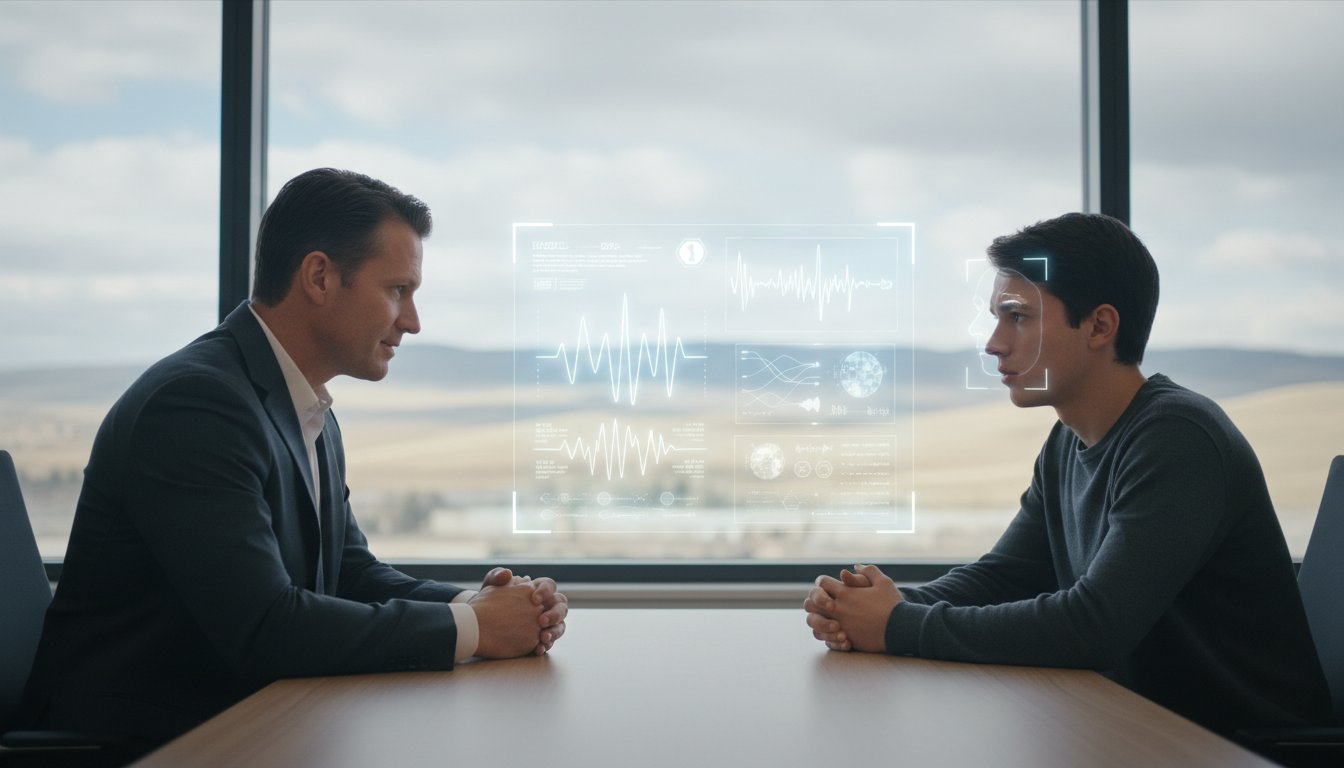
If you could uncover the truth from your laptop in under ten minutes, would you actually trust that result when your reputation or a vital relationship is at stake? In 2026, the search for instant clarity often leads people to ask, can you take a real lie detector test online, hoping to bypass the perceived stress of a clinical setting. It’s understandable to want a fast, affordable solution when you’re facing a crisis that demands immediate resolution and a way to move forward.
While AI-driven voice stress apps and facial tracking software have flooded the market, there’s a significant difference between a digital game and a court-recognized truth verification process. You deserve a result that carries weight and provides genuine peace of mind. We’ll explain why professional, in-person polygraph exams remain the gold standard for accuracy and legal validity. You’ll learn how to distinguish between experimental AI tools and the 40 years of proven methodology used by certified experts to ensure your results are both credible and discreet.
Key Takeaways
- Understand the scientific limitations of virtual software to determine if you can you take a real lie detector test online that provides the medical-grade accuracy required for true peace of mind.
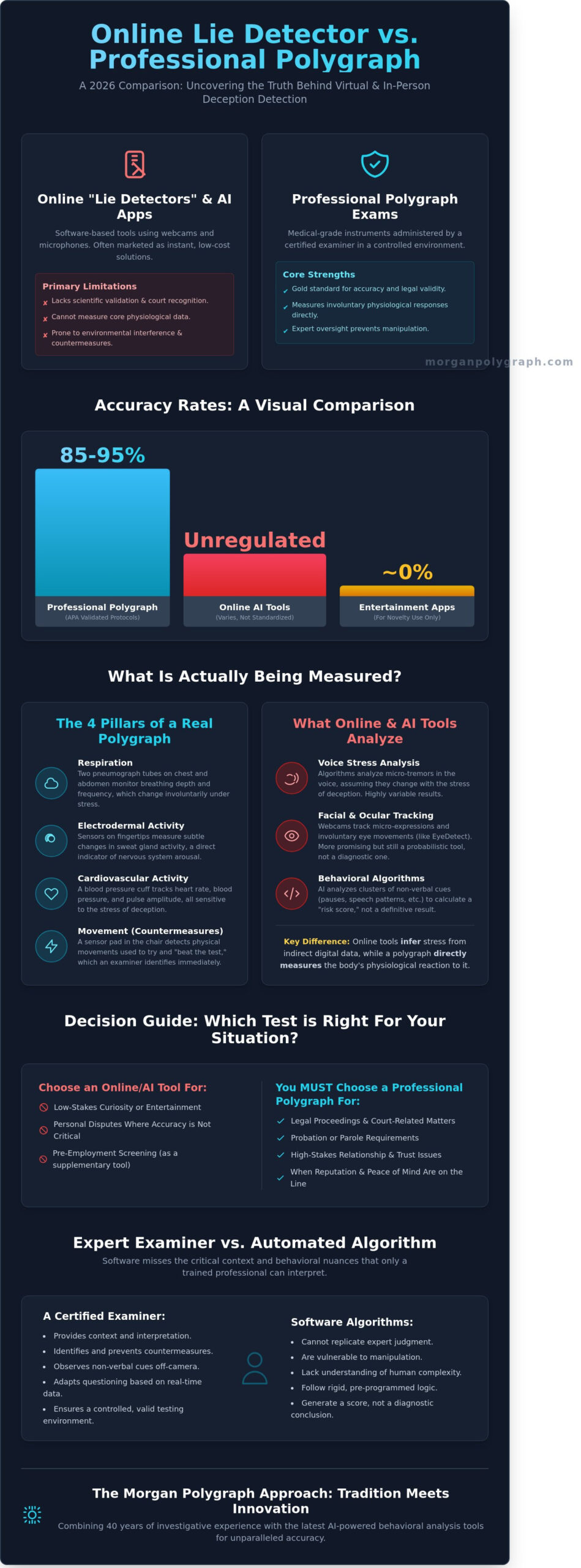
- Compare the proven 85-95% accuracy rates of traditional, sensor-based polygraphs against the emerging but less regulated world of AI deception detection.
- Learn why legal proceedings, probation requirements, and high-stakes trust issues strictly necessitate the physical presence of a certified expert examiner.
- Discover how a professional examiner interprets physiological nuances and behavioral cues that automated software algorithms often miss.
- Explore how Morgan Polygraph bridges the gap by combining forty years of investigative experience with the latest AI-powered behavioral analysis tools.
The Reality of Online Lie Detectors: Myth vs. Science
Many individuals facing sensitive personal or legal crises find themselves asking can you take a real lie detector test online to find immediate answers. As we move through 2026, the distinction between digital entertainment and forensic science has become more complex. Most results found in app stores or through browser-based “tests” are actually software algorithms rather than traditional polygraph systems. To understand what a polygraph test entails, you must recognize that it is a physiological process. A professional examination requires physical sensors to monitor respiratory patterns, sweat gland activity, and cardiovascular changes in real time.
While technology has advanced, a standard polygraph still relies on these physical connections to ensure accuracy. Software-only “tests” that claim to work through a standard webcam or mouse clicks often lack the scientific foundation required for high-stakes truth verification. However, the industry has seen the emergence of legitimate remote tools. Technologies like EyeDetect, which uses infrared cameras to track involuntary ocular movements, and sophisticated behavioral speech analysis have gained traction in corporate and pre-employment screening environments.
Entertainment Apps vs. Forensic Tools
Spotting a fake online test is straightforward if you know what to look for. Any application that asks you to place your thumb on a smartphone screen or tap a button to “scan” your fingerprint is purely for entertainment. Mobile hardware cannot measure the blood pressure fluctuations or skin conductivity changes necessary for a valid result. Using these unverified tools for serious relationship disputes or legal matters often leads to false accusations and unnecessary emotional distress.
- Professional Standards: The American Polygraph Association (APA) only recognizes specific validated protocols that maintain accuracy rates above 90%.
- Data Integrity: Forensic tools require a controlled environment to prevent countermeasures, something a home computer cannot guarantee.
- Expert Oversight: A certified examiner like Chip Morgan provides the context and interpretation that software alone cannot replicate.
Can AI Really Detect Deception Through a Screen?
By 2026, artificial intelligence has moved beyond simple voice stress analysis. Modern platforms now use behavioral speech analysis and facial micro-expression recognition to identify “hot spots” of cognitive load. These systems look for clusters of non-verbal cues that occur when a person is under the stress of concealment. Algorithms are trained on thousands of data points to identify patterns that correlate with deception, though they aren’t foolproof. AI truth verification is a probabilistic tool rather than a definitive forensic measure. While these digital tools provide a calculated risk score, they lack the diagnostic depth of a full physiological exam conducted by a court-recognized expert.
How Professional Polygraphs Differ from Online AI Apps
When people ask if can you take a real lie detector test online, they’re usually looking for the convenience of a smartphone app. There is a vast difference between a clinical examination and a digital simulation. A professional polygraph isn’t just software, it’s a medical-grade diagnostic tool that captures physiological data through physical contact. While a web camera can track eye movement, it cannot measure the subtle shifts in sweat gland activity or the specific rhythms of your heart. These biological markers are essential for a high-accuracy result.
The official stance of the U.S. Department of Justice emphasizes the complexity of these tests and their specific role in federal investigations. This level of scrutiny requires a controlled environment. In an online setting, an examiner cannot see what’s happening off-camera. A subject might use physical countermeasures, such as a hidden pin in their shoe or specific muscle contractions, to distort the data. In a professional office, an expert like Chip Morgan uses 40 years of experience to identify these attempts at deception immediately.
The Four Pillars of a Real Polygraph Exam
- Respiration: We use two pneumograph tubes placed on the chest and abdomen. These sensors monitor breathing depth and frequency, which change involuntarily when a person is under stress.
- Electrodermal Activity (GSR): Small sensors on the fingertips measure the skin’s electrical conductance. This identifies tiny amounts of sweat, a direct reaction from the sympathetic nervous system.
- Cardiovascular Activity: A blood pressure cuff provides a continuous stream of data regarding heart rate and pulse strength. This is far more precise than any optical heart rate sensor found in a 2026 smartwatch.
- The Pre-Test Interview: A human expert spends up to 90 minutes discussing the issues before the sensors are ever activated. This clinical interaction accounts for 50% of the overall accuracy by establishing a psychological baseline that AI cannot replicate.
AI Truth Verification: The Remote Alternative
Artificial intelligence has introduced new ways to analyze behavior remotely. Eye-tracking technology measures pupil dilation and “saccades,” which are tiny, involuntary eye movements. These metrics indicate cognitive load, or how hard the brain is working to maintain a lie. Voice Stress Analysis (VSA) is another common remote tool. It looks for tremors in the human voice that occur at frequencies between 8 and 12 Hertz.
At Morgan Polygraph, we recognize that the future of truth verification is a hybrid one. We don’t just follow the future, we help shape it by integrating cutting-edge AI-powered tools to supplement traditional methods. If you’re wondering if can you take a real lie detector test online for a legal or high-stakes personal matter, the answer remains focused on physical presence. For results that carry weight, you should schedule an in-person exam with a certified professional who understands the nuance of human behavior.
Accuracy Rates: Comparing In-Person and Virtual Methods
When you ask if you can take a real lie detector test online, the answer depends entirely on your required level of certainty. Traditional polygraph examinations remain the benchmark for truth verification. Peer-reviewed studies and data from the American Polygraph Association consistently show accuracy rates between 85% and 95% for specific-issue exams. These results rely on physiological sensors that track respiratory, galvanic skin response, and cardiovascular activity with high precision.
AI-powered software tools like EyeDetect or TruthConnect have gained traction in 2026. These systems typically report accuracy rates between 80% and 90%. While impressive, they often fall short because they lack the nuanced oversight of a human examiner. A significant risk with remote tools is the “false positive.” Without a certified professional to monitor the environment, high-anxiety individuals may trigger deceptive readings simply due to the stress of the process. In Idaho, courts and legal entities generally prioritize certified, in-person reports because they provide a verifiable chain of custody and expert oversight that an app cannot replicate.
Why In-Person Testing Remains the Gold Standard
The primary advantage of a physical exam is the examiner’s ability to customize questions in real-time. If a subject shows a specific reaction, a professional like Chip Morgan can adjust the phrasing to ensure clarity. This forensic reliability is a core reason why people ask, Are polygraphs accurate? when facing legal or high-stakes personal matters. An examiner provides expert testimony in court to defend their findings, a level of accountability that automated software simply doesn’t offer.
When AI-Powered Tools Are Sufficient
Virtual tools serve a specific purpose for low-stakes scenarios. Many companies use automated vetting for preliminary corporate screenings where a full polygraph isn’t logistically feasible. These platforms are also useful for initial relationship “check-ins” or as a precursor to a formal infidelity test. By 2026, platforms like TruthConnect have evolved to include behavioral speech analysis, making them helpful for early-stage truth verification before committing to a professional, in-person examination.
Ultimately, while you can take a real lie detector test online for basic screening, it doesn’t replace the scientific rigor of a traditional polygraph. Choosing the right method depends on whether you need a general indicator or a result that can stand up to professional and legal scrutiny.
Decision Guide: When to Take a Real Polygraph vs. Online Test
Deciding whether to use a digital tool or a certified examiner depends on the stakes of your situation. If you are asking can you take a real lie detector test online, you must first define what “real” means for your specific needs. While software can analyze voice stress or eye movements, these results rarely hold weight in formal environments. Accuracy matters most when your future is on the line.
The legal rule is absolute. If your situation involves a court case, probation requirements, or Post-Conviction Sex Offender Testing (PCSOT), an online test is not an option. These scenarios require a physical presence to ensure the integrity of the physiological data. Similarly, the relationship rule applies to deep-seated trust issues. A professional office provides a neutral, controlled environment that facilitates closure; something a smartphone app cannot replicate. For employment, the Employee Polygraph Protection Act (EPPA) strictly regulates how and when private employers can request exams. Most federal and local agencies require certified, in-person exams to meet their high evidentiary standards.
A cost-benefit analysis reveals that “cheap” online options often prove more expensive. A false result from an uncalibrated algorithm can lead to lost jobs, destroyed reputations, or legal complications. Investing in a professional exam ensures the data is gathered by an expert who can account for nuances in human behavior.
Choosing the Right Method for Your Situation
Use this checklist to determine if you need a court-recognized expert. Does your case involve legal counsel? Is there a requirement for “truth verification” in a signed contract? If you answer yes, you need a physical exam. Confidentiality is another major factor. Online apps often store sensitive data on remote servers where you lose control over your privacy. This is why local residents should search for a polygraph near me rather than trusting a generic URL. A local professional ensures your data stays secure and protected.
Legal Standards in Idaho and the Pacific Northwest
Boise-based examiners must comply with specific state legal requirements that digital platforms ignore. In Idaho, examiners are often vetted through rigorous standards to ensure their findings are admissible or useful for official oversight. This expertise is vital for psychosexual evaluations, where the examiner plays a critical role in the treatment and monitoring process. Local expertise beats a global algorithm every time because a human examiner understands the specific legal landscape of the Pacific Northwest. They provide the professional, compassionate, and respectful interaction required for sensitive legal proceedings.
The Morgan Polygraph Approach: Tradition Meets Innovation
While you might wonder can you take a real lie detector test online, the reality in 2026 is that high-stakes truth verification still requires a physical, controlled environment. Morgan Polygraph provides this gold standard from our Boise, Idaho office. With over 40 years of combined experience, our team, led by Chip Morgan, delivers results that automated web apps simply can’t match. We don’t just rely on legacy methods; we’ve integrated cutting-edge AI-powered tools like facial microexpression recognition and behavioral speech analysis with traditional, state-of-the-art polygraph equipment.
Why Experience Matters in Truth Verification
Experience isn’t just a number. Chip Morgan is a court-recognized expert whose professional reports are trusted by defense attorneys and law enforcement professionals throughout the region. When the stakes involve legal defense or sensitive family matters, the quality of the examiner is as vital as the technology. Morgan Polygraph helps shape the future of deception detection by bridging tradition and AI. Our hybrid approach uses AI to analyze physiological data points with a level of granularity that was impossible a decade ago.
We maintain a strict commitment to compassionate, respectful, and confidential interactions. Every client is treated with dignity, regardless of the circumstances surrounding their visit. This professional environment reduces the “anxiety noise” that often plagues less experienced examiners, leading to higher accuracy and clearer outcomes. We offer a full range of testing at competitive pricing, ensuring that professional truth verification remains accessible to those who need it most.
Taking the Next Step Toward Clarity
The path to resolution starts with a conversation. During your first phone consultation with Chip, you’ll receive a clear explanation of what to expect. There’s no guesswork or ambiguity. We’ll discuss the specific issues you need to resolve and determine the best testing protocol for your situation. If you’re still asking can you take a real lie detector test online, we’ll explain why a physical examination in our lab is the only way to ensure a result that holds up under scrutiny.
To secure a definitive result, you can visit our Boise office located at 6126 W. State Street. We’ve designed our workflow to be methodical and organized, ensuring your privacy is protected at every stage. Don’t settle for the uncertainty of an unverified digital tool when you can access decades of expertise in a secure, professional setting.
Secure the Truth Through Professional Expertise
As we navigate 2026, the question of whether can you take a real lie detector test online comes down to the difference between entertainment and evidence. While smartphone apps provide quick feedback, they can’t replicate the precision of physical sensors or the insight of a seasoned examiner. Professional truth verification remains a specialized field where human psychology meets advanced science. Morgan Polygraph sets the standard by integrating over 40 years of combined experience with cutting-edge AI-powered deception detection tools. These methods are nationally certified and court-recognized, ensuring your results hold weight where it matters most.
Choosing a path toward clarity shouldn’t be stressful. You deserve a process that’s both technologically superior and deeply respectful of your privacy. By moving away from unverified digital shortcuts and toward proven methodology, you gain the confidence that only an expert can provide. Chip Morgan and his team prioritize compassionate, discreet interactions to help you find the answers you need. It’s time to stop wondering and start knowing. Schedule Your Professional Polygraph Exam with Chip Morgan today to work with a leader in the industry. We’re here to guide you through every step with professional care.
Frequently Asked Questions
Is there a real lie detector test I can take on my smartphone?
You cannot take a real lie detector test on a smartphone because a true polygraph requires physical sensors to measure physiological changes. While 2026 smartphone apps claim to use AI for voice stress analysis or facial micro-expression recognition, they lack the 90 percent accuracy rate of a clinical polygraph. These tools function as entertainment rather than truth verification. A professional examiner must monitor blood pressure, respiration, and sweat glands in person to provide a reliable result.
Are online lie detector tests admissible in court?
Online lie detector tests are not admissible in court because they fail the Daubert Standard for scientific reliability. In contrast, results from certified examiners like Chip Morgan may be admissible in specific civil cases if both parties sign a written stipulation. Even then, 2026 legal standards require the examiner to be a court-recognized expert. Online AI tools lack the chain of custody and human oversight necessary for high-stakes judicial proceedings.
How much does a professional polygraph cost compared to an online test?
Professional polygraph examinations typically range from 400 to 800 dollars according to 2026 industry surveys by the American Polygraph Association. Online AI tests often cost between 20 and 100 dollars. While the digital option is cheaper, it lacks the professional equipment and expert analysis provided by a certified examiner. Investing in a professional test ensures you receive a credible report that stands up to scrutiny in sensitive legal or personal matters.
Can I use an online AI test for an infidelity issue?
You can use an online AI test for infidelity issues, but the results often lack the precision needed to resolve deep relationship conflicts. These digital tools analyze speech patterns or eye movements through a webcam. However, they can’t distinguish between the stress of being accused and the stress of lying. For a definitive answer, couples often prefer a professional polygraph where an expert like Chip Morgan can guide the process with compassion and 40 years of experience.
What is the most accurate type of lie detector test available today?
The most accurate truth verification method in 2026 is the computerized polygraph combined with AI-powered scoring algorithms. When administered by a certified expert, this combination reaches accuracy levels between 85 and 95 percent. These systems track five distinct physiological markers simultaneously. While you might wonder if you can take a real lie detector test online, these high-accuracy systems require specialized hardware that digital platforms simply don’t have yet.
Do I need to be in Boise to get a polygraph from Morgan Polygraph?
You don’t have to live in Boise, but you must travel to the Morgan Polygraph office in Garden City for the actual examination. Our facility at 5460 West Franklin Road serves clients from across the Pacific Northwest. We provide a professional and discreet environment for every session. You can email lieguy@gmail.com to coordinate your visit and discuss the specific requirements for your travel and testing schedule.
How long does a professional lie detector test take?
A professional lie detector test takes between 90 minutes and 3 hours to complete. This timeframe includes the pre-test interview, the actual data collection, and the post-test analysis. The examiner spends the first 45 minutes explaining the process and reviewing the questions to ensure clarity. We don’t rush these sessions because precision requires a calm and methodical approach. This thoroughness is why professional exams are superior to quick 10-minute online assessments.
Can someone cheat on an online lie detector test?
It’s significantly easier to cheat on an online lie detector test than a professional polygraph because digital tools can’t detect physical countermeasures. A participant can use simple tactics like controlled breathing or muscle tensing to distort AI algorithms. Professional examiners are trained to spot these behaviors in person. If you’re asking if you can take a real lie detector test online, remember that the lack of physical supervision makes the results highly vulnerable to manipulation.