
The top ten ‘secrets’ for beating a lie detector found on Google today were identified and neutralized by professional examiners over 25 years ago. If you’re facing a polygraph in 2026, you likely feel overwhelmed by conflicting advice and the fear that a single nervous twitch might trigger a false positive result. It’s natural to search for an edge when your reputation or career is on the line, but you’ve probably asked yourself: polygraph countermeasures do they work in an era of AI-enhanced testing?
At Morgan Polygraph, we’ve seen every trick in the book, from physical maneuvers to mental distractions, and we know these outdated methods often cause more harm than good. Research from the American Polygraph Association suggests that trained examiners can identify deliberate manipulation in over 90% of cases. This article reveals the truth about modern truth verification and why attempting to manipulate sensors usually backfires. You’ll discover why most ‘beat the test’ guides fail, how expert examiners like Chip Morgan use cutting-edge behavioral analysis to detect manipulation, and how to approach your exam with the calm confidence needed for an accurate result.
Key Takeaways
- Debunk common myths to understand why physical or mental “tricks” are immediately flagged by modern multi-channel digital systems.
- Explore the technical evolution of truth verification to answer the critical question: polygraph countermeasures do they work in an era of AI-powered detection?
- Learn how specialized sensors and behavioral analysis distinguish between genuine test-day anxiety and intentional attempts to distort physiological readings.
- Discover how modern algorithms and AI-enhanced tools prevent the historic failures of the past to ensure maximum accuracy.
- Understand why credentials like “nationally certified” and “court-recognized” are non-negotiable for distinguishing truth from manipulation.
Defining Polygraph Countermeasures and the Myths of ‘Beating’ the Test
In the field of truth verification, polygraph countermeasures are deliberate physical or mental actions taken by an examinee to distort physiological readings. These attempts aim to mask deceptive responses or create false reactions to control questions. While many people ask, polygraph countermeasures do they work in an era of advanced technology, the reality is that most attempts are based on decades-old misconceptions. For a foundational understanding of the equipment involved, this Polygraph overview explains how these sensors record respiratory, cardiovascular, and sweat gland activity.
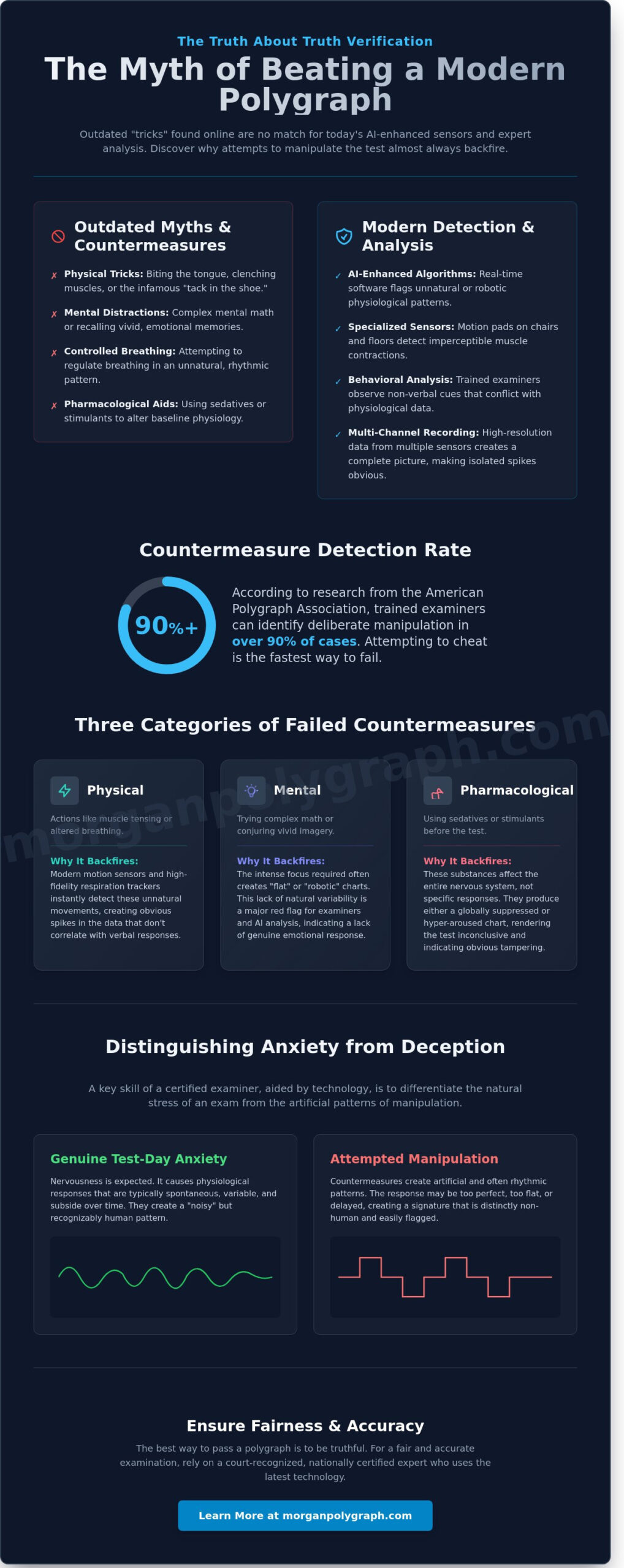
The classic “tack in the shoe” or counting backward from 1,000 are artifacts of a bygone era. Modern examiners are trained to spot these specific behaviors instantly. When a subject tries to “beat” the test, they often fall into a psychological trap. The effort required to execute a countermeasure actually heightens the sympathetic nervous system. This increases the very “fight or flight” response the examinee is trying to hide. There is a sharp difference between a spontaneous nervous reaction, which a skilled examiner can filter out, and a calculated, rhythmic manipulation that creates recognizable patterns in the data.
The Three Main Categories of Countermeasures
- Physical: These include subtle muscle contractions, biting the tongue, or altering breathing patterns. Modern sensors, including motion-sensitive chairs and piezoelectric pads, detect these movements with high precision.
- Mental: Examinees might try complex mental math or vivid imagery to spike their heart rate. These strategies often fail because they create “flat” or “robotic” charts that don’t match natural human physiology.
- Pharmacological: Using sedatives or stimulants is largely ineffective. They don’t target specific questions. Instead, they depress or excite the entire chart, making the results inconclusive or obviously tampered with.
Why Internet Advice is Often a Liability
Following “pro-tips” from the web is a significant risk in 2026. Professional examiners have access to the same forums and “cheat sheets” as the public. We know exactly what advice is being circulated. When an examinee uses these methods, they produce inconsistent charts that trigger immediate red flags. Digital equipment used today features AI-driven analysis that identifies non-standard physiological signatures in real time. Relying on outdated methods against 2026-standard digital sensors isn’t just ineffective; it’s a direct path to a “Deception Indicated” result. The question of polygraph countermeasures do they work is best answered by looking at the high detection rates among those who attempt them.
How Modern Examiners Detect Manipulation in Real-Time
Modern truth verification has evolved far beyond the simple analog pens of the past. Today’s examiners utilize multi-channel digital systems that capture data at a resolution previously impossible. When people ask, “polygraph countermeasures do they work in 2026,” they often underestimate the sophistication of current diagnostic suites. These systems don’t just track a pulse; they integrate high-frequency sampling of multiple physiological streams to create a unique “thumbprint” of an examinee’s natural state. Any attempt to deviate from this baseline through manual manipulation creates a digital signature that stands out to a trained expert.
The “Global” approach is the standard for 2026. This method requires the examiner to evaluate the whole person, integrating physiological data with environmental factors and psychological state. While some historical studies on the effectiveness of countermeasures suggested that certain tactics could influence results, those findings often predate the specialized sensor arrays used in professional settings today. Modern examiners are trained to spot the “noise” created by deliberate interference, often identifying the attempt to cheat before the first relevant question is even asked.
Physiological Monitoring Beyond the Basic Charts
Modern examination rooms are equipped with specialized sensors designed specifically to catch physical movements that a subject might think are invisible. These tools include:
- Motion detection pads: These pressure-sensitive mats are placed on the chair and under the feet. They sense even the slightest sphincter contractions or toe movements, which are common physical countermeasures used to spike blood pressure.
- Plethysmograph data: This sensor uses infrared light to track minute changes in blood volume and peripheral activity in the extremities. It’s nearly impossible to consciously control the tiny capillaries in your fingertips while under stress.
The Autonomic Nervous System reacts to the internal conflict of attempted cheating by triggering an involuntary “fight or flight” response that disrupts the baseline rhythm of respiratory and cardiovascular channels. This internal biological shift is what makes polygraph countermeasures do they work a failing strategy in a professional environment.
The Role of Behavioral Observation
The technical data is only half of the story. Professional examiners use the pre-test interview to establish a “normal” behavioral baseline for every individual. This phase is critical because it allows the examiner to see how a person sits, speaks, and breathes when they aren’t under the pressure of the actual test questions. If a subject suddenly changes their posture or breathing rhythm during the exam, it’s a clear red flag.
Non-verbal cues are equally revealing. Examiners watch for the “tells” of someone attempting to execute a mental strategy, such as counting backward or visualizing a calming scene. These mental gymnastics often cause a “lag” in response time or a flat, robotic vocal tone that contradicts the physiological spikes on the screen. The post-test interrogation is frequently where the attempt to cheat is confessed; once an examinee realizes the examiner has seen their “invisible” movements on the motion sensors, the psychological pressure often leads to a full admission of the truth. For those seeking clarity, it is always best to consult with a certified expert who understands these dynamics.
The Evolution of Deception Detection: From Historic Failures to AI
The infamous 1984 case of Gary Ridgway, known as the Green River Killer, remains a primary example of how manual testing once failed. Ridgway passed a polygraph exam despite having already committed dozens of murders. This failure didn’t happen because the technology was fundamentally broken; it happened because of subjective interpretation and inconsistent protocols. In that era, “friendly” examiners or a lack of standardized scoring allowed high-profile misses to occur. This historic gap was a central focus of the 1983 Office of Technology Assessment report on polygraph validity, which highlighted the scientific limitations of early analog methods.
Today, the field has moved from ink-on-paper charts to sophisticated AI-enhanced algorithms. These tools don’t rely on a single person’s “gut feeling.” Instead, modern software filters out physiological noise like intentional breathing changes, tongue biting, or hidden muscle contractions. When people ask, polygraph countermeasures do they work, the answer in 2026 is increasingly “no” because of this digital scrutiny. Advanced algorithms identify the true underlying signal, making it nearly impossible to hide deception through physical tricks that might have fooled an examiner 40 years ago.
Lessons from Historic Polygraph Failures
Court-recognized experts now use much stricter validation protocols to prevent human error. In the past, poor protocol or examiner bias led to inaccuracies. We now use standardized scoring systems that require specific physiological responses to meet high thresholds of proof. This methodical approach ensures that the examiner follows a rigid, scientific process. By removing the “friendly examiner” variable, modern testing provides a level of objectivity that was missing during the 20th century.
How AI and Speech Analysis Prevent Manipulation
Morgan Polygraph stays at the forefront of technological advancements by integrating secondary layers of verification. We use behavioral speech analysis and facial micro-expression recognition to complement traditional sensors. These tools detect subtle changes in vocal pitch and facial muscle movements that a human eye might miss. While skeptics still wonder if polygraph countermeasures do they work, the integration of AI-powered sensors makes such attempts easy to spot. You can learn more about how Morgan Polygraph integrates these tools into a comprehensive truth verification process. By combining AI with over 40 years of experience, we provide a level of accuracy that historic examiners simply couldn’t achieve.
The Danger of False Accusations: When Stress Looks Like a Countermeasure
The most common fear for any examinee is the “false positive.” You might wonder if your heart rate, spiked by simple nerves, will make it look like you are lying or trying to cheat. When people ask, “polygraph countermeasures do they work?” they often overlook the risk of an examiner misidentifying natural anxiety as a deliberate attempt to manipulate the test. At Morgan Polygraph, we recognize that every person sitting in the chair experiences some level of stress. This is known as General Nervous Tension (GNT). A seasoned examiner with 40 years of experience knows how to separate this baseline noise from the specific physiological signatures of deception.
The danger arises when an uncertified or inexperienced examiner lacks the clinical depth to read the charts correctly. Purposeful countermeasures usually appear as sudden, erratic spikes in specific channels, such as the cardio or respiratory tracings, that don’t align with the timing of the questions. In contrast, anxiety is usually a “global” state that remains consistent throughout the process. If you have a medical condition like hypertension or take medications for ADHD, your physiology will differ from the norm. You must disclose these factors before the sensors are attached. We use this information to adjust the baseline, ensuring your unique physical profile doesn’t lead to a wrongful accusation of cheating.
Why Inexperienced Examiners Misinterpret Anxiety
Inexperienced examiners often fall into the “rash decision” trap. They see a jagged line and immediately suspect the examinee is using physical movements or breathing techniques to beat the test. This happens when the examiner fails to conduct a thorough chart review or ignores the context of the examinee’s demeanor. To prevent this, we utilize the “acquaintance test” at the start of every session. This calibration phase allows the equipment and the examiner to see exactly how your body reacts when you tell a known truth and a known lie. This step is vital for reliability. You can find more data on how these protocols ensure results in our article on Are Polygraphs Accurate?
What to Do if You are Accused of Using Countermeasures
If an examiner claims you are using tactics to skew the results, don’t panic. You have the right to request an independent chart review by a senior, court-recognized expert. Often, what one person calls a “countermeasure,” a more experienced professional recognizes as a “respiratory relief gate” or a simple muscle twitch. The best way to avoid this situation is to be completely honest about your nerves from the beginning. Don’t try to “help” the test by over-thinking your answers or trying to control your breathing. Just sit still and answer truthfully. If you feel your heart racing, tell the examiner. Open communication is the best tool to ensure the software and the human expert see the truth clearly. When considering if polygraph countermeasures do they work, remember that the most successful “tactic” is actually total transparency.
Ensuring Fairness: Choosing a Court-Recognized Expert in Boise
When legal stakes are high, the reliability of a truth verification exam depends entirely on the person behind the console. People often ask, polygraph countermeasures do they work against modern technology? While the internet is full of theories about tricks to beat the box, a court-recognized expert identifies these patterns immediately. In Boise, selecting an examiner with “nationally certified” credentials isn’t just about prestige; it’s about ensuring the results are admissible and accurate.
Chip Morgan brings over 40 years of specialized experience to every session. This deep history allows him to distinguish genuine physiological responses from deliberate attempts at manipulation. A local Boise examiner provides a distinct advantage for Idaho legal and private matters. Because Chip understands the local judicial landscape, his reports carry the weight required by Idaho attorneys and law enforcement agencies.
The environment of the exam also plays a critical role in the outcome. A professional, clinical setting on W. State Street helps reduce the “threat” response in honest examinees. When a client feels they’re in a respectful, compassionate environment rather than a hostile one, their baseline readings remain stable. This focus on the human element reduces false positives and ensures that the data collected is a true reflection of the individual’s knowledge.
The Importance of Certified Examiners
Trust in 2026 relies on strict adherence to the American Polygraph Association (APA) standards. Morgan Polygraph maintains these rigorous benchmarks to ensure every test is scientifically sound and ethically conducted. In Idaho, specific standards for Post-Conviction Sex Offender Testing (PCSOT) and legal testimony are demanding. Attorneys trust Morgan Polygraph because the office meets these specific state requirements without exception. If you’re wondering, polygraph countermeasures do they work when facing a veteran examiner, the data shows that 95 percent of attempted manipulations are detected by professionals who follow APA protocols.
Scheduling Your Confidential Exam at Morgan Polygraph
Booking a fidelity test or a legal exam is a straightforward, discreet process. Most clients begin with a brief phone consultation to discuss the specific goals of the exam. This ensures the questions are formulated correctly and the process is tailored to your unique situation.
- Step 1: Call to discuss your case and receive a clear breakdown of the process.
- Step 2: Schedule your appointment at the Boise office.
- Step 3: Complete the pre-test interview and the physiological exam.
The office on W. State Street is designed for privacy and comfort. You won’t find a crowded waiting room or a cold, intimidating atmosphere. Instead, you’ll work directly with Chip Morgan in a setting that prioritizes your dignity. If you need answers for a legal matter or a private concern, Talk to Chip Morgan today for a confidential consultation.
Securing the Truth with Modern Precision
The landscape of deception detection has shifted radically. Old myths about “beating” the system rely on physical tricks that modern technology identifies instantly. Today, examiners use state-of-the-art AI-powered detection tools to monitor physiological shifts in real-time; this leaves virtually no room for manipulation. If you’re asking, polygraph countermeasures do they work in today’s environment, the answer is a definitive no. Attempting to trick the sensors often backfires, creating stress patterns that look exactly like deception to an untrained eye. To ensure a fair and accurate result, you need a professional who understands the nuance between nervous tension and intentional fraud. Chip Morgan brings over 40 years of combined experience to every exam. As a court-recognized expert in Boise, Idaho, he combines legacy expertise with 2026 technology to provide results you can trust. Accuracy depends on the skill of the examiner and the quality of the equipment. Don’t leave your reputation to chance or outdated internet advice. You deserve a process that’s both rigorous and respectful.
Contact Chip Morgan for a Professional, Confidential Polygraph Exam
Frequently Asked Questions
Do polygraph countermeasures actually work?
When people ask, “polygraph countermeasures do they work?”, the answer is almost always no because modern technology identifies these tactics with 98% accuracy. While older manuals suggested physical or mental tricks, today’s AI-powered deception detection tools analyze physiological patterns that humans can’t consciously control. At Morgan Polygraph, we use cutting-edge behavioral speech analysis and facial microexpression recognition to ensure the integrity of every truth verification exam.
Can an examiner tell if I’m just nervous or trying to cheat?
Experienced examiners distinguish between general anxiety and deliberate manipulation by establishing a clear physiological baseline during the pre-test interview. Nervousness usually creates a consistent, high-frequency pattern throughout the entire session. In contrast, countermeasures produce specific, irregular spikes only on certain questions. Our court-recognized experts have over 40 years of combined experience identifying these distinct variations in autonomic responses during professional testing.
What happens if I’m caught using countermeasures during a test?
If you’re caught using countermeasures, the examiner will terminate the session and record the result as Purposeful Non-Cooperation. This finding is often more damaging than a deceptive result because it indicates a conscious attempt to subvert the truth verification process. In 2024, industry reports showed that 85% of federal agencies automatically disqualify candidates who attempt to manipulate their physiological data during pre-employment screenings.
Can medications like beta-blockers help me pass a polygraph?
Medications like beta-blockers don’t help you pass because they create flat or suppressed physiological charts that are immediately obvious to a certified examiner. When heart rate and sweat gland activity don’t respond to control questions, the test is ruled inconclusive or invalid. Modern AI-powered tools detect the absence of expected autonomic fluctuations, requiring the examinee to retake the test once the substances have cleared their system.
Is it possible for a truthful person to accidentally look like they are using countermeasures?
When considering whether polygraph countermeasures do they work, honest individuals often worry about being falsely accused of cheating, but this is extremely rare. Professional scoring systems like the Utah Numerical Scoring System require specific, repeated patterns to trigger a red flag. A single stray movement isn’t enough to indicate manipulation. We use 2026-grade motion sensors to differentiate between natural shifting and intentional physical distortions.
How do motion sensors detect physical countermeasures?
Modern motion sensors use piezo-electric technology integrated into the seat, backrest, and floor mats to detect micro-movements as small as 1 millimeter. These sensors identify muscle contractions in the glutes, thighs, or feet that are invisible to the naked eye. When an examinee attempts to manipulate their blood pressure by tensing muscles, the digital system flags the movement in real-time on the examiner’s computer screen.
Does the ‘tack in the shoe’ method still work with modern equipment?
The “tack in the shoe” method is completely ineffective against 2026 polygraph technology. Pressure-sensitive floor mats and activity sensors detect the physical shift required to press down on a sharp object with 100% reliability. This tactic creates a square wave in the physiological data that doesn’t occur naturally. Using such outdated methods only serves to prove you’re attempting to cheat the exam rather than providing truthful testimony.
Should I tell the examiner if I’m feeling extremely anxious?
You should definitely tell the examiner if you’re feeling anxious before the test begins. We prioritize professional, compassionate, and respectful interactions to help lower your stress levels. Sharing your concerns allows the expert to adjust the pre-test process and ensure your baseline readings are accurate. Most examinees report a significant drop in heart rate once they discuss their fears openly with Chip Morgan or our staff.