
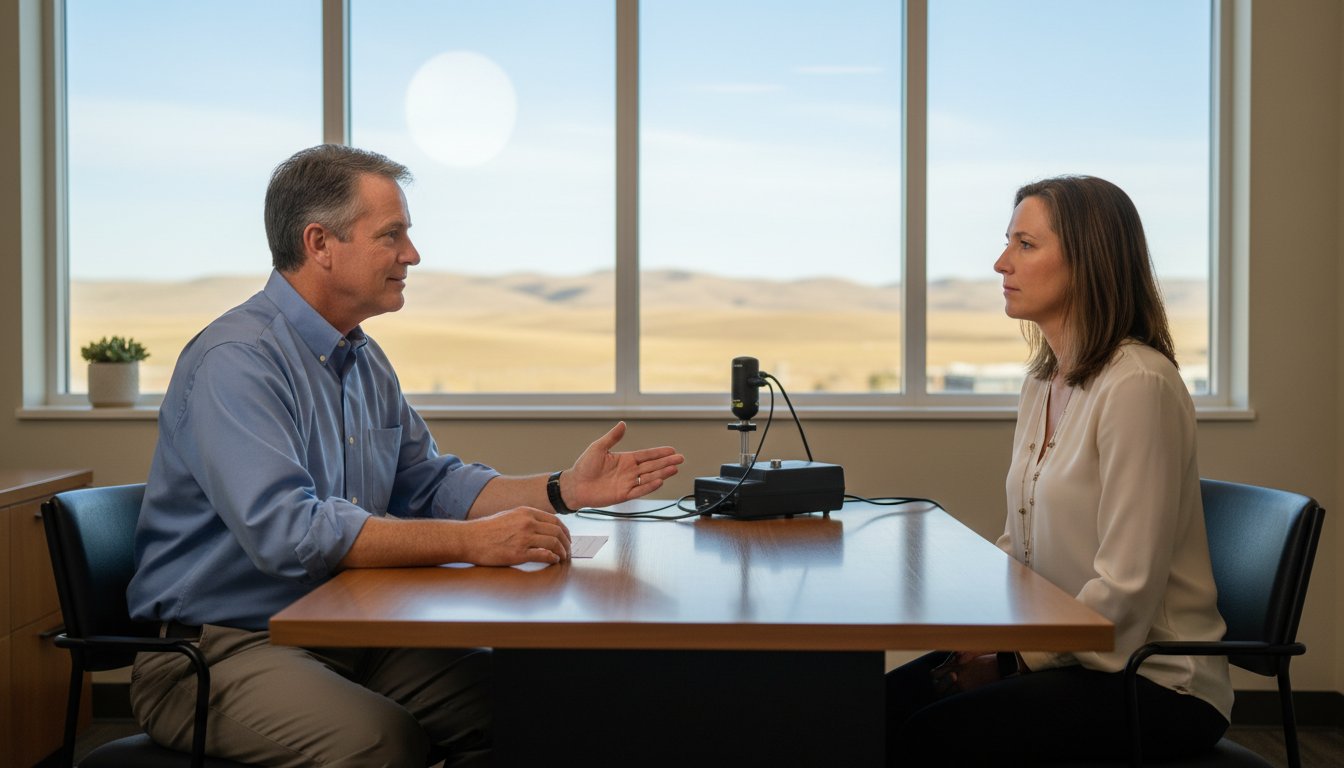
What if the most critical part of your polygraph exam happens before the sensors are even attached to your body? Most people walk into our office wondering exactly what happens in a pre-test interview, often fearing a high-pressure interrogation designed to trick them into a confession. It’s completely natural to feel a sense of dread when facing the unknown, particularly when your reputation or career is at stake. We understand that this process can feel clinical, but our goal at Morgan Polygraph is to provide a compassionate and professional environment where you feel heard.
This guide will walk you through the exact steps of the pre-test phase so you can arrive prepared and calm. You’ll learn how we establish a physiological baseline and why there are never any surprise questions, ensuring you understand the psychological calibration that maintains the 87% decision accuracy rate recognized by the American Polygraph Association. By the time you finish reading, you’ll understand how this collaborative session with experts like Chip Morgan ensures a fair and accurate truth verification process for every client.
Key Takeaways
- Understand that this mandatory phase is a collaborative session designed to ensure you are fully comfortable with every question before the sensors are activated.
- Learn exactly what happens in a pre-test interview, from the initial review of your legal rights to the detailed explanation of how the technology tracks physiological changes.
- Identify why transparency regarding medications and health conditions is vital for establishing an accurate baseline and preventing false readings.
- Discover practical steps for physical preparation, such as maintaining your normal routine, to ensure you remain calm and focused during the examination.
- Gain confidence by learning how the 40 years of combined expertise at Morgan Polygraph creates a fair, respectful, and professional environment for truth verification.
What is a Polygraph Pre-Test Interview?
The pre-test interview is the most misunderstood phase of the entire truth verification process. While many people confuse it with a standard job screening, a forensic pre-test is a highly structured, mandatory discussion that takes place before any physiological sensors are attached to your body. It’s a foundational step where the examiner completes necessary paperwork and explains the technology in detail. The primary goal is simple: total clarity. We ensure you understand the process, review every question word-for-word, and address any lingering anxieties. This isn’t an interrogation; it’s a professional calibration designed to ensure the test is fair and accurate.
Ethics drive this mandatory phase. The American Polygraph Association (APA) and state regulations require a pre-test to protect the integrity of the results. It’s during this time that the examiner establishes their role as a neutral, professional truth verifier. Unlike a screening interview that might focus on personality or job fit, a forensic pre-test focuses on the mechanics of the polygraph testing procedure. This ensures that every data point recorded later is scientifically valid and that the examinee is not caught off guard by the phrasing of a question.
The Legal and Ethical Necessity of the Pre-Test
You have rights that must be protected during any examination. The pre-test ensures informed consent, meaning you understand exactly what the test covers and that your participation is voluntary. Legally, a polygraph cannot proceed without this introductory phase because it establishes the ground rules. Our examiners act as objective professionals, not adversaries. We prioritize compassionate and respectful interactions to help you feel settled, which is essential for a fair examination. This phase also allows the examiner to identify any legal or medical reasons why a test shouldn’t proceed, such as specific health conditions that might interfere with data collection.
How Long Does the Pre-Test Interview Last?
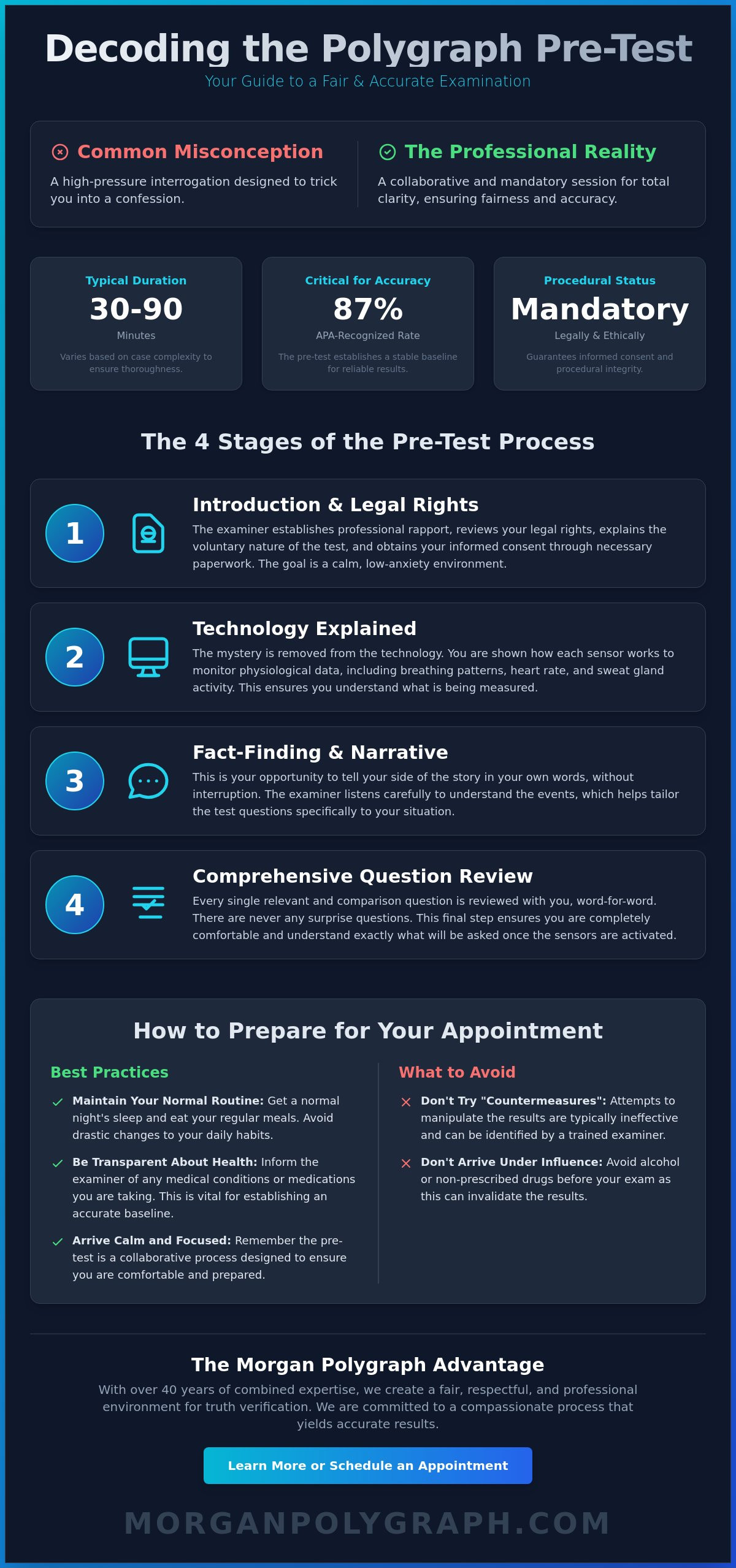
Time is a critical variable in truth verification. A typical session lasts between 30 and 90 minutes, though this fluctuates based on the complexity of the case. For example, a criminal defense exam might take longer than a standard relationship fidelity test or a Post-Conviction Sex Offender Testing (PCSOT) requirement. A thorough interview is the secret to accurate polygraph results. When an examinee knows exactly what happens in a pre-test interview, their anxiety levels stabilize. This allows the equipment to record a clear physiological baseline. With over 40 years of combined experience, we know that rushing this stage leads to ambiguity, while a methodical approach supports the 87% accuracy rate established by APA research.
The 4 Main Stages of the Pre-Test Process
A professional polygraph examination technique follows a strict sequence to ensure both accuracy and examinee comfort. This sequence is divided into four distinct stages that must occur before the actual testing begins. First, we handle the introduction and legal rights. This involves a clear review of the voluntary nature of the exam and the signing of release forms. We want you to feel fully informed and in control of your participation from the moment you sit down. Understanding what happens in a pre-test interview begins with this foundation of transparency and mutual respect.
The second stage is the explanation of the technology. We take the mystery out of the equipment by showing you exactly how the sensors track physiological data. You’ll see how the components monitor your breathing patterns, heart rate, and sweat gland activity. Third, we move into the fact-finding and narrative phase. This is your opportunity to tell your side of the story in your own words. We listen carefully as you describe the events, which helps us ensure the test is tailored to your specific situation. Finally, we conduct a comprehensive question review. We go over every single relevant and comparison question so there’s no confusion when the sensors are active. If you feel uneasy about the process, you can speak with our certified examiners to address your concerns before your appointment.
Phase 1: Building Professional Rapport
Our priority is lowering situational anxiety and eliminating “outside” noise that could interfere with your data. We use professional and compassionate interaction to establish a baseline for your normal communication style. In our Boise-based office, we understand that the setting can feel intimidating. By building rapport, we help you transition from a state of high stress to a calm, focused mindset. This methodical approach is a hallmark of our 40 years of combined experience in truth verification.
Phase 2: Reviewing the Questions
We adhere to a strict “No Surprises” rule. Every question is read aloud during the pre-test to ensure you understand the exact meaning of every word used. We refine the language together until the phrasing is clear and unambiguous. This stage is vital because it distinguishes between relevant questions regarding the specific issue, irrelevant questions about neutral facts, and comparison questions used for psychological calibration. You’ll never be asked a question during the test that wasn’t thoroughly discussed first.
Common Myths: Is the Pre-Test an Interrogation?
The most common fear we encounter is the belief that the pre-test is a clever trap designed to force a confession. This couldn’t be further from the truth. Understanding what happens in a pre-test interview is the best way to dispel these anxieties. In a professional setting, this phase is collaborative, not confrontational. Our examiners want you to be comfortable with the questions because a relaxed, focused mind produces the most reliable data. If you’re constantly worrying about a ‘trick’ question, your physiological responses may become clouded by situational stress rather than actual truthfulness.
The psychological purpose of this session is to ensure your mind is focused solely on the relevant issues of the case. By discussing the polygraph test phases openly, we eliminate the element of surprise. It’s also perfectly normal to realize during this conversation that you need to clarify a past event or a specific detail. We encourage this transparency. Clarifying information during the interview actually improves the validity of the test because it ensures the questions are tailored to your specific history and memory. This methodical approach is why we maintain such high standards of accuracy in our Idaho office.
Interview vs. Interrogation: Know the Difference
There’s a significant technical difference between an interview and an interrogation. An interview is a fact-gathering mission where the examiner and examinee work together to define the scope of the test. An interrogation is accusatory and designed to elicit a confession under pressure. Professional examiners in Idaho adhere to strict non-confrontational standards. We don’t use aggressive tactics because they’re counterproductive to truth verification. Our goal is to gather clear, objective information that allows the technology to do its job effectively.
The Role of AI and Modern Technology
As of May 2026, modern polygraph examinations have evolved to include sophisticated digital tools. At Morgan Polygraph, we integrate behavioral speech analysis and facial microexpression recognition to supplement the traditional sensors. These AI-powered tools help make the pre-test interview more objective by identifying subtle patterns that the human eye might miss. Far from making the process more intimidating, this technology provides a more comprehensive and fair evaluation. It ensures that the final result is based on a multi-layered analysis of truthfulness, combining decades of human expertise with cutting-edge precision.
How to Prepare for Your Pre-Test Appointment
Preparation for a polygraph examination begins long before you enter the testing room. To ensure the most accurate results, you need to arrive in a physical and mental state that allows for clear physiological data collection. We recommend getting at least 7 to 8 hours of sleep the night before your appointment. Skipping meals can cause fluctuations in blood sugar that might mimic stress responses, so eat a normal meal beforehand. Being physically prepared allows your body to remain in its natural state, which is essential for truth verification.
Medical transparency is equally vital. You must provide a list of all current medications and disclose any significant health conditions, such as respiratory issues or heart ailments, to your examiner. These factors don’t necessarily disqualify you from testing, but they’re essential for the examiner to understand your baseline. When you understand what happens in a pre-test interview, you realize that these details help us calibrate the equipment to your unique biology. Being honest and direct during the narrative phase of the interview is the best way to ensure a fair outcome.
Please bring the following items to your appointment:
- A valid government-issued photo ID.
- Any court-ordered paperwork or legal documents relevant to the case.
- A written list of your current medications and dosages.
The Night Before Your Exam
Your goal is to maintain your body’s natural equilibrium. Avoid excessive caffeine, energy drinks, or other stimulants for at least 12 hours prior to the test. There’s a common myth that you should “practice” your answers or research ways to influence the sensors. This is counterproductive. Trying to ‘game’ the pre-test often leads to inconclusive results, which may require a re-test at an additional cost. Instead, focus on being natural and cooperative with the examiner’s instructions.
Arrival at the Boise Office
Our office is located on W. State Street in Boise, where we provide a discreet and professional environment. We recommend arriving 15 minutes early to find parking and settle in. Being on time significantly reduces situational stress that could interfere with the delicate data collection process. Once you arrive, you’ll find a quiet, distraction-free waiting area designed to help you remain calm. This controlled environment is a critical part of what happens in a pre-test interview, as it allows for a focused and uninterrupted dialogue between you and the examiner. If you’re ready to schedule your session, you can contact Chip Morgan today to begin the process with an expert who respects your privacy.
Why Choose Morgan Polygraph for Your Examination?
Selecting a professional for truth verification requires a balance of technical expertise and human compassion. At Morgan Polygraph, we provide over 40 years of combined experience in forensic interviewing and physiological data analysis. We recognize that the stress of an examination can be overwhelming, which is why our process is designed to be as transparent and respectful as possible. Our deep understanding of what happens in a pre-test interview allows us to guide you through the calibration phase with a level of professional care that few other firms can match. We don’t just record data; we ensure the environment is conducive to a fair and accurate result.
Our firm stands at the intersection of traditional expertise and modern innovation. While we rely on decades of proven polygraph techniques, we also integrate cutting-edge AI tools, such as behavioral speech analysis and facial microexpression recognition. This multi-layered approach provides a more objective and comprehensive evaluation than traditional methods alone. When you choose us, you’re benefiting from a methodology that is respected in the polygraph community and recognized by courts for its precision and reliability.
Expertise You Can Trust in Idaho
Chip Morgan is a nationally certified examiner whose credentials make him a preferred choice for legal professionals across the state. His experience spans a wide range of sensitive issues, from high-stakes criminal defense to private matters such as infidelity testing. Boise attorneys and local agencies rely on our firm because we maintain strict confidentiality and adhere to the highest ethical standards. We understand the local legal landscape and provide results that are both accurate and defensible in a forensic context.
Next Steps: Scheduling Your Session
Taking the first step toward truth verification is often the most difficult part of the process. We make it simple by offering direct access to our principal examiner. You can contact Chip Morgan for a confidential consultation to discuss your specific needs and learn more about what happens in a pre-test interview at our Boise office. For attorneys requiring expert testimony or specialized criminal defense support, we provide detailed reporting and professional consultation tailored to your case requirements.
Your privacy is our priority. Whether you’re seeking clarity in a personal relationship or require forensic support for a legal matter, we are here to help. Contact Morgan Polygraph today to schedule your professional examination and work with a court-recognized expert who values accuracy, discretion, and respect.
Achieve Peace of Mind Through Expert Truth Verification
Navigating a polygraph exam doesn’t have to be a source of anxiety. By understanding exactly what happens in a pre-test interview, you can approach your session with the calm focus required for accurate results. This phase is a collaborative effort. We review every question in advance and ensure the technology is perfectly calibrated to your individual physiology. This methodical preparation ensures there are no surprises and that your rights remain protected throughout the process.
At Morgan Polygraph, we combine 40 years of combined forensic experience with innovative AI-powered deception detection tools to deliver precise results. As court-recognized experts in Idaho, we prioritize your privacy and treat every interaction with the highest level of professional discretion. You don’t have to face the unknown alone. Our blend of traditional expertise and forward-thinking technology ensures a fair and compassionate environment for every client.
Schedule your confidential polygraph examination with Chip Morgan today and take the first step toward the clarity you deserve. Our team is ready to provide the expert guidance you need for a successful and respectful examination.
Frequently Asked Questions
Can the examiner ask me personal questions not related to the case?
No, the examiner will not ask personal questions that are unrelated to the specific issue being tested. Professional standards set by the American Polygraph Association prohibit the use of intrusive or irrelevant questions during the process. We focus strictly on the matters at hand to maintain a professional and respectful environment. This ensures the examination remains objective and avoids any unnecessary intrusion into your private life or personal history.
What if I get nervous during the pre-test interview?
It’s completely natural to feel nervous, and our examiners are trained to distinguish between situational anxiety and deception. During the session, we establish a physiological baseline that accounts for your natural stress levels. Understanding what happens in a pre-test interview helps reduce this anxiety because it removes the fear of the unknown. We work with you to ensure you’re as calm and focused as possible before the sensors are activated.
Will the pre-test interview be recorded?
Yes, the entire polygraph process, including the pre-test phase, is typically recorded for quality control and legal documentation. These recordings ensure a high standard of professional conduct and provide an objective record of the interaction. We maintain strict confidentiality with all recordings, handling them with the same level of discretion as your test results. This practice protects both the examinee and the examiner by ensuring total procedural transparency.
Can I change my mind about a question during the pre-test?
Yes, you have the right to request changes to a question’s phrasing if you find it confusing or inaccurate. The pre-test is the specific time designed for this collaborative review. We won’t proceed to the actual test until you’re fully comfortable with the exact wording of every relevant question. This “No Surprises” policy is essential for achieving an accurate result and ensuring you feel heard throughout the session.
Does the pre-test interview affect the final score of the polygraph?
The pre-test interview doesn’t produce a numerical score, but it’s vital for the accuracy of the final result. By reviewing the questions and establishing a baseline, we ensure that the physiological data collected later is clean and interpretable. If an examinee is confused about what happens in a pre-test interview, their results might be skewed by misunderstanding rather than deception. Proper preparation here prevents false positives and ensures a fair outcome.
What should I do if I don’t understand a question the examiner asks?
You should immediately ask the examiner for clarification if any part of a question is unclear. We’ll stop and explain the terminology or intent until you have a complete understanding. It’s our professional responsibility to ensure there’s no ambiguity before the sensors are turned on. Clear communication during this phase is the primary reason why we achieve a high decision accuracy rate of 87% in our forensic evaluations.
Is the pre-test interview confidential?
Yes, the pre-test interview is strictly confidential and handled with the utmost discretion. Information shared during this session is only disclosed to the authorized parties involved in the case, such as your attorney or the requesting agency. We adhere to rigorous privacy standards to protect your sensitive information. Our commitment to confidentiality is a cornerstone of our 40 years of combined experience in the truth verification and forensic interviewing field.
Can my attorney be present during the pre-test interview?
While attorneys typically can’t be present in the room during the actual examination to avoid distractions, they can consult with you before and after the session. Most professional examiners require a one-on-one environment to maintain a clean physiological baseline. You can review the question list with your legal counsel before the pre-test begins. This ensures your legal rights are protected while maintaining the scientific integrity of the testing environment.