

Could your body’s natural response to intense stress be mistaken for a deception? If you’re currently asking, “is a polygraph test right for my situation,” you’re likely facing a high-stakes moment where your reputation or your future is on the line. It’s natural to feel anxious about physiological reactions being misread or to fear a false positive. You want the truth to come out, but you don’t want a technicality to work against you.
This article provides the clarity you need by detailing the specific legal, medical, and situational factors that determine if a polygraph will help your case or create an unnecessary risk. We’ll explore the legal landscape in Idaho and identify the mental health or physical exclusions that could compromise your data. You’ll also learn how to find a secure, private testing environment that utilizes modern, data-driven methodologies. Understanding these variables is the first step toward making an informed, confident decision about your next steps.
Key Takeaways
- Distinguish between law enforcement interrogations and private evidentiary exams to understand how Idaho legal standards impact your results.
- Identify specific medical conditions and medications that can disrupt physiological baselines and potentially skew your data.
- Evaluate the timing and emotional environment of your case to help answer the question: is a polygraph test right for my situation?
- Recognize technical red flags, such as outdated analog equipment or lack of computer-aided scoring, that compromise testing integrity.
- Learn how to vet an examiner’s credentials and methodology to ensure a professional, private, and accurate testing experience.
The Legal Lens: Why Police Polygraphs Are Often a Bad Idea
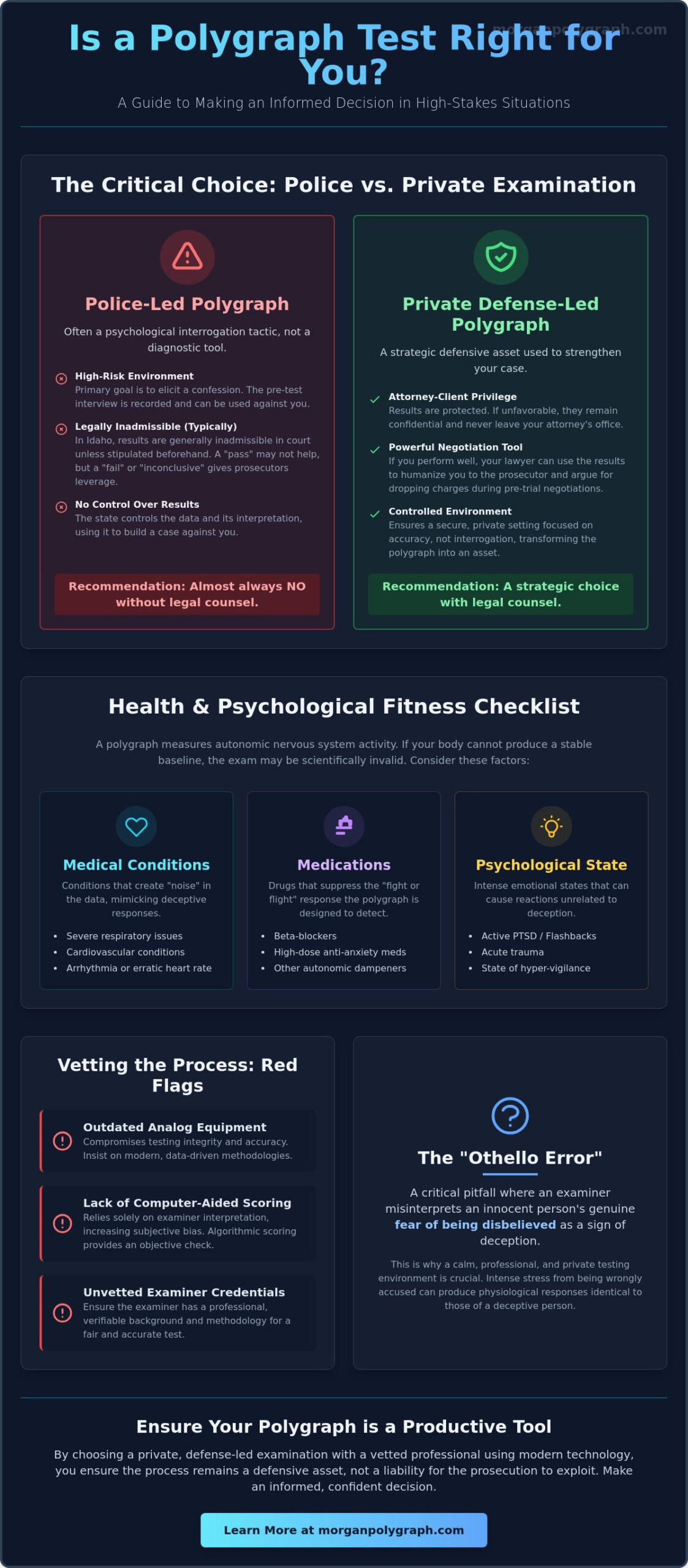
When a detective suggests a polygraph to “clear your name,” it rarely functions as a simple diagnostic tool. In a law enforcement context, the examination often serves as a sophisticated psychological interrogation tactic designed to elicit a confession. You might wonder, is a polygraph test right for my situation if the police are the ones requesting it? The answer is almost always no without the presence of legal counsel. In Idaho, polygraph results are generally inadmissible as direct evidence in court unless both parties stipulate to their entry before the test occurs. This means a “pass” might not even be seen by a jury, yet a “fail” or even an “inconclusive” result gives prosecutors immense leverage to pressure you into a plea deal.
The most significant danger often lies in the pre-test interview. Before the sensors are even attached, the examiner will engage you in a detailed conversation about the incident. This phase is recorded and can be used against you in court, even if the polygraph results themselves are excluded. Law enforcement officers are trained to use the perceived authority of the machine to make suspects feel that resistance is futile. Even if you pass the exam with high accuracy, a prosecutor is under no legal obligation to drop charges. They may simply view the result as a fluke or claim you used “countermeasures” to beat the system.
The ‘Nothing to Hide’ Fallacy
Many innocent people agree to police testing because they believe their honesty will produce a clear result. This ignores the reality of physiological stress. A comprehensive overview of the Polygraph on Wikipedia highlights the ongoing scientific and legal debates regarding how fear is measured. Innocent individuals often experience intense autonomic responses simply because they are terrified of being wrongly accused. This leads to the “Othello Error,” where an examiner misinterprets a subject’s genuine fear of being disbelieved as a sign of deception. If the result comes back as inconclusive, police often pivot, using that ambiguity to claim you are hiding something and demanding a “truthful” confession to resolve the discrepancy.
Defense-Led vs. Police-Led Examinations
You should never submit to a polygraph without your criminal defense attorney’s explicit approval and oversight. There is a profound difference between a test administered by the state and a private, privileged examination. When you work with a private examiner like Morgan Polygraph, the results are protected by attorney-client privilege. If the results are unfavorable, they never have to leave your attorney’s office. However, if you perform well, your lawyer can use those results as a powerful tool during pre-trial negotiations to humanize you to the prosecutor. Choosing a private polygraph examination ensures that the process remains a defensive asset rather than a liability for the prosecution to exploit. This controlled environment is often the only way to ensure the question “is a polygraph test right for my situation” ends with a productive outcome.
Biological and Psychological Contraindications for Testing
A polygraph functions by tracking autonomic nervous system activity. If your body cannot produce a stable baseline, the exam becomes scientifically invalid. This is why determining is a polygraph test right for my situation requires a deep look at your current health profile. Severe respiratory issues or cardiovascular conditions like arrhythmia can create “noise” in the data that an examiner cannot filter out. If your heart rate or breathing patterns are erratic at rest, the sensors will record fluctuations that look like deception even when you are being truthful.
Certain medications directly interfere with the body’s “fight or flight” response. Beta-blockers and high doses of anti-anxiety medications are designed to dampen autonomic reactivity. While these drugs help manage health, they essentially flatten the physiological spikes the polygraph is meant to detect. The DOJ on Polygraphs in Court notes that the reliability of these tests is often contested, and biological interference is a primary reason why. If your system is chemically suppressed, the test results may be deemed inconclusive or unreliable.
Active PTSD or acute trauma presents a significant challenge. When a person is in a state of hyper-vigilance, their nervous system is already overtaxed. A polygraph examiner might see a massive spike in heart rate when a specific topic is mentioned, but that spike could be a flashback rather than a lie. Neurological conditions that affect the sympathetic nervous system also pose risks. Without a clear signal-to-noise ratio, the examination cannot meet the high standards of accuracy required for professional use.
Mental Health and Cognitive Factors
Clinical depression or severe anxiety disorders can skew physiological signals in opposite directions. Depression may lead to “hypo-arousal,” where the body fails to react even to significant stimuli. Conversely, severe anxiety can cause “hyper-arousal,” leading to false positives. Examiners must conduct a thorough mental health screening to ensure the subject fully understands the gravity of the questions. If a cognitive impairment prevents a person from grasping the consequences of the test, the results lack ethical and scientific standing.
Physical Pain and Extreme Fatigue
Physical discomfort is a major distractor during a session. Acute pain can cause sudden physiological jumps that have nothing to do with the questions being asked. Similarly, extreme sleep deprivation, specifically less than four hours of rest, severely compromises the brain’s ability to process information and react consistently. Asking is a polygraph test right for my situation requires an honest assessment of your physical readiness. If you are managing a chronic condition, consulting with a professional examiner beforehand can help determine if a reliable reading is even possible for your specific circumstances.
Technical Red Flags: When the Examiner is the Problem
The accuracy of a polygraph depends as much on the person behind the desk as it does on the sensors attached to your body. If you’re weighing the question, “is a polygraph test right for my situation,” you must look beyond the equipment and evaluate the practitioner. Using an uncertified or non-nationally recognized examiner in private disputes introduces a massive variable of human error. Many practitioners operating without oversight still use outdated analog equipment or lack the software for computer-aided scoring. This is a major technical red flag. Analog systems are prone to manual interpretation bias, whereas modern digital systems provide objective, quantifiable data that can be audited.
The persona of the examiner also plays a critical role in the outcome. A hostile “interrogator” persona often creates an environment of intense, unnecessary stress. This atmosphere can lead to unreliable data because the subject’s physiological responses are driven by the examiner’s aggression rather than the questions themselves. A professional examiner uses a standardized, non-confrontational pre-test interview process. This ensures the subject is comfortable and understands the process, which is essential for establishing a clean baseline. The National Academies’ Report on Polygraph Accuracy has historically pointed out that the technique’s validity is highly sensitive to the examiner’s skill and the context of the test.
Why National Certification Matters in Boise
In Boise and throughout Idaho, the distinction between a general “polygrapher” and a nationally certified examiner is significant. A certified professional adheres to the strict Standards of Practice set by the American Polygraph Association (APA). These standards govern everything from the types of questions asked to the physical environment of the room. You can verify credentials through national or state bodies to ensure your examiner isn’t just a hobbyist. Understanding how to become a polygraph examiner reveals the extensive training and ethical grounding required to provide a reliable standard of care.
The Role of Peer Review and Blind Scoring
A single-examiner opinion without secondary quality control is a risk you shouldn’t take. Morgan Polygraph mitigates this by utilizing state-of-the-art data-driven detection and algorithmic scoring. We also implement “blind scoring” as a vital safeguard. In this process, a second examiner reviews the raw data without knowing the original examiner’s conclusion or the details of the case. This prevents examiner bias or preconceived notions from influencing the final report. When you ask, “is a polygraph test right for my situation,” the answer depends on whether these technical safeguards are in place to protect the integrity of your results.
Relationship and Infidelity Testing Pitfalls
In the wake of discovered infidelity, the urge for immediate answers is overwhelming. Many individuals find themselves asking, “is a polygraph test right for my situation,” while still in the throes of an active emotional crisis. However, the week following a discovery is often the least productive time for a session. When a relationship is in a state of acute shock, the physiological volatility of both parties can interfere with the data. A polygraph is a precision instrument, not a weapon to be used in the heat of an argument. Using it to force a confession during a period of high emotional instability often leads to inconclusive results that only deepen the trauma.
The process requires a clinical environment to be effective. One common mistake is “polygraph shopping,” where a partner seeks out an examiner who promises a specific result or a more aggressive interrogation style. This undermines the integrity of the findings. Furthermore, a polygraph cannot replace long-term therapeutic trust-building. It provides a snapshot of truth regarding specific events, but it doesn’t address the underlying behavioral issues that led to the crisis. Attempting to use a test as a shortcut to bypass counseling often leaves the core problems unresolved.
Timing and Therapeutic Readiness
For a polygraph to yield reliable data in a relationship context, both partners should ideally reach a level of emotional stabilization. This often follows a period of professional counseling where the specific issues have been identified. The examiner plays a vital role in managing the emotional temperature of the session. If a subject is too distraught to provide a consistent physiological baseline, a professional examiner will recommend rescheduling. Understanding the requirements of a successful infidelity test is essential for couples who want the process to be a step toward healing rather than a source of further conflict.
Defining the Scope of Inquiry
Vague questioning is the enemy of a successful examination. Questions like “have you ever lied to me?” are technically invalid because they are too broad and open to interpretation. These “fishing expeditions” rarely provide clarity and often lead to inconclusive results. A professional session focuses on specific, factual, and time-bound questions. For example, an examiner might use a question such as, “Since January 2024, have you had any sexual contact with [Name]?” This clarity allows the subject’s autonomic nervous system to respond to a concrete fact rather than a subjective concept. Professional examiners help couples narrow their focus to the most critical unresolved issues to ensure the data is actionable.
If you are ready to seek definitive answers through a structured and professional process, schedule a confidential consultation to discuss your specific needs.
How to Ensure a Polygraph is a Productive Tool
A polygraph examination is a precision instrument. To ensure it yields actionable data, you must approach the process with a methodical mindset. If you’re still debating the question, is a polygraph test right for my situation, the answer often depends on the quality of the practitioner you select. Vetting an examiner is the most critical step in safeguarding the integrity of your results. Before booking any session, ask these three specific questions: Are you a current member of the American Polygraph Association (APA)? Do you utilize validated, evidence-based testing techniques and computer-aided scoring? Do you have a formal secondary quality control or peer review process in place? If the answer to any of these is no, the risk of an unreliable result increases significantly. Just as you might find out more about an online platform before engaging with it, performing due diligence on your examiner is the best way to ensure accuracy.
The physical setting of the test is equally important. A professional, neutral testing environment in Boise ensures that external variables don’t interfere with your physiological readings. Conducting a test in a chaotic or informal space can trigger stress responses that have nothing to do with the questions being asked. You should also consult with your legal or therapeutic professionals before agreeing to an examination. They can help you determine how the results will be used and if the timing is appropriate for your specific case. Remember that a polygraph is one part of a larger truth-seeking process. It’s a powerful tool for verification, but it’s not a magic bullet that replaces comprehensive investigation or long-term behavioral observation.
Choosing a Court-Recognized Expert
Morgan Polygraph is widely trusted by defense attorneys and courts across Southern Idaho because of our commitment to rigorous standards. We bring extensive experience to complex criminal, civil, and Post-Conviction Sex Offender Testing (PCSOT) cases. This specialized background allows us to handle sensitive matters with the necessary academic gravitas and clinical precision. When clients ask are polygraphs accurate, we point to our use of modern, data-driven methodologies that minimize human bias and maximize reliability. Our practitioners are recognized within the professional community for their expertise and adherence to national standards.
Final Checklist Before Testing
Before you arrive for your appointment, ensure you’ve addressed your physical and mental readiness. If you have a history of cardiovascular conditions or are taking heavy medications, you should obtain medical clearance from your physician. Transparency with your examiner is vital. You must disclose your current physical and mental state during the pre-test interview so the data can be interpreted with the proper context. If you’ve determined that is a polygraph test right for my situation, the next step is to engage with a professional who prioritizes accuracy and discretion. Schedule a confidential consultation with Morgan Polygraph to discuss the specifics of your case and ensure your examination is handled with the highest level of professional care.
Taking the Next Step Toward Clarity and Resolution
Deciding to undergo a polygraph is a significant choice that requires careful consideration of legal, medical, and situational factors. You’ve learned that avoiding the confession trap of police-led exams and ensuring you’re physically fit for testing are essential for a reliable outcome. Vetting your examiner for national certification and modern, data-driven methodology isn’t just a recommendation; it’s a necessity for protecting your reputation and your rights. When the technical and emotional environments are properly managed, the results provide a powerful foundation for the truth.
If you’re still asking, is a polygraph test right for my situation, the best way to find a definitive answer is through expert guidance. At Morgan Polygraph, we provide a confidential and professional Boise office where your sensitive issues are handled with the utmost discretion. Our nationally certified and court-recognized examiners utilize state-of-the-art technology and validated methodologies to ensure the highest standards of accuracy. Don’t leave your future to chance or outdated methods. Consult with a Certified Polygraph Expert in Boise today to secure the professional clarity you deserve. We’re here to help you navigate this complex process with confidence and respect.
Frequently Asked Questions
Can I refuse a polygraph test requested by the police?
You have a clear legal right to refuse any polygraph test requested by law enforcement. Police often use these examinations as psychological interrogation tools to elicit confessions rather than to prove innocence. Since the results are rarely admissible in court without a prior stipulation, it’s generally advisable to decline the request and consult with a criminal defense attorney before making any decisions.
Will I fail a polygraph if I have high blood pressure or a heart condition?
Having high blood pressure or a heart condition doesn’t mean you’ll automatically fail, but it can lead to an inconclusive result. These conditions can create an unstable physiological baseline, making it difficult for the sensors to distinguish between a heart rhythm irregularity and a deceptive response. You should disclose your medical history to the examiner and consider obtaining medical clearance before the session begins.
Is it a bad idea to take a polygraph if I have severe anxiety?
Severe anxiety can compromise the integrity of a polygraph because the equipment measures autonomic arousal. If you’re in a state of hyper-vigilance, your body may produce exaggerated physiological responses to neutral or control questions. This heightened reactivity increases the risk of a false positive, also known as the Othello Error, where your fear of being disbelieved is misinterpreted as deception.
Can my employer fire me if I refuse to take a polygraph test?
The Employee Polygraph Protection Act of 1988 prohibits most private employers from firing or disciplining an employee for refusing to take a lie detector test. There are specific exceptions for government agencies, security firms, and pharmaceutical companies. If you’re in the private sector, your employer generally cannot use your refusal as the sole basis for termination or any adverse employment action.
Are polygraph results admissible in Idaho courts?
Polygraph results are generally not admissible as evidence in Idaho courts. The only common exception is when both the prosecution and the defense agree, or stipulate, to the admission of the results before the test is even administered. Even then, the court retains the final authority on whether the data meets the necessary legal standards for reliability and relevance in your specific case.
What happens if a polygraph test comes back as inconclusive?
An inconclusive result means the physiological data was not distinct enough for the examiner to render a definitive opinion of “truthful” or “deceptive.” This often occurs due to external factors like extreme fatigue, physical pain, or the use of certain medications. In these instances, the examiner may recommend a re-test after a period of rest or after the interfering variable has been addressed.
Should I take a polygraph to prove I didn’t cheat on my spouse?
Determining if a polygraph test is right for my situation in a marriage requires careful timing. While a test can provide factual clarity regarding specific events, it’s not a substitute for long-term therapeutic work. It’s most productive when both partners have reached a level of emotional stabilization and have narrowed the scope of inquiry to specific, time-bound questions that a counselor has helped identify.
Can medications like Xanax or Beta Blockers affect my polygraph results?
Medications like Xanax or beta-blockers can significantly impact your results by suppressing the body’s natural autonomic reactivity. These drugs are designed to keep the heart rate and blood pressure stable under stress, which flattens the physiological spikes the equipment needs to detect. You must be completely transparent with your examiner about any medications you’re taking to ensure they can interpret the data accurately.