
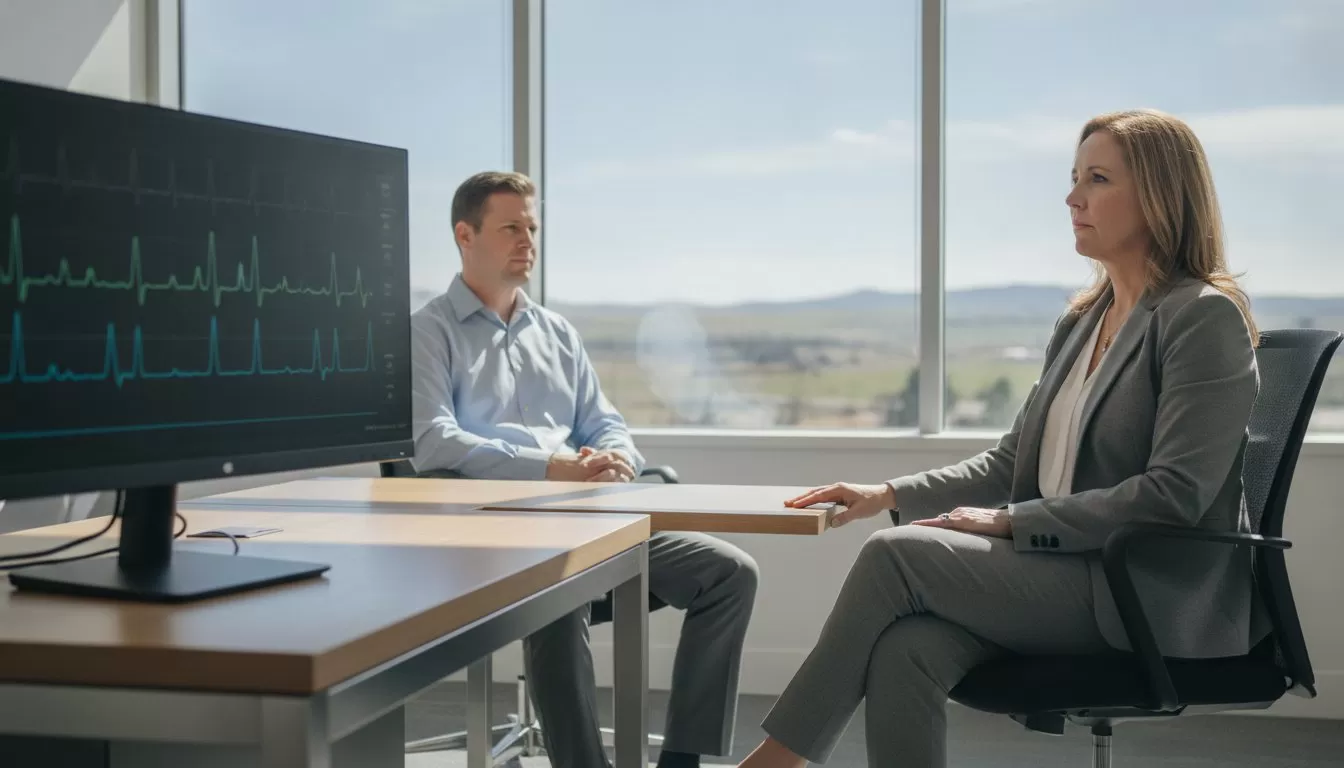
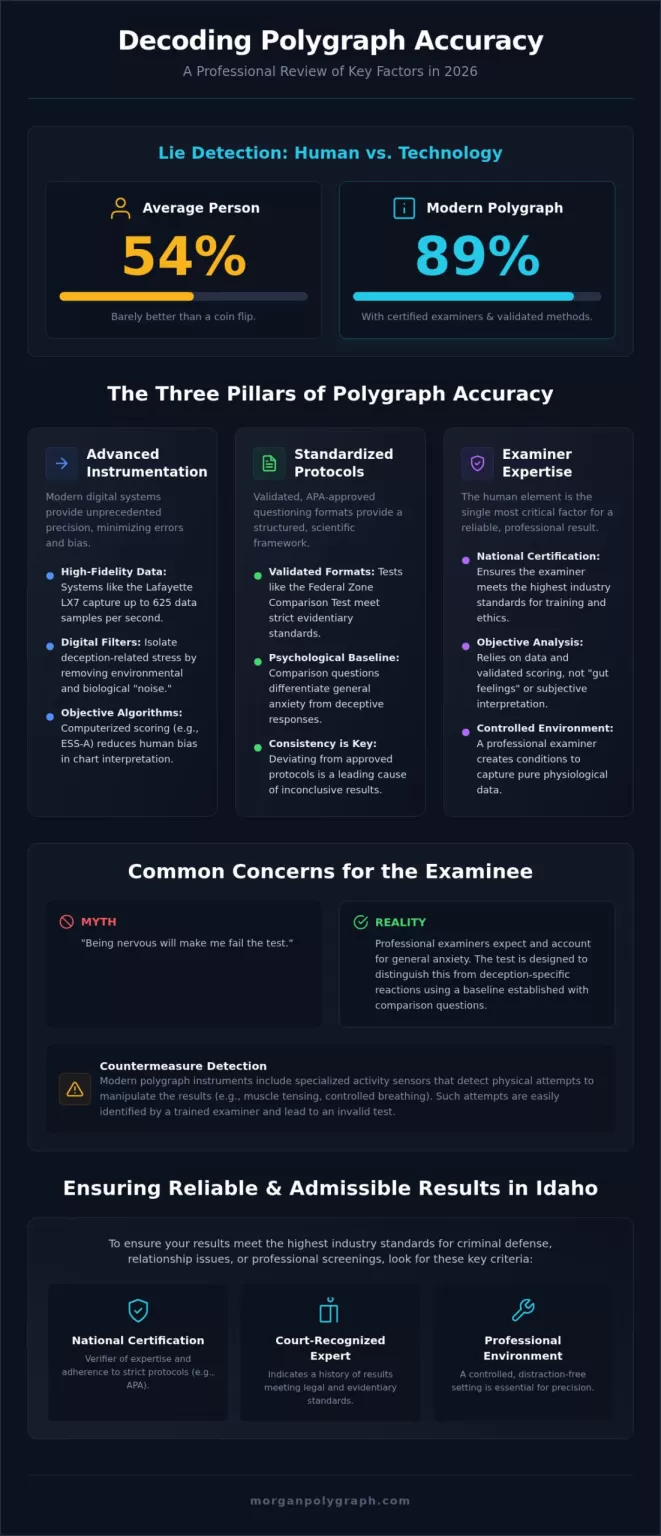
Did you know that while the average person detects lies only 54% of the time, a modern, computerized polygraph can reach an accuracy rate of 89%? It’s a significant difference, yet many people still fear that a racing heart or a sudden bout of anxiety will lead to a false accusation. You aren’t alone in feeling that way. The science behind these tests can feel opaque and intimidating, especially when your reputation or career is on the line.
In this professional review for 2026, we’ll demystify the various factors affecting polygraph accuracy so you can approach your appointment with confidence. You’ll learn how specialized training and state-of-the-art instruments like the Lafayette LX7 minimize errors. We also cover how medications and health conditions influence sensor data and what you should look for when selecting a court-recognized examiner in Idaho. By the end of this guide, you’ll understand exactly what determines a reliable outcome and how to prepare yourself for the most precise reading possible.
Key Takeaways
- Learn why national certification and examiner expertise are the most critical components for a reliable, professional result.
- Discover how modern digital instrumentation and standardized protocols are primary factors affecting polygraph accuracy in 2026.
- Understand why being naturally nervous won’t cause a failed test and how professional examiners account for your unique health profile.
- Find out how specialized activity sensors detect physical countermeasures and why a controlled, professional environment is essential for precision.
- Gain clear criteria for selecting court-recognized experts in Idaho to ensure your results meet the highest industry standards.
The Three Pillars of Polygraph Accuracy: Instrumentation, Protocol, and Expertise
Accuracy is defined as the measure of a test’s ability to correctly identify both deceptive and truthful subjects. It isn’t a static number but a result of rigorous scientific application. When we discuss the Polygraph, we’re looking at a diagnostic tool that relies on three specific pillars: high-fidelity instrumentation, validated questioning protocols, and the specialized expertise of the examiner. If any of these pillars are weak, the reliability of the entire examination is compromised.
Understanding the primary factors affecting polygraph accuracy requires looking beyond the sensors themselves. It’s about the synergy between the examinee’s psychology and the examiner’s methodology. A professional examiner doesn’t just read charts; they create a controlled environment where physiological data can be captured without the interference of external stress or technical “noise.” This methodical approach ensures that the data reflects genuine physiological responses rather than environmental artifacts.
Advanced Digital Instrumentation in 2026
The transition from analog ink-charts to modern computerized systems has revolutionized the field. In 2026, instruments like the Lafayette LX7 capture high-resolution physiological data with unprecedented precision. These systems monitor respiration, galvanic skin response (GSR), and blood volume changes through multiple channels, some offering sampling rates up to 625 samples per second. Digital filters in 2026 hardware isolate deception-related stress by removing environmental interference and unrelated biological tremors.
This technological leap allows for the use of advanced computerized scoring algorithms, such as the Empirical Scoring System (ESS-A). These algorithms provide an objective layer of analysis, reducing the potential for human bias in chart interpretation. By minimizing data “noise,” these sensors ensure that the final reading is based on clear, high-fidelity biological signals rather than ambiguous artifacts. This precision is a cornerstone for any professional review of the industry’s current capabilities.
Standardized Testing Protocols
Even the best equipment fails without a validated roadmap. Standardized questioning protocols, such as the Federal Zone Comparison Test, are essential for valid results. These formats are developed and vetted by the American Polygraph Association (APA) to ensure they meet strict evidentiary standards. A core component of these protocols is the use of “Comparison Questions.” These are designed to create a psychological baseline for the examinee, allowing the examiner to contrast responses to relevant questions against a controlled reaction.
- Validated protocols provide a structured framework for data collection.
- Comparison questions help differentiate between general anxiety and specific deception.
- Deviations from APA-approved formats are the leading cause of inconclusive results.
When an examiner follows these rigorous steps, the test moves from a subjective interview to a data-driven forensic examination. Adherence to these protocols is one of the most significant factors affecting polygraph accuracy, as it prevents the introduction of procedural errors that could skew the final results.
The Examiner Factor: How Professional Certification Impacts Reliability
Sophisticated hardware captures biological data, yet the human element remains the most significant of the factors affecting polygraph accuracy. An examination in 2026 isn’t simply a matter of attaching sensors; it’s about the examiner’s ability to interpret complex physiological waveforms in a controlled environment. This process requires a deep understanding of human psychology and forensic methodology. A National Research Council review emphasized that the quality of the examiner’s training and their strict adherence to protocol are fundamental to the test’s validity. Without a certified professional, the data lacks the necessary context to be considered a reliable forensic tool.
Professional examiners in Idaho serve as neutral, objective observers who don’t rely on intuition or subjective “gut feelings.” Instead, they use validated scoring systems to analyze data with clinical precision. This expertise is particularly vital when handling high-stakes criminal defense or sensitive relationship testing. If you require clarity in a difficult situation, choosing a nationally certified examiner in Boise ensures your results are based on rigorous scientific standards rather than subjective interpretation.
Training and National Certification
National certification is the non-negotiable benchmark for reliability. The American Polygraph Association (APA) requires examiners to complete 30 hours of continuing education every two years to maintain their standing. This requirement ensures they stay current on the latest research and technological shifts. In Boise, court-recognized experts must also comply with the Idaho Polygraph Licensing Act. These high standards are reinforced by internal quality control measures, where professional firms employ peer reviews to verify that every chart is scored with absolute precision before a final report is issued.
Neutralizing Examiner Bias
A primary goal of a professional examiner is to neutralize “exam anxiety” before the first question is ever asked. This is achieved through a standardized pre-test interview. During this phase, the examiner ensures the subject fully understands the process and the specific phrasing of every question. This transparency reduces the biological “noise” caused by confusion or fear of the unknown. To further eliminate bias, modern firms utilize “blind scoring.” In this process, a second examiner reviews the charts without knowing the background of the case, providing a purely data-driven second opinion. This methodical approach is essential for ensuring that external biases do not become factors affecting polygraph accuracy during high-stakes relationship or criminal testing.
Examinee Variables: Health, Stress, and the ‘Nervous’ Subject
One of the most misunderstood factors affecting polygraph accuracy is the emotional state of the subject. Many individuals fear that simply being “naturally nervous” will lead to a failed exam. This is a misconception. Professional polygraphy doesn’t measure nervousness in a vacuum; it measures physiological shifts away from a stable baseline. Nervousness is usually a constant throughout the process. Deception, however, produces a distinct, episodic change in the autonomic nervous system that a trained examiner can isolate from general anxiety.
Physical health and external stressors also play a role in how data is collected. Chronic pain, for example, can create “noise” in the physiological readings, as the body’s reaction to discomfort might mask or mimic the signals of deception. Similarly, acute fatigue or sleep deprivation can dampen the body’s reactivity, making the charts harder to read. These medical variables are critical factors affecting polygraph accuracy because they directly influence the heart rate, sweat gland activity, and respiratory patterns the machine is designed to track.
Distinguishing Anxiety from Deception
This emphasis on physiological and health-based compliance is common in other high-stakes environments across the country, such as the drug and health screenings conducted by the Miami CDL/DOT Physical Exam Center for commercial transportation professionals.
Examiners use the “Psychological Set” theory to ensure the subject’s brain focuses on the correct stimuli. This theory suggests that an individual will respond most intensely to the questions that pose the greatest threat to their immediate interests. For a truthful person, the “threat” is often the comparison questions, while the deceptive person focuses on the relevant ones. To calibrate the equipment to a person’s specific anxiety levels, examiners in Boise use an “acquaintance test.” This preliminary step demonstrates how the sensors react to the subject’s unique physiology, allowing the examiner to adjust the sensitivity of the instruments before the actual testing begins. This methodical approach ensures that your natural temperament doesn’t skew the final report.
Medical and Physiological Considerations
Your internal chemistry is just as important as your external behavior. Medications that affect the heart rate or the central nervous system, such as beta-blockers, stimulants, or heavy sedatives, must be disclosed during the pre-test interview. These substances can alter the autonomic responses that the polygraph monitors. Professional examiners at our W. State Street office conduct a comprehensive health screening to determine if any conditions, such as severe respiratory issues or PTSD, might interfere with the test’s validity. A subject must be in a ‘fit for test’ state, characterized by adequate rest and the absence of acute physical distress, to ensure the validity of the captured physiological data.
While the Department of Justice position highlights the investigative limitations of the tool in federal criminal contexts, its reliability in private and civil matters depends heavily on this physiological readiness. If a subject is too ill or exhausted to provide a clear baseline, a responsible examiner will postpone the session rather than risk an inconclusive or inaccurate result. This commitment to subject health is what separates a professional forensic firm from a generic “lie detector” service.
Environmental Factors and Countermeasure Detection
Technical specifications and examiner credentials are vital, but the physical space where an exam occurs is one of the most overlooked factors affecting polygraph accuracy. A professional examination requires a neutral, clinical environment to ensure that physiological data remains pure. External noise, sudden temperature shifts, or even visual clutter can create “artifacts” in the data, leading to inconclusive results or misleading spikes in heart rate and respiration. By controlling these variables, we ensure that every physiological response recorded is a direct reaction to the questioning, not a reaction to a slamming door or a flickering light.
Our dedicated Boise office is designed specifically to eliminate these external stressors. We provide a quiet, professional atmosphere where the examinee can focus entirely on the process. If you require a test that meets the highest forensic standards, we recommend you schedule your session at our Boise facility to ensure environmental variables don’t compromise your results.
The Controlled Testing Environment
Eliminating distractions is about more than just peace and quiet; it’s about psychological focus. In an improvised or “on-site” location, the examinee’s mind may wander to their surroundings, which introduces “noise” into the autonomic nervous system. A professional setting provides a consistent baseline. The physical layout of our W. State Street office is methodical and organized, designed to put the subject at ease while maintaining the necessary professional distance. This controlled atmosphere, supported by the same high-quality essentials found at Mega Office Supplies, is essential for capturing the high-resolution data required for modern computerized scoring algorithms to function correctly.
A common concern is whether someone can “fool” the test using physical movements or mental tricks. In 2026, this is nearly impossible for an untrained subject. Modern polygraph systems utilize specialized “activity sensors,” including motion-sensitive seat pads and limb sensors, to detect even the slightest muscle tensing or breathing changes. These sensors identify non-natural physiological patterns that indicate an attempt to manipulate the outcome. To understand the technology behind these sensors, you can read our detailed guide on how polygraphs work.
Attempting to use countermeasures is often the most frequent reason for a “Deception Indicated” result. When a subject tries to artificially inflate their response to a comparison question, the resulting physiological signature is distinct and easily recognized by algorithmic scoring. The pre-test interview also serves a psychological purpose here. By explaining how the sensors work, the examiner often deters the subject from attempting to cheat, as the subject realizes their efforts will be detected. This transparency is one of the key factors affecting polygraph accuracy, as it encourages genuine cooperation and produces clearer, more reliable charts.
Ensuring Admissibility: The Role of Court-Recognized Experts in Idaho
The ultimate value of a test in the Idaho legal system depends on the examiner’s standing within the professional community. Selecting an expert recognized by Idaho courts and law enforcement ensures that the results carry the necessary weight during negotiations. While we’ve discussed the biological and technical factors affecting polygraph accuracy, the legal application of this data is where precision meets consequence. A high-quality report from a nationally certified examiner can be a decisive tool for defense attorneys in Boise when seeking plea deals or case dismissals.
The question of are polygraphs accurate enough for the courtroom is often addressed through stipulations. In Idaho, if both the prosecution and defense agree to the testing beforehand, the results may become admissible. This collaborative approach relies entirely on the credibility of the practitioner. For specialized cases involving the idaho sex offender registry, examiners must strictly follow specialized state-recognized guidelines for sex offender testing. Post-Conviction Sex Offender Testing (PCSOT) is a mandatory component of supervision, and accuracy is vital for maintaining compliance with registry requirements.
Legal Standards and Admissibility in Boise
Idaho law differentiates between stipulated and non-stipulated examinations. In many Boise criminal cases, defense counsel uses a private polygraph as a preliminary investigative tool. If the results are favorable, they may present them to the prosecutor to demonstrate their client’s truthfulness or to negotiate a more favorable outcome. This strategic use of polygraphy requires an examiner who can provide expert testimony and detailed, professional reports that withstand rigorous scrutiny. Our firm provides the methodical documentation and authoritative presence required for such high-stakes legal environments.
Choosing the Right Boise Polygraph Service
Credibility in the Boise legal community isn’t built overnight; it’s the result of decades of consistent, ethical practice and a deep understanding of local standards. When the stakes involve your freedom or reputation, the physical environment of the exam matters just as much as the credentials on the wall. Our firm maintains a dedicated, professional office at 6126 W. State Street, providing the controlled setting necessary for valid forensic data collection. This stability is one of the primary factors affecting polygraph accuracy, as it ensures the examinee remains focused and the data is free from external interference.
Securing a reliable result requires a practitioner who understands the nuances of Idaho’s legal landscape. Whether you are dealing with a civil litigation matter or a criminal defense case, the quality of the examiner is the final safeguard for the test’s integrity. If you’re ready to move forward with a professional assessment, you can find a certified polygraph near me by scheduling a consultation at our Boise office.
Securing Clarity Through Professional Precision
Polygraphy in 2026 is a sophisticated forensic process built on data integrity and standardized methodology. We’ve explored how the three pillars, instrumentation, protocol, and expertise, work in tandem to provide reliable results. By understanding the various factors affecting polygraph accuracy, you can approach your examination with the calm confidence necessary for a successful outcome. Whether you’re navigating a sensitive relationship issue or a complex legal defense, the quality of your examiner is the single most important variable in the equation.
At Morgan Polygraph, we provide a methodical and compassionate environment designed to deliver the truth with absolute discretion. Our nationally certified examiners utilize state-of-the-art technology and offer court-recognized expert testimony to ensure your results meet the highest standards of reliability. Our confidential and discreet Boise office is specifically equipped to handle your most sensitive concerns with the professional respect you deserve.
Contact Morgan Polygraph in Boise to schedule a professional, court-recognized examination today. You deserve a process that provides the clarity and peace of mind needed to move forward with your life.
Frequently Asked Questions
Can being extremely nervous cause me to fail my polygraph test?
Being extremely nervous won’t cause you to fail. Examiners distinguish between general anxiety and the specific physiological spikes associated with deception. Your nervousness usually stays constant throughout the test, creating a steady baseline. Deception produces episodic shifts that are distinct from this background noise. A professional pre-test interview also helps stabilize your emotions so the captured data remains clear and objective.
How accurate are polygraph tests in 2026 compared to older models?
Modern polygraph examinations in 2026 are significantly more precise than older analog versions. Current digital systems like the Lafayette LX7 use high-resolution sensors and validated scoring algorithms to reach an aggregated accuracy of 87% to 89% for single-issue tests. These technological advancements are primary factors affecting polygraph accuracy, as they eliminate the subjective interpretation errors common with manual ink-chart reading from decades ago.
Do medications like blood pressure pills or anti-anxiety meds affect the results?
Medications that influence the central nervous system or cardiovascular system can alter your physiological responses. Blood pressure pills, beta-blockers, and anti-anxiety medications may dampen the body’s reactivity, which can lead to inconclusive results. It’s essential to provide a complete list of your current prescriptions during the pre-test health screening. This allows the examiner to properly calibrate the sensors to your medicated physiological state.
Can a person with a heart condition or a pacemaker take a polygraph?
Individuals with heart conditions or pacemakers can typically undergo an examination, but the examiner must be informed beforehand. These conditions may affect the cardiovascular channel’s data, requiring the professional to rely more heavily on respiratory and galvanic skin response channels. In some cases, a medical clearance from your physician may be requested to ensure you are fit for the stress of the testing environment.
How do examiners detect if someone is trying to ‘cheat’ or use countermeasures?
Examiners utilize specialized activity sensors to identify physical countermeasures. Motion-sensitive seat pads and limb sensors detect subtle muscle contractions or shifts in posture that a subject might use to manipulate the readings. Additionally, modern computerized scoring algorithms are trained to recognize non-natural physiological patterns. These sophisticated tools are essential factors affecting polygraph accuracy because they protect the integrity of the test against deliberate attempts to cheat.
What happens if my polygraph result is ‘Inconclusive’?
An “Inconclusive” result occurs when the captured physiological data is not distinct enough to support a definitive opinion of truthfulness or deception. This result isn’t a failure; it simply means the charts are unreadable. Common causes include extreme physical fatigue, illness, or the influence of certain medications. If your test is inconclusive, a re-test may be scheduled once the underlying cause, such as a lack of sleep, is addressed.
Are polygraph results admissible in Boise, Idaho courts?
In Boise and throughout Idaho, polygraph results are generally inadmissible as evidence in court. However, there is a significant exception for stipulated examinations where both the prosecution and defense agree to the testing in writing. Even when not used in trial, these results are frequently employed during pre-trial negotiations, internal investigations, and as part of mandatory compliance for the Idaho sex offender registry.
Does the examiner’s personality or tone affect the accuracy of the test?
The examiner’s professional tone is critical for maintaining an objective environment. An overly aggressive or accusatory tone can introduce unnecessary stress, which may lead to erratic physiological data. A seasoned expert maintains a neutral, respectful, and clinical demeanor to ensure the subject remains focused on the questions. This professional distance prevents examiner bias from skewing the results and ensures the final report is based purely on data.