
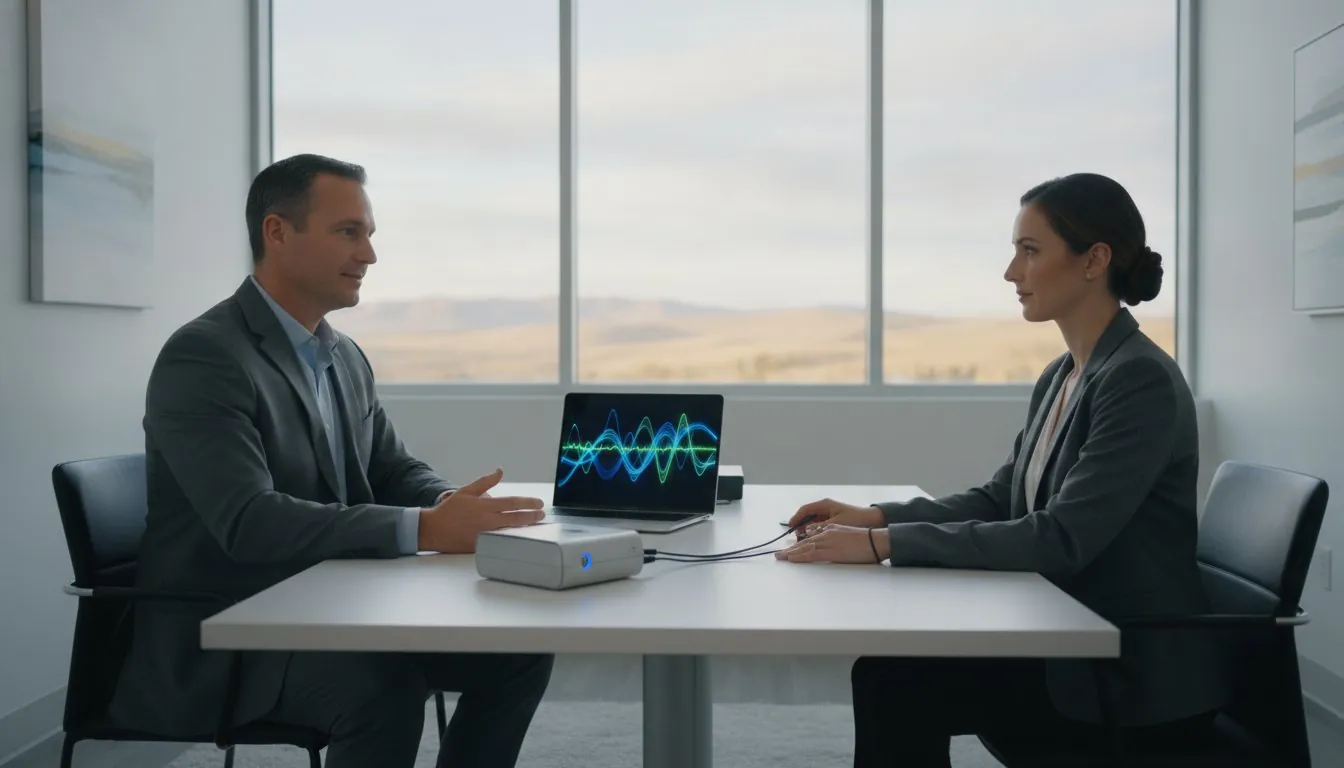
What if the key to uncovering the truth wasn’t about reading your mind, but rather understanding the silent language of your nervous system? Most people feel a surge of anxiety at the mere thought of a lie detector test. You might worry that your natural nerves will be mistaken for guilt or wonder exactly how does a polygraph work when faced with high-stress questions. These concerns are valid, especially when sensitive personal or legal matters are at stake and you require a process that is both fair and methodical.
In this article, you’ll discover the physiological mechanisms and expert methodologies that allow professional polygraphs to identify truth and deception. We’ll move past common skepticism to explain the data-driven techniques that allow nationally certified examiners to interpret biological signals with precision. We will provide a clear breakdown of the specific biomarkers measured by state-of-the-art digital systems, the rigorous protocols that ensure fairness, and the steps you can take to prepare yourself mentally for a calm, transparent process conducted in a professional environment.
Key Takeaways
- Learn why the term “lie detector” is a misnomer and how these instruments actually record autonomic nervous system activity related to stress and arousal.
- Discover the four pillars of physiological measurement to understand exactly how does a polygraph work during a professional examination.
- Understand the critical role of a nationally certified examiner in interpreting complex data and maintaining a fair, methodical environment.
- Explore the three distinct phases of the examination process, including why the pre-test interview is the most vital step for accurate results.
- Gain insights into court-recognized testing standards in Boise, Idaho, for specialized needs such as criminal defense or relationship verification.
What is a Polygraph? The Science of Physiological Stress
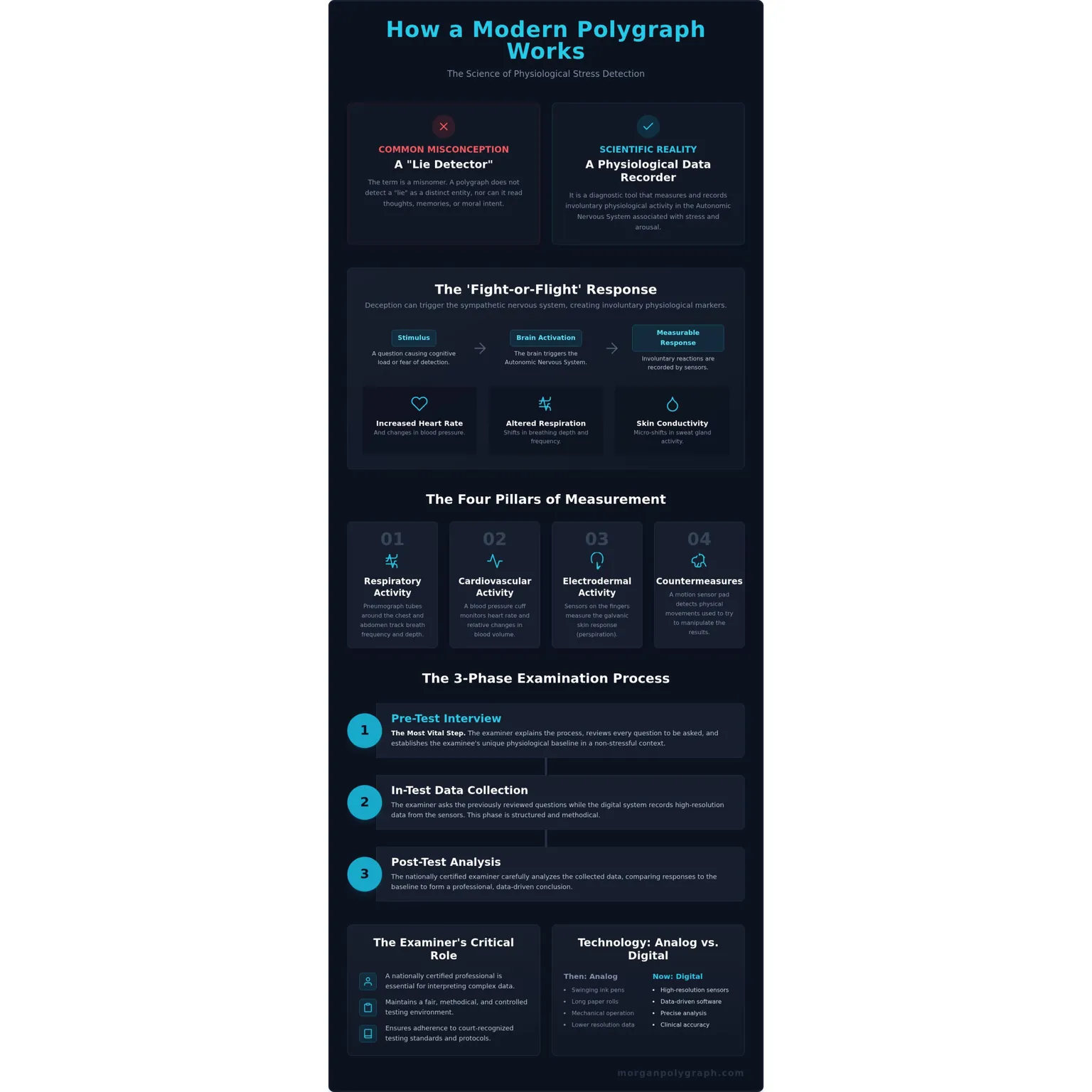
A Polygraph is a diagnostic tool designed to record activity within the autonomic nervous system. While pop culture often uses the term “lie detector,” this is technically a misnomer. The instrument doesn’t detect a “lie” as a distinct physical entity. Instead, it measures physiological shifts associated with fear, anxiety, and cognitive arousal. When asking how does a polygraph work, it’s best to view it as a sophisticated biological sensor that captures the body’s internal reaction to specific stimuli.
Traditional analog machines, once recognizable by their swinging ink pens and long rolls of paper, have largely been phased out. Modern examiners now utilize state-of-the-art digital systems. These innovative tools convert physiological signals into high-resolution data points, allowing for a more precise and data-driven analysis. This transition from mechanical to digital has improved the clarity of the recorded biomarkers, ensuring that every subtle shift in heart rate or skin conductivity is captured with clinical accuracy.
The Fight-or-Flight Response
When a person chooses to be deceptive, the brain often triggers the sympathetic nervous system. This is the fight-or-flight response. It’s an involuntary reaction that prepares the body for a perceived threat. During an examination, this response manifests as measurable changes in several areas:
- Increased heart rate and blood pressure.
- Changes in respiratory patterns and depth of breath.
- Micro-shifts in sweat gland activity, known as galvanic skin response.
Because these reactions are governed by the autonomic nervous system, they are exceptionally difficult for the average person to suppress or manipulate. The cognitive load required to maintain a falsehood often generates a distinct physical stress marker that digital sensors identify. It’s this involuntary nature that makes the data so valuable for forensic assessment.
Debunking the ‘Mind Reading’ Myth
There is a persistent belief that polygraphs can peer into a person’s thoughts or determine their moral character. This isn’t true. The polygraph is a recorder of physiological data, not a moral judge. It cannot see intent, specific memories, or the “content” of a thought. Instead, it provides a window into how the body reacts to the stress of specific questioning. Understanding how does a polygraph work requires recognizing that the results depend on a structured, controlled environment. By isolating the examinee from external distractions, the examiner ensures that the recorded data reflects internal physiological states rather than outside noise.
The Four Pillars of Measurement: How the Components Work
To understand how does a polygraph work in a modern forensic setting, one must look at the specific hardware that bridges the gap between biological stress and digital data. A professional examination utilizes four primary non-invasive sensors to monitor autonomic activity. These sensors don’t just provide a snapshot of the body; they stream high-resolution data into a digital system that displays results in real-time. This allows a trained examiner to observe physiological fluctuations as they occur in response to specific questions.
A methodical approach is required to ensure these results are fair and accurate. Before the actual questioning begins, the examiner establishes a baseline measurement. This “normal” state accounts for the natural anxiety most people feel when being tested. By comparing subsequent responses against this unique baseline, the examiner can isolate significant physiological shifts from general nervousness. This is consistent with what psychological science says about polygraphs and the necessity of controlled environments. For those seeking this level of technical precision in Boise, Morgan Polygraph utilizes these advanced protocols to ensure every examination is conducted with the highest degree of professional integrity.
Respiratory and Cardiovascular Monitoring
The first two pillars of measurement involve the chest and the arm. Pneumograph tubes are placed around the examinee’s chest and abdomen to measure respiratory activity. These sensors track the frequency and depth of each breath, as deceptive responses often correlate with subtle “breath-holding” or shallow respiration. Simultaneously, a blood pressure cuff monitors heart rate and relative changes in blood volume. Even a micro-shift in pulse can indicate a significant physiological reaction. Because the heart and lungs are so closely tied to the autonomic nervous system, these channels provide a foundational view of the examinee’s internal state.
Electrodermal Activity (EDA) and Skin Conductivity
The third and fourth pillars focus on the fingertips, where Galvanic Skin Response (GSR) sensors are attached. These sensors measure Electrodermal Activity, or the microscopic sweat gland activity on the skin’s surface. EDA is often considered the most sensitive indicator of psychological arousal because it’s entirely involuntary. The digital system detects “micro-sweat” responses that are invisible to the naked eye but highly indicative of a stress reaction. By requiring all four channels of data to form a conclusion, the process ensures that a single outlier doesn’t skew the results, providing a comprehensive and data-driven assessment of truthfulness.
The Role of the Examiner: Why the Machine is Only Half the Story
While the hardware captures physiological signals, the practitioner transforms those signals into a forensic conclusion. A common misconception is that the device itself makes a “pass” or “fail” determination. In reality, the examiner is responsible for the entire diagnostic process. This is why national certification and continuous education are mandatory for professionals in this field. Understanding how does a polygraph work requires shifting focus from the sensors to the specialist who interprets the data.
Distinguishing between general anxiety and deceptive arousal is perhaps the most critical skill an examiner possesses. Most examinees are nervous, regardless of their truthfulness. A court-recognized expert in Idaho uses validated protocols to separate this baseline “noise” from the specific physiological spikes that occur when a person attempts to conceal information. These ethical standards ensure that the process remains objective and fair, particularly in high-stakes criminal defense or PCSOT cases. The machine is secondary. The expertise of the human examiner is the primary factor in a reliable result.
Structured Questioning Techniques
Professional examiners rely on scientifically validated questioning methods, such as the Comparison Question Technique (CQT) or the Relevant-Irrelevant Test. These structures are designed to ensure the examinee fully understands the scope of every question before the sensors are even activated. During a professional polygraph examination, “surprise” questions are never used. Unexpected queries would cause a natural startle response, which would contaminate the data and make it impossible to distinguish between shock and deception. Every question is reviewed in advance to maintain the integrity of the controlled environment.
Data Interpretation vs. Subjective Bias
To prevent subjective bias, modern examiners use standardized numerical scoring systems to analyze charts. This methodical approach ensures that the final report is based on data patterns rather than gut feelings or behavioral observations. Peer review also plays a vital role in the process, as complex cases are often reviewed by other certified experts to confirm the accuracy of the findings. Examiners look for consistent patterns of physiological reaction across multiple charts, not isolated spikes. This commitment to data-driven analysis is what separates a professional forensic process from a simple interview. It’s about identifying a repeatable biological signature that points toward the truth.
The Examination Process: What Happens During a Polygraph Test
A professional polygraph appointment is a methodical, multi-stage process that typically spans two to three hours. While the actual recording of physiological data takes only a fraction of that time, the surrounding phases are what ensure the integrity of the final findings. To fully grasp how does a polygraph work, one must view it as a comprehensive forensic procedure rather than a simple machine reading. Every step is designed to isolate truth from the noise of natural human anxiety.
The process is conducted in a quiet, distraction-free environment at our Boise facility. This controlled setting is vital. It minimizes external stimuli that could trigger false physiological spikes, allowing the examiner to focus entirely on the examinee’s internal responses. Once the session concludes, the results are communicated clearly to the client or their legal representative. This post-test discussion provides a transparent overview of the data and the examiner’s expert conclusion, ensuring all parties understand the basis for the findings.
The Pre-Test Interview Phase
The pre-test interview is the most time-consuming and critical part of the entire examination. During this phase, the examiner reviews the specific facts of the case and explains the technology in detail. This transparency is designed to lower “innocent” anxiety by removing the fear of the unknown. A collaborative effort follows where the examiner and examinee develop the exact wording of every question. No question is ever asked during the test that hasn’t been reviewed and agreed upon beforehand. This eliminates ambiguity and ensures that any physiological reaction is a direct response to the content of the question, not a misunderstanding of its scope.
The In-Test and Post-Test Phases
During the in-test phase, the actual data collection occurs. The examiner runs the question sets multiple times, creating several “charts” to ensure consistency across the session. Consistency is the hallmark of a reliable result. The examinee is instructed to remain perfectly still and follow specific breathing patterns. This is necessary because physical movement or irregular breathing can contaminate the digital sensors. Once the charts are complete, the examiner moves to the final analysis. By applying standardized scoring to the recorded patterns, the examiner reaches a conclusion of either “Deception Indicated” (DI) or “No Deception Indicated” (NDI). If you are currently involved in a legal or personal matter, you can schedule a professional examination to ensure your case is handled with this level of forensic precision.
Professional Polygraph Services in Boise, Idaho
Choosing a polygraph provider is a decision that requires careful consideration of both technical proficiency and ethical standing. For residents of the Treasure Valley, understanding how does a polygraph work within the specific framework of Idaho law is essential. Morgan Polygraph provides a professional, court-recognized resource for those navigating complex legal or personal situations. Our Boise-based practice is built on a foundation of transparency, utilizing the latest digital technology to deliver results that meet the highest forensic standards.
Legal and Court-Recognized Standards
In the legal arena, the qualifications of the examiner are often as significant as the data itself. We work closely with defense attorneys in both criminal and civil proceedings to provide objective insights that can be used as legal leverage. Our examiners are nationally certified and adhere to the rigorous training standards of the American Polygraph Association, which requires a minimum of 400 hours of specialized instruction. This level of expertise is particularly vital for Post-Conviction Sex Offender Testing (PCSOT).
In Idaho, the Sexual Offender Management Board (SOMB) maintains specific requirements for examiners conducting these specialized tests. We maintain the necessary certifications to support the judicial system and the department of corrections in these high-stakes cases. When a person’s freedom or reputation is on the line, the methodical application of validated protocols ensures that the process remains fair and the results are defensible in a court of law.
Discreet Testing for Private Matters
Beyond the courtroom, we provide clarity for individuals facing sensitive personal challenges. We understand that requesting an infidelity test is an emotionally taxing experience. Our approach is defined by compassion, neutrality, and a commitment to absolute privacy. We conduct all examinations in a professional office environment, which provides a level of focus and clinical accuracy that home-based testing cannot match. This controlled setting is a key part of how does a polygraph work to reduce the stress of the examinee and isolate true physiological responses.
Every client is treated with the utmost respect, regardless of the nature of the inquiry. We provide a calm, structured atmosphere where the truth can be established without judgment. If you require professional verification for a legal case or personal peace of mind, we are here to guide you through the process with expert care. Contact Morgan Polygraph in Boise to schedule a confidential consultation and take the first step toward resolution.
Establishing Clarity Through Scientific Precision
Establishing the truth requires more than just advanced hardware. It demands a methodical approach that respects both the science of physiological stress and the dignity of the individual being tested. By understanding how does a polygraph work, you can approach the process with confidence, knowing that every sensor and questioning technique is designed to isolate objective data from natural anxiety. This forensic process transforms involuntary biological signals into a clear, data-driven narrative that provides resolution for legal, professional, or personal matters.
Morgan Polygraph brings over 20 years of combined experience to the Boise community. Our nationally certified examiners utilize state-of-the-art digital technology to ensure every session is conducted with the highest degree of accuracy and discretion. Whether you’re navigating a complex legal case or seeking relationship clarity, our professional environment is designed to minimize stress and prioritize transparency. You don’t have to face the unknown alone. Take the next step toward the answers you need and Schedule a Professional Polygraph Exam in Boise today. We are committed to helping you move forward with confidence and peace of mind.
Frequently Asked Questions
How accurate is a polygraph test in 2026?
Modern examinations are widely recognized for their high degree of reliability when conducted by nationally certified experts. While no forensic tool is 100% accurate, the use of state-of-the-art digital technology has significantly reduced the margin of error compared to older analog systems. Accuracy depends heavily on the examiner’s skill and the specific protocols used. We follow American Polygraph Association standards to ensure every result is as precise and data-driven as possible.
Can you fail a polygraph if you are just nervous?
You won’t fail simply because you’re nervous. It’s perfectly normal to feel anxious during a test. To account for this, the examiner begins by establishing a baseline of your physiological activity. This “normal” state is used to distinguish between general nerves and the specific spikes associated with deception. Understanding how does a polygraph work helps you realize that the process isolates stress related to specific questions rather than overall anxiety.
How long does a typical polygraph examination take?
A typical professional examination takes between two and three hours. The actual time spent connected to the sensors is relatively short, usually about 15 to 20 minutes. The majority of the appointment involves the pre-test interview, case review, and question formulation. This thorough preparation is necessary to ensure you fully understand the process and to eliminate any potential for confusion or surprise during the actual data collection phase.
Is it possible to ‘beat’ a polygraph using countermeasures?
Attempting to use physical or mental countermeasures is generally ineffective and easily detected by modern digital systems. State-of-the-art sensors are designed to identify irregular breathing patterns or muscle movements intended to manipulate the data. Our examiners are trained to recognize these behavioral and physiological anomalies. If countermeasures are detected, the test may be terminated or the results will be reported as inconclusive, which often creates more complications for the examinee.
Are polygraph results admissible in Idaho courts?
In Idaho, polygraph results are generally inadmissible as evidence in court proceedings. However, they can be admitted if both parties agree to their use through a legal stipulation or at the specific discretion of a judge. Despite this general rule, polygraphs remain vital tools for defense attorneys in Boise to gain leverage during negotiations or to verify information during the pre-trial phase of criminal and civil cases.
What kind of questions are asked during an infidelity polygraph?
Infidelity examinations focus on specific, observable actions rather than feelings or vague intentions. Questions are formulated to be clear, “yes” or “no” queries that address the core concerns of the relationship. For example, a question might ask if you have had physical contact with a specific person outside of the relationship. Every question is reviewed and agreed upon during the pre-test interview to ensure there are no surprises or misunderstandings during the test.
What should I do to prepare for my polygraph appointment?
Preparation is simple but important for accurate results. You should get a full night’s sleep and eat a normal meal before your appointment at our Boise office. Avoid excessive caffeine or any substances that might abnormally alter your heart rate. Wear comfortable, loose-fitting clothing that allows the sensors to be placed easily. Most importantly, arrive with an open mind and a willingness to cooperate with the examiner’s instructions throughout the process.
Can medical conditions or medications affect the polygraph results?
Certain medical conditions and medications can influence physiological responses. This is why the pre-test interview includes a thorough review of your health history. You should disclose any heart conditions, respiratory issues, or medications you’re currently taking. A skilled examiner understands how does a polygraph work in the context of these variables and can often adjust the scoring or protocols to ensure the medical factors don’t lead to an inaccurate result.