

What if the clarity you need to move forward isn’t found in a hidden phone bill or a confrontation, but through a scientifically validated diagnostic tool? Living with the constant weight of suspicion is emotionally draining. The fear that you’re being lied to during every conversation can make reconciliation feel impossible. You deserve more than just a gut feeling. A professional polygraph test for cheating spouse provides an objective foundation to replace exhausting uncertainty with definitive facts. It’s a difficult step to take; however, it’s often the only way to break through the wall of silence that suspicion creates.
This guide explores how modern, state-of-the-art polygraph examinations offer the truth needed to begin the process of relationship recovery or find the closure you require. We’ll examine the 89% accuracy rate of single-issue examinations and address common concerns regarding legality and the testing process. By understanding the methodology behind these clinical exams, you can move toward a resolution with confidence. Whether the goal is to rebuild trust or part ways with certainty, professional testing ensures your private matters are handled with the discretion and expertise they deserve.
Key Takeaways
- Learn how a polygraph test for cheating spouse transitions your situation from exhausting emotional suspicion to objective, data-driven clarity.
- Understand the three-phase clinical process that monitors physiological responses to provide a highly reliable foundation for the truth.
- Discover how state-of-the-art technology and expert analysis identify and neutralize attempts to deceive the examination through countermeasures.
- Gain guidance on structuring specific, effective questions that avoid ambiguity and ensure the most accurate results for your concerns.
- Explore the benefits of seeking professional, discreet testing in Boise to ensure your private matters are handled with the highest level of confidentiality.
What is an Infidelity Polygraph Test for a Cheating Spouse?
A polygraph test for cheating spouse is a specialized psychophysiological examination designed to provide clarity when trust has eroded. Unlike a standard conversation, this process uses advanced technology to monitor physiological indicators. What is a polygraph test? At its core, it’s a method of recording changes in heart rate, blood pressure, respiration, and skin conductivity to determine the presence of deception. This shift from emotional suspicion to objective data-gathering is vital for couples who feel they’ve reached a dead end.
Many couples choose this path because communication has completely broken down. When one partner suspects infidelity but lacks concrete proof, the resulting cycle of accusation and denial creates a toxic environment. The goal isn’t simply to “catch” someone in a lie. Instead, it’s about establishing a foundation of transparency that allows both individuals to make informed decisions about their future. By moving the conversation from a “he-said, she-said” dynamic into a clinical setting, the focus shifts toward verifiable facts.
The Purpose of Relationship Transparency Testing
Resolving “gaslighting” is a primary motivator for many seeking an examination. This occurs when one partner is manipulated into doubting their own perceptions or memories. A professional examination provides the objective evidence needed to validate those perceptions or clear a spouse of false accusations. Therapeutic polygraphy is defined as a clinical tool used within a recovery framework to facilitate honest disclosure and emotional healing. It serves as a “baseline of truth” that marriage counselors often use to begin effective treatment. This transparency is often the only way to end the cycle of uncertainty and begin the work of rebuilding a fractured bond.
Why Professional Certification Matters
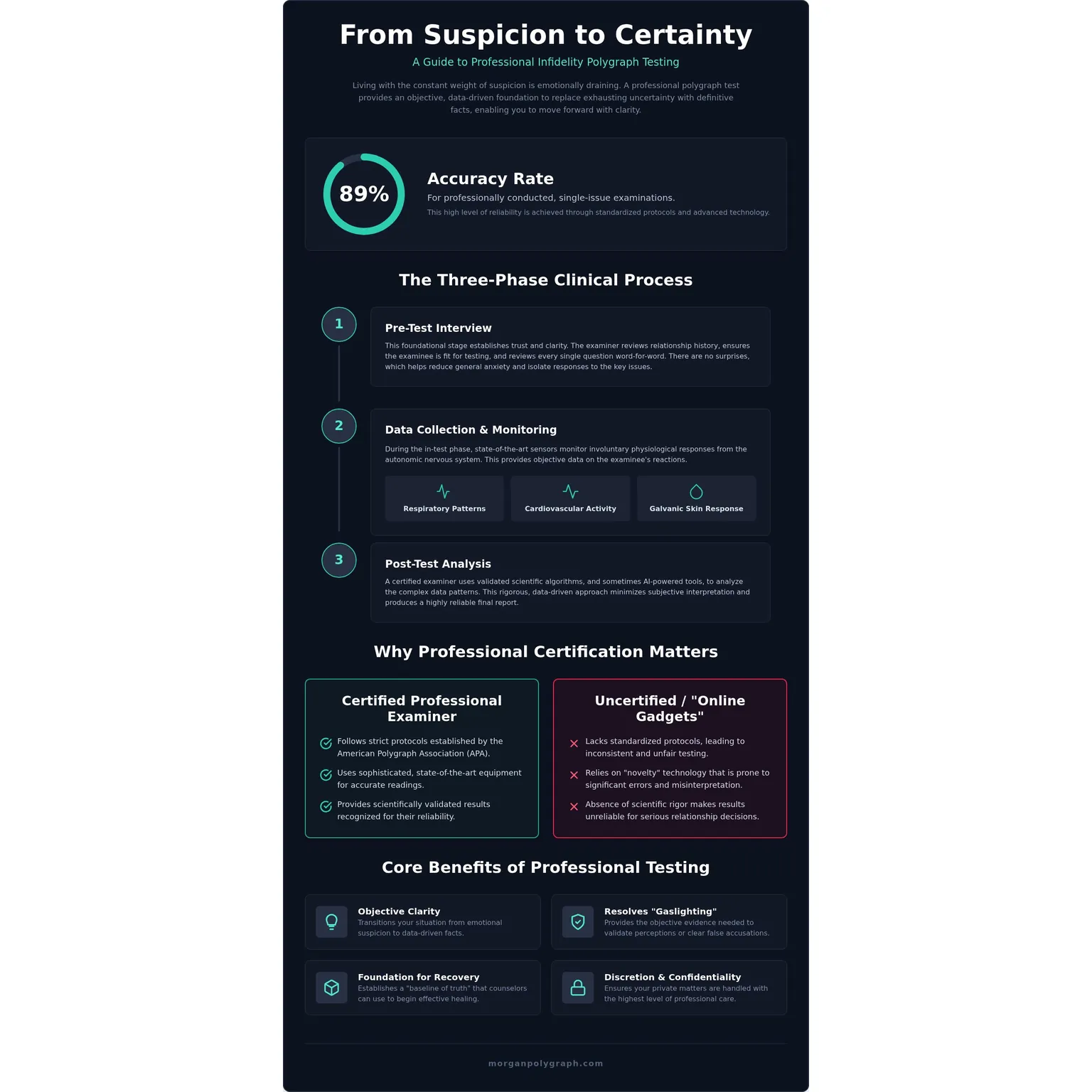
Accuracy depends entirely on the examiner’s skill and the equipment’s sophistication. There’s a significant difference between “online gadgets” and a certified professional. Nationally certified examiners follow strict protocols established by the American Polygraph Association (APA). These standards ensure the examination is conducted fairly, safely, and accurately. Relying on court-recognized experts in Boise ensures that your private matters are handled with the scientific rigor required for such sensitive issues. This professional oversight prevents the errors common in uncertified or “novelty” testing environments, ensuring the results are highly reliable and useful for relationship recovery.
How the Infidelity Lie Detector Process Works
The process of administering a polygraph test for cheating spouse is a highly structured, clinical procedure divided into three distinct phases: the pre-test interview, the data collection phase, and the post-test analysis. This methodical approach ensures that the results are based on objective data rather than subjective impressions. The examiner acts as a neutral, third-party observer throughout the entire session. This professional distance is necessary to maintain the integrity of the examination and ensure that both parties can trust the final report. Accuracy in these tests depends on a controlled environment and a standardized protocol.
The Pre-Test Interview Phase
The pre-test interview is the most critical stage for establishing clarity and trust. During this phase, the examiner reviews the relationship history and the specific allegations of infidelity. It’s also a time to ensure the examinee is physically and mentally fit for testing, as extreme fatigue or certain medical conditions could impact physiological readings. Every question that will be asked during the exam is reviewed word-for-word with the examinee beforehand. There are no surprise or “trick” questions. This transparency helps lower general anxiety and ensures that the responses recorded later are specific to the issues at hand. You can learn more about the official stance on polygraph testing to understand how these protocols maintain investigative standards.
Data Collection and Analysis
During the in-test phase, state-of-the-art technology monitors the autonomic nervous system. Sensors track respiratory patterns, galvanic skin response (sweat gland activity), and cardiovascular activity. The sensors include pneumographs for breathing, galvanometers for skin conductivity, and a blood pressure cuff. Modern equipment uses validated scientific algorithms and, in some cases, AI-powered tools to analyze these complex patterns. This data-driven approach minimizes human error and provides a highly reliable result. Once the data is collected, the examiner scores the charts using standardized methods to determine if the physiological responses indicate deception. If you are seeking a clear path forward, scheduling professional infidelity testing can provide the objective foundation you need for resolution.
The final phase is the post-test analysis and result delivery. The examiner reviews the charts a final time to ensure all data points are consistent before providing a definitive finding. This rigorous review process is what separates a professional examination from less reliable methods. By focusing on physiological facts, the test offers a path toward either reconciliation or closure, free from the exhaustion of constant doubt.
Accuracy and the ‘Can You Beat It?’ Myth
Can a person truly deceive a professional examiner? This is perhaps the most common concern for anyone considering a polygraph test for cheating spouse. Pop culture often portrays the “guilty” party successfully tricking the equipment using simple physical maneuvers. In reality, modern polygraphy is a sophisticated scientific discipline. Meta-analyses conducted by the American Polygraph Association (APA) indicate that single-issue examinations, which are standard for infidelity cases, maintain an accuracy rate of approximately 89%. This level of precision makes the exam a highly reliable tool for resolving deep-seated suspicions.
Deception is difficult to hide because the test monitors the autonomic nervous system, which governs involuntary bodily functions. While historical debates have questioned the scientific validity of polygraphs in broad, multi-issue security screenings, their application in specific, single-issue relationship cases remains a gold standard for truth verification. Modern examiners don’t just look at a single data point; they analyze a complex web of physiological responses that are nearly impossible to manipulate simultaneously.
Why Countermeasures Rarely Work
Countermeasures are intentional tactics used by an examinee to try and distort the physiological data. These might include physical movements, controlled breathing, or mental dissociation. However, state-of-the-art technology includes specialized sensors, such as motion-sensitive pads, designed specifically to detect these subtle movements. Furthermore, trained examiners are experts in behavioral observation. They can identify the “signatures” of countermeasures both in person and on the recorded charts. Because the equipment tracks things you can’t consciously control, like sweat gland activity and cardiovascular changes, attempts to “beat” the test usually result in clear indicators of manipulation that the examiner will immediately identify.
Understanding Inconclusive Results
It’s vital to distinguish between a “deceptive” result and an “inconclusive” one. Studies show that approximately 11% to 13% of examinations end in an inconclusive finding. This doesn’t mean the person lied or told the truth; rather, it means the physiological data wasn’t clear enough to make a definitive call. Factors like extreme physical exhaustion, certain medications, or acute illness can lead to these results. A professional examiner will never “guess” if the data is ambiguous. Instead, they’ll report the result as inconclusive and may suggest a retest at a later date when the examinee is in a more stable physical state. For a deeper dive into these metrics, see Are polygraphs accurate?
Preparing for the Exam: Questions and Protocols
A successful polygraph test for cheating spouse depends heavily on the preparation of the questions and the environment. This is a methodical process designed to ensure the physiological data is as clear as possible. Rather than an aggressive interrogation, the exam is a structured diagnostic session. Establishing the right protocols beforehand prevents ambiguity and helps the examinee understand exactly what to expect. Clear expectations reduce general anxiety, allowing the sensors to focus on specific responses to the core issues.
Most professional exams follow the “Rule of Three.” This principle suggests that focusing on three core issues yields the most reliable results. When an exam tries to cover too many unrelated topics, the physiological data can become cluttered and difficult to score. By narrowing the focus to the most critical concerns, the examiner can gather high-quality data that provides a definitive path forward. This focused approach is why professional testing is often more effective than informal confrontations.
Constructing Effective Infidelity Questions
The most effective questions focus on verifiable physical acts rather than subjective emotional states. For instance, asking “Do you still love your ex-partner?” is ineffective because “love” is an abstract emotion that can fluctuate. Instead, questions should address specific behaviors, such as “Have you had physical sexual contact with anyone other than your spouse since your wedding date?” This provides a clear “yes” or “no” framework that the autonomic nervous system can respond to accurately.
It’s also vital to avoid compound questions. A question like “Did you go to the hotel and meet that person?” contains two separate actions. If the examinee went to the hotel but didn’t meet the person, their physiological response may be confused, leading to an inconclusive result. Professional examiners work with you to refine these questions during the pre-test phase to ensure they are definitive and non-ambiguous.
Setting the Stage for Truth
The physical environment plays a significant role in the accuracy of the examination. A quiet, distraction-free room is necessary to ensure the sensors only record responses to the specific questions asked. External noises or interruptions can create “noise” in the autonomic nervous system data, potentially skewing the results. A professional office in Boise provides the controlled, clinical setting required for these sensitive tests.
For this reason, the requesting spouse cannot be in the room during the test. While it’s natural to want to witness the process, your presence can trigger emotional responses in the examinee that aren’t related to deception. Maintaining a clinical, neutral atmosphere is the best way to ensure the results are highly reliable. For more detailed preparation steps, you can review our Infidelity test guide. If you are ready to move forward with a professional examination, you can schedule an infidelity polygraph session today to begin the process of finding the truth.
Discreet Infidelity Testing in Boise, Idaho
For residents across the Treasure Valley, the decision to seek a polygraph test for cheating spouse is often a final effort to reclaim peace of mind. Local expertise matters in these high-stakes personal issues. Choosing a provider with a physical, professional office in Boise ensures a level of accountability and discretion that national referral services simply cannot provide. Morgan Polygraph operates with a commitment to a professional, non-judgmental environment. We understand the vulnerability involved in these cases. Our goal is to provide a calm, clinical setting where the truth can surface without the heat of a typical domestic confrontation.
Working with a court-recognized expert provides an added layer of confidence. When the results of an examination carry significant weight for your family’s future, the credentials of the examiner are not a minor detail. Our Boise office serves as a neutral ground where scientific rigor replaces emotional guesswork. This professional approach helps both parties feel that the process is fair and the results are highly reliable. By prioritizing privacy and specialized skill, we help you move from a state of exhausting uncertainty toward a clear, factual resolution.
The Morgan Polygraph Advantage in Idaho
Our office, located at 6126 W. State Street in Boise, offers a convenient and private location for residents from Eagle, Meridian, and the surrounding areas. Being nationally certified means our examiners adhere to the highest industry standards, ensuring every test is conducted with the latest validated protocols. This certification is vital because it guarantees the use of state-of-the-art technology and ethical questioning techniques. We don’t just provide a verbal “pass” or “fail.” We produce professional, detailed reports that are often used in therapeutic settings to help couples navigate the difficult path of relationship recovery. These documents provide a factual anchor for marriage counselors and therapists as they work with you to rebuild trust.
Next Steps: Moving Toward Clarity
Initiating the process doesn’t have to escalate existing conflicts. Many clients find that presenting the option of a professional examination as a tool for “clarity” rather than “punishment” helps facilitate cooperation. You can start by scheduling a confidential consultation to discuss your specific concerns and refine the questions for the exam. Once the test is complete, you’ll receive a formal written report detailing the physiological findings. This document serves as the objective foundation needed for your next steps, whether that involves reconciliation or seeking closure. If you’re currently searching and need help finding a polygraph near me, our Boise-based team is ready to provide the professional support you need to resolve your suspicions with certainty.
Reclaim Your Peace of Mind with Professional Clarity
Resolving deep-seated suspicions requires more than just intuition; it demands objective, verifiable facts. By choosing a professional polygraph test for cheating spouse, you move beyond the cycle of accusation and denial into a space of clinical certainty. We’ve explored how state-of-the-art technology and validated protocols provide the highly reliable data necessary for relationship recovery. Truth is the only foundation upon which trust can be rebuilt or closure can be found.
At Morgan Polygraph, we provide the expertise needed to handle these sensitive matters with the highest level of care. Our nationally certified examiners and court-recognized experts ensure that every session is conducted with scientific rigor. Located in our discreet and professional Boise office, we prioritize your privacy above all else. You don’t have to carry the burden of uncertainty alone any longer. The path to resolution begins with a commitment to transparency and professional oversight.
Take the first step toward a definitive resolution today. Schedule a Confidential Infidelity Polygraph in Boise to get the answers you deserve. You have the strength to find the truth and move forward with confidence.
Frequently Asked Questions
How much does a polygraph test for a cheating spouse cost?
The cost of a professional polygraph test for cheating spouse varies based on the complexity of the case and the time required for a thorough analysis. Factors such as the number of issues being tested and the specific protocols used by the examiner influence the final fee. Because Morgan Polygraph utilizes state-of-the-art technology and nationally certified experts, we provide a detailed quote following an initial consultation. This ensures the fee reflects the specific requirements of your unique situation.
Can my spouse refuse to take the lie detector test?
Yes, a polygraph examination is a voluntary procedure, and an individual cannot be legally compelled to participate in a private relationship setting. Consent is a fundamental requirement for a valid test. If a partner refuses, it’s often helpful to discuss the examination as a tool for clinical transparency rather than an interrogation. A voluntary agreement to participate ensures that the physiological data collected is as accurate and reliable as possible for relationship recovery.
How long does an infidelity polygraph examination take?
A standard infidelity polygraph examination typically requires two to three hours to complete. This timeframe includes the critical pre-test interview, the actual data collection phase, and the post-test analysis. We don’t rush the process; each phase is essential for ensuring the integrity of the results. The examiner spends significant time reviewing questions and ensuring the examinee is physically and mentally prepared, which helps maintain the highly reliable nature of the final findings.
Is a polygraph test for cheating admissible in court for a divorce?
In most jurisdictions, polygraph results are not automatically admissible as primary evidence in divorce or family court proceedings. However, they may be admitted if both legal parties provide prior written consent to include the findings. While the legal standing varies, many individuals use these professional reports within a therapeutic context or as a private foundation for making informed decisions. It’s advisable to consult with a legal professional regarding the specific rules in your local court system.
What happens if the polygraph results are inconclusive?
An inconclusive result occurs when the physiological data is not clear enough to support a definitive finding of deception or truthfulness. This is not a failure of the test but a clinical determination that the data is ambiguous. Factors like acute illness, extreme fatigue, or specific medications can lead to this outcome. In such cases, a professional examiner will explain the likely cause and may recommend a follow-up session once the physical interference is resolved.
Can anxiety or a ‘guilty conscience’ cause a false positive?
General anxiety or a “guilty conscience” does not typically cause a false positive result in a professionally administered exam. The polygraph test for cheating spouse monitors specific autonomic nervous system responses to directed questions, which are distinct from general nervousness. Trained examiners use baseline readings and control questions to differentiate between situational anxiety and the unique physiological signature of deception. This specialized methodology ensures that results remain highly reliable despite the stress of the situation.
How should I bring up the idea of a polygraph to my partner?
Approaching the topic with a focus on relationship healing rather than accusation often yields the best results. Frame the examination as a way to provide the objective clarity needed to stop the cycle of suspicion and begin rebuilding trust. Emphasizing that the process is handled by a discreet, third-party professional in Boise can also lower defensiveness. When the goal is presented as finding a path toward reconciliation, partners are often more willing to participate in the process.
Are the results of the infidelity test kept confidential?
Absolute confidentiality is a cornerstone of our professional practice at Morgan Polygraph. The results of an infidelity examination are only released to the individuals specified in the initial agreement. Our Boise office follows strict privacy protocols to ensure that your sensitive personal information and the final written report are handled with the utmost discretion. We understand the high stakes involved and maintain a secure environment to protect your private business throughout the entire process.