
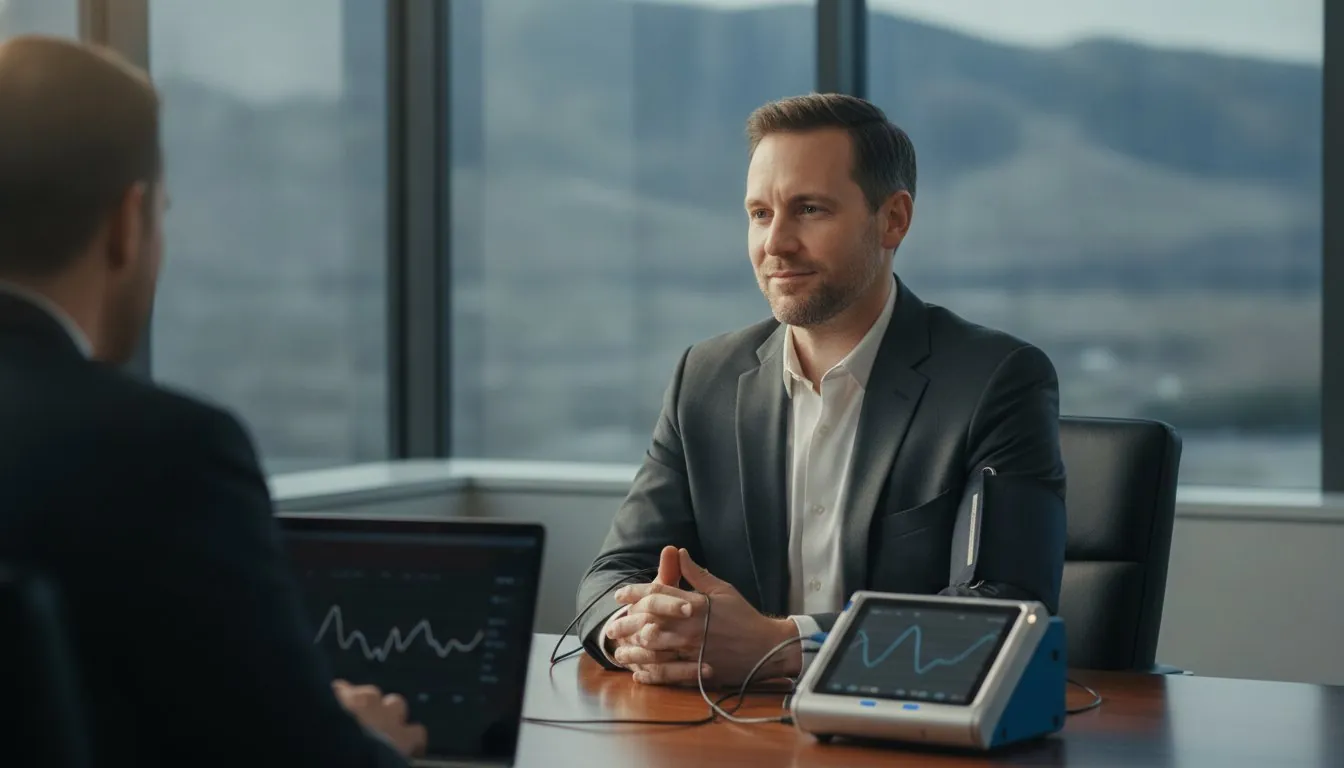
Last Tuesday, Mark discovered how quickly a few hours in a Boise interrogation room could lead to a statement he didn’t mean to sign. This sense of being trapped is a common fear for those facing the Idaho legal system without physical evidence to back up a retraction. An Ada County polygraph for false confession claims offers a path forward, transforming a “he-said, she-said” situation into a discussion centered on objective, physiological data. You’re likely worried that a jury won’t believe your story of coercion, but science provides a way to validate your experience.
We understand the immense pressure and fear that accompany a contested confession. You deserve a professional environment where your side of the story is measured with precision and discretion. This article explains how a certified polygraph examination provides the objective evidence needed to challenge false confession claims in Ada County legal proceedings. You’ll discover how state-of-the-art technology and evidence-based methods can help support a Motion to Suppress and provide the peace of mind you need during this difficult time.
Key Takeaways
- Learn how an Ada County polygraph for false confession claims serves as a critical objective tool to validate a retraction through scientific data.
- Understand the specific physiological markers and statement validity techniques used by certified examiners to analyze the truthfulness of a contested statement.
- Discover the “Confidentiality Advantage” of choosing a private, defense-oriented examination over an adversarial law enforcement polygraph.
- Identify the optimal timeline for scheduling a defense examination to maximize its impact on plea negotiations and Motions to Suppress.
- See why working with nationally certified, court-recognized examiners in Boise ensures your results meet the highest professional standards.
The Role of an Ada County Polygraph for False Confession Claims
In the Boise legal system, a recorded confession is often viewed as the ultimate proof of guilt. However, local defense attorneys recognize that high-pressure environments can lead to unreliable statements. An Ada County polygraph for false confession claims serves as an objective credibility assessment tool. It provides a scientific counter-balance to the subjective nature of a custodial interrogation. This process is essential when a defendant’s word alone isn’t enough to overturn a previous statement. A false confession polygraph is a specialized examination to verify the truthfulness of a statement retraction.
Navigating the local legal landscape requires an understanding of how Ada County juries perceive confessions. Without objective data, a retraction often looks like a desperate attempt to avoid consequences. Our role is to provide the data-driven evidence that bridges this gap. By using state-of-the-art technology, we help defense teams demonstrate that a confession was the result of external pressure rather than actual guilt.
Why False Confessions Happen in Interrogations
Interrogations often rely on the Reid Technique or similar high-pressure tactics. These methods are designed to break down a suspect’s resistance through accusatory questioning and the minimization of consequences. In many cases, an innocent individual experiences the “exhaustion factor.” They may confess simply to end a grueling session or to escape the immediate stress of isolation. To truly grasp the psychology of false confessions, one must acknowledge how psychological coercion can override a person’s instinct for self-preservation. Our private examiners offer a stark contrast to this environment. We provide a neutral, professional setting in Boise where the focus is on discovering the truth, not confirming a police theory.
Validating a Retraction with Science
Modern polygraphy has moved far beyond the outdated concept of simple “lie detection.” We employ advanced credibility assessment techniques. These are evidence-based scientific methods promoted by the American Polygraph Association (APA). This approach is data-driven. It monitors specific physiological markers that react to the cognitive load of deception. When a client retracts a statement, the polygraph measures their physiological response to questions about the original confession and the circumstances of the interrogation. This data helps distinguish between a coerced confession and a genuine admission of guilt. Our nationally certified examiners use state-of-the-art technology to provide the objective evidence needed to challenge a confession’s validity. This scientific backing gives defense strategies the weight they need during plea negotiations or court hearings.
How Polygraph Technology Analyzes Confession Validity
An Ada County polygraph for false confession claims provides the technical foundation needed to challenge a recorded statement. Unlike the high-pressure environment of a police interrogation, a defense-based examination focuses on objective data collection. This process relies on sophisticated instrumentation to monitor physiological changes that occur when a person is finally able to speak the truth after a period of coercion. It’s vital for defendants and their legal teams to understand the accuracy of polygraph tests when they’re conducted by nationally certified experts using the latest validated protocols.
Physiological Responses to Truthful Retractions
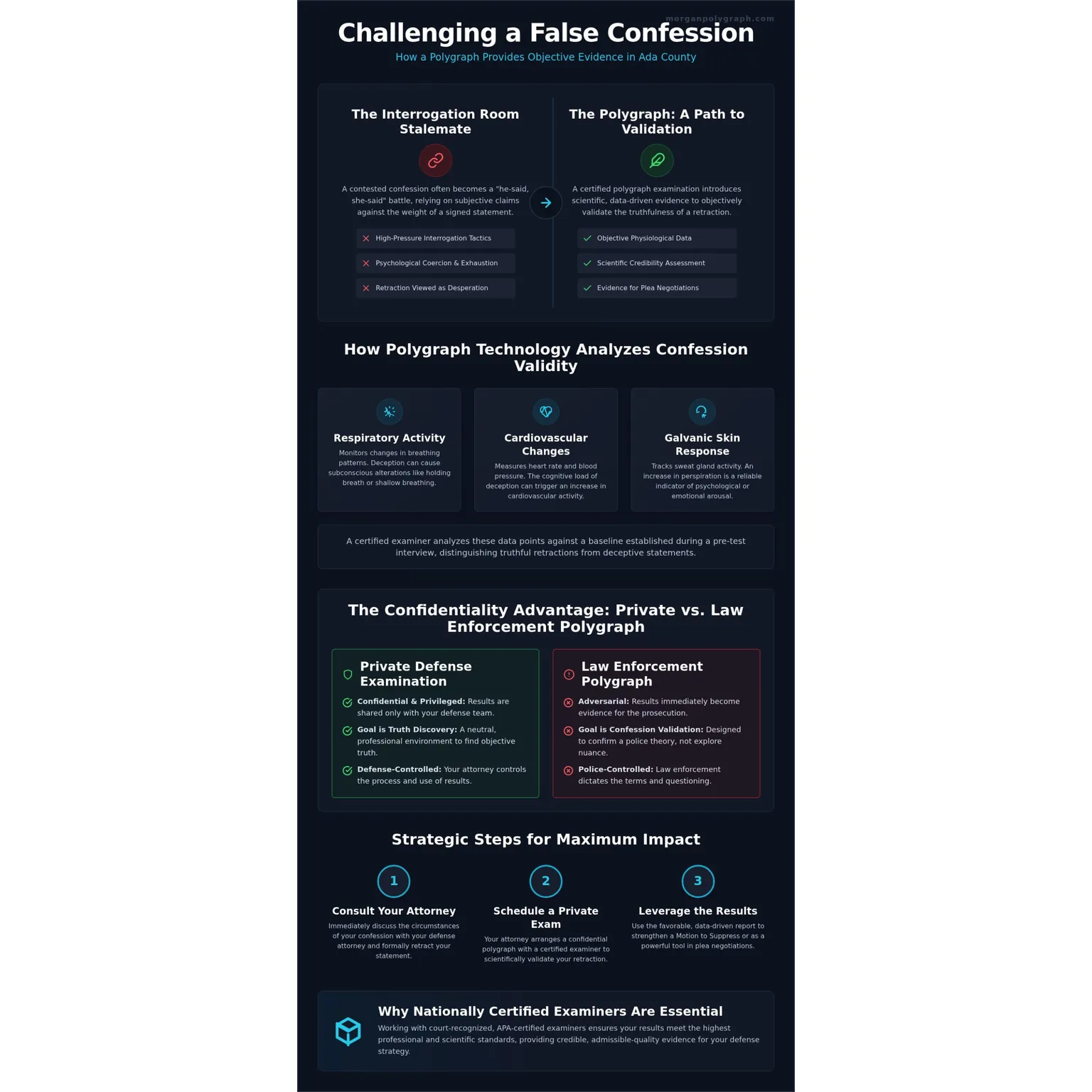
During an examination, we monitor three primary systems: respiratory activity, galvanic skin response, and cardiovascular changes. These markers are sensitive to the cognitive and emotional load associated with different types of statements. When a person provides a truthful retraction, their physiological patterns often stabilize compared to the erratic responses seen during a coerced confession. We begin every session with a detailed pre-test interview to establish a baseline. This step is critical because it allows the examiner to account for the client’s natural anxiety or stress levels. By comparing this baseline to responses regarding the specific confession, we can identify the clear physiological markers of a sincere statement. This data-driven approach helps reduce the risk of false positives that can occur in less controlled environments.
The Science of Credibility Assessment
Nationally certified examiners use a “Statement Validity” approach to move beyond the simple concept of lie detection. This methodology focuses on the overall credibility of the individual’s account. While some historical reports have questioned the scientific validity of polygraphs in broad security screenings, modern forensic applications in Boise rely on much more refined, standardized protocols. We use data-driven detection methods that isolate specific reactions to carefully phrased questions about the interrogation process.
This objective polygraphy creates a record that is far more reliable than the subjective observations of an interrogating officer. By focusing on measurable data rather than behavioral “tells” that can be misinterpreted, we provide a clearer picture of the truth. If you’re facing the consequences of an unreliable statement, it’s beneficial to consult with a professional examiner who specializes in criminal defense. This scientific layer of protection is often the only way to demonstrate the psychological reality of a false confession to the court.
Private vs. Law Enforcement Polygraphs in Boise
Law enforcement agencies in Idaho often view polygraph testing as an extension of the interrogation process. This perspective creates an inherently adversarial atmosphere where the goal is frequently to confirm an existing theory of guilt. An Ada County polygraph for false confession claims conducted in a private setting operates under a completely different philosophy. We prioritize objectivity and the scientific collection of data over the pursuit of an admission. This distinction is critical for anyone trying to overturn a statement made under the intense pressure of police questioning.
The Adversarial vs. Neutral Environment
Police interrogation rooms are intentionally designed to increase stress and isolation. This environment can easily skew physiological data, leading to inconclusive results or false positives that further complicate a legal defense. At our office located at 6126 W. State Street, we provide a discreet and professional atmosphere that fosters calm. A neutral examiner doesn’t have a vested interest in a specific legal outcome. Instead, we focus on establishing an accurate baseline and providing the examinee with a fair opportunity to speak. This professional setting is far more likely to produce a reliable reading on a retraction because it removes the fear-based triggers present in a precinct house.
Confidentiality and the Defense Team
One of the most significant benefits of choosing a private expert is the “Confidentiality Advantage.” When a defense attorney schedules an examination, the results are typically protected by attorney-client privilege. This protection doesn’t exist with law enforcement exams, where every reaction becomes part of the investigative record. Defense teams can strategically use “pass” results to gain significant leverage in plea negotiations with Ada County prosecutors. If a result doesn’t support the defense narrative, it remains confidential and never leaves the defense team’s office.
Understanding the admissibility of polygraph examinations is a complex part of Idaho’s legal landscape. While results aren’t generally admissible as direct evidence of guilt or innocence in court, they are powerful tools for shaping the direction of a case and supporting a Motion to Suppress. Choosing court-recognized experts over internal agency examiners ensures that the process is handled with the highest level of academic gravitas. At Morgan Polygraph, we combine decades of traditional experience with a compassionate approach to help you find the truth. If you’re ready to take the next step in your defense, you can schedule a confidential criminal defense polygraph today.
Strategic Steps for Challenging a Confession in Ada County
Integrating a polygraph into a criminal defense requires a methodical approach. It isn’t just about taking a test; it’s about building a scientific narrative that counters the police record. Timing is a critical factor. Ideally, you should schedule the examination immediately after a retraction has been formally documented by your legal counsel. This ensures that the physiological markers of the event are fresh and the baseline is accurate. Selecting a certified polygraph examiner is the most important decision in this phase. A nationally recognized expert brings the academic gravitas needed to make the findings hold weight in the Boise legal system.
An Ada County polygraph for false confession claims works best as a proactive discovery tool. It provides the defense team with objective data before plea negotiations reach a critical stage. By establishing credibility early, you create opportunities for your attorney to challenge the prosecution’s assumptions before the case moves deeper into the trial process.
Coordinating with Your Defense Attorney
The success of the examination depends on the partnership between the examiner and the attorney. Your lawyer plays a central role in framing the specific questions to ensure they address the legal hurdles of your case. Attorneys use these exams during the discovery phase to identify weaknesses in the prosecution’s narrative. Before the session, the defense team must prepare the client mentally. This involves explaining the process to reduce unnecessary anxiety, which helps in establishing a stable physiological baseline. This preparation ensures the test focuses on the validity of the statement rather than the stress of the legal situation.
Using the Report in Legal Proceedings
The final report is a powerful document that can influence Ada County judges and prosecutors. We provide data-driven findings that defense teams leverage to support a Motion to Suppress the confession. While Idaho courts have specific rules regarding admissibility, a professional report often serves as a catalyst for Boise prosecutors to re-evaluate the strength of their case. During trial, these findings can shape how a jury perceives the “coerced” narrative by providing a scientific basis for the retraction. It moves the conversation from a simple denial to a documented, physiological reality.
To begin building a stronger defense, schedule a professional consultation for your criminal case. Our methodical approach ensures that every detail is handled with the precision and confidentiality your legal strategy requires.
Why Morgan Polygraph is the Trusted Choice in Boise
Choosing the right examiner is the most critical step in a defense strategy. At Morgan Polygraph, we provide the expertise of nationally certified and court-recognized professionals who understand the high stakes of the Idaho legal system. An Ada County polygraph for false confession claims requires more than just technical skill; it demands a deep understanding of the psychological pressures inherent in criminal investigations. Our examiners are recognized within the Boise legal community for maintaining the highest professional standards while providing the objective data needed to challenge unreliable statements.
Every case we handle at our Boise office is approached with a methodical and organized mindset. We recognize that our clients are often in vulnerable states, and we prioritize a discreet, compassionate environment to ensure the most accurate results possible. You can find our Boise office at 6126 W. State Street to begin the process of validating your story through science. Our facility is designed to provide a calm, neutral setting that is far removed from the stress of a typical interrogation room.
Experience in Criminal and Civil Cases
Our history of assisting Boise defense teams spans decades of complex felony cases. We’ve built a reputation as a trusted partner for attorneys who need reliable credibility assessments. This recognition comes from our commitment to evidence-based methods and our ability to provide clear, actionable reports. Whether the case involves a criminal charge or a civil dispute, our approach remains clinical and unbiased. We focus on the data, ensuring that every examination meets the rigorous requirements of the Ada County legal landscape. This methodical approach is why the local legal community continues to rely on our expertise for sensitive matters.
Modern Technology and Traditional Expertise
We bridge the gap between traditional experience and futuristic technology by integrating the latest deception detection tools. This includes the use of behavioral speech analysis and facial micro-expression recognition to enhance the accuracy of our polygraph examinations. By staying at the forefront of technical advancements, we provide our clients with the most reliable results available in 2026. Our practitioners undergo continuous training to ensure full adherence to American Polygraph Association (APA) standards. This commitment to innovation means you aren’t just getting a test; you’re getting a comprehensive, data-driven analysis of the truth.
If you’re facing the weight of a false statement, don’t wait to seek professional assistance. Schedule a confidential consultation with Morgan Polygraph today to discuss how we can support your defense strategy with the precision and integrity your case deserves.
Empowering Your Legal Defense with Scientific Data
Challenging a recorded statement in Boise requires more than just a simple retraction. It demands objective, physiological evidence that can withstand the scrutiny of the Idaho legal system. By choosing a private, defense-oriented environment over an adversarial police setting, you ensure that your side of the story is measured with precision and absolute confidentiality. An Ada County polygraph for false confession claims provides the scientific foundation your attorney needs to advocate for a Motion to Suppress or negotiate more favorable plea terms.
Our nationally certified examiners utilize a state-of-the-art Boise laboratory to deliver results that are both reliable and court-recognized. We bridge the gap between decades of traditional expertise and the latest technical advancements to help you regain control of your narrative. You don’t have to face the weight of a coerced confession alone. Our methodical approach is designed to provide the clarity and data-driven proof necessary for complex criminal cases.
Contact Morgan Polygraph for a Confidential Defense Consultation and take the first step toward securing the objective evidence your case requires. We’re here to help you move forward with confidence and peace of mind.
Frequently Asked Questions
Are polygraph results admissible in Ada County courts?
Polygraph results are generally inadmissible in Idaho state courts as direct evidence of guilt or innocence unless both parties stipulate to their entry. However, they remain a powerful defense tool for plea negotiations and supporting a Motion to Suppress a confession. Nationally certified examiners provide the objective data your attorney needs to influence a prosecutor’s perspective or a judge’s decision regarding the reliability of a statement.
Can a polygraph really prove a confession was false?
A polygraph examination provides objective, physiological data that supports the truthfulness of your statement retraction. By monitoring respiratory, cardiovascular, and skin response markers, an Ada County polygraph for false confession claims can demonstrate that your current account is sincere. While it doesn’t “prove” facts in a legal sense, it offers scientific validation that your original confession was inconsistent with your actual knowledge and physiological state.
What happens if I fail a private polygraph test for my defense?
If you fail a private polygraph examination arranged by your legal counsel, the results are typically protected by attorney-client privilege. This means the findings remain confidential and aren’t shared with the prosecution or Boise police. This “Confidentiality Advantage” allows you to explore the scientific validity of your claim without risk to your case. Your defense team can then adjust their strategy privately based on the outcome of the examination.
How long does a criminal defense polygraph examination take?
A comprehensive criminal defense polygraph examination typically takes between two and three hours to complete. This duration allows for a detailed pre-test interview, the establishment of a physiological baseline, and multiple chart collections to ensure maximum accuracy. We prioritize a methodical and unhurried process at our Boise laboratory to account for the complex nature of false confession claims and to provide the most reliable data possible.
Will the Boise police know I took a private polygraph test?
No, law enforcement agencies will not be notified of your private examination unless you and your defense attorney choose to disclose the results. Our services are strictly confidential and conducted in a discreet, professional environment at 6126 W. State Street. You have complete control over the information. This privacy ensures that you can pursue scientific credibility assessment without the adversarial pressure often found in police-administered examinations.
Can stress from the interrogation cause a false positive on the test?
While high stress is common after a custodial interrogation, our nationally certified examiners use standardized protocols to distinguish between general anxiety and specific deceptive responses. We conduct a thorough pre-test interview to establish a physiological baseline for each client. This methodical approach ensures that the stress of the legal situation doesn’t skew the results. Our neutral Boise laboratory provides a calm setting designed to minimize external triggers.
How do I find a court-recognized polygraph examiner in Boise?
Finding a court-recognized examiner involves verifying their national certification and their standing within the local legal community. Morgan Polygraph features examiners who are recognized for their expertise in criminal defense cases throughout Ada County. Our practitioners adhere to American Polygraph Association (APA) standards and utilize state-of-the-art technology. You can schedule a consultation at our Boise office to discuss how our certified services can support your specific legal strategy.
What questions are asked during a false confession polygraph?
The questions are specific, closed-ended, and focused directly on the validity of the original confession and the subsequent retraction. We review every question with you and your attorney before the examination begins to ensure clarity and relevance. This collaborative process ensures that the Ada County polygraph for false confession claims targets the most critical aspects of your statement. We avoid surprise or ambiguous phrasing to maintain the highest levels of scientific precision.