

What if the most significant factor in a polygraph suite isn’t the advanced technology, but your own legal authority to walk out? It’s natural to feel a sense of vulnerability when you’re asked to sit for a lie detector test. You might worry about being coerced into a confession or forced to answer invasive questions that have nothing to do with the matter at hand. Understanding your rights during a polygraph examination is the first step toward replacing that anxiety with confidence. Whether you’re participating in a criminal case polygraph or a voluntary relationship test, you aren’t entering a lawless space; you’re entering a regulated professional environment designed with specific safeguards.
Key Takeaways
- Understand that all professional examinations are voluntary and governed by legal protections such as the Employee Polygraph Protection Act.
- Learn how to exercise your right to review every question in advance and receive a thorough explanation of the physiological sensors being used.
- Identify the specific personal topics that are legally off-limits and understand your absolute authority to terminate the examination at any time.
- Gain a clear understanding of your rights during a polygraph examination regarding the confidentiality of your results and the distribution of the final written report.
- Discover why seeking an examiner with American Polygraph Association (APA) certification ensures your procedural rights are respected through every phase of the test.
The Foundation of Polygraph Rights: Voluntary Participation and Legal Protections
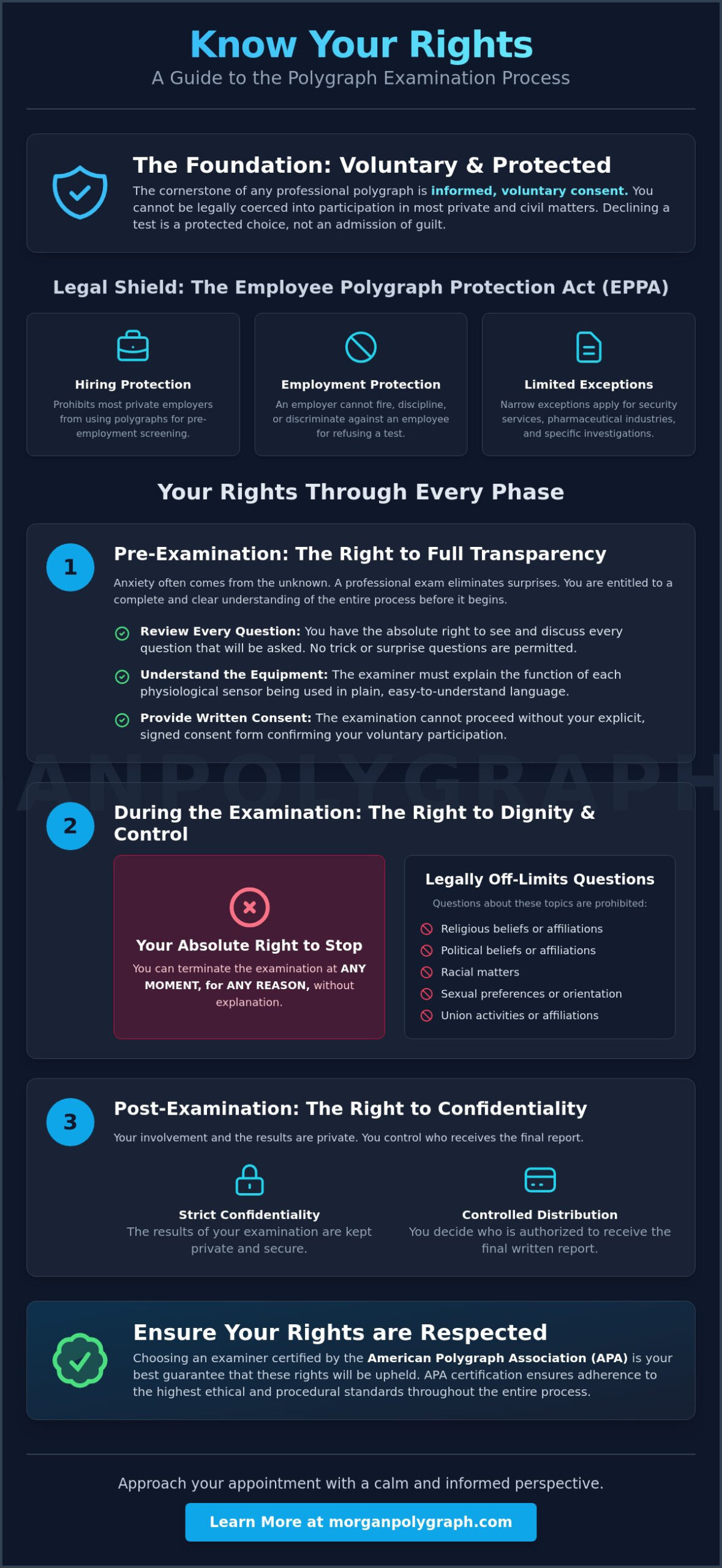
The cornerstone of any professional lie detector test is the principle of informed, voluntary consent. Your rights during a polygraph examination begin with the fundamental understanding that you cannot be physically or legally coerced into participation in most private and civil matters. To understand the context of these protections, it’s helpful to first ask, What is a Polygraph? and how has its legal standing evolved? While the technology has advanced into the digital age, the legal framework remains firmly rooted in protecting the individual from undue pressure. A common misconception is that declining a test serves as an admission of guilt; however, the law views refusal as a protected choice rather than a confession. You have the power to decline without legal prejudice in the vast majority of circumstances.
The Employee Polygraph Protection Act (EPPA)
Enacted in 1988, the EPPA serves as a federal shield for most private-sector employees. This legislation prohibits private employers from using lie detector tests for pre-employment screening or as a condition of continued employment. While narrow exceptions exist for security and pharmaceutical industries, most workers are fully protected. An employer cannot fire, discipline, or threaten an employee who refuses a test. In Idaho, state law mirrors these protections, making it a misdemeanor for employers to mandate such testing.
Voluntary Consent in Criminal and Civil Cases
In criminal investigations, you cannot be forced to take a polygraph. Participation requires explicit, written consent. Many attorneys use criminal defense polygraphs as tactical tools to support a client’s position. These exams are conducted in private, ensuring that your rights during a polygraph examination are upheld through a controlled environment. Before the process begins, you must sign a consent form that confirms your voluntary participation and outlines the scope of the test.
This voluntary foundation ensures that the examiner and the examinee enter the process with a mutual understanding of cooperation. It moves the experience away from the category of interrogation and into a professional, data-driven assessment. Whether you’re seeking to clear your name in a civil dispute or providing evidence for a legal defense, the process is built upon your willingness to engage. Without your signed consent, a professional examiner will not proceed. The ethical standards of the industry prioritize the dignity and legal standing of the individual.
Pre-Examination Rights: Understanding the Scope and Questions
Transparency is the bedrock of a professional examination. Before the actual questioning begins, you’re entitled to a thorough pre-test interview. This phase is designed to ensure you understand exactly what will happen and why. You have the right to have the nature of the examination explained in plain language, stripped of technical jargon. This level of clarity isn’t just a courtesy; it’s a procedural requirement. Even specific sectors, as noted by the Office of Congressional Workplace Rights, maintain rigorous standards for how these protections are communicated to individuals. This ensures that the examinee is never left in the dark about the legal or practical implications of the test.
The Right to Question Review
One of the most common anxieties involves the fear of “trick” or “surprise” questions. In a professional setting, these simply don’t exist. You have the absolute right to review every single question that will be asked during the exam before the recording starts. If a question is phrased in a way that feels ambiguous or confusing, you can request a modification for clarity. Questions should be direct and capable of being answered with a simple “yes” or “no.” Your rights during a polygraph examination include the power to refuse to answer specific questions during this pre-test phase if they fall outside the agreed-upon scope of the investigation. This ensures the focus remains strictly on the relevant issues.
Understanding the Methodology
A qualified examiner must provide a full explanation of the polygraph equipment and the physical environment. You should understand how the various physiological sensors work, including components that monitor heart rate, respiration, and galvanic skin response. Transparency in how a polygraph test works is an ethical standard that builds trust and reduces unnecessary stress. You also have the right to know if the session is being recorded via audio or video. A professional examiner will explain that the room is designed to be free from distractions to ensure the integrity of the data collected.
Your physiological state is unique. You have the right to provide a medical or psychological explanation for any physiological variations. If you have a heart condition, respiratory issues like asthma, or take specific medications, these factors must be documented. Sharing this information allows the examiner to interpret the data with the necessary context. This collaborative approach ensures that the results are as accurate as possible and prevents misinterpretation of natural physical responses. If you have concerns about how your health might impact the process, it’s best to consult with a certified professional before your scheduled appointment to ensure a smooth and fair process.
Protecting Your Dignity: Rights During the Questioning Phase
Once the physiological sensors are attached, the formal questioning phase begins. This stage often creates the highest level of anxiety, but your rights during a polygraph examination remain fully in effect throughout the entire procedure. A professional examination is a structured data collection process; it is not an interrogation. You’re entitled to a non-coercive environment where your physical and psychological comfort is prioritized. This includes freedom from any form of physical restraint, intimidation, or verbal abuse. A reputable examiner maintains a calm, measured demeanor to ensure the integrity of the physiological data remains uncompromised by external stress factors.
Prohibited Areas of Questioning
Federal and state regulations provide strict boundaries regarding the topics an examiner can explore. Under the Employee Polygraph Protection Act (EPPA), and following general ethical standards for private cases, several areas are strictly off-limits. These include:
- Religious Beliefs: Questions regarding your faith, affiliations, or lack thereof.
- Political Affiliations: Your voting record, party membership, or political opinions.
- Union Activities: Any involvement with labor organizations or collective bargaining.
- Sexual Orientation: Personal matters regarding your identity or private life, unless they’re directly relevant to specific Post-Conviction Sex Offender Testing (PCSOT) protocols.
The “relevance rule” is a critical safeguard. Every question asked must directly relate to the specific issue being investigated as agreed upon during the pre-test interview. If a question feels invasive or deviates from the established scope, you have the right to challenge it or decline to answer. Professional examiners are trained to keep the inquiry focused and respectful, ensuring that the process never becomes an excuse for a “fishing expedition” into your private life.
The Right to Stop the Exam
Perhaps the most empowering of all your rights is the ability to terminate the session at any moment. You don’t need to provide a legal justification to stop the test. If you feel physically unwell, experience a panic attack, or simply decide you no longer wish to participate, the examiner has a professional duty to cease questioning immediately. It’s vital to understand that choosing to stop the exam isn’t the same as failing it. While the examiner will document that the session was terminated at the examinee’s request, this is a procedural fact rather than a determination of deception. You also have the right to request a temporary break if you need to regain your composure or use the restroom. Your agency over the process is absolute from start to finish.
After the Exam: Results, Confidentiality, and Reports
The conclusion of the questioning phase marks the transition into data analysis and reporting. Your rights during a polygraph examination extend beyond the physical test and cover how your sensitive information is handled and interpreted. Once the sensors are removed, you have the right to a verbal explanation of the examiner’s preliminary findings. This immediate feedback provides clarity before the formal written report is finalized. However, it is essential to remember that the final determination is based on a meticulous review of the physiological charts; often involving computerized scoring algorithms to ensure objective results.
Confidentiality and Privacy Standards
Privacy is a central pillar of professional polygraphy. Examiners have a strict ethical obligation to protect your personal data and the details of the examination. The distribution of the final report depends largely on the nature of the case. In infidelity testing, results are typically shared only with the individual who commissioned the test. In legal or criminal matters, the report is usually forwarded directly to the requesting attorney or agency. You should confirm who is authorized to see the results before the test begins. There are rare exceptions to confidentiality, specifically in cases involving mandatory reporting requirements, such as the disclosure of child abuse or immediate threats of violence, where the law requires the examiner to notify the appropriate authorities.
Interpreting the Results
A professional report will categorize the findings into one of three standard outcomes. “No Deception Indicated” (NDI) suggests the physiological data aligns with truthful answers, while “Deception Indicated” (DI) suggests the opposite. The third possibility is an “Inconclusive” result. An inconclusive result signifies a lack of sufficient physiological data to reach a definitive conclusion rather than a failure on the part of the examinee. This outcome can occur due to various factors, such as fatigue, illness, or inconsistent breathing patterns. Your examiner should provide a clear explanation if your results fall into this category.
The weight given to these findings often depends on the context of the case and the recognized polygraph accuracy within the professional community. While not always admissible in court without prior stipulation, a well-documented report from a certified expert can be a powerful investigative or defensive tool. If you have questions about how a report will be structured or who will have access to your sensitive information, you can schedule a confidential consultation to discuss your specific needs with a seasoned expert.
Choosing a Certified Idaho Examiner to Ensure Your Rights
The individual operating the equipment is the most critical factor in ensuring your rights during a polygraph examination are respected. While the technology provides the data, the examiner provides the ethical framework for the entire session. In Idaho, where statewide licensing isn’t required for every category of testing, the American Polygraph Association (APA) certification serves as the definitive benchmark for professionalism. Choosing an examiner with these credentials ensures that your session is conducted according to international standards of practice and legal compliance. It moves the process away from the risks of unregulated testing and into a controlled, forensic environment.
The Role of Certification in Ethics
Certified examiners are bound by a strict code of ethics that prioritizes the examinee’s dignity and legal standing. This professional oversight is what prevents the session from devolving into an “interrogation-style” encounter. There’s a significant difference between a basic “lie detector” and a formal forensic psychophysiological examination. The latter is a scientific process that relies on objective data rather than psychological pressure. By finding a certified polygraph near you, you’re choosing a practitioner who understands the boundaries of their authority and the absolute nature of your procedural rights. These experts are trained to maintain a neutral, non-judgmental environment that facilitates accurate physiological responses.
Why Idaho Clients Trust Morgan Polygraph
Morgan Polygraph serves the Boise community with a steadfast commitment to discretion and technical precision. We understand the high stakes involved in criminal defense and civil cases, which is why we utilize state-of-the-art technology and validated testing protocols. Our office is recognized for its expertise in specialized fields, including Post-Conviction Sex Offender Testing (PCSOT) and complex relationship assessments. We adhere to the rigorous standards set by the Idaho Sexual Offender Management Board (SOMB) when applicable, ensuring that every test meets the highest level of scrutiny required by the courts or private agencies.
When you walk into our Boise office, you’re entering a space designed for clarity and respect. We take the time to answer your questions and ensure you’re comfortable with every sensor and every inquiry. Our goal is to provide a methodical, organized experience that yields reliable data while protecting your personal privacy. Whether you’re a private citizen or a legal professional, you deserve an examiner who respects the gravity of the situation. Don’t leave your reputation or your future to chance. Protect your rights and get the truth with Morgan Polygraph by scheduling your professional examination today.
Securing Your Peace of Mind Through Informed Consent
Navigating a lie detector test doesn’t have to be a source of distress when you’re equipped with the facts. You’ve learned that your rights during a polygraph examination include the power to review every question in advance and the absolute authority to terminate the session at any time. These safeguards ensure the process remains a professional, data-driven tool rather than a coercive interrogation. By understanding the legal protections afforded by the EPPA and current state statutes, you can approach your appointment with a sense of calm control.
Choosing an expert who respects these boundaries is essential for a fair and accurate outcome. Morgan Polygraph combines decades of experience with state-of-the-art forensic technology to deliver results you can trust. With over 10,000 examinations conducted, our nationally certified and court-recognized examiners prioritize your dignity and privacy. Whether you’re addressing a legal defense or a personal relationship matter, we provide the clarity you need in a discreet, professional environment.
Schedule a Discreet and Professional Consultation in Boise
You deserve a process that’s as transparent as it is precise. We’re ready to help you move forward with the confidence that comes from knowing the truth.
Frequently Asked Questions
Do I have a right to have an attorney present during my polygraph?
You generally don’t have a right to have an attorney present inside the examination room during the actual testing phase. The presence of a third party can create environmental distractions that compromise the integrity of the physiological data. However, you maintain the absolute right to consult with your legal counsel immediately before the sensors are attached or after the questioning concludes to discuss the process.
Can I refuse to answer a specific question during the test?
You have the right to refuse to answer any specific question during the pre-test interview. If a question is asked during the actual examination that you’re uncomfortable with, you can decline to answer; though this typically results in the examiner terminating the session. Every question must be reviewed and agreed upon before the physiological recording begins to ensure there are no surprises.
What happens if I decide to stop the polygraph in the middle of the session?
If you decide to stop the session in the middle, the examiner is professionally obligated to cease all questioning and remove the sensors immediately. Stopping the test is a procedural right and isn’t recorded as a failed result. The examiner will simply document that the examination was terminated at the request of the examinee before completion, regardless of the reason provided.
Are my polygraph results protected by HIPAA or other privacy laws?
Polygraph results are generally not protected by HIPAA because the examination isn’t considered medical treatment or healthcare. However, your rights during a polygraph examination include strict confidentiality protections under professional ethical codes and specific contract law. Results are only shared with the person or agency that authorized the examination, unless mandatory reporting laws regarding safety or abuse are triggered.
Can an examiner ask me about my past sexual history during a standard test?
In a standard criminal, civil, or relationship examination, the examiner cannot ask about your past sexual history. These topics are considered invasive and irrelevant to the vast majority of investigative scopes. The only exception occurs in Post-Conviction Sex Offender Testing (PCSOT), where specific protocols require inquiries into sexual history as part of a court-mandated supervision and treatment program.
Is it my right to see the actual polygraph charts after the exam?
You don’t have an inherent legal right to view or possess the raw physiological charts after the exam. These charts are technical data intended for expert analysis rather than public review. You do, however, have the right to receive a verbal explanation of the findings and, depending on the hiring entity, a copy of the final written report summarizing the examiner’s conclusions and data analysis.
Can I be forced to take a polygraph by my employer in Idaho?
No, an employer in Idaho cannot force you to take a polygraph as a condition of employment or continued employment. Idaho Statutes § 44-903 prohibits this practice and classifies violations as a misdemeanor. While the federal Employee Polygraph Protection Act provides broad shields for private-sector workers, Idaho’s specific state laws offer an additional layer of protection that ensures your participation remains entirely voluntary.
What should I do if I feel my rights were violated during an exam?
If you feel your rights during a polygraph examination were violated, you should immediately terminate the session and document the specific details of the incident. You can file a formal complaint with the American Polygraph Association (APA) if the examiner is a member. For employment-related violations, you may also contact the U.S. Department of Labor or the Idaho Department of Labor to report the incident.