
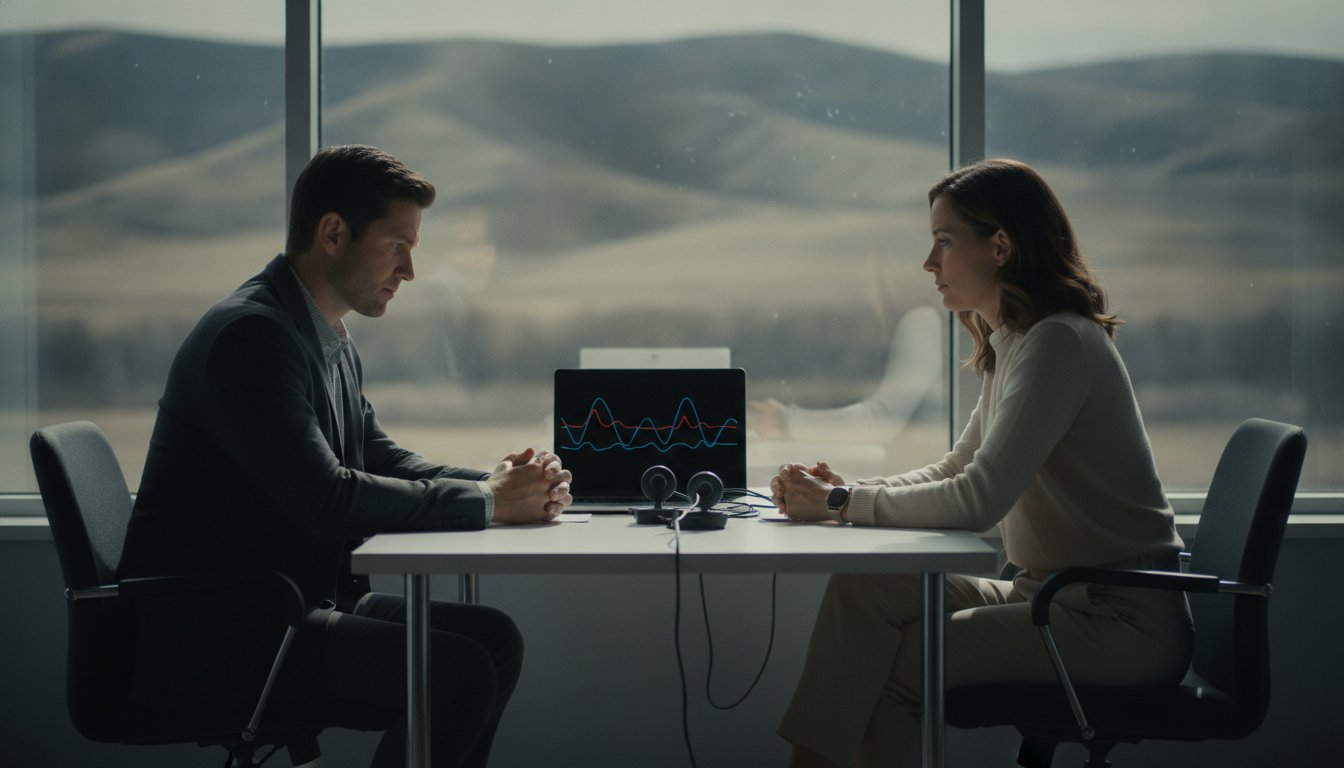
A lie detector test for cheating spouse isn’t a weapon of confrontation; it is a clinical instrument designed to restore transparency to a fractured foundation. If you’ve been living with the weight of constant anxiety, you know how exhausting it is to navigate the fog of gaslighting. It’s painful to feel your intuition is being dismissed while you search for a truth that feels perpetually out of reach. You deserve a definitive answer that moves you beyond the cycle of suspicion and emotional exhaustion.
We understand that you need more than just another argument; you need objective validation. This professional guide will show you how a polygraph examination provides the clarity required to resolve infidelity suspicions and begin the healing process. You’ll learn why the science behind single-issue tests can yield accuracy rates between 90 and 95 percent when conducted by a certified expert using modern, data-driven methodology. We will preview the methodical process of question formulation, the importance of voluntary consent, and how this clinical approach offers a clear pathway toward reconciliation or a necessary clean break.
Key Takeaways
- Learn why a professional polygraph serves as a clinical tool for transparency rather than a weapon of confrontation when navigating circular arguments.
- Understand the physiological monitoring process and how sensors track respiration and skin conductivity to provide an objective data set.
- Discover why a specialized lie detector test for cheating spouse is resistant to manipulation and how modern digital systems identify physical countermeasures.
- Master the “Less is More” rule for question design to maximize accuracy by focusing on two or three specific, binary issues.
- Recognize the value of choosing an experienced examiner in a discreet, neutral office environment to ensure a fair and professional testing experience.
Beyond Suspicion: Why Couples Choose a Lie Detector Test for Infidelity
When trust within a relationship begins to erode, couples often find themselves trapped in a destructive loop of circular arguments. One partner presents a question, and the other offers an answer that doesn’t align with the available evidence or the partner’s intuition. This cycle can persist for months, creating a state of emotional paralysis where neither party can move forward. A lie detector test for cheating spouse serves as a specialized private examination designed to break this deadlock. By transitioning the conflict from subjective accusations to a data-driven analysis, the process provides a foundation of factual clarity that is often impossible to achieve through conversation alone.
It’s vital to distinguish between evidence-based suspicion and Othello Syndrome, which involves a form of pathological jealousy where a partner is convinced of infidelity without any rational basis. While a Polygraph is a powerful tool for validating legitimate concerns, it also acts as a safeguard for the falsely accused. Professional examiners look for the presence of objective physiological markers, helping couples differentiate between anxieties born from past trauma and actual deceptive behavior. The ultimate goal is to move beyond the emotional stalemate and reach a point where both individuals can make informed decisions about their future.
The Emotional Impact of Deception
Living with the suspicion of infidelity is more than just stressful; it’s often a source of profound psychological trauma. Gaslighting, a tactic where a deceptive partner makes the other question their own reality, can lead to severe anxiety and a loss of self-confidence. This uncertainty prevents the betrayed spouse from beginning the healing process because there is no solid ground upon which to rebuild. Utilizing an infidelity test acts as a diagnostic tool, offering the closure required to stop the mental health decline associated with chronic deception.
When is a Polygraph the Right Choice?
A lie detector test for cheating spouse is particularly effective when there is circumstantial evidence, such as unexplained absences or hidden communications, that a partner continues to deny. It’s also frequently used in long-term recovery scenarios where a spouse agrees to provide “full disclosure” of past actions to settle all doubts at once. For the process to be ethically and scientifically sound, both partners must agree to the examination voluntarily. This willingness to participate often serves as the first genuine indicator that a partner is committed to transparency and the potential reconciliation of the relationship.
The Infidelity Polygraph Protocol: How the Examination Works
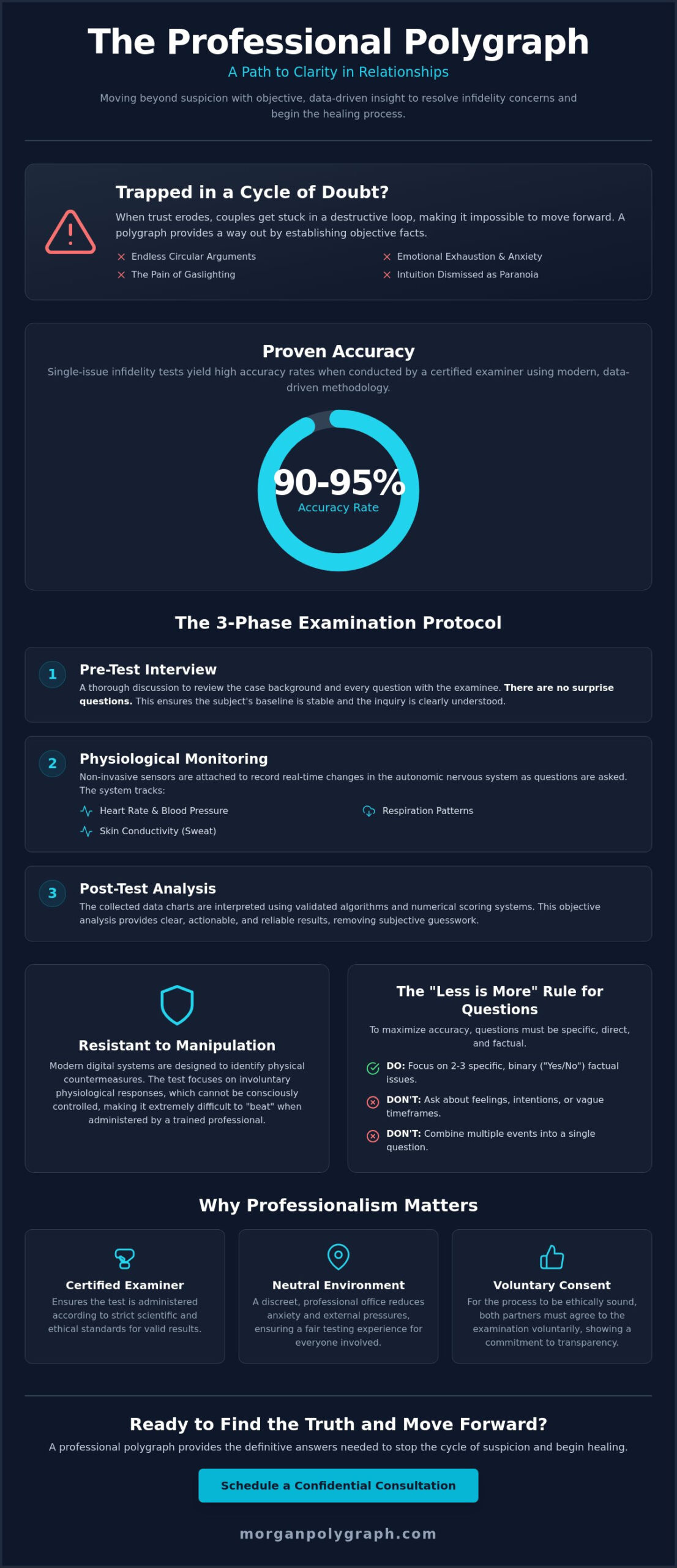
A professional lie detector test for cheating spouse follows a rigorous, three-phase protocol to ensure the highest levels of accuracy and ethical integrity. This process begins with the pre-test interview. During this stage, the examiner discusses the background of the case and reviews every question with the examinee. There are no surprise questions. Transparency is essential for reducing “noise” in the data and ensuring the subject’s baseline is stable. The examiner refines the narrative to ensure the subject fully understands the scope of the inquiry before any sensors are activated.
Once the pre-test is complete, the physiological monitoring phase begins. The examiner attaches non-invasive sensors to record changes in heart rate, blood pressure, respiration patterns, and skin conductivity. The data collection phase involves the examiner asking a series of prepared “relevant” questions while the sensors transmit real-time physiological responses to a digital system. Finally, in the post-test analysis, the examiner uses validated algorithms and numerical scoring to interpret the charts. While the U.S. Department of Justice on polygraphs highlights the complexity of interpreting such data in criminal contexts, modern relationship testing relies on these standardized protocols to provide clear, actionable results.
The Role of the Autonomic Nervous System
The science behind the examination relies on the autonomic nervous system, which controls involuntary bodily functions. When an individual provides a deceptive answer to a relevant question, the brain often triggers a subtle “fight or flight” response. The polygraph records these involuntary physiological shifts in respiration, cardiovascular activity, and sweat production to detect changes in the body’s baseline state. The equipment specifically detects physiological arousal, which the examiner then interprets as a likely indicator of deception based on the timing and intensity of the response.
Standardized Testing Formats
Most relationship cases utilize the Comparison Question Technique (CQT). This method compares responses between “relevant” questions about the alleged cheating and “comparison” questions about general character. Vague inquiries are discarded in favor of binary, fact-based questions that can only be answered with a “Yes” or “No.” This specificity is why a lie detector test for cheating spouse typically takes between 1.5 and 3 hours to complete. If you’re seeking this level of professional precision, consulting an expert can help you prepare for the process correctly.
Accuracy and Reliability: Can a Cheating Spouse “Beat” the Test?
One of the most frequent concerns regarding a lie detector test for cheating spouse is the fear that a partner might manipulate the results. Movies and internet forums often suggest that “beating” the machine is a matter of simple physical tricks. However, modern digital polygraph systems are specifically engineered to identify these countermeasures. Today’s equipment includes motion sensors and activity pads designed to detect even the slightest muscle movements or pressure changes that indicate a subject is trying to alter their physiological baseline. When an individual attempts to manipulate their breathing or heart rate, the software flags these anomalies, allowing the examiner to address the behavior immediately.
It’s vital to differentiate between general nervousness and deceptive responses. Examiners expect every person to be anxious during an infidelity exam. This baseline anxiety is accounted for during the pre-test phase. Deception, conversely, produces a specific and repeatable physiological shift that occurs only when a relevant question is asked. While there are discussions regarding the scientific validity of the polygraph in academic settings, the practical application in private, single-issue cases remains highly effective. When conducted by a certified professional using validated methods, the accuracy of polygraphs in infidelity matters typically ranges between 90% and 95%.
Common Myths About Passing a Lie Detector
Many people believe they can pass by using a tack in their shoe or by holding their breath at specific intervals. These Hollywood myths are easily debunked by modern sensors that monitor multiple channels of physiological data simultaneously. Even individuals who consider themselves “good liars” or who have lower levels of empathy cannot easily suppress the autonomic nervous system’s response to a direct, binary question. It’s also important to recognize that online lie detector tests are fundamentally unreliable; they lack the necessary physiological sensors and professional oversight required to produce a valid result.
The Examiner as the Key Factor
The reliability of the results depends as much on the examiner as it does on the technology. A machine doesn’t “detect lies”; it records data that an expert must interpret. In 2026, professional standards set by the American Polygraph Association (APA) require examiners to follow strict guidelines for question formulation and chart scoring. This ensures that every lie detector test for cheating spouse is conducted with clinical neutrality. Accuracy is ultimately a product of both advanced digital technology and the expert interpretation of a highly trained professional who understands the nuances of human behavior.
Question Design and Preparation: Getting the Most Out of the Exam
The success of a lie detector test for cheating spouse depends heavily on the precision of the questions asked. We strictly follow the “Less is More” rule, which dictates that focusing on two or three specific issues yields the highest accuracy rates. When an examination covers too many topics, the physiological data often becomes diluted; this makes it harder to distinguish between significant reactions and baseline noise. We work closely with clients to narrow their concerns down to the most critical, binary facts that will provide the closure they seek. This methodical narrowing of focus ensures the data collected is both clear and scorable.
Ambiguity is the enemy of a successful examination. Terms like “cheating” or “having an affair” are subjective; what one person considers an affair, another might define differently. To ensure clinical accuracy, we replace these vague descriptors with specific, observable acts. Questions must be answerable with a simple “Yes” or “No” to trigger the clear physiological responses necessary for algorithmic scoring. Additionally, the spouse requesting the test is never permitted in the examination room. Their presence creates an emotionally charged atmosphere that can interfere with the subject’s baseline readings, potentially compromising the integrity of the results.
Examples of Effective Infidelity Questions
Effective questions focus on verifiable actions rather than internal feelings. For example, “Since the start of your marriage, have you had sexual contact with [Name]?” is a valid, binary question. Conversely, “Do you love me?” or “Are you sorry?” are not valid because they measure emotions, which are not binary and fluctuate constantly. We also utilize “maintenance” questions to address deceptive behaviors used to cover tracks, such as: “Have you deleted any text messages to hide them from your spouse?” These direct inquiries provide the objective truth needed to move forward with confidence.
Preparing for the Results
Receiving the results of a lie detector test for cheating spouse is a significant emotional event that requires preparation for any outcome. If the test indicates deception, the results provide the factual basis needed to make a clean break or demand full transparency in therapy. If the results indicate no deception, it offers a starting point for rebuilding trust. Integrating these findings into professional relationship counseling is often the most productive next step for long-term healing. If you are ready to resolve your suspicions, finding a polygraph near me ensures you work with a certified expert who prioritizes your privacy. To begin this process with a seasoned professional, you can schedule a confidential consultation to discuss your specific needs.
Professional Infidelity Testing in Boise: Why Experience and Discretion Matter
Boise residents facing the turmoil of relationship uncertainty need a local resource that combines clinical expertise with absolute discretion. Morgan Polygraph serves as the leading authority in the Treasure Valley for specialized relationship examinations. Choosing a lie detector test for cheating spouse is a significant step that requires a professional, neutral environment to ensure the integrity of the results. Our office, located at Suite 208 on West State Street, provides a controlled setting designed to minimize outside stress and allow for a precise physiological baseline. This professional atmosphere is essential for moving beyond the emotional noise of home-based arguments and into a space defined by objective truth.
The credibility of your results depends entirely on the credentials of the person administering the exam. Our lead examiner is not only nationally certified but also holds court-recognized status within the state of Idaho. This level of recognition is rare and reflects a career dedicated to the highest standards of polygraph science. We understand that privacy is a primary concern for our Boise clients. Our facility is operated with a “discreet and trustworthy” philosophy, ensuring that your sensitive personal matters remain confidential from the first phone call to the final report delivery.
Certified Expertise in the Treasure Valley
It’s vital for local residents to avoid uncertified or “fly-by-night” examiners who may use outdated equipment or unvalidated testing methods. Our active membership in the American Polygraph Association (APA) ensures that every lie detector test for cheating spouse we conduct follows the most rigorous protocols available in 2026. We take a compassionate, non-judgmental approach with every couple. We recognize the vulnerability involved in this process and prioritize a respectful interaction that softens the clinical nature of the technology. This balance of empathy and academic gravitas is what sets our Boise practice apart.
How to Schedule a Private Exam in Boise
We’ve designed our booking process to be straightforward and confidential to reduce the burden on clients already experiencing emotional exhaustion. Whether we’re handling a high-profile criminal case or a private relationship matter, we apply the same level of investigative rigor and methodical organization. We don’t just provide a service; we provide the validation needed to begin the healing process. When you’re ready to resolve your suspicions with the help of a seasoned expert, we’re prepared to assist you. Schedule a confidential infidelity polygraph at our Boise office to take the first step toward factual clarity and peace of mind.
Moving Forward with Factual Clarity
A lie detector test for cheating spouse represents a transition from the exhaustion of uncertainty to the stability of objective truth. You’ve navigated the fog of circular arguments long enough. By utilizing a methodical, clinical approach, you can move past emotional stalemates and begin the necessary process of healing. This guide has detailed how specialized question design and advanced physiological monitoring provide the transparency required to resolve suspicions of infidelity once and for all. You deserve definitive answers.
At Morgan Polygraph, we provide the expertise of nationally certified and court-recognized examiners with over 20 years of industry experience. Our Boise facility utilizes state-of-the-art digital polygraph technology to deliver results that are both accurate and reliable. We understand the sensitivity of your situation and prioritize a discreet, respectful environment for every client. When you’re ready to find the clarity you deserve, Contact Morgan Polygraph for a Discreet Professional Consultation. You don’t have to live with the weight of the unknown any longer. Taking this step is a powerful commitment to your own peace of mind and your future.
Frequently Asked Questions
Can my spouse pass the test if they take anti-anxiety medication?
Anti-anxiety medications do not typically allow an individual to bypass a polygraph if they are being deceptive. While these substances may lower a person’s overall physiological reactivity, the examiner establishes a baseline at the start of the session. Modern sensors are sensitive enough to detect shifts even in a dampened state. It’s essential that the examinee discloses all medications during the pre-test interview so the examiner can account for them during the final chart analysis.
How much does an infidelity lie detector test cost in Boise?
The cost of a lie detector test for cheating spouse in Boise depends on the complexity of the case and the examiner’s experience level. Generally, professional fees reflect the specialized clinical time required for the pre-test interview, data collection, and algorithm-based scoring. While prices fluctuate across the Treasure Valley, choosing a certified expert ensures that the investment provides reliable, data-driven results rather than a generic report that lacks clinical standing or professional validation.
Is the result of a private infidelity polygraph admissible in Idaho courts?
Polygraph results are generally not admissible in Idaho courts for civil or family law matters unless both parties agree to their admission beforehand. In divorce or custody disputes, judges typically prioritize other forms of evidence. However, a private examination is often used as an out-of-court tool to facilitate transparency between partners. It serves as a clinical resource for personal resolution and healing rather than a legal instrument for use in formal litigation.
What happens if the results come back as “Inconclusive”?
An “inconclusive” result occurs when the physiological data does not clearly meet the numerical threshold for either “No Deception Indicated” or “Deception Indicated.” This doesn’t mean the test failed; it means the subject’s responses were not stable enough for a definitive score. Factors such as extreme physical fatigue, inconsistent breathing, or certain medical conditions can cause this outcome. In such cases, a follow-up examination is usually recommended after the underlying issues have been properly addressed.
Can I be in the room while my spouse is taking the lie detector test?
You cannot be in the examination room while your spouse is taking the test. The presence of a partner creates an emotionally charged atmosphere that can significantly interfere with the subject’s baseline physiological readings. To maintain clinical neutrality and ensure the highest accuracy, the examination must be conducted in a private, distraction-free environment. You will be provided with a comprehensive report of the findings once the examiner completes the scoring and data analysis.
How long after the suspected cheating should we wait to take the test?
It’s best to wait at least 48 to 72 hours after a confrontation before scheduling a lie detector test for cheating spouse. While events should be fresh in the subject’s mind, testing during an immediate state of high emotional crisis can lead to unstable data. Allowing the initial shock to subside ensures the examinee can focus on the questions during the pre-test interview, which leads to more reliable and scorable physiological charts.
Does a “fail” on the test automatically mean they are cheating?
A “fail” result, technically termed “Deception Indicated,” means the subject’s physiological responses were consistent with deception regarding the specific questions asked. It does not provide a narrative of the events; it simply validates that the person was not truthful in their binary answers. This data should be used as a factual foundation for your next steps, whether that involves seeking professional relationship counseling or making difficult decisions about your future.
What is the difference between a “screening” test and a “specific issue” test?
A “screening” test is broad and covers multiple behaviors over a long period, whereas a “specific issue” test focuses on one particular event. For infidelity matters, specific issue tests are significantly more accurate because they narrow the brain’s focus to a single, binary fact. While screening is useful for a general review of a marriage, specific issue exams are the preferred clinical standard for resolving a single, recent suspicion of cheating with precision.