
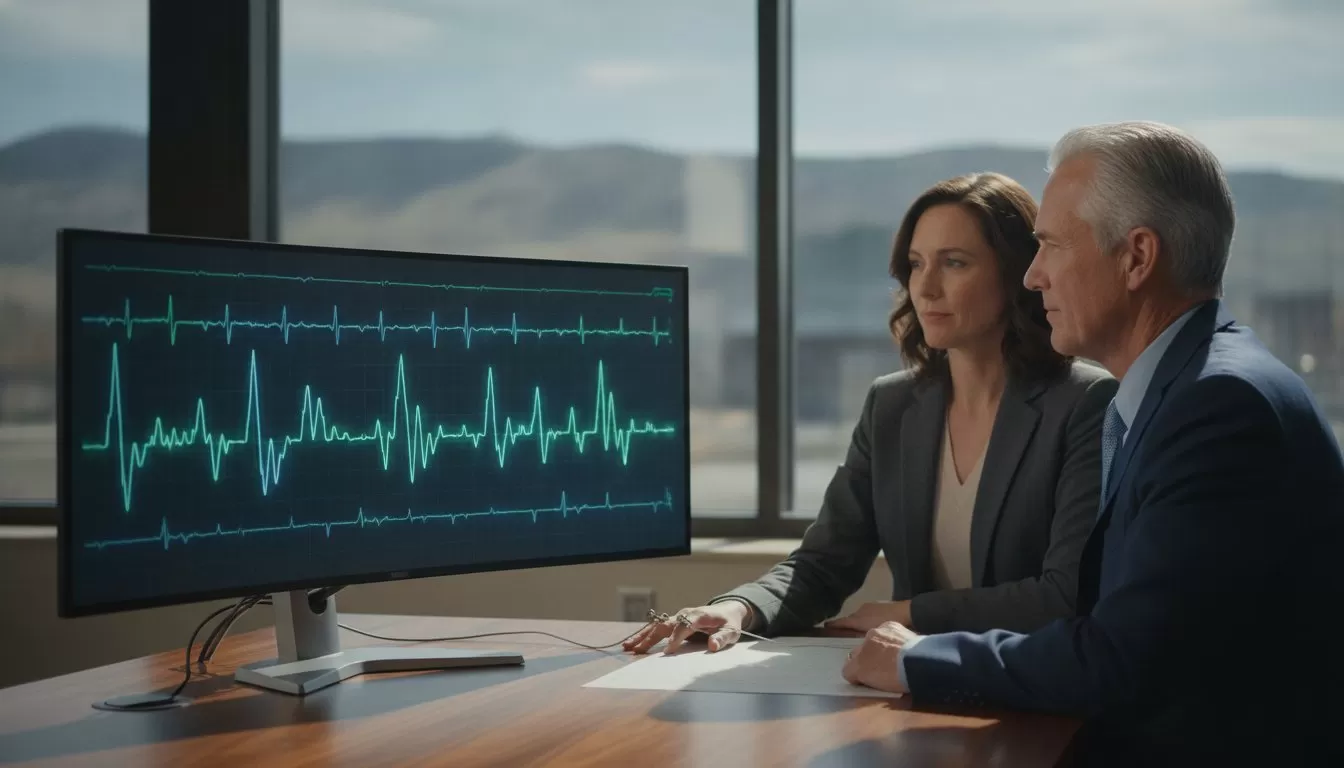
Can your own heart rate betray you even when you’re telling the truth? For many individuals facing a professional polygraph examination, the primary fear isn’t the truth itself, but the possibility that natural anxiety might trigger a false positive. It’s completely normal to feel a sense of trepidation when your integrity is under a microscope. You’re likely looking for more than just a test; you want a process that respects your dignity while providing the objective clarity you need to move forward.
This comprehensive guide demystifies the science behind the sensors, showing you exactly how modern computerized instruments separate baseline nerves from deceptive stress. We’ll walk through the methodical three-phase process used by nationally certified examiners, from the initial pre-test interview to the final data analysis. You’ll also gain vital insights into the 2026 legal admissibility standards in Idaho and learn practical ways to prepare your mind for the appointment. By understanding the rigorous standards and high accuracy rates of the American Polygraph Association, you can replace fear of the unknown with the confidence that comes from professional transparency.
Key Takeaways
- Understand how modern computerized instruments have replaced analog systems to provide more precise, data-driven results.
- Learn the specific 3-phase structure of a professional polygraph examination, which typically lasts between 90 minutes and three hours to ensure thoroughness.
- Discover the biological connection between your autonomic nervous system and the non-invasive sensors used to record physiological data.
- Identify the differences between stipulated and court-admissible results while exploring why industry accuracy rates remain between 85% and 95%.
- Find out how a compassionate, expert approach in a discreet Boise office environment helps mitigate anxiety during sensitive testing.
What is a Polygraph Examination? Defining Modern Lie Detection
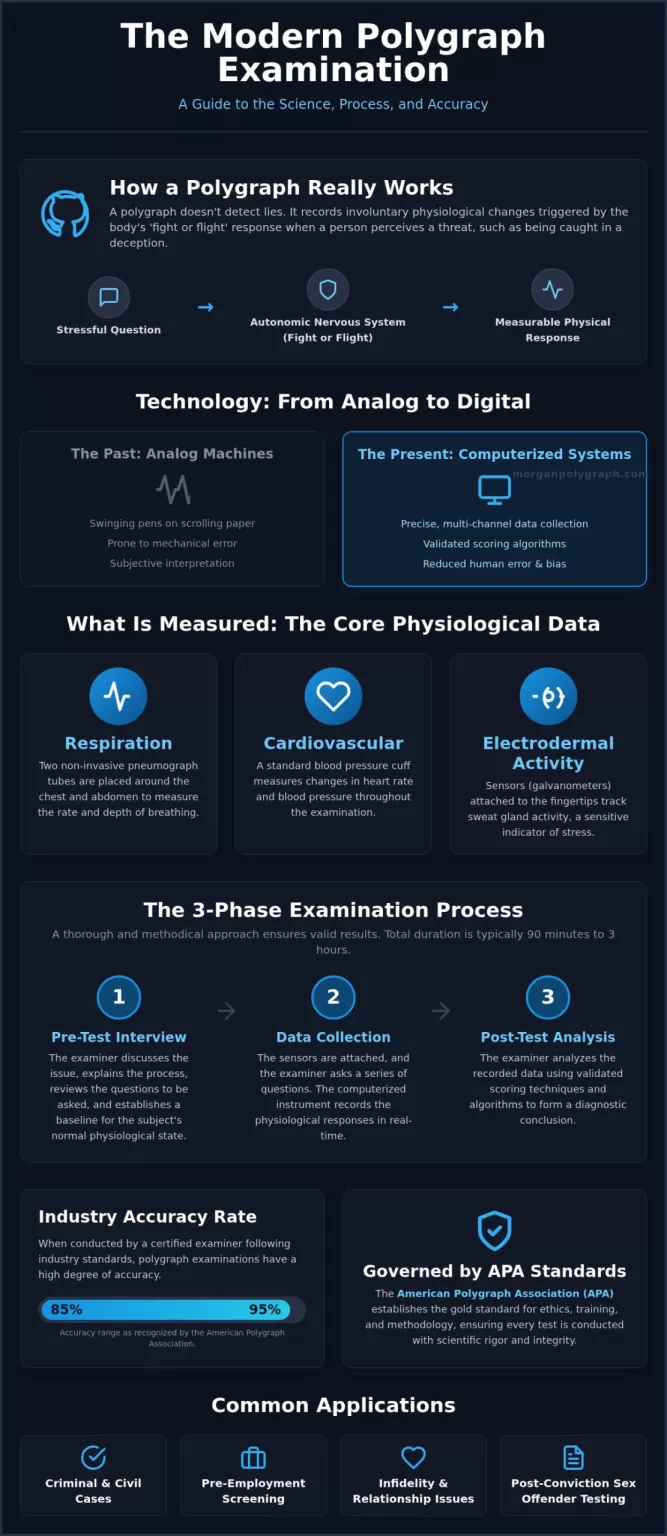
A professional polygraph examination is a diagnostic procedure that utilizes a multi-channel physiological recording device. While the term literally means “many writings,” it refers to the simultaneous measurement of several involuntary body responses. When asking What is a Polygraph?, it’s essential to understand that the process doesn’t monitor thoughts. It tracks the physical manifestations of the autonomic nervous system, specifically changes in breathing, heart rate, blood pressure, and sweat gland activity.
The industry has evolved significantly over the last few decades. We’ve moved away from the old-fashioned analog machines featuring swinging pens and ink on scrolling paper. Today, we use state-of-the-art computerized systems. These digital instruments allow for far more precise data collection. They use validated algorithms to analyze results, which helps to reduce human error and provides a more objective baseline for the examiner.
The core purpose of this technology is to identify deceptive patterns. When a person is deceptive, their Autonomic Nervous System (ANS) often triggers a “fight or flight” response. These involuntary physiological shifts are nearly impossible to control consciously. This is why a professional polygraph examination is vastly superior to unverified tools like voice stress analysis. Voice stress tools often lack the multi-channel data required for a reliable diagnostic, making them insufficient for serious legal or personal matters.
The Role of the American Polygraph Association (APA)
The American Polygraph Association (APA) establishes the gold standard for ethics and methodology. Adhering to these standards ensures that every test is conducted with the highest level of integrity and scientific rigor. It’s vital to choose a certified examiner for a polygraph examination to ensure the results are valid. At Morgan Polygraph, we strictly follow these national certification requirements. This commitment to excellence provides our clients with the peace of mind that their case is being handled by a recognized expert who remains current with modern research.
Common Applications: From Criminal Defense to Fidelity
The foundation of a professional polygraph examination lies in the Autonomic Nervous System (ANS). This complex system controls involuntary body functions like heart rate, respiration, and sweat gland activity. When a person perceives a threat, such as the risk of being detected in a lie, the ANS triggers a “fight or flight” response. This biological shift occurs automatically. It’s a survival mechanism that’s nearly impossible to suppress through sheer willpower, even if the individual appears calm on the surface.
It’s a common misconception that the equipment reads a subject’s thoughts or “sees” a lie. In reality, the instrument acts as a sophisticated recorder for physiological signals. The sensors used are entirely non-invasive and sit on the surface of the skin or clothing. While the technology provides the raw data, the examiner is the professional who interprets these patterns to reach a diagnostic conclusion. Understanding the 3-phase process of a professional polygraph exam helps clarify how these signals are contextualized within the structure of a formal interview. During a polygraph examination, every physiological shift is mapped against specific stimuli to ensure the most accurate reading possible.
Respiratory and Cardiovascular Monitoring
To track breathing patterns, the examiner places two pneumograph tubes around the chest and abdomen. These sensors measure the rate and depth of every breath, looking for suppressions or changes that occur during questioning. Simultaneously, a standard blood pressure cuff monitors heart rate and relative blood pressure. “The cardiovascular channel remains one of the most reliable indicators of physiological arousal during a polygraph exam.” These fluctuations provide a clear window into the body’s internal state, showing how it reacts to the stress of specific inquiries.
Electrodermal Activity (Sweat Gland Response)
Small sensors known as galvanometers are attached to the fingertips to measure skin conductance. These sensors detect micro-sweat responses that are invisible to the naked eye. Even if your palms don’t feel noticeably damp, the instrument picks up minute changes in electrical conductivity caused by the sweat glands. Modern computerized sensors are highly sensitive. This allows a seasoned expert to distinguish between the general “background noise” of situational anxiety and the specific, sharp reactions associated with deceptive intent. If you’re concerned about how your nerves might impact your results, consulting with a compassionate expert in Boise can help you understand the preparation process and mental state required for a successful session.
The 3-Phase Process of a Professional Polygraph Exam
A professional polygraph examination isn’t a rapid-fire interrogation. It’s a methodical diagnostic process that typically lasts between 90 minutes and three hours. At our Boise office, we maintain a discreet, unhurried environment to ensure you feel respected throughout the session. One of the most important rules we follow is that there are absolutely no surprise questions. Every single query is reviewed with you in detail before any sensors are activated. This methodical approach to a polygraph examination ensures that the data collected is both reliable and fair.
Phase 1: The Pre-Test Interview
Phase 3: Data Analysis and Post-Test
Finally, the process moves to Data Analysis and the Post-Test. The examiner uses validated scoring systems to evaluate the collected charts. Admissibility and Accuracy: Can You Trust the Results? is a common concern at this stage, but the scoring process is designed to be entirely objective. The three possible outcomes are No Deception Indicated (NDI), Deception Indicated (DI), or Inconclusive. Once the analysis is complete, we provide a professional report detailing these findings, which is suitable for legal counsel, employers, or private resolution.
Admissibility and Accuracy: Can You Trust the Results?
The most frequent question we hear from clients is: are polygraphs accurate? According to the American Polygraph Association’s meta-analysis, event-specific diagnostic tests conducted by certified experts show an aggregated accuracy between 85% and 95%. This high degree of reliability makes the polygraph examination a cornerstone of modern investigative work. Some people believe they can beat the test through physical or mental countermeasures, but modern computerized instruments use AI-driven analysis and movement sensors to identify these attempts. It’s nearly impossible to consciously override the autonomic nervous system’s response to specific stimuli.
Polygraph Admissibility in Idaho Courts
In Boise and the Treasure Valley, polygraph results are typically used through a process called stipulation. A stipulated polygraph examination involves a written agreement between the defense attorney and the prosecutor. This agreement allows the results to be admitted as evidence in court. Many Idaho attorneys integrate these tests into their criminal defense strategy to provide objective data for their cases. Partnering with court-recognized experts like those at Morgan Polygraph ensures that the examination adheres to the strict protocols necessary for legal consideration.
The “Nervousness” Myth
It’s a myth that being nervous will cause a false positive. We expect every examinee to feel some level of anxiety. To account for this, we use control questions to establish your unique physiological baseline. This allows the examiner to distinguish between general nervous tension and a specific deceptive reaction. Your natural nerves are a constant; a deceptive reaction is a distinct, localized spike in data. Nerves don’t cause failures, but they do require a methodical examiner to interpret them correctly. To experience the difference that a compassionate, expert examiner makes, contact us to discuss your specific needs.
Choosing a Boise Polygraph Examiner: The Morgan Polygraph Difference
Selecting the right examiner is a pivotal step in resolving sensitive legal or personal matters. You need a professional who combines technical mastery with a compassionate, human-focused approach. Our office is conveniently located at 6126 W. State Street in Boise, providing a central point for residents throughout the Treasure Valley. We don’t view a polygraph examination as a hostile encounter. Instead, we treat it as a methodical diagnostic tool designed to provide the objective clarity you need to move forward with your life or legal strategy.
Our firm brings a wealth of specialized experience to every case. We’ve worked extensively with the Idaho Department of Corrections and adhere to the rigorous Post-Conviction Sex Offender Testing (PCSOT) requirements. This background ensures that our protocols meet the highest regulatory and ethical standards in the industry. Whether we’re assisting with a criminal defense case or a private relationship issue, our goal is to provide a reliable, court-recognized expert perspective that you can trust.
State-of-the-Art Technology and Discreet Environment
Privacy is the cornerstone of our practice. When you visit us at Suite 208, you’ll find a professional, quiet, and entirely private office setting designed to put you at ease. We utilize state-of-the-art computerized polygraph instruments. These modern systems are far superior to older analog machines because they eliminate many of the variables that once led to human error in data recording. By using digital sensors and validated scoring algorithms, we ensure the highest level of data integrity for every client. Your sensitive information is handled with absolute confidentiality from the moment you walk through our doors.
How to Schedule an Examination in Boise
Getting started is a straightforward process. We recommend beginning with a consultation to determine if a polygraph examination is the most effective tool for your specific situation. This is especially helpful for attorneys who are building a defense or private individuals seeking a resolution to family conflicts. Once we’ve established the parameters of the test, we’ll guide you through the preparation steps to ensure you’re ready for your appointment. For more logistical details on finding a certified polygraph near me, our expert guide provides everything you need to know about our Boise location and scheduling availability.
Securing the Truth with Professional Clarity
Navigating the complexities of truth and deception requires more than just advanced technology; it demands a methodical approach rooted in science and respect. You now understand that this process is a structured diagnostic of physiological data, designed to provide objective answers while maintaining your dignity. From the precision of computerized sensors to the rigorous standards of the American Polygraph Association, every phase of the session serves to ensure data integrity and psychological comfort. High accuracy rates between 85% and 95% are only possible when the procedure is handled by a seasoned expert who understands the human element behind the data.
With over 20 years of specialized experience, our nationally certified and court-recognized examiners provide the expert insight necessary for criminal defense, relationship fidelity, and screening needs. We invite you to visit our discreet Boise office location to discuss your case in a secure, private environment. Taking the first step toward resolution can be difficult, but you don’t have to face the unknown alone. Schedule a Professional Polygraph Examination in Boise today and gain the clarity you deserve. We’re here to help you move forward with confidence.
Frequently Asked Questions
How long does a polygraph examination typically take?
A standard polygraph examination typically lasts between 90 minutes and three hours. This duration ensures enough time for a thorough pre-test interview, the actual data collection, and the final analysis. We never rush the process; a methodical pace is essential for accuracy and examinee comfort. The exact time depends on the complexity of the issues being addressed, but you should plan to be in our Boise office for at least two hours.
Can I fail a polygraph test just because I am nervous?
You won’t fail simply because you’re nervous. Examiners expect every examinee to experience situational anxiety. We establish a physiological baseline during the pre-test phase using control questions. This allows us to distinguish between your general nervous tension and a specific reaction to a relevant question. Your baseline nerves remain constant, while deceptive reactions appear as distinct, measurable spikes in the data recorded by our computerized instruments.
What questions are asked during an infidelity polygraph?
All questions are reviewed with you before the sensors are attached to ensure there are no surprises. In relationship testing, questions focus on specific physical acts or hidden communications rather than vague emotions or feelings. For example, we might ask about physical contact with a specific person or the existence of secret social media accounts. We work with the requesting partner to ensure the questions provide the clarity needed for resolution.
Are polygraph results admissible in Idaho courts?
In Idaho, polygraph results are generally admissible in court only if both the prosecution and the defense agree to their use through a written stipulation. Attorneys frequently use these examinations to help shape defense strategies or to provide objective data during negotiations. While admissibility rules can be complex, a professionally administered test from a court-recognized expert provides a high level of credibility for legal teams and private individuals throughout the Treasure Valley.
How should I prepare for my polygraph appointment?
Preparing for your appointment is straightforward. You should get a full night’s sleep and eat a normal meal before arriving at our Boise office. It’s important to continue taking any prescribed medications as directed by your physician. Try to arrive in a neutral frame of mind. Avoid consuming excessive caffeine or nicotine immediately before the test, as these can unnecessarily stimulate your autonomic nervous system and complicate the data collection process.
Can medications or medical conditions affect the test results?
Certain medications and medical conditions can influence physiological responses, which is why we discuss your health history during the pre-test interview. Most common medications won’t prevent a successful test, but the examiner needs to be aware of anything that affects heart rate or respiration. If you have a significant respiratory or cardiovascular condition, we’ll evaluate whether a test is appropriate for you at this time to ensure the most reliable outcome.
What is the difference between a polygraph and a lie detector?
“Lie detector” is the common term used by the public, while “polygraph” is the technical, scientific name for the instrument. The word polygraph literally means “many writings,” referring to the multiple physiological channels being recorded simultaneously. While the concepts are the same, a professional polygraph examination involves a rigorous, multi-phase process and state-of-the-art computerized equipment that goes far beyond the simplified “lie detector” image often portrayed in entertainment.
Is the polygraph examination confidential?
Confidentiality is a core requirement of our professional ethics. We handle every case with the utmost discretion. The results of the examination are only released to the individual who authorized the test, such as an attorney, an employer, or the examinee themselves. Our Boise office is designed to provide a private environment where sensitive issues can be addressed securely. We don’t share your information with third parties without your explicit, written consent.