

Did you know that the American Polygraph Association’s meta-analysis found inconclusive rates as high as 13 percent for multi-issue tests? If you just received an inconclusive polygraph result what now is likely the only question on your mind. It’s natural to feel anxious that a non-result will be viewed as deception, especially when your career or personal reputation is on the line. You’ve likely invested significant time and between $400 to $2,500 for a private examination, only to be met with technical ambiguity instead of the clarity you deserve.
An inconclusive result isn’t a verdict; it’s a technical pause indicating the physiological data wasn’t clear enough for a definitive call. This guide will help you understand the specific factors that lead to these results and the professional roadmap required to move forward. You’ll learn the vital differences between an inconclusive and a deceptive reading, what to expect during a re-test, and how to approach your next steps with the calm confidence of someone who knows the truth is on their side.
Key Takeaways
- Understand that an inconclusive result is a technical “no-call” based on scoring parameters, rather than a verdict of deception or a failed test.
- Identify how physiological factors like extreme fatigue, illness, or inconsistent breathing can create “noise” that masks your autonomic nervous system responses.
- Discover the professional roadmap for an inconclusive polygraph result what now, including how to navigate re-test protocols and formal written reports.
- Prepare for a successful re-examination by prioritizing 7 to 8 hours of sleep and maintaining your normal dietary and medication routines.
- Learn how Chip Morgan’s 40 years of court-recognized expertise provides the precision needed to resolve ambiguous data and reach a definitive resolution.
Defining the Inconclusive Polygraph Result: Why It’s Not a ‘Fail’
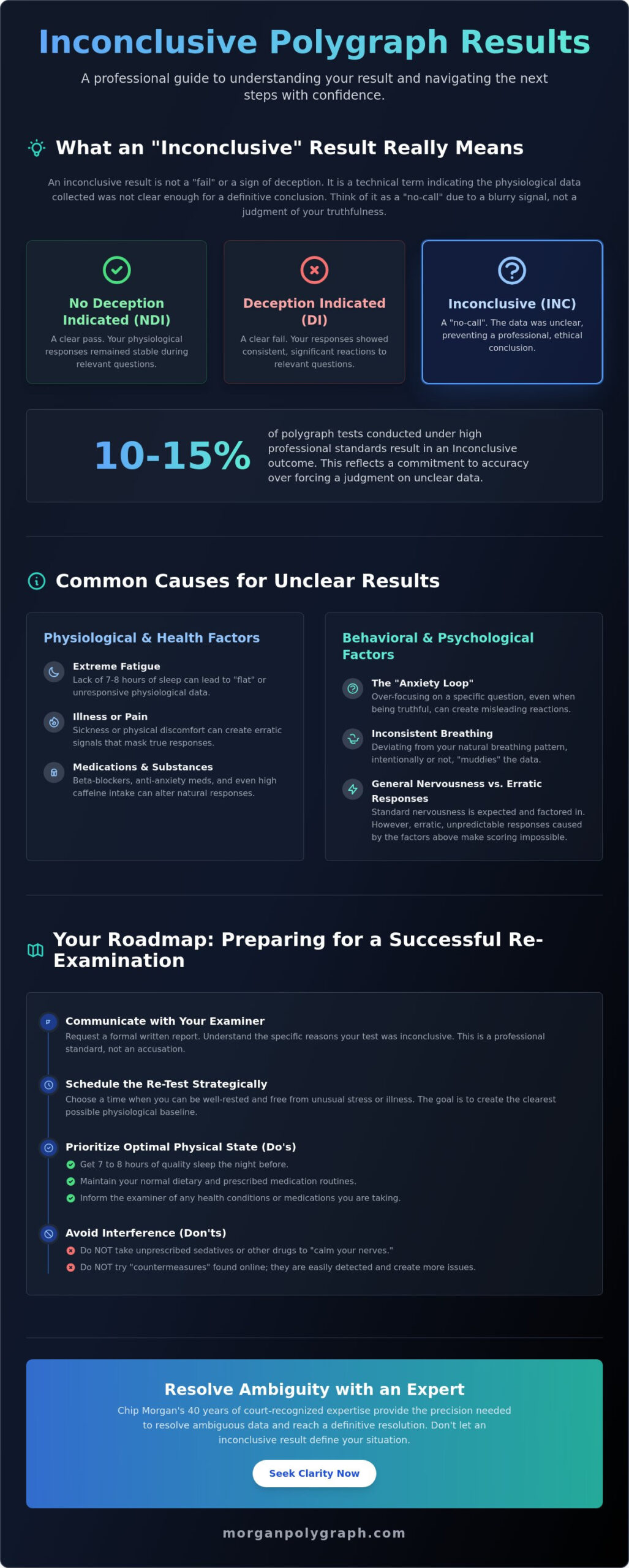
Receiving an inconclusive result is frustrating, but you shouldn’t view it as a failure. In the field of truth verification, “inconclusive” is a specific technical term. It indicates that the physiological data collected during your session fell outside established scoring parameters. It’s essentially a “no-call” in a high-stakes environment. The data didn’t provide enough clarity to move the needle toward a definitive result in either direction.
To better understand this, we have to look at What is a polygraph? and how it tracks your body’s autonomic responses. Most people produce clear, readable charts that fall into distinct categories. However, some charts land in a physiological “gray area.” Think of the polygraph chart as a high-resolution photograph. If the camera moves or the lighting is poor, the image comes out blurry. You can’t identify the subject with 100% certainty. In this scenario, the examiner isn’t saying you’re lying; they’re saying the “photo” of your physiological response is too blurry to make a professional identification.
Deceptive vs. Non-Deceptive vs. Inconclusive
When you face an inconclusive polygraph result what now becomes the primary focus, but first, you need to know the three possible outcomes. A result of No Deception Indicated (NDI) is a clear pass. This means your body remained stable during relevant questions. Deception Indicated (DI) is a clear failure, showing consistent stress responses. The Inconclusive (INC) result serves as a vital safety net for accuracy. It exists because professional ethics prevent examiners from guessing when the data is messy. We’d rather provide no result than an incorrect one that could unfairly label you as deceptive.
The Examiner’s Duty to Accuracy
Certified examiners prioritize scientific truth over a quick decision. The question of are polygraphs accurate depends heavily on the examiner’s ability to reject unclear data. If we see “noisy” data caused by external factors, we won’t force a verdict. We have a professional obligation to remain objective. Professional statistics show that the inconclusive rate typically falls between 10% and 15% in high-standard settings. This range reflects a commitment to precision. We don’t make guesses that could jeopardize your career or your future. Instead, we look for the “why” behind the unclear data to ensure your next steps are based on solid evidence.
Common Causes for an Inconclusive Polygraph Outcome
An inconclusive result occurs when the recorded data lacks the distinct patterns required for a definitive “Deceptive” or “Non-Deceptive” call. If you find yourself facing an inconclusive polygraph result what now becomes the immediate question, but the answer often lies in your body’s physical state during the exam. It’s rarely about a single factor. Instead, it’s usually a combination of physiological “noise” and environmental variables that obscure your autonomic nervous system’s signals.
Physiological and Health Factors
Your physical condition is the foundation of a readable chart. Extreme fatigue is a leading cause of unclear data. When you haven’t had 7 to 8 hours of restful sleep, your body’s responses can become “flat” or unresponsive. Similarly, illness or even high caffeine intake can create erratic heart rate patterns. It’s a common hurdle, as seen with inconclusive polygraph results for clearance applicants, where the high pressure of the situation combined with physical exhaustion can lead to physiological interference.
Medications also play a significant role. Certain beta-blockers, anti-anxiety meds, or even heavy allergy medications can suppress the skin conductivity or heart rate responses that examiners need to see. While being “nervous” is expected and factored into the scoring, “erratic” responses caused by physical discomfort or chemical interference make the data impossible to score accurately. If you’re concerned about how your health might impact your session, you can speak with a professional examiner to discuss your specific situation.
Behavioral and Psychological Interference
The “anxiety loop” is a psychological phenomenon where a person becomes overly focused on one specific question, even if they’re telling the truth. This hyper-focus creates a consistent but ambiguous stress response that doesn’t match typical deception patterns. Another factor is “minimizing.” This happens when someone tells a partial truth. The body reacts to the withheld information, but the response isn’t strong enough to trigger a deceptive result, leading to a “no opinion” verdict.
Emotional state is equally critical. When conducting an infidelity test, the sheer weight of emotional trauma or grief can sometimes overwhelm the autonomic nervous system. This creates a state of “emotional flooding” where the charts become unreadable due to the intensity of the subject’s baseline distress. In these cases, the examiner must recognize that the data is reflecting trauma rather than deception, necessitating a pause and a future re-test once the individual is more stable.
Immediate Next Steps: Navigating the ‘What Now’ Phase
After being told of an inconclusive polygraph result what now becomes the primary focus for your peace of mind. The first step is patience. You must wait for the formal written report from the examiner. This document provides a technical breakdown of why the scoring parameters weren’t met. It’s a professional analysis of your physiological data, not a guess or a summary of a conversation. Receiving this report is a standard requirement before any secondary actions are taken.
Don’t let the waiting period fuel your anxiety or lead you toward destructive habits. Most professional agencies and private clients have a standard re-test protocol. A second attempt is almost always granted because the goal is truth verification, not a rushed judgment. While you wait, stay away from online forums or “guides” on how to beat the test. These sources often recommend physical or mental countermeasures. If you try these during a re-test, the examiner will likely identify the manipulation. This results in another inconclusive result or, worse, a “purposeful non-cooperation” verdict. As of May 2026, data suggests that examiners are increasingly trained to spot these AI-identified behavioral patterns.
Legal and Criminal Case Protocols
In legal settings, defense attorneys often view an inconclusive result as an opportunity for a fresh start. They may use the technical “no-call” to request a different examiner or a more specific test format. For court-mandated testing, an inconclusive result is handled methodically. It doesn’t automatically trigger a violation of probation or a negative legal inference. Instead, it signals that the physiological data was insufficient for a court-recognized report. For a deeper look at how these sessions fit into the legal framework, review our polygraph examination guide. This resource clarifies the procedural steps required for reaching a definitive resolution.
Private and Relationship Testing Scenarios
For couples, an inconclusive result can feel like a setback in rebuilding trust. However, it’s actually a chance for better communication. It’s important to explain to your partner that the body simply didn’t provide clear data, often due to the emotional flooding we discussed earlier. The solution is usually a second test with a “finer” focus. We narrow the scope to very specific, single-issue questions. This reduces the physiological “noise” caused by broad inquiries. Throughout this process, we maintain strict discretion and confidentiality. We ensure that the technical nature of the inconclusive result is explained clearly to both parties to prevent unnecessary conflict or false accusations.
How to Prepare for Your Polygraph Re-Examination
If you’re facing an inconclusive polygraph result what now involves a deliberate reset of your physical and mental state. A re-examination isn’t a penalty; it’s a second opportunity to provide the clear physiological data that was missing during your first session. To ensure the most accurate outcome, you must treat your body like a precision instrument. This starts with basic physical maintenance that many examinees overlook in their anxiety.
- Prioritize 7 to 8 hours of sleep: Fatigue is a primary driver of “flat” or unscoreable charts. Your autonomic nervous system needs to be fully rested to produce distinct responses.
- Maintain your routine: Don’t skip breakfast or double your caffeine intake. Stick to your normal diet and take all prescribed medications exactly as directed by your physician unless the examiner specifically instructs otherwise.
- Arrive 15 minutes early: Use this time to sit quietly in the waiting area. This small window allows your baseline heart rate and respiration to stabilize after the stress of driving and parking.
- Practice total transparency: During the pre-test interview, be 100% honest about any medications, illnesses, or specific questions that caused you stress during the first exam.
Mental and Physical Baseline Reset
Over-preparing is often the enemy of a clear polygraph chart. Many people spend hours researching “tips” online, which only increases cognitive load and creates erratic physiological responses. Instead, focus on physical comfort. Wear loose, non-restrictive clothing and ensure you’re well-hydrated. If you’re physically uncomfortable, your body will produce “noise” that masks the very signals the examiner needs to track. You should treat the re-test as a fresh start, not a continuation of the first.
Communicating with Your Examiner
Effective communication is the bridge to a definitive result. If you felt physical discomfort from the blood pressure cuff or sensors during the first session, tell the examiner immediately. We can adjust the equipment or your seating position to minimize interference. It’s also vital to clarify the “pre-test” questions. If a question feels semantically ambiguous or if you’re unsure of a definition, ask for clarification until you’re certain of your answer. Ambiguity leads to hesitation, and hesitation leads to inconclusive data.
If you suspect the initial inconclusive result was due to an examiner’s lack of experience, you have the right to request a certified expert for your follow-up. Accuracy in truth verification requires a deep understanding of complex physiological patterns. To ensure your case is resolved with the highest level of professional scrutiny, schedule a consultation with a certified polygraph professional who brings decades of experience to the table.
The Morgan Polygraph Advantage: Resolving the Unclear
When you’re left with an inconclusive polygraph result what now is a question that requires an expert answer. At Morgan Polygraph, we specialize in resolving the technical ambiguities that leave other examiners guessing. Chip Morgan brings over 40 years of combined polygraph testing experience to the table. This isn’t just about reading charts; it’s about understanding the human element behind the data. As a court-recognized expert, Chip has the authority to provide definitive legal reports that carry weight in both civil and criminal cases. We don’t just provide a score; we provide a resolution based on decades of professional practice.
Our Boise office is designed to be a low-stress environment. We know that high anxiety can lead to the “noisy” data that causes inconclusive results, as we discussed in earlier sections. By fostering a professional and respectful atmosphere, we help you reach a stable baseline from the moment you walk through our doors. This methodical approach is why we’re trusted with sensitive issues ranging from pre-employment screening to post-conviction sex offender testing (PCSOT). We prioritize your comfort to ensure your body’s physiological signals are as clear as possible.
Cutting-Edge Technology in Boise
Traditional sensors are just one part of the equation at our firm. We integrate behavioral speech analysis and facial microexpression recognition to supplement standard polygraph charts. If your body’s autonomic responses were suppressed or erratic during a previous exam, these AI-driven tools offer another layer of truth verification. This technology helps us identify the specific reasons for previous data gaps. If you’re finding a certified polygraph near me, you want a firm that uses every available technological advantage to ensure accuracy. AI reduces the risk of human error and helps us shape a more reliable future for the industry.
Schedule Your Definitive Truth Verification
If you’ve received an inconclusive result from another provider, don’t feel discouraged or assume the worst. Call Chip directly to discuss the specifics of your case. We’ll review the circumstances of your first test and develop a professional roadmap for a successful re-examination. Every interaction is handled with the utmost discretion, compassion, and scientific gravitas. We understand the high stakes involved in your career or relationships, and we’re committed to providing the clarity you deserve.
Don’t let an unclear result leave your future in question. Contact Morgan Polygraph today for a confidential consultation and take the first step toward a definitive resolution.
Moving Toward a Definitive Resolution
Receiving an inconclusive outcome is a technical hurdle, not a final judgment on your character. These results occur in up to 13 percent of multi-issue exams because the physiological data didn’t meet strict scoring parameters. By prioritizing rest and maintaining your physical baseline, you significantly improve the chances of a clear reading during your second session. Now that you understand the inconclusive polygraph result what now phase, you can approach your re-test with the calm confidence required for accurate truth verification.
At Morgan Polygraph, we combine 40 years of combined experience with cutting-edge AI-powered deception detection tools to resolve even the most complex cases. Our nationally certified and court-recognized experts specialize in identifying the specific causes of unscoreable data. Don’t let an ambiguous result stall your career or damage your personal relationships. Talk to Chip Morgan about your inconclusive result to schedule a session where accuracy and professional discretion are the top priorities. You deserve a definitive answer, and we have the expertise to help you find it.
Frequently Asked Questions
Is an inconclusive polygraph result the same as failing?
No, an inconclusive result is not a failure. It means the physiological data didn’t meet the threshold for a definitive “Deception Indicated” or “No Deception Indicated” verdict. According to American Polygraph Association standards, this occurs in approximately 10 to 15 percent of examinations. It’s a technical “no-call” that protects the accuracy of the final report by refusing to guess on ambiguous charts.
Can I be fired if my polygraph result is inconclusive?
Under the Employee Polygraph Protection Act of 1988, most private employers cannot fire an employee based solely on a lie detector test. In government or law enforcement roles, an inconclusive result typically triggers a re-test rather than immediate termination. Agencies recognize that physiological noise can happen to anyone. You’ll usually be given at least one additional opportunity to reach a clear result.
What are the most common reasons for an inconclusive result?
The most frequent causes include physical exhaustion, acute illness, or inconsistent breathing patterns. If you’re wondering about an inconclusive polygraph result what now, understand that these factors create “noise” on the chart. This noise masks the autonomic nervous system signals the examiner needs to track. These technical issues account for the majority of the 13 percent inconclusive rate found in multi-issue testing.
How many times can you take a polygraph if it keeps coming back inconclusive?
Most agencies and private examiners allow for two to three attempts to reach a definitive call. If a result remains inconclusive after multiple sessions, the client may seek alternative truth verification methods like behavioral speech analysis. There’s no federal limit on re-tests. However, examiners will typically pause to identify the root cause of the ambiguity before scheduling a third appointment.
Does being nervous cause an inconclusive result?
Standard nervousness is expected and rarely causes an inconclusive result. Examiners establish a physiological baseline at the start of every session to account for your anxiety. Only extreme, erratic emotional flooding or “anxiety loops” that prevent a stable baseline will lead to a technical no-call. Staying calm and following the examiner’s instructions helps ensure your data stays within scoreable parameters.
Can medications cause a polygraph to be inconclusive?
Yes, certain medications that affect heart rate or skin conductivity can flatten your physiological charts. Beta-blockers and some anti-anxiety medications are known to suppress the autonomic responses required for a clear reading. You must disclose all medications during the pre-test interview. This allows the examiner to factor these substances into their analysis and reduces the risk of an unscoreable session.
What should I do differently for my second polygraph test?
Focus on physical readiness by securing 7 to 8 hours of sleep and arriving 15 minutes early to your appointment. Addressing an inconclusive polygraph result what now requires a mental reset. You should treat the second exam as a fresh start. Be completely transparent about any physical discomfort you felt during the first session. This allows the examiner to adjust the equipment for better data collection.
How long does it take to get the final report after an inconclusive result?
You can typically expect a formal written report within 24 to 48 hours of your session. While verbal results are sometimes discussed immediately, the technical analysis requires time for the examiner to score the charts precisely. For court-mandated or complex civil cases, the review process ensures the report meets the high standards required for legal recognition and professional accuracy.