
What if the “affordable” polygraph you just booked is the very reason your case falls apart in front of a judge? When you’re managing the stress of a legal battle, it’s natural to look for clear answers; however, prioritizing a low price over forensic precision can be a costly mistake. You’re likely worried about whether your evidence will actually be accepted or if you’re just throwing money away on a report that won’t hold up in a Boise courtroom. Understanding the true cost of a polygraph for a court case involves looking past the initial fee and focusing on the examiner’s credentials and the technical rigor of the process.
In this guide, you’ll learn exactly what drives the cost of court-recognized polygraph exams in 2026 and how to ensure your results hold the necessary legal weight. We’ll explore why local expertise and national certification matter more than ever for criminal and civil cases. From the complexity of specialized testing to the importance of a clear, expert report, we’re providing the transparency you need to make an informed decision and regain your peace of mind. By the end of this article, you’ll have the confidence to choose an examiner who offers both technical excellence and professional integrity.
Key Takeaways
- Learn what factors define the 2026 price range for the cost of a polygraph for a court case and why legal matters require more intensive preparation than private exams.
- Discover how specialized forensic reporting and attorney consultations ensure your examination survives strict legal scrutiny and cross-examination.
- Identify the critical risks associated with uncertified examiners and virtual scams that can jeopardize your entire legal strategy.
- Explore the specific Idaho SOMB standards and PCSOT requirements that dictate testing frequency and expert certification for sex offender management.
- Follow a clear, methodical process to define your legal requirements and consult with counsel before scheduling an examination in Boise.
Understanding the Cost of a Polygraph for a Court Case in 2026
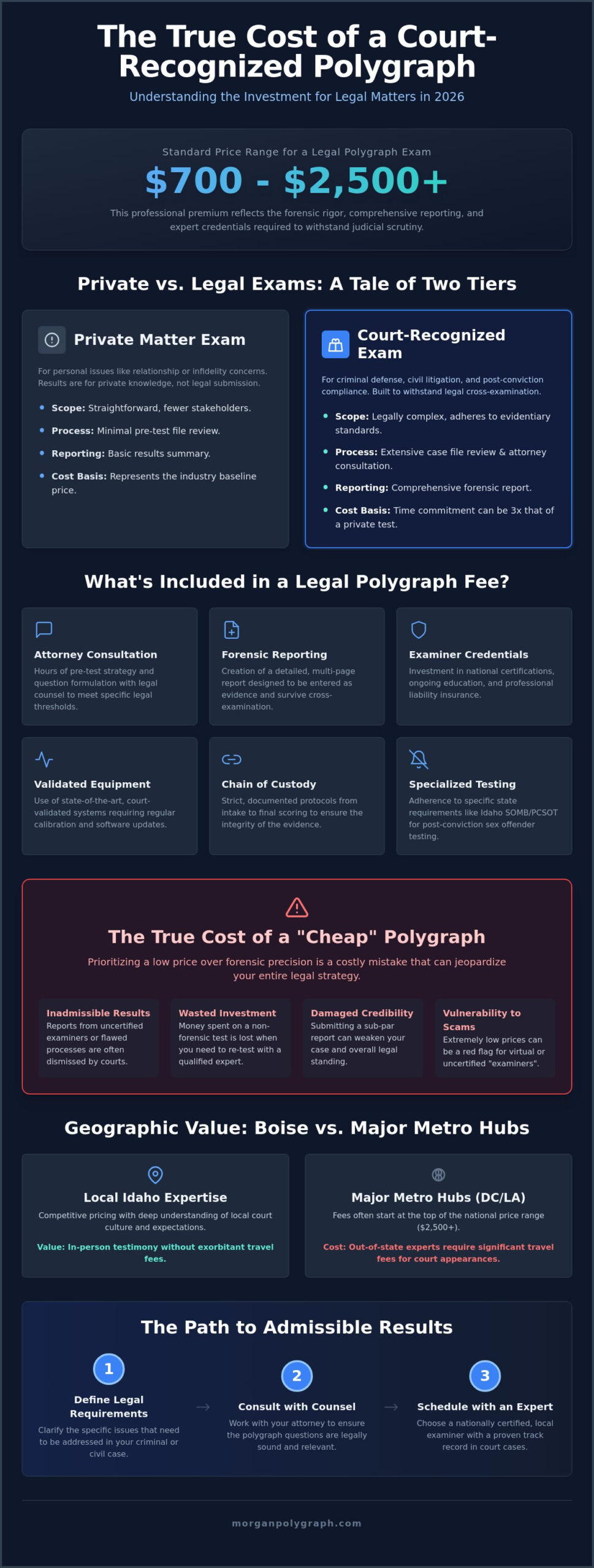
The cost of a polygraph for a court case in 2026 typically reflects the transition from simple truth-verification to a rigorous forensic process. While individual quotes vary based on case complexity, industry-standard market rates for legal examinations generally range from $700 to over $2,500. This investment covers the examiner’s professional liability, specialized credentials, and the extensive preparation required for results that hold legal weight. You shouldn’t settle for “discount” services; these often exclude the comprehensive forensic reports that attorneys need to build a defense or support a civil claim. A Polygraph overview highlights that while the core technology remains consistent, the application in legal settings requires a level of precision that basic screenings simply don’t provide.
Court-recognized examinations involve hours of pre-test analysis and direct consultation with legal counsel. Unlike a private matter, a legal exam must adhere to strict evidentiary standards. If an examiner offers a quote significantly below the market average, it’s likely they aren’t accounting for the administrative time needed to survive a cross-examination. Professional examiners in Boise maintain these high standards because their reputation is on the line every time a report enters the public record.
Private vs. Legal Polygraph Pricing
Relationship or infidelity tests often serve as the baseline for pricing in the industry. These exams are generally straightforward and involve fewer stakeholders. In contrast, the cost of a polygraph for a court case is higher because the stakes are significantly greater. Criminal defense and civil litigation exams require the examiner to review case files, coordinate with attorneys, and draft questions that meet specific legal thresholds. For firms focusing on civil justice, such as the Oberg Law Office, the thoroughness of these forensic reports is essential for building a credible case. The time commitment for a legal exam can be triple that of a private test, justifying the professional premium.
The 2026 National vs. Local Idaho Market
Pricing in Boise remains competitive compared to major metropolitan hubs like Washington D.C. or Los Angeles, where fees often start at the top of the price range. However, local Idaho expertise provides a value that “fly-in” examiners can’t match. An examiner based in Southern Idaho understands the local court culture and the specific expectations of Idaho’s legal community. When you’re finding a polygraph near me, you’re investing in a professional who can appear in person for testimony without the exorbitant travel fees associated with out-of-state experts. Local reputation is the ultimate currency in the legal field; it ensures the court views the report with the necessary gravity.
Why Legal Polygraphs Command a Professional Premium
The cost of a polygraph for a court case includes far more than the time spent in the examination room. When legal outcomes are at stake, you aren’t just paying for a result; you’re paying for a forensic process that can withstand the intense scrutiny of a courtroom. This professional premium is driven by the examiner’s obligation to produce a document that survives aggressive cross-examination. Unlike private screenings, legal examinations require hours of pre-test consultation with defense attorneys or civil counsel to refine specific issue questions. This ensures the test addresses the exact legal nuances of the case while adhering to the admissibility of polygraph examinations standards established by federal and state guidelines.
Maintaining a strict chain of custody and following validated testing protocols adds significant administrative weight to the process. Every step, from the initial intake to the final scoring, must be documented to ensure the integrity of the evidence. Additionally, the cost of a polygraph for a court case reflects the investment in state-of-the-art, court-validated equipment. These systems aren’t static; they require regular calibration and software updates to remain at the leading edge of physiological data detection. Forensic examiners must invest in these high-precision tools to provide the level of accuracy that judges and legal professionals expect.
The Role of the Expert Witness
An examiner’s reputation within the Boise judicial system is a critical component of the service’s value. Judges and prosecutors often recognize specific practitioners whose work consistently meets high forensic standards. There’s a profound difference between a simple “pass/fail” result and a comprehensive chart analysis that provides a data-driven explanation of physiological responses. Attorneys prioritize the question are polygraphs accurate because a scientifically sound report is much harder for the opposing side to dismiss. The expert’s ability to testify and explain these charts is what transforms a test into admissible evidence.
Administrative and Legal Overhead
The logistical coordination required for legal cases is extensive. Examiners must frequently spend time communicating with prosecutors, probation officers, or court administrators to align the testing with legal mandates. A professional polygraph examination follows a rigorous methodology that transforms raw data into a forensic product. This final report isn’t just a summary of a conversation; it’s a specialized forensic document designed to be entered into evidence. If you’re preparing for a legal proceeding, it’s wise to consult with a certified expert who understands these high-stakes requirements and can provide the necessary documentation for your counsel.
Specialized Testing: PCSOT and Idaho SOMB Requirements
Post-Conviction Sex Offender Testing (PCSOT) represents a specialized category where the cost of a polygraph for a court case is often a recurring budget item rather than a one-time expense. In Idaho, these examinations are governed by state oversight, which sets rigorous standards for how often offenders must be tested and what specific protocols examiners must follow. Unlike a standard criminal defense exam, PCSOT is a long-term monitoring tool designed to ensure community safety and treatment compliance. The legal definition of a polygraph typically focuses on the technology itself; however, in the context of these specialized program requirements, the emphasis shifts to the examiner’s specialized certification and their ability to work within a multidisciplinary containment team.
Examiners performing these tests must complete at least 40 hours of specialized PCSOT training in addition to their basic 400-hour accreditation. This advanced skill set ensures that the reporting formats meet the precise needs of probation officers and treatment providers. Because these tests are often court-mandated, the documentation must be flawless to remain in compliance with state law. The state of Idaho maintains a specific fee structure for examiner certification, ensuring that only those who meet the state’s high standards are permitted to conduct these high-stakes examinations.
Pricing for PCSOT and Therapeutic Exams
Monitoring tests often follow a different pricing structure because they’re performed at regular intervals, such as every six months. These exams are frequently integrated into a broader treatment framework that begins with a psychosexual evaluation. While a single-issue criminal defense exam focuses on a specific past event, PCSOT compliance testing monitors ongoing behavior and adherence to supervision rules. This therapeutic focus requires the examiner to maintain a balance of professional detachment and clinical cooperation, which is a specialized skill set that commands a professional premium.
Jail and Off-Site Testing Fees
When an examination must take place within a correctional facility, additional logistical costs are inevitable. Conducting a polygraph in a secure environment involves significant wait times, security screenings, and the transport of sensitive equipment. Many providers charge travel fees for visits to Southern Idaho jails or state prisons. Choosing a Boise-based examiner is a practical way to manage the cost of a polygraph for a court case, as it minimizes these travel-related expenses. Local experts are already familiar with the security protocols of Idaho facilities, which streamlines the process and reduces the administrative hours billed to the client.
The True Cost of ‘Cheap’ Lie Detector Services
Choosing a low-cost provider might seem like a practical way to manage expenses, but in a legal setting, it often leads to catastrophic results. The market is currently flooded with “gag” kits and polygraph test online scams that promise professional results for a fraction of the market rate. These virtual services lack scientific validity. They are universally rejected by Idaho courts. When calculating the cost of a polygraph for a court case, you must consider the “cost of being wrong.” An inaccurate result or a report from an uncertified practitioner can lead to a judge dismissing your evidence entirely, potentially shifting the outcome of your entire legal battle.
Discount examiners frequently cut corners on the very elements that make a report court-admissible. They often skip the intensive pre-test research and post-test chart analysis discussed in previous sections. Without these rigorous steps, the risk of a “false positive” or a “false negative” increases significantly. The emotional and legal fallout of a botched examination is far more expensive than the initial investment in a qualified expert. If your examiner cannot provide a forensic-grade document that survives a prosecutor’s scrutiny, the money spent on that test is essentially wasted. This can result in lost custody, damaged reputations, or even incarceration.
Professional Certification vs. Unregulated Services
The journey of how to become a polygraph examiner involves hundreds of hours of accredited training and ongoing peer review. National certification from organizations like the American Polygraph Association is a non-negotiable requirement for legal cases. Unregulated services often employ individuals who have only completed a few days of training. These practitioners lack the depth of knowledge required to interpret complex physiological data, which is where most errors occur. Using an uncertified individual is a risk that most Idaho attorneys simply won’t take.
Identifying Red Flags in Low-Cost Quotes
Be wary of quotes that seem too good to be true. A professional polygraph test requires a controlled, distraction-free environment and high-end, calibrated equipment. If an examiner refuses to provide their credentials upfront or suggests meeting in a public space, they aren’t a forensic professional. These red flags indicate a lack of the administrative and technical overhead necessary for court-recognized work. Reliable results come from experts who invest in their practice and their community. To ensure your case is handled with the precision it deserves, schedule your examination with a nationally certified Boise expert today.
How to Get an Accurate Quote and Schedule in Boise
Securing a professional examination requires a methodical approach to ensure the results are both accurate and admissible. The first step is to define the specific legal issue or court requirement. Judges often mandate specific protocols, so you must understand whether you need a criminal defense exam or a PCSOT monitoring test. Always consult with your attorney before contacting an examiner. Your counsel will help refine the issues and ensure the timing aligns with your litigation strategy. This preparation is essential because the cost of a polygraph for a court case reflects the depth of research and coordination required between the expert and your legal team.
Once your attorney provides the green light, verify the examiner’s standing with both Idaho courts and national boards like the American Polygraph Association. This step protects you from the uncertified services that can jeopardize your case. Finally, request a transparent, written quote. A professional should provide a clear breakdown of fees, including the pre-test consultation, the examination itself, and the final forensic report. This transparency ensures there are no hidden costs when your legal deadlines approach.
- Step 1: Define the specific legal issue or court requirement.
- Step 2: Consult with your attorney before contacting the examiner.
- Step 3: Verify the examiner’s standing with Idaho courts and national boards.
- Step 4: Request a transparent, written quote including all reporting fees.
What Information Your Examiner Needs
To provide a precise quote for the cost of a polygraph for a court case, your examiner needs several logistical details. First, clarify the number of issues to be tested. While single-issue exams are the forensic gold standard for accuracy, some civil cases may require a different approach. You must also specify the location. Whether the exam takes place in a controlled Boise office or requires a Southern Idaho jail visit will impact the final administrative fee. Finally, communicate the deadline. Legal filings are time-sensitive, and your examiner needs to know exactly when the final forensic report must be delivered to your counsel to meet court dates.
Booking Your Examination with Confidence
Morgan Polygraph is the preferred choice for Treasure Valley attorneys because of our deep Idaho legal ties and commitment to forensic precision. We provide a neutral, professional environment that is essential for collecting valid physiological data. This setting ensures the examinee is handled with respect while the data remains free from environmental interference. By following this organized booking process, you can move forward with the confidence that your evidence is in expert hands. Contact Morgan Polygraph for a confidential legal consultation.
Securing Expert Evidence for Your Legal Strategy
Choosing a forensic professional is a critical step in managing your legal outcome. As we’ve explored, the cost of a polygraph for a court case is an investment in accuracy, transparency, and results that survive judicial scrutiny. By prioritizing nationally certified examiners and state-of-the-art forensic technology, you ensure that your evidence is rooted in scientific rigor rather than guesswork. Whether you’re navigating a complex criminal defense or adhering to Idaho SOMB requirements for PCSOT, the reputation of your examiner in the Boise legal community is your greatest asset.
A professional report serves as a cornerstone of your defense or compliance strategy. It provides the clarity that attorneys, judges, and probation officers require to make informed decisions. Don’t leave your future to chance with unverified services. Request a Professional Quote for Your Court Case and partner with specialists in criminal defense and PCSOT who understand the high stakes of Idaho litigation. We’re here to provide the authoritative support and peace of mind you need to move forward with your case.
Frequently Asked Questions
How much does a polygraph for a court case cost in Boise, Idaho?
Professional fees for a court-recognized examination in Boise are determined by the complexity of the specific legal issue. Because these tests require extensive forensic preparation and adherence to strict evidentiary standards, they command a premium over private screenings. You’ll receive a transparent, written quote after your initial consultation that accounts for all technical and administrative requirements. This ensures the results are suitable for legal submission.
Are there extra fees for the examiner to testify in court?
Yes, expert witness testimony is billed as a separate professional service. This fee covers the examiner’s time spent in the courtroom, travel, and any necessary preparation for depositions. Providing testimony is a specialized skill that requires the examiner to explain complex physiological data to a judge or jury. Most practitioners provide a separate fee schedule for these legal appearances to ensure clear communication with your attorney.
Will my insurance cover the cost of a polygraph for a legal matter?
No, polygraph examinations are almost never covered by standard medical or legal insurance policies. Insurance providers typically view these services as specialized litigation expenses rather than medical necessities. Clients should plan for this as an out-of-pocket cost within their legal budget. In some criminal defense cases, you may want to consult with your attorney to see if certain court-appointed funds are available to cover forensic expert fees.
Why is a criminal defense polygraph more expensive than an infidelity test?
A criminal defense exam involves significantly more labor than a standard relationship test. The cost of a polygraph for a court case covers the hours spent reviewing case files, coordinating with defense counsel, and drafting questions that meet legal thresholds. In specialized cases involving specific state regulations, such as those navigated by Mission Focus Legal Group, the complexity of the legal framework directly influences the depth of the forensic inquiry. These forensic-grade examinations are designed to survive cross-examination, which requires a level of technical rigor and administrative documentation not found in private matters.
What happens to the fee if the examinee is found to be ‘untestable’?
If a session is terminated because the examinee is found to be physically or mentally unfit for testing, a partial administrative fee usually applies. This covers the examiner’s time, the laboratory setup, and the initial intake process. Professional examiners perform a thorough pre-test assessment to identify medical or psychological factors that might interfere with the data. If an examinee is untestable, the examiner will provide a clear explanation for the record.
Is the written report included in the initial cost of the examination?
Yes, a comprehensive forensic report is a standard component of a court-recognized exam. This document isn’t just a simple result; it’s a detailed analysis of the physiological data collected during the session. The report is designed to be entered into evidence and provides the technical justification for the examiner’s conclusions. You won’t be charged extra for the basic documentation required by your legal counsel to move forward with the case.
Do I have to pay a deposit to schedule a polygraph in Boise?
Most professional examiners in Boise require a non-refundable deposit to secure a specific date and time for your examination. This practice ensures that the laboratory and the expert’s schedule are fully committed to your legal matter. Because legal cases often have strict deadlines, the deposit protects the examiner’s availability. The remaining balance is typically due at the time of the appointment, ensuring a professional and streamlined engagement.
How much does travel to a correctional facility usually add to the cost?
Travel fees for off-site testing at a correctional facility are calculated based on distance and the total time required for security clearances. Conducting an exam in a secure environment involves significant logistical complexity and often requires the examiner to be on-site for several hours. These fees are usually billed as a flat travel rate plus an hourly administrative charge. Choosing a local Boise examiner helps minimize these expenses compared to hiring an out-of-state expert.