
What if the only thing standing between your family and a life-altering separation is a single, unverified accusation? For many parents in Idaho, the sudden arrival of a social worker feels like the start of a battle they’ve already lost. It’s a terrifying experience to feel that an investigator has already made up their mind, especially when you lack the objective evidence needed to counter a false claim. You aren’t alone in feeling that the emotional stress of a potential separation is almost too much to bear.
We understand that verifying statements in a child welfare investigation Nampa is about more than just data; it’s about protecting the bond you have with your children. This guide will show you how professional, court-recognized statement verification provides the clarity required to protect your rights and ensure the truth remains the focus of your case. We’ll explore how modern technology can help you resolve these high-stakes investigations quickly, allowing you to clear your name and keep your family whole in the face of new legislative shifts like Isaiah’s Law. By the end of this article, you’ll understand how to use objective evidence to navigate the system with confidence and peace of mind.
Key Takeaways
- Understand how recent Idaho legislative changes, including Isaiah’s Law and Benji’s Law, increase the scrutiny on families during state-led assessments.
- Discover why verifying statements in a child welfare investigation Nampa is a critical step in moving past subjective “he-said, she-said” allegations with objective data.
- Learn how modern, data-driven polygraph examinations provide measurable physiological evidence to help clear your name and protect your parental rights.
- Identify strategies for collaborating with your legal counsel to ensure verified evidence is properly integrated into the investigator’s final report.
- Recognize the importance of choosing a nationally certified examiner who offers a discreet and compassionate environment for sensitive family matters.
Understanding Child Welfare Investigations in Nampa and Canyon County
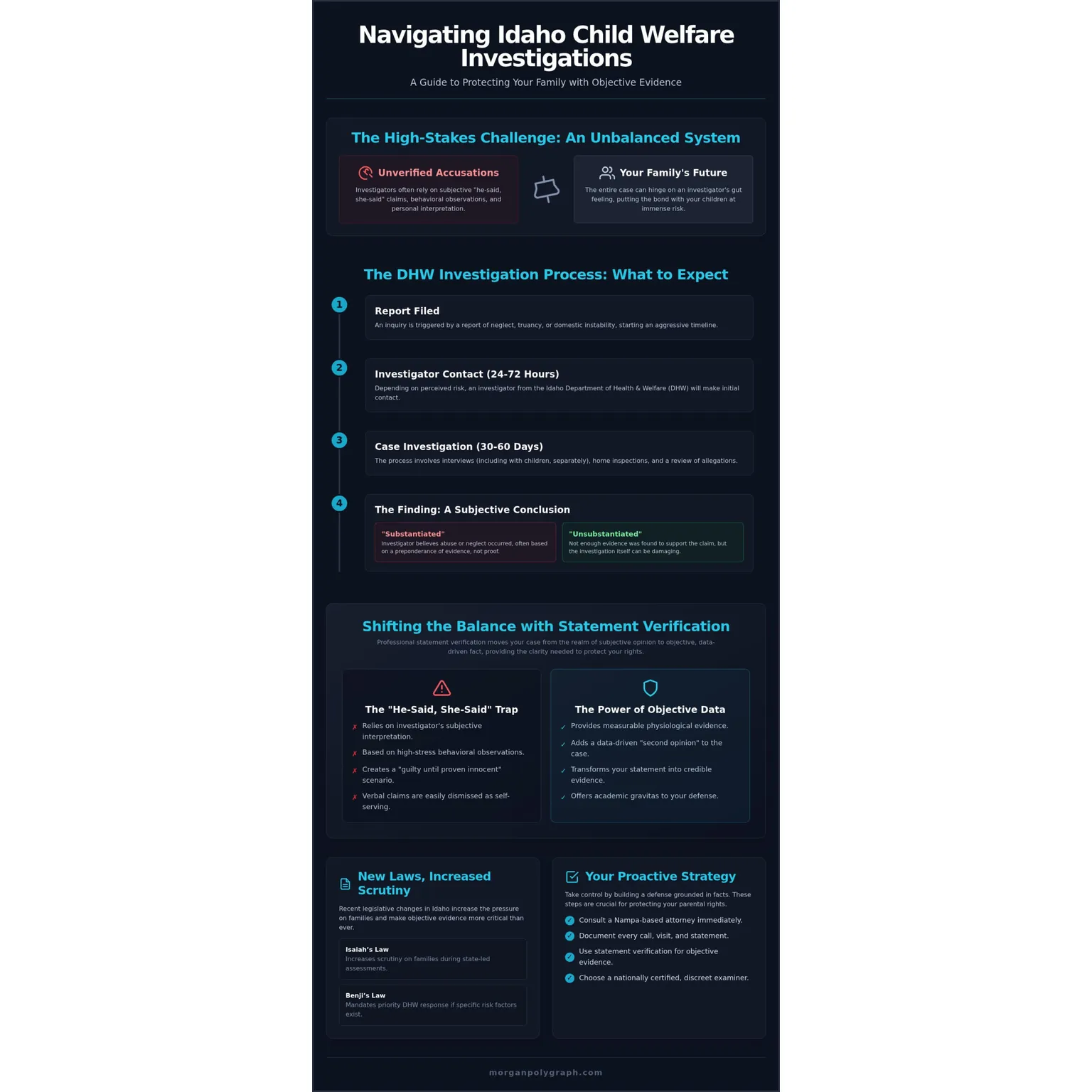
In Canyon County, the Idaho Department of Health and Welfare (DHW) acts as the primary agency responsible for the safety and well-being of minors. When a report is filed through the 208 area code, an investigation begins that can feel both overwhelming and deeply intrusive for any parent. Understanding Child Protective Services and how they function within the state’s legal framework is the first step toward regaining control of your family’s future. While the DHW has a mandate to protect children, their process often puts parents in a defensive position from the very first knock on the door.
Common triggers for an inquiry in Nampa include reports of physical neglect, educational truancy, or allegations of domestic instability. The timeline is usually aggressive. Once a referral is made, an investigator typically attempts contact within 24 to 72 hours, depending on the perceived level of risk. The entire process often concludes within 30 to 60 days, but the impact of the findings can last a lifetime. Because physical evidence is often absent in family disputes, verbal accounts become the cornerstone of the case. This makes verifying statements in a child welfare investigation Nampa a critical priority for any parent facing state scrutiny.
Verbal statements are the most critical, yet most contested, elements of any Canyon County case. Investigators often rely on behavioral observations that may be biased by the high-stress nature of the situation. Without objective proof, your future depends entirely on whether a state employee believes your version of events over an accuser’s claims.
The Investigative Process at the Nampa DHW Office
When a Nampa investigator enters your home, they look for specific environmental and behavioral markers. They will likely interview your children separately and record your responses to specific allegations. A finding of “substantiated” means the investigator believes, by a preponderance of evidence, that abuse or neglect occurred. An “unsubstantiated” finding means there wasn’t enough evidence to support the claim. Because these decisions often hinge on the investigator’s subjective interpretation, professional verification helps bridge the gap when an investigator’s notes don’t capture the full truth.
Your Rights During a Canyon County Investigation
You have the right to legal representation, and it’s highly recommended to consult a Nampa-based attorney as soon as you’re notified of an inquiry. While investigators have the authority to interview children and inspect homes, their power isn’t absolute. Document every phone call, visit, and statement made by DHW staff. Under 2026 mandates like Benji’s Law, the DHW must initiate a priority response if specific risk factors exist. Protecting yourself requires a proactive strategy for verifying statements in a child welfare investigation Nampa to ensure your side of the story is documented with scientific accuracy.
The Role of Statement Verification in High-Stakes Family Cases
In child welfare matters, the absence of physical evidence often forces investigators to rely on subjective assessments. This creates a high-stakes “he-said, she-said” dynamic that can be incredibly dangerous for families. When a state authority doubts your word, the psychological toll is profound. It’s common for parents to feel isolated, unheard, and trapped in a “guilty until proven innocent” scenario. Professional statement verification serves as an objective bridge. It moves the conversation from personal credibility to data-driven facts.
Informal claims are easily dismissed by authorities as self-serving. By contrast, a professionally verified statement carries significant weight. It provides a structured “second opinion” for the investigation that isn’t based on an investigator’s gut feeling. This process uses established protocols, such as the Polygraph Examination Technique, to measure physiological responses that align with truthful accounts. This transition from verbal anecdote to scientific data can change the trajectory of an entire case by providing a layer of academic gravitas to your defense.
When Statements Become Evidence
Nampa courts and DHW investigators closely monitor every word you say during an inquiry. Even minor inconsistencies in your story over several weeks can be interpreted as signs of deception or instability. Verifying statements in a child welfare investigation Nampa helps you establish a consistent, truthful narrative from the outset. It demonstrates a level of transparency that informal denials simply cannot match. By anchoring your account in objective evidence, you provide your legal team with a solid foundation to challenge unsubstantiated findings.
Clearing the Air in Sensitive Allegations
False allegations of neglect or mistreatment are unfortunately common in contentious family disputes. Sometimes, a child’s statement is influenced or coached by another adult, complicating the investigator’s task. Objective data helps cut through these emotional layers. It offers a clear, clinical perspective on the facts, allowing you to address specific accusations with confidence. If you find yourself in a position where your integrity is being questioned, seeking a professional evaluation can provide the clarity needed to protect your future. This methodical approach ensures the focus remains on the truth rather than emotional hearsay.
Polygraph Testing as a Tool for Statement Verification
While many view the polygraph through the lens of television drama, the reality is a methodical, scientific process. It’s a data-driven physiological measurement that captures involuntary body responses. When you’re in the middle of a high-stakes case, verifying statements in a child welfare investigation Nampa requires more than just your word. It requires evidence that a state investigator can’t easily dismiss. A professional polygraph examination serves this purpose by translating your verbal account into measurable data points.
The science involves monitoring three primary systems: respiratory activity, cardiovascular changes, and electrodermal activity. When an individual provides a truthful statement, their physiological markers remain within a baseline range. Deviations from this baseline, when measured against standardized control questions, provide the examiner with the data needed to verify the integrity of the statement. For these results to carry weight in a Nampa legal context, professional certification is non-negotiable. Nationally certified examiners follow strict ethical and technical guidelines, ensuring the findings are recognized by legal professionals and state authorities.
The Accuracy and Reliability of Modern Exams
Clients often ask: Are polygraphs accurate?. When utilizing state-of-the-art technology and validated techniques, the reliability of these exams is well-documented. Modern digital systems have replaced old analog charts, allowing for precise data analysis. By using standardized questioning protocols, we eliminate the risk of examiner bias. This creates a level playing field where the truth is determined by your body’s own metrics rather than a subjective opinion. This methodical approach is essential when verifying statements in a child welfare investigation Nampa to ensure the final report reflects reality.
What to Expect During a Verification Exam
A professional polygraph test consists of three distinct phases. The pre-test interview is perhaps the most vital for child welfare cases. This is where we discuss the allegations in a calm, discreet environment. It’s a chance for you to explain the context of the situation without the pressure of a state investigator present. Following this, the data collection phase occurs, where sensors record your responses to specific, pre-discussed questions. Finally, the post-test analysis provides a clear report of the findings. We ensure a respectful atmosphere for Nampa residents, understanding the immense stress these investigations cause and the importance of a clear, unhurried process.
Navigating the Nampa Legal Landscape with Verified Evidence
Integrating verified evidence into your legal strategy requires a calculated approach. In Nampa, where the DHW often views its own assessments as the final word, presenting independent data can disrupt a biased narrative. Verifying statements in a child welfare investigation Nampa isn’t just about personal vindication; it’s a formal legal tool. It allows you to present a transparent, data-backed account of your actions and intentions. This transparency often shifts the investigator’s perception, moving you from a subject of suspicion to a cooperative participant in the truth-seeking process.
In Canyon County family court, judges look for credible, consistent evidence. While the state presents its findings, your ability to provide a court-recognized verification report offers a powerful counterweight. It addresses the stigma of being investigated by showing you have nothing to hide. This methodical approach demonstrates a commitment to the facts that verbal denials alone can’t achieve. It’s a proactive choice that signals your willingness to be held to the highest standard of accountability.
Working with Nampa Legal Counsel
You should always consult with your attorney before scheduling a verification exam. A seasoned Nampa lawyer understands how to use these results to negotiate with the DHW or Canyon County prosecutors. When an attorney orders the exam, the results are often protected by attorney-client privilege. This ensures you can review the findings and decide on the best course of action with your legal team. This partnership is essential for turning physiological data into a persuasive legal argument that protects your parental rights.
Presenting Results to Child Protective Services
The timing and method of sharing your report with an investigator are critical. A professional report should be delivered through your legal counsel to ensure it’s officially documented in your case file. If you’re faced with “substantiated” findings, this evidence provides a basis to request a formal administrative review. Our examiners are also prepared to provide expert testimony if your case moves to a courtroom setting. If you’re ready to take this step, you can contact us today to ensure your voice is heard through objective science.
Why Morgan Polygraph is the Trusted Choice for Nampa Families
When your family’s future hangs in the balance, you need an expert who balances technical precision with genuine empathy. Morgan Polygraph has established itself as a leader in the Treasure Valley by focusing on the sensitive nature of family legal matters. We recognize that verifying statements in a child welfare investigation Nampa is a process fraught with anxiety. Our role is to provide a calm, collected environment where the truth can be documented through scientific methodology. By choosing a nationally certified examiner, you’re ensuring that the results are respected by both legal counsel and state authorities.
Our practitioners aren’t just technicians; they’re seasoned experts with extensive professional affiliations. This standing within the professional community gives our reports the weight they need in high-stakes environments. We bridge the gap between traditional experience and innovative technology. This forward-thinking approach ensures that every examination is conducted with the highest level of accuracy available in 2026. Our methodical and organized process guides you from the initial consultation to the final report with total transparency.
A Professional Environment in the Treasure Valley
Our facility is specifically designed to prioritize your privacy and comfort. We understand that residents searching for a polygraph near me want a discreet location away from the prying eyes of the public. Our lead practitioners utilize state-of-the-art digital systems to capture data-driven physiological measurements. This integration of modern technology allows for a methodical analysis that removes subjective bias, providing you with a clear and authoritative record of the facts. We focus on the human element, ensuring you feel heard and respected throughout the testing process.
Next Steps for Nampa Residents
If you’re currently involved in an active investigation, timing is critical. State timelines are often aggressive, and waiting to verify your account can lead to unsubstantiated findings becoming permanent records. Scheduling a confidential consultation is a straightforward process. Our Boise office is conveniently located for Nampa residents, offering a professional setting where you can discuss your case without judgment. We recommend acting quickly to ensure your verified evidence is ready for your attorney to present to the DHW. Taking this proactive step is the most effective way to protect your rights and keep your family together.
Securing Your Family’s Future with Objective Truth
Facing an investigation by the Idaho Department of Health and Welfare is one of the most stressful experiences a parent can endure. You’ve seen how moving beyond subjective verbal accounts into the realm of data-driven physiological evidence can fundamentally change the outcome of your case. By prioritizing the process of verifying statements in a child welfare investigation Nampa, you provide your legal team with the objective tools needed to challenge false allegations and restore your reputation. This scientific approach replaces uncertainty with measurable facts, ensuring that the truth remains the focal point of every decision made about your children.
As the Treasure Valley’s leading polygraph service, we’re dedicated to providing the clarity you need during these high-stakes moments. Our nationally certified examiners and court-recognized experts offer a methodical, compassionate approach that respects both the science and the human element of your situation. Don’t let unverified claims dictate your family’s future. Schedule a Discreet Consultation with Morgan Polygraph Today to take a proactive step toward the truth. You don’t have to navigate this journey alone; we’re here to ensure your side of the story is told with scientific precision.
Frequently Asked Questions
Can a polygraph test be used in a Nampa child welfare case?
Yes, a polygraph test is a valuable tool for verifying statements in a child welfare investigation Nampa. While the state conducts its own assessment, you have the right to present independent, scientific evidence to support your account. Our court-recognized experts provide detailed reports that help clarify contested facts. This objective data serves as a critical bridge when investigators are faced with conflicting verbal accounts from different parties during an inquiry.
Is the Idaho Department of Health and Welfare required to look at my polygraph results?
The Idaho DHW isn’t legally mandated to treat polygraph results as absolute proof, but they must consider all relevant evidence you submit. Under 2026 protocols like Benji’s Law, investigators are under increased pressure to verify risk factors quickly. Providing a report from a nationally certified examiner adds a layer of professional credibility to your side of the story. It forces a more thorough review of the case facts rather than relying on hearsay.
What happens if I ‘fail’ a polygraph during a child welfare investigation?
If an examination indicates deception, the results can be used by your legal team to identify areas of concern before the state does. However, if the exam is conducted under attorney-client privilege, the results remain confidential. We don’t provide legal advice; we do ensure that the testing process is methodical and accurate. This allows you and your counsel to make informed decisions about how to proceed with the Canyon County investigation.
Are polygraph results admissible in Canyon County family court?
In Canyon County family court, the admissibility of polygraph results often requires a prior agreement between the parties involved. Even when not formally admitted as evidence, a report from a court-recognized expert can influence the investigator’s final recommendations. Judges and attorneys frequently respect the findings of nationally certified practitioners. Using state-of-the-art technology ensures the data meets the high standards required for professional legal and civil case reviews.
How long does a statement verification polygraph take?
A professional statement verification exam typically requires two to three hours to complete. This duration ensures a thorough pre-test interview where all allegations are discussed in a discreet environment. The actual data collection phase follows, where we monitor your physiological responses to specific questions. Finally, the examiner conducts a detailed analysis of the results. This unhurried, methodical approach is essential for maintaining the highest levels of precision and reliability in family matters.
Will my child welfare investigator think I’m guilty if I suggest a polygraph?
Most investigators view the suggestion of a polygraph as a sign of transparency rather than guilt. It demonstrates that you’re willing to undergo a rigorous, scientific process to prove your integrity. In high-stakes child welfare cases, being proactive can shift the narrative from suspicion to cooperation. By verifying statements in a child welfare investigation Nampa, you show the DHW that you are committed to the truth and have nothing to hide from the state.
Can I use a polygraph to prove someone else is lying about me?
You can’t force another person to take a test, but you can use your own results to disprove their claims. By verifying the truthfulness of your own statements, you provide objective evidence that contradicts false allegations. This methodical approach helps clear your name by showing that your version of events is supported by measurable physiological data. It’s an effective way to resolve “he-said, she-said” disputes that often plague sensitive family investigations.
Do I need my lawyer’s permission to take a polygraph in Nampa?
While you aren’t legally required to get a lawyer’s permission, it’s a vital step for protecting your rights. Consulting a Nampa attorney allows the examination to be conducted under the umbrella of attorney-client privilege. This means you can review the findings privately before deciding whether to share them with the DHW. Our examiners work closely with local legal professionals to ensure the process is handled with the utmost discretion and professional care.